Why Live Plants Are Essential for Bioactive Reptile Enclosures
Here's a truth that separates good reptile keeping from great reptile keeping: a bare enclosure with paper towels, a plastic hide, and a water bowl meets your reptile's survival needs, but it doesn't meet their biological or psychological needs. Reptiles evolved in complex environments 鈥?leaf litter, growing plants, varied microclimates, and living ecosystems. When you place a reptile in a bare enclosure, you remove every natural stimulus that drives their behavioral repertoire: no plants to climb, no leaf litter to explore, no microclimate variation to thermoregulate through, no chemical complexity from living plants. The result is a reptile that eats, sleeps, and exists 鈥?but doesn't thrive.
Live plants in a bioactive vivarium do far more than look attractive. They absorb nitrogenous waste (ammonia and nitrates from reptile waste) through their root systems and leaves, converting it into plant growth. They transpire water vapor, maintaining humidity gradients that support healthy shedding 鈥?particularly critical for species prone to stuck shed (crested geckos, chameleons, ball pythons). They create microclimates: shaded areas under broad leaves are 5-10掳F cooler than open basking spots; humid pockets near substrate-level plants maintain 10-20% higher humidity than the open enclosure. These microclimates allow your reptile to self-regulate its environment instead of being at the mercy of a uniform enclosure.
The bioactive approach 鈥?live plants combined with a drainage layer, organic substrate, and a cleanup crew of springtails and isopods 鈥?creates a self-regulating ecosystem. The plants use reptile waste as fertilizer. The cleanup crew (isopods and springtails) consumes mold, decaying plant matter, and waste, converting it into plant-available nutrients. The result: you spot-clean solid waste, mist regularly, and perform a full substrate replacement once every 12-18 months instead of every 4-6 weeks. The enclosure becomes a living, breathing habitat rather than a cage that needs constant scrubbing.
Not all plants work in vivariums, however. Reptile enclosures present unique challenges: high humidity (60-100% in tropical setups), low light (many enclosure lights are designed for reptile basking, not plant growth), temperature extremes (90-100掳F near basking spots), and physical damage from climbing and digging reptiles. The wrong plant selection leads to dead plants, rotting organic matter, and frustrated keepers. The right selection creates a lush, self-sustaining landscape that improves your reptile's health and quality of life.
This guide covers the best vivarium plants for every type of reptile setup: tropical species for crested geckos and tree frogs, arid-adapted species for bearded dragons and leopard geckos, high-light species for chameleon enclosures, and ground-cover plants that tolerate heavy reptile traffic.
Key Considerations for Vivarium Plant Selection
- Lighting Requirements: Most reptile UVB and basking bulbs provide insufficient light for plant growth. T5 HO fluorescent fixtures or LED grow lights are essential for thriving plants 鈥?a 6500K T5 HO bulb provides the full-spectrum light plants need for photosynthesis while still providing UVB for reptiles. For low-light tolerant plants (pothos, snake plants, ferns), ambient light from the room plus a standard 5.0 UVB bulb may suffice. For high-light plants (bromeliads, orchids, most flowering species), dedicated LED grow lights with 12-hour photoperiods are mandatory. Measure your light levels: if you can't read a book comfortably at the plant level, you need more light
- Humidity and Moisture Tolerance: Tropical species (crested geckos, tree frogs, chameleons) need 70-100% humidity and plants that tolerate constantly moist roots and frequent leaf misting. Desert species (bearded dragons, leopard geckos) need plants that tolerate 30-50% humidity and drying out completely between waterings. Matching plant moisture requirements to your enclosure's humidity is the single most important factor in plant survival 鈥?a fern that thrives in 80% humidity will rot in a bearded dragon enclosure at 40% humidity
- Temperature Tolerance: Vivarium plants must survive temperatures near basking spots (95-100掳F for bearded dragons, 85-90掳F for tropical basking species). Heat-tolerant species like pothos, snake plants, and bromeliads handle these temperatures without wilting. Delicate species like fittonia and most mosses will crisp and die within days of exposure to basking temperatures. Position heat-sensitive plants in the cool end of the enclosure and reserve the warm end for heat-tolerant species
- Physical Robustness: Climbing reptiles (crested geckos, anoles, day geckos) will climb on and potentially break delicate plants. Digging reptiles (leopard geckos, skinks) will uproot shallow-rooted plants. Heavy reptiles (bearded dragons, tegus) will crush ground-cover plants that can't support their weight. Choose plants with robust stems and strong root systems for high-traffic areas, and reserve delicate species for areas your reptile doesn't frequently access
- Toxicity: Some common houseplants are toxic to reptiles if ingested (though most reptiles won't eat them if properly fed). Avoid: philodendron (calcium oxalate crystals can cause mouth irritation), dieffenbachia (oral swelling), sago palm (liver failure), and oleander (cardiac toxins). Safe choices: pothos, snake plants, bromeliads, orchids, ferns, and most tropical foliage plants. If your reptile is a known plant-eater (some crested geckos and anoles occasionally nibble), provide edible plants like pothos or install sacrificial plants that you rotate in and out
Top 10 Vivarium Plants for Bioactive Reptile Enclosures
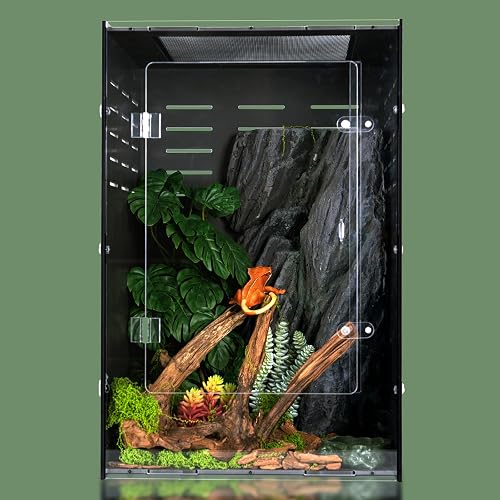
Live vivarium plants for bioactive reptile enclosures
Live vivarium plants for bioactive reptile enclosures
1. Golden Pothos (Epipremnum aureum) 鈥?Best All-Around Vivarium Plant
Golden Pothos is, without question, the single most reliable vivarium plant in the reptile keeping hobby. It tolerates almost every condition a reptile enclosure can throw at it: low light to bright indirect light, 30% to 95% humidity, temperatures from 60掳F to 100掳F, and occasional physical abuse from climbing reptiles. It grows voraciously 鈥?in a bioactive enclosure with good lighting, pothos can cover the entire background in 2-3 months, providing dense foliage cover that makes shy reptiles feel secure. The trailing vines create vertical climbing opportunities for arboreal species and the broad heart-shaped leaves provide shade and hiding spots at multiple levels of the enclosure.
Pothos is also one of the most effective biofiltration plants in the vivarium. Its extensive root system absorbs nitrogenous waste from the substrate rapidly, and the large leaf surface area transpires water vapor that stabilizes humidity. When pothos is allowed to root in the drainage layer (which it will if given the chance), it accesses standing water and becomes essentially self-watering 鈥?the plant draws water from the drainage layer through capillary action, reducing the frequency of misting needed. For reptile keepers who struggle to keep plants alive in their enclosures, pothos is the solution. If you can kill pothos, you probably can't keep any vivarium plant alive.
Pros:
- Extremely tolerant 鈥?survives low light, wide temperature range (60-100掳F), and 30-95% humidity
- Fast-growing 鈥?covers backgrounds and creates dense foliage cover within 2-3 months
- Excellent biofiltration 鈥?roots absorb nitrogenous waste effectively, leaves transpire for humidity
- Roots into drainage layer 鈥?becomes partially self-watering in bioactive setups
- Propagates easily 鈥?cut a vine with 2-3 nodes, place in water or moist substrate, watch it grow
- Non-toxic to reptiles (though calcium oxalate can cause mild oral irritation if eaten in quantity)
- Inexpensive 鈥?a starter plant costs $5-10 at any garden center
Cons:
- Can overgrow the enclosure 鈥?requires monthly trimming to prevent complete takeover
- Vines can become heavy and pull down lightweight background structures
- May cause mild oral irritation if reptiles eat significant amounts (rare in practice)
- Not suitable for arid enclosures below 30% humidity (leaves dry and crisp)
- Can develop root rot if the substrate stays waterlogged without drainage layer underneath
Rating: 5/5 | Best For: Every tropical and semi-humid enclosure, beginners, bioactive setups
2. Snake Plant (Sansevieria trifasciata) 鈥?Best Arid-Enclosure Plant
Snake plants 鈥?also called mother-in-law's tongue or Sansevieria 鈥?are the go-to plant for arid reptile enclosures (bearded dragons, leopard geckos, uromastyx, desert tortoises). They thrive in the conditions that kill most other vivarium plants: 20-40% humidity, temperatures up to 100掳F, bright basking light, and infrequent watering. The tall, stiff, upright leaves create vertical structure in low-profile enclosures and provide visual barriers that reduce stress in ground-dwelling reptiles. The tough, fibrous leaves resist physical damage from digging and climbing 鈥?snake plants are one of the few plants that survive in a bearded dragon enclosure without being crushed or uprooted.
Snake plants use CAM photosynthesis (Crassulacean Acid Metabolism) 鈥?they open their stomata at night to absorb CO2 and close them during the day to reduce water loss. This makes them exceptionally drought-tolerant and water-efficient. Water a snake plant once every 2-4 weeks in an arid enclosure, and it will thrive. Water it weekly, and the roots will rot. In bioactive desert setups, snake plants should be potted individually with well-draining substrate (50% organic potting mix, 50% coarse sand or perlite) and positioned in the cooler end of the enclosure away from direct basking bulbs. The cylindrical variety (Sansevieria cylindrica) with its round, spear-like leaves is particularly popular for its modern aesthetic and resilience.
Pros:
- Extremely drought-tolerant 鈥?thrives in 20-40% humidity, watering every 2-4 weeks
- Heat-tolerant 鈥?survives up to 100掳F without wilting
- Stiff, upright leaves resist physical damage from climbing and digging reptiles
- Tall leaves (2-4 feet) create vertical structure in ground-level enclosures
- CAM photosynthesis means roots don't need constant moisture 鈥?hard to overwater
- Non-toxic and safe for all reptiles
- Virtually indestructible 鈥?harder to kill than any other vivarium plant
Cons:
- Sharp leaf tips can injure reptiles in tight spaces 鈥?trim tips or position away from high-traffic areas
- Slow-growing 鈥?takes months to show visible growth, won't fill in bare spaces quickly
- Not suitable for humid enclosures above 60% humidity 鈥?leaves rot at the base
- Doesn't provide broad shade 鈥?the tall narrow leaves offer vertical structure but little canopy cover
- Overwatering kills faster than underwatering 鈥?must resist the urge to water frequently
- Cannot root in drainage layer 鈥?will rot if the root zone stays wet
Rating: 5/5 | Best For: Arid enclosures (bearded dragons, leopard geckos, uromastyx), desert bioactive setups
3. Bromeliads (Neoregalia spp.) 鈥?Best Tropical Canopy Plant
Bromeliads are the signature plant of tropical vivariums 鈥?the epiphytic rosettes that create the iconic "tree frog on a leaf" image that defines the hobby. Neoregalia bromeliads (the most common vivarium variety) grow as epiphytes, meaning they don't need soil and can be mounted on branches, cork bark, and background walls. The overlapping leaves form a central cup (called a "tank") that holds water 鈥?this tank provides drinking water for tree frogs, crested geckos, and day geckos, and creates microhabitats for small invertebrates in the cleanup crew. The leaves also provide broad, stable perching surfaces for arboreal reptiles.
Bromeliads prefer bright indirect light 鈥?the same light levels that suit most tropical reptiles with UVB (5.0 or 6% bulbs in a T5 HO fixture). They need high humidity (70%+) and consistent moisture in the central cup 鈥?fill the cup with dechlorinated water or RO water weekly and mist the leaves daily. In a well-established bioactive tropical enclosure, misting the enclosure daily is usually sufficient to keep bromeliads healthy without additional watering. The plants are slow-growing but long-lived 鈥?a healthy bromeliad can thrive in a vivarium for 2-3 years before producing pups (offsets) and beginning to decline. When the mother plant declines, the pups (plantlets forming at the base) are already growing to replace it.
Pros:
- Central water cup provides natural drinking source for tree frogs, crested geckos, day geckos
- Epiphytic growth 鈥?mount on branches and walls without soil, no potted plant needed
- Broad, stable leaves create perching surfaces for arboreal reptiles
- Produces pups (offsets) that naturally replace aging mother plants 鈥?self-renewing
- Vibrant colors 鈥?many Neoregalia varieties develop stunning red, pink, and purple hues in bright light
- Excellent humidity retention 鈥?the rosette shape traps moisture and maintains a humid microclimate
- Non-toxic and safe for all reptiles
Cons:
- Requires high humidity (70%+) 鈥?unsuitable for arid or moderate-humidity enclosures
- Central cup water must be changed weekly 鈥?standing water in warm vivariums breeds bacteria and mosquitoes
- Slow-growing 鈥?months to establish, years to fully mature
- $12-25 per plant 鈥?more expensive than common houseplants
- Can trap dead insects and debris in the central cup 鈥?requires occasional cleaning
- Mother plant dies after 2-3 years (pups replace it, but the main plant declines)
Rating: 5/5 | Best For: Tropical high-humidity enclosures, tree frogs, crested geckos, day geckos
Creeping fig (Ficus pumila) is the ivy of the vivarium world 鈥?a fast-growing, self-clinging vine that will cover an entire enclosure background with small, dense leaves within 3-6 months. Unlike pothos, which sends out long trailing vines, creeping fig attaches directly to surfaces using aerial rootlets, creating a solid green wall that provides climbing surfaces for geckos and frogs while hiding equipment like filter intakes, thermostat probes, and pump tubing. The small heart-shaped leaves (1-2 inches) create a natural-looking canopy that maintains humidity well and provides diffuse shade for light-sensitive species.
Creeping fig thrives in high humidity (70%+) and moderate indirect light. It can survive in lower light conditions but will grow more slowly and may drop lower leaves in the process. The plant is vigorous enough that it needs monthly trimming to prevent it from covering equipment access panels, light fixtures, and ventilation grates. The adhesive pads that attach to surfaces can leave residue on glass and acrylic 鈥?if you're building a background (expanding foam and silicone method), allow the background to cure fully before introducing creeping fig. The plant is non-toxic and reptile-safe, though its small leaves can be accidentally ingested by larger reptiles (harmless, but not ideal).
Pros:
- Self-clinging aerial rootlets 鈥?attaches to backgrounds without tying or mounting
- Fast-growing 鈥?covers a 2脳3 foot background in 3-6 months with proper conditions
- Dense leaf coverage creates a natural green wall 鈥?hides equipment effectively
- Small leaves create natural-looking canopy that won't overwhelm small enclosures
- Maintains high humidity 鈥?dense foliage reduces evaporation from the substrate
- Can be trimmed and shaped easily
Cons:
- Requires high humidity (70%+) 鈥?will crisp and drop leaves below 50% humidity
- Aggressive growth 鈥?must be trimmed monthly to prevent covering equipment and ventilation
- Adhesive rootlets leave residue on glass surfaces if removed
- Can trap moisture against enclosure walls 鈥?potential mold growth in poorly ventilated setups
- Lower leaves shed naturally 鈥?creates leaf litter that cleanup crew must process
- Can overwhelm other plants if not kept in check
Rating: 4.5/5 | Best For: Background coverage in tropical high-humidity vivariums, dart frog and gecko enclosures
5. Dwarf Schefflera (Schefflera arboricola) 鈥?Best Shrub-Form Vivarium Plant
Dwarf Schefflera 鈥?also called umbrella tree or arboricola 鈥?is the plant that fills the mid-story of a tropical vivarium. It grows as a multi-stemmed shrub with glossy, compound leaves that radiate from central stems like umbrella spokes. In a vivarium, Schefflera provides broad, stable leaves that crested geckos and day geckos love to perch on, dense foliage cover for shy species, and shrub-level structure that creates visual depth in the enclosure. The plant's multi-stem growth habit also provides multiple climbing routes for arboreal reptiles 鈥?rather than a single trunk, Schefflera branches create a network of varying diameters that exercise a reptile's grip and climbing muscles.
Schefflera adapts to moderate light (survives in lower light than bromeliads) and moderate to high humidity (60-90%). It tolerates the temperature range of most tropical enclosures (75-90掳F) but may drop lower leaves if the basking zone is too intense or the plant is positioned too close to heat sources. In arid enclosures, Schefflera struggles 鈥?the leaves dry and brown at the edges below 50% humidity. For keepers who want a shrub-form plant that provides structure and perching opportunities in a tropical vivarium, dwarf Schefflera is the best option.
Pros:
- Multi-stemmed shrub habit creates mid-story structure and climbing routes
- Glossy, compound leaves provide stable perching surfaces
- Dense foliage cover for shy reptiles that need visual barriers
- Tolerates moderate light 鈥?works with standard 5.0 UVB bulbs plus ambient room light
- Moderate growth rate 鈥?fills in without needing weekly trimming like pothos
- Can be pruned into a tree form or left as a natural shrub
- Non-toxic and reptile-safe
Cons:
- Requires moderate to high humidity (60%+) 鈥?leaf edge browning below 50%
- Slow to establish 鈥?may drop leaves initially while adapting to vivarium conditions
- Can develop root rot if substrate stays waterlogged (requires well-draining bioactive substrate)
- Not suitable for small enclosures under 18" tall 鈥?needs vertical space to grow
- Does not root into drainage layer 鈥?must be watered independently or through the substrate
Rating: 4.5/5 | Best For: Mid-story structure in tropical enclosures, crested geckos, day geckos, tree frogs
6. Java Fern (Microsorum pteropus) 鈥?Best Paludarium and Riparium Plant
Java fern is an aquatic fern that grows emersed (above water) in high-humidity environments, making it perfect for paludariums 鈥?setups with a water feature, pond, or stream section. The long, wavy leaves emerge from a thick rhizome and can grow 6-12 inches tall above the water surface. Java fern absorbs nutrients directly through its leaves (it doesn't need soil), and its rhizome grows attached to hardscape 鈥?wood, rocks, or background materials. In a paludarium with a water pump and spray bar, java fern positioned in the spray zone or waterfall splash area stays constantly moist and grows lush green leaves that cascade over rocks and wood.
Java fern tolerates very low light 鈥?it's one of the few plants that will thrive in the shaded lower levels of a heavily planted vivarium where other plants struggle. It needs high humidity (80%+) to grow well emersed, and the rhizome must stay moist at all times. In paludariums housing turtles, newts, or semi-aquatic reptiles, java fern planted at the water line provides a natural transition zone between aquatic and terrestrial habitats. The plant is non-toxic, reptile-safe, and hardy enough to survive occasional nibbling from semi-aquatic reptiles like mud turtles and painted turtles.
Pros:
- Excellent paludarium choice 鈥?grows emersed in high-humidity spray zones
- Rhizome attaches to wood and rock 鈥?no soil needed, mounts directly on hardscape
- Very low light tolerance 鈥?grows in shaded vivarium areas where other plants fail
- Wavy, textured leaves create visual interest and natural transition between water and land
- Loves being in the spray zone of pumps and waterfalls 鈥?thrives on constant moisture
- Non-toxic, reptile-safe, and hardy enough for turtle setups
- Propagates by rhizome division 鈥?split the rhizome to create new plants
Cons:
- Requires very high humidity (80%+) for emersed growth 鈥?not suitable for most standard vivariums
- Rhizome must not be buried 鈥?burying the rhizome causes rot and plant death
- Slow-growing 鈥?weeks to establish, months to fill in
- Can develop brown spots (algae or nutrient deficiency) in suboptimal conditions
- Leaves are relatively stiff and can be uncomfortable for small reptiles to climb on
- Not suitable for arid or even moderate-humidity enclosures
Rating: 4/5 | Best For: Paludariums, turtle enclosures, high-humidity setups with water features
7. Club Moss (Selaginella spp.) 鈥?Best Ground Cover for Tropical Enclosures
Selaginella 鈥?commonly called spikemoss or club moss 鈥?is the carpeting plant that creates the lush, mossy ground layer characteristic of high-end tropical vivariums. Unlike true mosses (which struggle in most vivariums because they require constant moisture and very low light), Selaginella forms a dense, low-growing mat of scale-like leaves that spreads horizontally across the substrate. Several species are popular: Selaginella kraussiana (golden or green club moss, the hardiest and most widely used), Selaginella uncinata (peacock moss, with blue-green iridescent foliage), and Selaginella willdenowii (a larger species with fern-like fronds).
Selaginella needs high humidity (80%+), consistent moisture, and moderate indirect light. It's sensitive to drying out 鈥?even a few hours of dry substrate can cause the foliage to crisp and die. In a well-established bioactive enclosure with a functioning drainage layer and springtail cleanup crew, Selaginella forms a living carpet that stabilizes the substrate surface, prevents erosion during misting, and creates a natural-looking landscape that showcases your reptile or amphibian. The ground cover also provides shelter for cleanup crew isopods and springtails, improving the health of the entire bioactive system.
Pros:
- Creates a lush, moss-like living carpet 鈥?the ultimate ground cover for naturalistic vivariums
- Forms a dense mat that stabilizes substrate and prevents erosion
- Provides cover for cleanup crew (isopods, springtails) in the leaf litter layer
- Multiple species with different colors and leaf textures available
- Moderate growth rate 鈥?fills a 12脳12 inch area in 3-4 months under good conditions
- Propagates by stem cuttings 鈥?easily fills in bare areas
- Safe and non-toxic for all reptiles and amphibians
Cons:
- Requires very high humidity (80%+) and consistent moisture 鈥?unforgiving of drying out
- Not suitable for arid or moderate-humidity enclosures
- Can develop mold patches in poorly ventilated setups
- Sensitive to high light 鈥?will crisp if positioned too close to UVB or basking bulbs
- Slow to recover from reptile traffic 鈥?heavy reptiles can crush and kill the mat in high-traffic areas
- More expensive than common houseplants 鈥?$10-20 for a small pot
Rating: 4/5 | Best For: High-humidity tropical vivariums, dart frog enclosures, bioactive background ground cover
8. Boston Fern (Nephrolepis exaltata) 鈥?Best Humidity-Absorbing Fern
Boston fern is the quintessential humid-environment fern, and it performs exceptionally well in large tropical vivariums where its arching fronds create waterfall-like cascades of foliage. The feathery fronds can grow 12-24 inches long in vivarium conditions, providing immense surface area for transpiration 鈥?a single mature Boston fern planted in a 4脳2脳2 enclosure can increase the overall humidity by 10-15% through water vapor release. This makes Boston fern particularly valuable for keepers who struggle to maintain adequate humidity levels for tropical species.
Boston fern needs bright indirect light (T5 HO fixtures or LED grow lights) and consistently moist soil 鈥?it cannot dry out between waterings. In a bioactive substrate with a functioning drainage layer, Boston fern thrives because it can access the moisture reservoir below through its deep root system. The fronds provide excellent visual barriers for shy reptiles and create microclimates with higher humidity and lower light at the substrate level. For larger enclosures housing multiple reptiles, a Boston fern in the center of the enclosure creates a dramatic visual centerpiece while providing functional benefits for the entire ecosystem.
Pros:
- Exceptionally effective humidity buffer 鈥?large fronds transpire moisture and stabilize humidity
- Dramatic visual centerpiece for large enclosures with arching, cascading fronds
- Provides excellent cover and visual barriers for shy reptiles
- Deep root system accesses drainage layer moisture for consistent hydration
- Non-toxic and completely safe for all reptiles
- Thrives in bioactive setups with moderate to high light
Cons:
- Requires consistently moist soil 鈥?cannot dry out, risks of root desiccation in shallow bioactive substrate
- Large 鈥?needs significant space, only suitable for enclosures 24"+ tall
- Sheds brown fronds regularly 鈥?requires monthly cleanup or a robust cleanup crew
- Can harbor spider mites in dry conditions 鈥?quarantine new plants and inspect regularly
- Not suitable for small or shallow enclosures
- Can become top-heavy and tip small pots over
Rating: 4/5 | Best For: Large tropical vivariums (4脳2脳2 and larger), humidity management, centerpiece plant
9. Orchids (Phalaenopsis spp.) 鈥?Best Flowering Vivarium Plant
Phalaenopsis orchids (moth orchids) bring the elegance of flowering plants into the vivarium 鈥?their long-lasting blooms (2-4 months per spike) add color and visual interest that green foliage plants simply cannot match. As epiphytes, orchids grow naturally on tree branches and bark 鈥?the same mounting techniques used for bromeliads work for orchids. Mount them on cork bark or branch sections using fishing line or glue, and their aerial roots will attach to the surface over 2-3 months. The roots photosynthesize (they turn green when exposed to light) and absorb moisture and nutrients from the air and from orchid misting.
Orchids require bright indirect light (brighter than most vivarium plants 鈥?position near the light source), high humidity (70%+), and consistent air movement (a small computer fan in the enclosure prevents fungal issues on the blooms). The key challenge: orchids need their roots to dry out between waterings 鈥?in a constantly damp bioactive substrate, orchid roots will rot. Mounted orchids on background walls or branches avoid this by staying above the moist substrate. When the orchid blooms, the flowers attract reptiles' attention (some crested geckos and day geckos will investigate and occasionally nibble 鈥?harmless but can damage the bloom).
Pros:
- Stunning, long-lasting flowers (2-4 months) provide unmatched visual impact
- Epiphytic 鈥?mounts on branches and background without soil
- Aerial roots photosynthesize and absorb moisture from the air
- Multiple miniature varieties available for smaller enclosures
- Non-toxic and safe 鈥?blooms add natural color without artificial dyes
- Enhances the naturalistic aesthetic of high-end vivariums
Cons:
- Requires high light 鈥?positioned near the top of the enclosure under T5 HO or LED grow lights
- Needs air movement to prevent bloom rot 鈥?computer fan or adequate ventilation required
- Must not sit in damp substrate 鈥?exclusively epiphytic mounting, not in-soil planting
- Expensive 鈥?$15-30 per plant, with shorter vivarium lifespan than bromeliads
- Bloom spikes can be damaged by climbing reptiles
- Requires specialized orchid fertilizer (20-20-20 at 1/4 strength monthly)
Rating: 4/5 | Best For: Advanced keepers, high-end display vivariums, flowering accent plants
10. Pilea depressa (Miniature Baby Tears) 鈥?Best Terrarium Carpet for Small Enclosures
Pilea depressa 鈥?commonly called miniature baby tears or creeping pilea 鈥?is a tiny-leaved creeping plant that forms a dense, low carpet across the substrate surface in small vivariums (10-20 gallon enclosures for crested geckos, 18脳18脳18 enclosures for dart frogs). The leaves are no larger than 1/4 inch, creating a scale-appropriate ground cover for small reptiles and amphibians that would look lost under a Boston fern or pothos. Pilea depressa hugs the substrate closely, never growing more than 1-2 inches tall, and roots at every node as it spreads 鈥?creating a living mat that holds the substrate together and prevents bare soil spots.
Like Selaginella, Pilea depressa needs high humidity (70%+) and consistent moisture. It tolerates moderate light well but will grow leggy and sparse in low light. In small nano-vivariums for dart frogs, tree froglets, or small geckos, Pilea depressa combined with small ferns and moss creates a miniature landscape that looks like a 1:10 scale model of a rainforest floor. The plant propagates easily: pinch off a 2-inch section and press it into moist substrate 鈥?it will root within 2 weeks and begin spreading.
Pros:
- Forms a scale-appropriate ground cover for small enclosures and nano-vivariums
- Tiny leaves (1/4 inch) create a realistic miniature landscape
- Low-growing 鈥?stays under 2 inches tall, never overwhelms the enclosure
- Roots at every node 鈥?spreads to form a dense living mat
- Easy to propagate 鈥?pinch, press into substrate, and watch it grow
- Non-toxic and safe for all reptiles and amphibians
Cons:
- Requires high humidity (70%+) 鈥?will crisp below 50% humidity
- Sensitive to drying out 鈥?even short dry periods cause leaf browning
- Not suitable for larger enclosures 鈥?the tiny leaves get lost in spaces over 24" wide
- Can harbor fungus gnats in consistently wet substrate (add springtails to control)
- Melts back dramatically if allowed to dry out 鈥?recovers slowly
Rating: 4/5 | Best For: Nano-vivariums, dart frog enclosures, miniature bioactive landscapes
Planting a Bioactive Vivarium: Step-by-Step Guide
How to plant a bioactive vivarium for reptiles
How to plant a bioactive vivarium for reptiles
- Step 1 鈥?Build Your Drainage Layer: Before any plants go in, you need a drainage layer at the bottom of the enclosure. This prevents the substrate from becoming waterlogged and rotting plant roots. Use 1-2 inches of hydroballs (expanded clay pebbles) or LECA (lightweight expanded clay aggregate). Cover the drainage layer with a sheet of fiberglass window screen or landscape fabric to prevent substrate from migrating down into the drainage layer. This barrier is critical 鈥?without it, your substrate will gradually mix with the drainage layer, rendering the drainage layer useless and creating anaerobic conditions at the bottom of the enclosure
- Step 2 鈥?Install Substrate: Above the screen barrier, add 2-4 inches of bioactive substrate mix. A proven formula: 40% organic potting soil (no fertilizers or perlite), 30% coconut coir or peat moss, 20% sphagnum moss, and 10% activated charcoal (for chemical filtration and odor control). Mix thoroughly and moisten to the consistency of a wrung-out sponge 鈥?not soaking wet, not dry. The substrate should hold together when squeezed but not release water. This mix provides the structure and nutrients that plants need while supporting the cleanup crew
- Step 3 鈥?Add Hardscape: Position your major hardscape elements 鈥?branches, cork bark tubes, rocks 鈥?before planting. These define the layout and determine where plants go. Plant around the hardscape, not the other way around. Larger branches and background pieces should be placed before adding plants to avoid damaging roots later. Soak all wood in dechlorinated water for 24-48 hours before installation to waterlog it (prevents floating in paludariums) and release tannins
- Step 4 鈥?Plant From Background to Foreground: Install background plants first (creeping fig mounted on the background, bromeliads and orchids attached to branches and background wall). Then mid-story plants (Schefflera, Boston fern in the center-back areas). Finally, foreground and ground cover plants (Selaginella, Pilea depressa along the front edges). This layered approach ensures that all plants receive adequate light 鈥?background plants get the highest light, mid-story plants get moderate light, and ground-cover plants in the foreground are the most shade-tolerant. Bury plant roots to the crown (where stems meet roots) 鈥?burying the crown causes stem rot; leaving roots exposed causes desiccation
- Step 5 鈥?Introduce Cleanup Crew: After planting, wait 2-4 weeks for plants to establish before introducing your reptile or amphibian. During this waiting period, add springtails (Collembola 鈥?tiny, soil-dwelling arthropods that eat mold and fungi) and isopods (woodlice 鈥?also called pill bugs or roly-polies 鈥?that eat decaying plant matter and waste). Start with 50-100 springtails and 20-30 isopods per 20 gallons of enclosure volume. The cleanup crew needs to establish before your reptile arrives to create the self-sustaining waste-processing ecosystem
- Step 6 鈥?Establish the Cycle: During the establishment phase, mist the enclosure 1-2 times daily to maintain humidity, provide 12 hours of light per day (using T5 HO fixtures with 6500K bulbs), and monitor for plant health. Remove any dead or declining leaves promptly. After 2-4 weeks, when plants show new growth and the cleanup crew is active (visible springtails and isopods when you lift leaf litter), introduce your reptile. Continue monitoring plant health 鈥?the first 3 months are the critical establishment phase for a bioactive enclosure
FAQ
Can I use regular potting soil for my vivarium plants?
No 鈥?standard potting soil contains chemical fertilizers, perlite (which reptiles can ingest and cause impaction), and often moisture-retaining polymers that can harm reptiles. Use organic soil specifically formulated for bio-active enclosures, or create your own mix with organic potting soil (no additives), coconut coir, sphagnum moss, and activated charcoal. Avoid any soil containing vermiculite, perlite, chemical fertilizers, or moisture control crystals. The BioDude TerraFirma and Josh's Frogs bioactive substrates are proven mixes that work well out of the bag.
How do I provide enough light for plants without overheating my reptile?
This is the most common challenge in planted reptile enclosures. The solution: separate your lighting fixtures. Use T5 HO fluorescent fixtures (or LED grow lights) for plant growth 鈥?these produce the full-spectrum, high-output light that plants need without excessive heat. Position the plant lights on a 12-hour timer independent of the basking bulb. The basking bulb (which generates most of the heat) stays on a shorter 8-10 hour cycle matching the reptile's needs. For a 4脳2脳2 enclosure: one T5 HO 6500K bulb for plants (12 hours) plus one basking bulb (8 hours) covers both needs without overheating. LED grow lights produce almost no heat and can run 14-hour photoperiods without affecting enclosure temperature.
Will my reptile eat the plants?
Some will, most won't. Crested geckos occasionally nibble on pothos and other soft leaves (harmless 鈥?pothos and most vivarium plants are non-toxic). Bearded dragons may sample leaves but generally prefer their salad greens. Day geckos may eat flowers from orchids and bromeliads. Tortoises and iguanas WILL eat your plants 鈥?these species require edible plant selections (hibiscus, mulberry leaves, dandelion, and other reptile-safe edible plants). For most insectivorous and carnivorous reptiles (geckos, frogs, snakes), plant consumption is minimal and generally harmless. If your reptile persistently eats a specific plant, that plant isn't providing enough nutrition to cause concern 鈥?just consider it a sacrificial plant and rotate replacements.
Conclusion
Best live vivarium plants for reptiles 2026
Best live vivarium plants for reptiles 2026
For the vast majority of tropical vivariums, Golden Pothos is the single most reliable and versatile plant you can buy 鈥?it tolerates the widest range of conditions, grows fast enough to create cover within weeks, and provides excellent biofiltration through its extensive root system. If you can only buy one plant species for your vivarium, this is the one.
For bearded dragon, leopard gecko, and desert enclosures, Snake Plant (Sansevieria) is the absolute best choice 鈥?it thrives in the dry, hot conditions that kill every other vivarium plant and provides vertical structure in ground-level enclosures. No other plant comes close for arid setups.
For tropical high-humidity enclosures housing tree frogs, crested geckos, and day geckos, the combination of Bromeliads (mounted on branches for perching and drinking stations), Creeping Fig (on background walls for green cover), and Dwarf Schefflera (as mid-story shrub structure) creates the classic three-layer tropical vivarium that provides climbing, hiding, and drinking opportunities at every level.
For dart frog enclosures and nano-vivariums, Pilea depressa combined with Selaginella creates a scale-appropriate miniature landscape that looks natural rather than oversized, and the dense ground cover provides essential shelter for tiny frogs.
And for paludariums and enclosures with water features, Java Fern mounted on wood and rocks in the spray zone provides a natural transition between aquatic and terrestrial habitats that semi-aquatic reptiles and amphibians use instinctively.
A planted vivarium is not just decoration 鈥?it's a functional ecosystem that processes waste, stabilizes humidity, creates microclimates, and provides the behavioral enrichment that turns a surviving reptile into a thriving reptile. The investment in plants, substrate, and cleanup crew pays dividends in reduced maintenance, better reptile health, and a living landscape that you'll enjoy watching as much as your reptile enjoys living in it.
Related reading: Bioactive Terrarium Kits, Reptile Terrarium Backgrounds & 3D Decor, Reptile Substrate & Terrarium Bedding, Reptile Terrarium Stands & Enclosure Cabinets, Reptile Cleaning & Disinfectant Supplies, Leopard Gecko Terrarium Supplies & Starter Kits, Snake Humidifiers & Terrarium Misters, Reptile Thermostats and Temperature Controllers 2026: 8 Precision Devices for Perfect Vivarium Climate, How to Set Up a Bearded Dragon Enclosure: A Step-by-Step Build and Reptile Myths Debunked: 12 Things New Owners Get Wrong.
Affiliate Disclosure: PawCritic.com participates in the Amazon Services LLC Associates Program. We may earn commissions from qualifying purchases at no extra cost to you.
Complete vivarium plant guide for bioactive reptile enclosures
Where to Buy: Our Top Picks
As an Amazon Associate, PawCritic earns from qualifying purchases. This does not affect our reviews or recommendations.
Affiliate Disclosure: PawCritic is reader-supported. When you buy through links on our site, we may earn an affiliate commission at no extra cost to you. Learn more.