Why Reptile Egg Incubation Demands Precision Equipment
Reptile eggs are nothing like bird eggs. A chicken egg has a hard, calcified shell that withstands handling and moderate environmental fluctuation. Drop a chicken egg a few inches and it might survive. Reptile eggs are fundamentally different: most species (geckos, many snakes, bearded dragons) lay soft, leathery-shelled eggs that are permeable, flexible, and exquisitely sensitive to their environment. Temperature determines not just whether they hatch, but often the sex of the hatchlings (temperature-dependent sex determination, or TSD). Humidity determines whether the egg loses too much water (dehydrating and collapsing) or absorbs too much (drowning the embryo). Even the orientation matters. Reptile eggs lack the chalaza (the protein cord that suspends a bird embryo), meaning the embryo attaches to the inner shell membrane within 24-48 hours of laying. Rotate a reptile egg after attachment and the embryo detaches, dies, and drowns.
A dedicated reptile egg incubator addresses all three variables in a controlled, consistent environment that mimics the underground nest chamber where these eggs would naturally develop. The alternative (makeshift incubators from styrofoam boxes, heat mats, and deli cups) works for experienced breeders who have calibrated their systems over years of trial and error, but for anyone from first-time breeders to serious hobbyists, a purpose-built incubator eliminates guesswork and dramatically increases hatch rates.
This guide covers what to look for in a reptile egg incubator for every scale of breeding, from compact tabletop units for a single gecko clutch to cabinet-sized commercial incubators for multi-species breeding operations. It is written for keepers who want to understand the variables before they spend money, not for readers looking for a ranked list of products the author has personally handled.
Understanding Reptile Incubation: TSD, Diapause, and Species-Specific Requirements
- Temperature-Dependent Sex Determination (TSD): Many reptile species (most turtles, all crocodilians, many gecko species including leopard geckos, and some skinks) have no sex chromosomes. Incubation temperature determines whether the embryo develops as male or female. In leopard geckos: 79-82 F = predominantly female, 86-89 F = mixed ratio, 90-93 F = predominantly male (but risk of hot females, aggressive and often infertile females at extreme temperatures). In red-eared sliders: 72-79 F = males, 82-86 F = mixed, 86-91 F = females. Precise, stable temperature control is not just for hatch rates. It determines the sex ratio of your hatchlings.
- Egg Diapause: Some species (bearded dragons, veiled chameleons) can undergo embryonic diapause, a pause in development triggered by cooling, which lets breeders synchronize clutches. A good incubator with cooling capability (not just heating) enables diapause management.
- Humidity Requirements by Species: Leopard gecko eggs: 80-90 percent humidity in the incubation container (not the incubator air; the closed deli cup with substrate holds the humidity). Crested gecko eggs: 85-95 percent. Ball python eggs: 90-100 percent (they are particularly sensitive to dehydration; maternal incubation in the wild maintains near-100 percent humidity in the coil). Bearded dragon eggs: 70-80 percent (slightly drier than gecko or python eggs). The incubator maintains ambient temperature; the sealed egg container (with moistened perlite or vermiculite) maintains the humidity microclimate.
- Incubation Duration: Leopard geckos: 35-90 days (temperature-dependent; warmer equals faster). Crested geckos: 60-120 days (room temperature incubation, 68-78 F; they are unusual in preferring cooler incubation). Ball pythons: 55-60 days at 88-90 F. Bearded dragons: 50-75 days at 84-86 F. Veiled chameleons: 150-200 days (among the longest of commonly-bred reptiles).
What to Look For in a Reptile Egg Incubator
An incubator is a box that holds a temperature, and the useful differences between models come down to how precisely it holds that temperature, whether it can also cool, how it manages humidity, how much air it moves, how many eggs fit, and how reliable the controller is over weeks or months of continuous operation. Published manufacturer specifications and verified owner reports, rather than hands-on testing, are the basis for the guidance below. Where a claim is disputed in owner communities, that is noted.
Temperature Control and Accuracy
The single most important specification is temperature accuracy. A unit rated at plus or minus 0.5 F is meaningfully different from one rated at plus or minus 2 F, because a 2 F swing can shift sex ratios in TSD species and can stress embryos in any species. Look for a digital controller with a stated accuracy figure, proportional or PID control rather than simple on/off switching, and a separate temperature probe that the controller actually reads. Analog wafer thermostats, common on repurposed poultry incubators, drift by several degrees and are generally considered unsuitable for reptile eggs without a digital thermostat upgrade.
Heating and Cooling
Most hobby incubators can only heat. That is fine if your room stays below the target incubation temperature year-round. It is not fine during a summer heat wave, in a warm garage, or for keepers who need to simulate a cooling period for diapause species. Units that use a thermoelectric Peltier module can both heat and cool, which makes them the only option for precise control in an uncontrolled room. Compressor-based cooling, as found in standard mini-fridges, is generally avoided because it removes humidity aggressively.
Humidity Management
Humidity is often managed in two layers. The incubator holds ambient humidity with a water tray, sponge, or pump-driven evaporation system; the sealed egg container holds the high humidity the eggs actually need. Active humidification with a reservoir is more consistent than a passive tray, but it adds a pump that can clog with mineral deposits from hard water and needs periodic cleaning. A built-in hygrometer is convenient, but independent verification with a separate digital hygrometer is widely recommended because built-in sensors drift.
Air Circulation
Still-air incubators develop temperature stratification, with warmer air near the top and cooler air near the bottom. Circulated-air models use a fan to even out the temperature, which removes the need to position eggs at a specific height. The trade-off is that moving air increases evaporation from egg containers, so slightly higher substrate moisture is often needed to compensate. Fan noise is a minor but real consideration for bedroom setups.
Capacity and Footprint
Capacity is usually expressed in deli cups rather than eggs, because eggs are incubated in sealed containers. A compact tabletop unit might hold 3-8 cups, a mid-size unit 15-25, and a cabinet-style unit 60-100 or more. Match capacity to the number of clutches you expect per season, not to the single clutch you have today, but do not buy a commercial cabinet for one pair of geckos. Footprint matters too: a mini-fridge conversion occupies roughly 18-24 inches wide by 18-20 inches deep by 20-30 inches tall, which is not a desktop device.
Build, Power, and Failure Modes
Styrofoam bodies insulate well but crack, absorb odors, and are hard to sanitize. Rigid plastic with foam insulation is more durable. Transparent lids or doors let you inspect eggs without opening the unit, which matters because every opening causes a temperature and humidity fluctuation. Power failure is the failure mode that matters most: a unit with good insulation will hold temperature longer during an outage, and a backup power supply or a battery-operated alarm can prevent a clutch from being lost. Some keepers also run a second, inexpensive thermometer as an independent alarm.
Incubator Types and What They Suit
Purpose-Built Reptile Incubators
Purpose-built units are designed for reptile eggs from the start: flat egg platforms, reptile-appropriate temperature ranges, and no egg turner to remove. The trade-off is usually price and, at the entry level, limited capacity and passive humidity. These are the simplest choice for a first-time breeder who wants to set a temperature and walk away.
Repurposed Poultry Incubators
Poultry incubators are widely used by reptile breeders because they are inexpensive and available at farm supply stores. They require at least two modifications: the egg turner must be removed and replaced with a flat platform, and the analog wafer thermostat must be replaced with a digital thermostat. With those changes, a circulated-air poultry incubator can offer temperature stability and capacity that rival purpose-built reptile units at a lower price. The trade-off is that the unit is not reptile-ready out of the box, and still-air models require attention to egg placement height.
DIY Mini-Fridge Conversions
A thermoelectric mini-fridge paired with an external temperature controller and internal heat tape can both heat and cool at a fraction of the cost of a commercial unit, with large capacity and excellent insulation. The trade-offs are real: it requires drilling, wiring, and controller configuration; thermoelectric mini-fridges are harder to find than compressor models; and there is no warranty or customer support if something fails mid-incubation. This route suits keepers who are comfortable with basic electrical work and want to understand every component of their system.
A Concrete Example to Compare Against
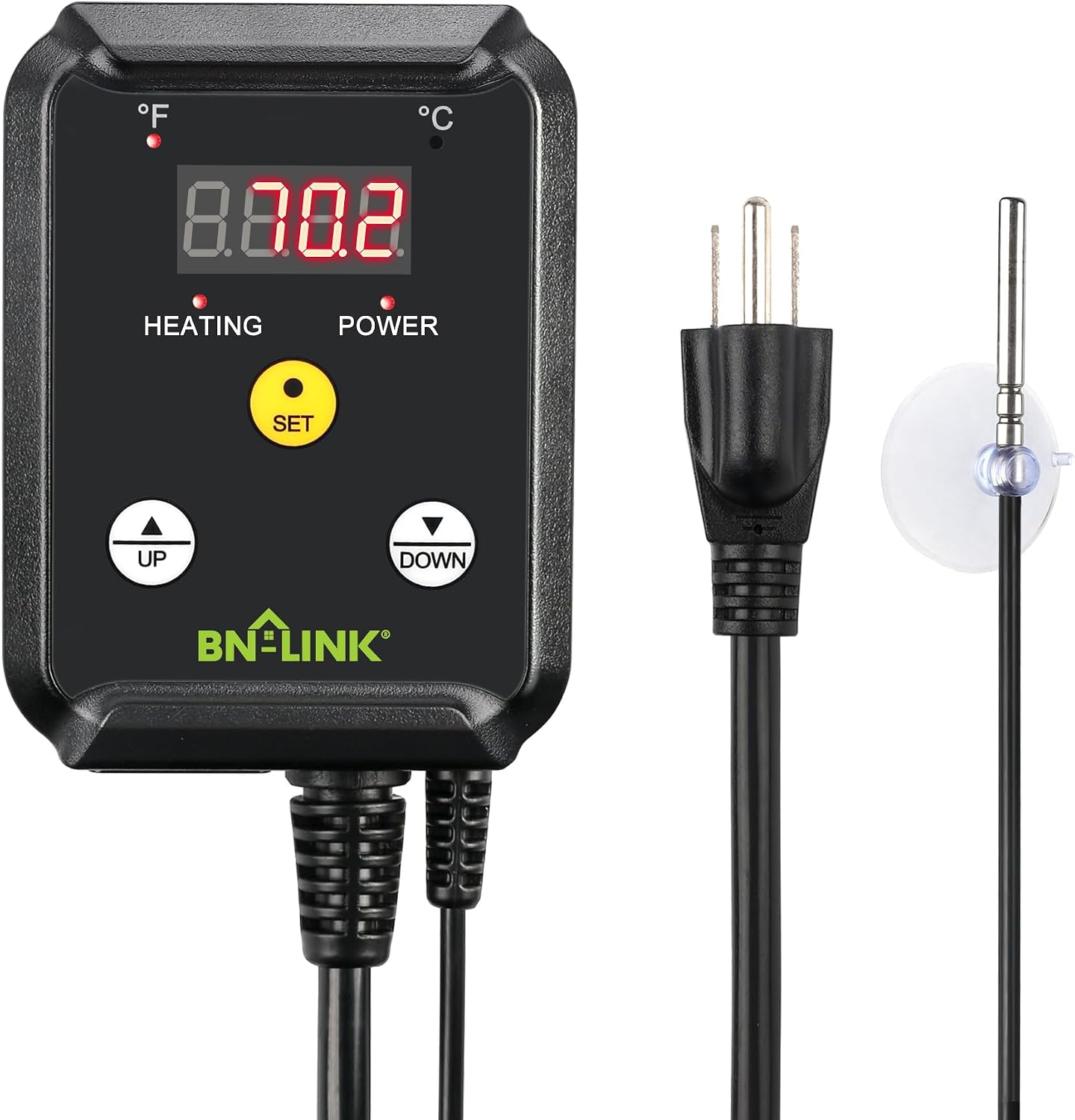
Rather than a ranked list of products, it helps to look at one concrete option and measure every other unit against it. The unit linked below is a purpose-built reptile incubator in the entry-to-mid range, and its published specifications are typical of that class: a digital thermostat, a compact footprint, and a clear viewing lid. It is included here as a reference point, not as a tested recommendation, and readers should confirm current specifications on the listing before buying.
When evaluating any incubator, including this one, check the stated temperature accuracy, whether it can cool as well as heat, whether humidity is active or passive, whether a hygrometer is included, the number of deli cups it holds, and whether the controller has a calibration function. A unit that is strong on all six is a professional unit; a unit that is strong on three is a hobby unit; and a unit that is weak on temperature accuracy is a unit to avoid for TSD species regardless of price.
check the current price on Amazon
Reptile Egg Incubation: Critical Best Practices
Essential reptile egg incubation tips and techniques
- Never rotate eggs after 24 hours: Reptile embryos attach to the inner shell membrane within 24-48 hours of laying. Rotating the egg after attachment detaches the embryo, which then drowns in the egg fluid. When you collect eggs from the lay box, mark the top of each egg with a soft pencil (never a pen or marker, since the solvents can penetrate the permeable shell). Place the egg in the incubation container with the pencil mark facing up. The embryo develops against the top of the egg, so keeping the mark facing up ensures the embryo stays properly positioned.
- Use the deli cup and perlite method: Do not place eggs directly in the incubator. Place them in a sealed deli cup or food-grade container with moistened incubation substrate (perlite or vermiculite, not soil, which harbors fungi and bacteria). The substrate-to-water ratio by weight should be approximately 1:0.8 for perlite or 1:1 for vermiculite; the substrate should clump when squeezed but not drip water. Press eggs halfway into the substrate, not buried. Poke two or three pinholes in the lid for minimal gas exchange. The sealed container maintains the humidity microclimate; the incubator maintains the temperature macroclimate.
- Verify incubator stability for 48 hours before adding eggs: Set up the incubator, fill the deli cup with substrate (no eggs), place it inside, close the door, and monitor temperature and humidity for 48 hours with a separate digital thermometer and hygrometer placed inside the deli cup, with the probe through a pinhole. The incubator display might read 84 F while the temperature inside the deli cup is 82 F due to evaporative cooling from the moist substrate. Adjust based on the deli cup temperature, not the incubator display.
- Candle eggs weekly, not daily: Candle eggs by shining a bright LED flashlight against the shell to check for veins and embryo development, once per week. Fertile eggs will show a network of blood vessels by day 7-14, depending on species. Infertile eggs remain uniformly yellow or white with no veins; mark them so you do not confuse them, but leave them in place, since some develop late. Remove only eggs that are obviously dead (collapsed, moldy, foul-smelling, or leaking fluid). Opening the incubator briefly to candle is acceptable; minimize the time and close it gently.
- Prepare for hatch day: A few days before the expected hatch date, the eggs may begin to sweat, with condensation beads on the egg surface, a sign the hatchling is absorbing the remaining yolk and the egg shell is thinning. Do not assist hatchlings out of the egg. Reptiles have a yolk sac attached to their abdomen that must be absorbed before they leave the egg. Pulling a hatchling out prematurely tears the yolk sac and can kill the animal. Hatchlings may take 24-48 hours to fully emerge after pipping. Set up hatchling enclosures before hatch day; each hatchling needs its own small enclosure with heat, hide, and water dish.
Common Mistakes and What to Avoid
The most frequent mistake is trusting the incubator's built-in display as the true egg temperature. Built-in sensors drift, and the temperature inside a sealed deli cup can differ from the incubator air by several degrees because of evaporative cooling from moist substrate. Always verify with an independent probe placed where the eggs actually sit.
A second common mistake is over-wetting the substrate. Substrate that drips water when squeezed can drown embryos and encourage mold. If condensation is dripping onto the eggs from the lid, the substrate is too wet; crack the lid slightly for 24 hours to vent excess moisture. Conversely, substrate that is crumbly and dusty will let eggs collapse, and reptile eggs cannot rehydrate once collapsed.
A third mistake is opening the incubator too often. Every opening causes a temperature and humidity fluctuation, and repeated fluctuations are more damaging than a steady temperature that is slightly off target. Inspect through a clear lid or door when possible, and candle no more than once per week.
A fourth mistake is buying a unit with an analog wafer thermostat and no digital upgrade. Wafer thermostats drift by several degrees and cycle unpredictably at reptile temperatures, which are well below the poultry temperatures they were designed for. A 25-dollar digital thermostat upgrade is the difference between a usable and an unusable unit.
A fifth mistake is choosing capacity for today's single clutch. If you plan to breed more than one pair, a unit that holds 3-8 deli cups will be outgrown within a season. Buying a mid-size unit once is usually cheaper than buying a small unit and then a larger one.
A sixth mistake is ignoring cooling. In a warm room, a heating-only incubator cannot bring the temperature down, and a summer heat wave can push a clutch past its safe range. If your room temperature can exceed your target incubation temperature, you need a unit that can cool, or you need to move the incubator to a cooler room.
Finally, avoid soil, compost, and untreated outdoor substrate as incubation media. These harbor fungi, bacteria, and invertebrates that can destroy a clutch. Perlite and vermiculite are inert, hold moisture predictably, and are the standard media in published breeding guidance.
Safety and Species-Specific Notes
Reptile eggs and hatchlings are sensitive to more than temperature and humidity. The Association of Reptilian and Amphibian Veterinarians maintains resources on husbandry and preventive care that are useful for breeders, including guidance on quarantine and hygiene (ARAV resources). The Merck Veterinary Manual covers exotic and laboratory animal medicine, including reproduction and developmental problems in reptiles (Merck Veterinary Manual).
Hygiene matters because incubators are warm, humid, and dark, which is also ideal for microbial growth. Wash hands before handling eggs, sanitize containers between clutches, and discard any egg that develops mold or a foul odor. Do not reuse substrate between clutches.
Species-specific requirements vary widely. Crested geckos and gargoyle geckos are unusual in tolerating room-temperature incubation in the high 60s to high 70s F, but even they benefit from a stable environment. Ball pythons need near-saturated humidity and tolerate relatively high temperatures. Bearded dragons need slightly drier conditions and can undergo diapause. Leopard geckos are the classic TSD species, where the incubation temperature determines sex. Turtles and tortoises have their own temperature windows, and many species have long incubation periods that require the incubator to run reliably for months.
If a hatchling emerges with an unabsorbed yolk sac, do not pull it off. Keep the hatchling on a clean, moist paper towel in a small container and consult a reptile veterinarian. The ASPCA Animal Poison Control Center is a useful reference if you suspect exposure to a toxin in the enclosure or incubation area (ASPCA Animal Poison Control).
Maintenance and Long-Term Reliability
An incubator that runs for two to six months continuously needs periodic attention. Clean the water reservoir and any humidification pump regularly, since mineral deposits from hard water clog nozzles and reduce humidity output. Replace thermometer and hygrometer batteries annually, because a low battery can cause inaccurate readings that go unnoticed until a clutch fails. Check door seals and hinges for wear, and inspect the power cord and controller connections for damage.
Keep a log of temperature and humidity readings, ideally twice daily, along with the date eggs were laid and the expected hatch window. A log makes it obvious when a controller is drifting or a fan is failing, and it gives you a record to compare against published incubation data for the species. Some keepers also run a second, inexpensive thermometer as an independent alarm.
Plan for power interruptions. A well-insulated incubator will hold temperature for a period during an outage, but a battery backup or a small uninterruptible power supply can carry the controller and fan through short outages. If you breed species with long incubation periods, such as veiled chameleons, the cost of backup power is small compared with the cost of losing a clutch that has been incubating for five months.
FAQ
Can I incubate reptile eggs without an incubator?
Some species (crested geckos, gargoyle geckos, certain colubrid snakes) can be incubated at room temperature if your room consistently stays within the species' incubation range, typically 70-78 F for New Caledonian geckos. However, room temperature fluctuates with air conditioning, cold nights, and sunny windows, and those fluctuations stress developing embryos. A dedicated incubator provides consistency. For any species with TSD or tight temperature requirements (leopard geckos, ball pythons, bearded dragons), an incubator is effectively mandatory, since a 5 F temperature swing during incubation can shift sex ratios, cause developmental abnormalities, or kill the embryos.
What is the most common reason eggs fail to hatch?
Humidity management errors, far more than temperature. Too-wet substrate (dripping water) drowns the embryo or causes fungal growth on the shell. Too-dry substrate (crumbly, dusty vermiculite) causes the egg to collapse as it loses water, and reptile eggs cannot rehydrate once collapsed. The 1:0.8 perlite or 1:1 vermiculite water-to-substrate-by-weight ratio is the starting point; adjust based on your local ambient humidity. If eggs are collapsing or denting, increase humidity by adding a few drops of water to the substrate, not directly on the eggs. If condensation is dripping onto the eggs from the lid, the substrate is too wet; crack the lid slightly for 24 hours to vent excess moisture.
How do I know if my incubator's temperature display is accurate?
Never trust the incubator's built-in display alone. Place a calibrated digital thermometer probe inside a deli cup with substrate, matching your actual egg setup, and compare readings over 24 hours. The incubator display reading and the true deli cup temperature can differ by 2-5 F. Adjust your incubator set point based on the deli cup probe, not the incubator display. Replace the probe battery annually, since a low battery causes inaccurate readings that you might not notice until eggs fail.
What temperature should I use for leopard geckos to get all females?
Leopard gecko TSD: incubate at 79-82 F for predominantly female hatchlings, 86-89 F for a mixed ratio, and 90-93 F for predominantly males. However, hot females incubated at the extreme upper female range display male-typical aggressive behavior and are often infertile, so 80-81 F is the sweet spot for healthy, fertile females. For males, 90-91 F produces healthy males; 93 F and above increases the risk of hot females rather than more males. Temperature stability matters more than the exact number; a steady 81 F produces better results than fluctuating 80-83 F.
Conclusion
Best reptile egg incubators for successful hatches
For first-time breeders with one or two clutches, a compact purpose-built digital incubator in the 65-85 dollar range is the most accessible entry point, with digital control, a small footprint, and a clear lid that makes egg monitoring simple. It will not handle large-scale breeding, but for a pair of leopard geckos or bearded dragons producing their first clutch, it is enough.
For active hobbyist breeders producing multiple clutches per season, a mid-range unit in the 120-180 dollar range adds active humidification, a dual temperature and humidity display, and three times the capacity of a compact unit. A circulated-air repurposed poultry incubator in the 100-120 dollar range offers better temperature stability and larger capacity for keepers willing to remove the egg turner and install a flat platform. A unit with a digital thermostat rated at plus or minus 0.5 F and a circulation fan is the unofficial standard of the serious hobbyist breeding community, and it outperforms dedicated reptile incubators costing twice as much once modified.
For commercial breeders and anyone who needs active cooling, a purpose-built unit with a Peltier thermoelectric module, active humidification, and capacity for 60-100 deli cups is the professional solution. When a breeding operation produces dozens of hatchlings per season that sell for 50-200 dollars each, the cost is amortized across a single clutch. For advanced DIY breeders, a thermoelectric mini-fridge conversion with an external proportional controller delivers heating and cooling with large capacity at roughly half the cost, but requires the skills and confidence to build, wire, and calibrate the system.
Reptile egg incubation rewards patience, precision, and preparation. The incubator is your foundation. Choose one that matches your scale, verify its stability before adding eggs, monitor with independent instruments, and resist the urge to open the door just to check. Every degree and every gram of humidity matters. Get them right, and you will be rewarded with the sight of a miniature gecko, snake, or dragon pushing through its shell and taking its first breath.
Affiliate Disclosure: PawCritic.com participates in the Amazon Services LLC Associates Program. We may earn commissions from qualifying purchases at no extra cost to you.
Where to Buy: A Concrete Option to Compare
As an Amazon Associate, PawCritic earns from qualifying purchases. This does not affect our reviews or recommendations.
If you want a single reference point while you compare specifications, the unit below is a purpose-built reptile incubator in the entry-to-mid range. Confirm current specifications on the listing before buying, since manufacturer specifications can change.
The same unit is linked again below so you can compare it against the other categories below without scrolling back.