Reptile Escape-Proof Cage Locks and Safety Latches: A Practical Buying Guide (2026)
Published on July 5, 2026 by PawCritic — Reptiles Category
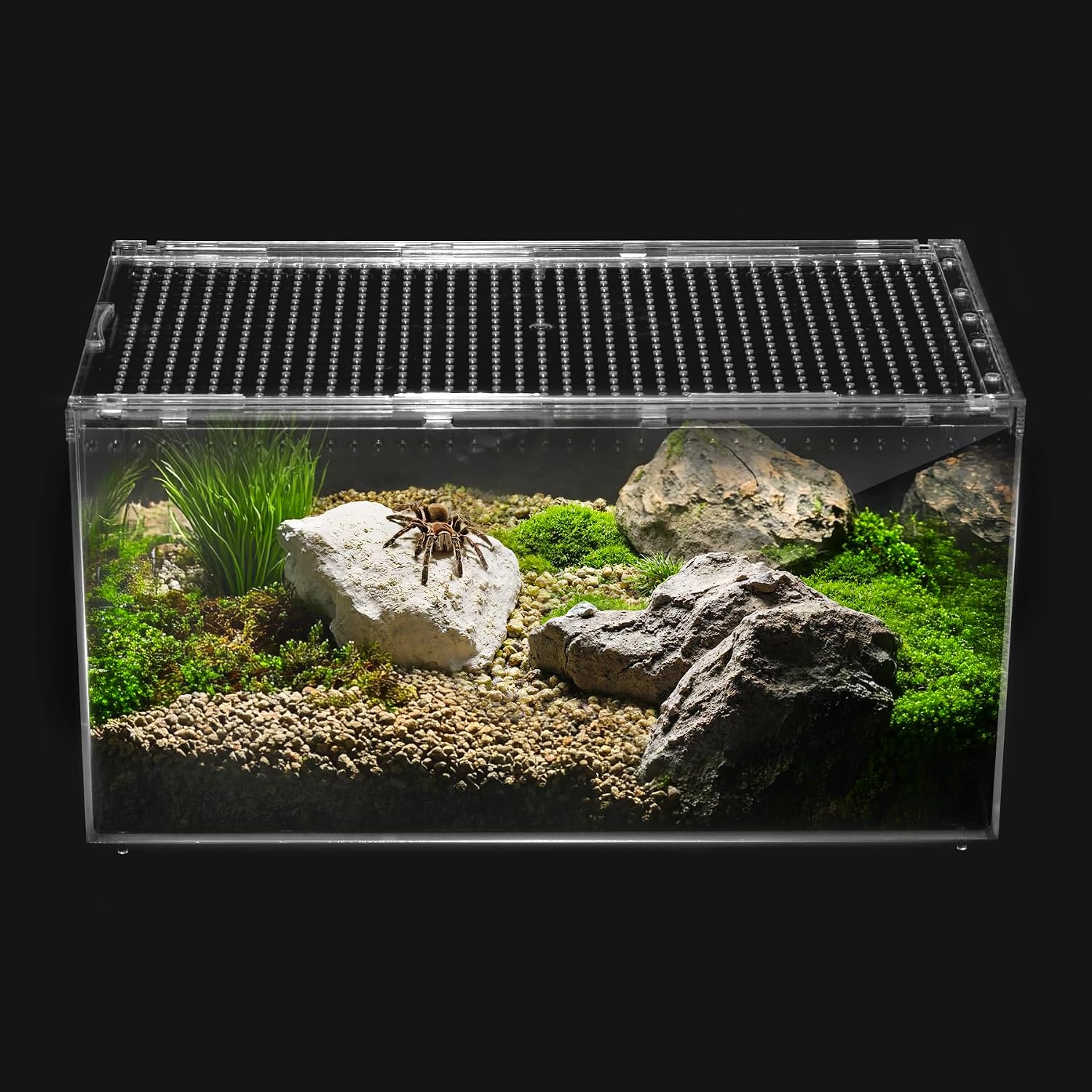
Nearly every experienced reptile keeper has an escape story. The ball python that found a quarter-inch gap in a sliding door track. The crested gecko that learned to push open a loosely latched screen door. The bearded dragon that lifted an unsecured lid. Reptiles are natural escape artists, and their patience and ability to exploit small weaknesses in an enclosure make cage security one of the most consequential — and most frequently overlooked — parts of responsible husbandry. This guide explains what actually matters when choosing a lock or latch, what published husbandry guidance says about containment, and what to look at in a concrete product example you can compare against other options.
An escaped reptile faces serious hazards. A typical home is not held at the temperatures a tropical species needs, so hypothermia can set in within hours for heat-dependent animals. Household pets may injure a loose lizard or snake, and furniture, appliances, doors, and ductwork all present crush and entrapment risks. Dehydration is a particular concern for species from humid environments. Beyond the welfare risk, an escaped snake can create serious friction with landlords, roommates, or neighbors. Veterinary resources on reptile husbandry, including the Merck Veterinary Manual's exotic animals section, consistently emphasize secure, appropriately sized enclosure design as a foundation of preventive care rather than an optional extra.
Why Stock Latches Are Often Not Enough
Most glass terrariums ship with simple twist latches or magnetic catches, and most PVC cages ship with a basic cam or hasp. These mechanisms are designed for convenience during feeding and cleaning, not for resisting a determined animal. The problem is not just raw strength: many reptiles, particularly snakes, engage in what keepers describe as exploratory pushing, applying steady pressure to every part of the enclosure perimeter over weeks or months. Verified owner reports across reptile-keeping communities repeatedly describe corn snakes, king snakes, boas, and ball pythons defeating stock latches, especially worn twist latches on front-opening glass doors. A latch that felt secure in the first month can loosen as the strike notch wears, and a single successful push at the right angle is all it takes.
The realistic goal of an aftermarket lock is deterrence matched to your animal. A small gecko or an anole needs little more than a snug catch, because these animals cannot generate meaningful force against a door. A large boid or an adult colubrid can push with surprising force concentrated on a small area, and for those animals a keyed or combination lock that physically prevents the door from translating is the sensible standard. Match the security level to the species rather than buying the strongest option available for every cage, which adds cost and daily friction without benefit.
The Main Lock Types and Their Trade-Offs
Thumbscrew and Clamp Locks for Sliding Glass Doors
These are the simplest upgrades for standard sliding-glass front doors. A bracket clamps into the door track and a thumbscrew tightens to block the door from sliding past. No tools, drilling, or permanent modification are involved, and operation takes a few seconds. The trade-off is security level: a clamp deters casual escapes but can be defeated by a persistent, strong animal, and the thumbscrew can work loose with vibration or repeated use. Owners of strong snakes commonly report using two clamps per door, spaced apart, which doubles the failure points an animal must overcome. If your track width is unusual, measure before buying, because clamp compatibility varies.
Keyed Latches
Keyed latch kits mount to the aluminum frame of sliding glass doors with screws and use a quarter-turn key to drive a bolt into a strike plate. They provide genuine mechanical security rather than deterrence, which matters for large snakes, households with curious children, and rental situations where an escape would be catastrophic. The cost is installation: you must drill pilot holes into the enclosure frame, which is permanent and intimidating for keepers with expensive tanks. Keys also need to be managed; buy a kit with at least two keys and store a spare somewhere deliberate. Brass lock bodies with steel strike plates are the common construction, and that material pairing is worth looking for because a soft strike plate is the weakest link even when the lock itself is sturdy.
Combination Locks
Three-digit combination locks eliminate key management entirely and suit multi-user households where several people open the cage for feeding or maintenance. A thousand possible combinations is adequate for keeping out children and preventing accidental opening, but it is not high security against a determined human, so treat these as escape prevention rather than theft prevention. Look for zinc-alloy or brass construction with a corrosion-resistant coating, since the lock sits near a humid environment even when mounted outside the cage. One known weakness reported by owners: fine dust and substrate particles can eventually bind dial mechanisms, so occasional cleaning and a drop of appropriate lubricant extends service life.
Cam Locks for PVC and Melamine Enclosures
Cam locks are the industry standard for PVC and melamine-faced cages. A keyed cylinder rotates a cam behind the door frame, and the rotating cam cannot be manipulated from outside the enclosure. Many PVC cage manufacturers pre-drill for standard cam locks, making retrofit a five-minute screwdriver job; for cages without pre-drilled holes, installation requires boring a three-quarter-inch hole through the panel. Adjustable cam depth matters if your panel thickness is non-standard. Cam locks are affordable and reliable, but they are not pick-resistant — they are designed to contain animals, not to resist a person with lock picks.
Magnetic Catches and Adhesive Latches
For hinged front doors and screen cages, aftermarket neodymium magnetic catches and adhesive twist-latches fill the gap left by weak factory magnets. Quality kits use 3M VHB adhesive, which holds well on clean glass and survives humid environments, but is essentially permanent: repositioning requires heat and solvent. Adhesive latches, often adapted from child-proof cabinet hardware, are sold inexpensively in multi-packs and suit keepers with many small enclosures. Their limits are real: plastic construction and small footprint mean they can be overwhelmed by heavy-bodied snakes, and adhesion fails on textured or dusty surfaces. Cleaning the mounting surface with isopropyl alcohol before application is the single most important step for any adhesive-mounted part.
Pin Locks for Rack Systems
Rack systems and certain cage lines use spring-loaded pin locks that engage automatically every time a tub or door slides closed. This automatic engagement is a meaningful safety feature: the lock cannot be forgotten after a late-night feeding. There is no key and no battery, just a steel pin that must be manually retracted by a tab. The trade-off is compatibility — these are designed for specific cage geometries and are not a general-purpose solution for glass terrariums.
What to Look For, Spec by Spec
Materials. Brass cylinders and steel strike plates resist wear and corrosion; zinc-alloy is acceptable for moderate use; plain steel without plating will rust in humid rooms. Plastic has a place only for small, light animals.
Engagement depth. For sliding door locks, how far the bolt or pawl extends into the strike determines how much force the lock can transfer into the frame. Deeper engagement with a reinforced strike plate is the difference between a lock that holds and one that tears out under sustained pressure.
Mounting method. Screw-mount hardware is stronger but permanent and requires drilling, which voids some enclosure warranties. Adhesive mounting preserves the enclosure but depends entirely on surface preparation and cannot be repositioned.
Number of keys and reset capability. Two keys minimum for keyed locks; a resettable code for combination models, with the reset tool stored somewhere you will remember.
One-handed operation. You will routinely open the cage while holding tongs, a food bowl, or a spray bottle. If a lock is awkward to operate, you will eventually skip it, and an unused lock provides no security at all.
A Concrete Example Worth Comparing Against
As a reference point, one widely available keyed lock kit sold on Amazon — the type designed for aluminum-framed sliding glass doors, with a brass pin-tumbler body, hardened steel strike plate insert, two keys, and an alignment template for drilling the two pilot holes — is a good illustration of the keyed category done properly. Manufacturer specifications for this class of kit typically call out a quarter-turn bolt engagement and roughly ten minutes of installation with a power drill and an eighth-inch bit. Verified buyer reviews for such kits commonly come from ball python and boa keepers describing doors that no longer budge under sustained pushing, along with the expected complaints: the drilling step is nerve-wracking on an expensive tank, and the keys must not be lost. If that profile matches your needs, you can check the current price on Amazon. This is one example of the category, not a blanket endorsement — compare it against any keyed kit that lists the same engagement and strike-plate features.
Two accessories in the same ecosystem are worth mentioning. Spare keys for keyed reptile lock kits are sold separately, and owners who have lost a key mid-feeding-schedule describe them as cheap insurance; you can view this option on Amazon. And keepers upgrading older or secondhand enclosures sometimes replace the sliding door track itself, since a worn track with widened gaps is a common root cause of both escape risk and poor door alignment; a replacement track is available here on Amazon if you go that route. Together, a keyed lock plus spare keys — view the lock kit on Amazon to check current pricing and compatibility notes — represents the core security upgrade most glass-terrarium keepers settle on.
Species-Specific Considerations
Snakes are the primary reason aftermarket locks exist. Colubrids such as corn snakes and king snakes are persistent perimeter-pushers with slender bodies that exploit tiny gaps; larger constrictors add raw force. For any snake over roughly three feet, published keeper guidance and veterinary resources alike point toward keyed or combination locking rather than friction latches. The Association of Reptilian and Amphibian Veterinarians' keeper resources are a good place to verify husbandry expectations for your specific species, including enclosure security norms.
Geckos and small lizards pose a different problem: not force, but gap exploitation. A crested gecko can squeeze through openings that look sealed, so for these animals the priority shifts from locks to gasket condition, door alignment, and cable pass-through sealing. Monitor lizards and tegus are in a class of their own — intelligent, strong, and reported by owners to defeat latches, unzip gaps, and manipulate unprotected hinges. For these species, keyed locks on every access point plus hasps on hinged lids are the baseline expectation among experienced keepers.
Installation and Maintenance Essentials
A poorly installed lock is arguably worse than no lock, because it creates false confidence. For screw-mounted locks, use the manufacturer's template, drill straight, and verify the bolt seats fully in the strike before relying on it. For adhesive mounts, clean with isopropyl alcohol, let the adhesive cure for a full 24 hours before loading it, and never bond to a dusty or textured surface. Then maintain what you installed: check thumbscrews for tightness monthly, wipe substrate dust out of combination dials, and inspect adhesive edges for lifting, especially in rooms held above 60 percent humidity. Test every lock after any enclosure move, because frames flex and strike plates shift during transport.
Common Escape Points Beyond the Door
- Sliding door tracks: the classic escape route. Check for gaps wider than your animal's thickest body section, and replace worn tracks rather than trusting a lock to compensate.
- Screen tops: heat lamps resting on screen create sag and gaps. Use fixture stands and fine mesh.
- Cable pass-throughs: seal gaps around probe and heater wires with silicone or foam.
- Hinged door corners: the bottom corners of hinged doors are the usual weak spot on glass terrariums.
- Ventilation slots: some PVC enclosures have slot vents small hatchlings can squeeze through.
- Feeding doors: small secondary doors need their own latch; owners report these being pushed open from inside.
Common Mistakes to Avoid
The most frequent mistake is relying on a heavy object on the lid. Weights shift, fall, and block ventilation, and a determined animal can often move them anyway. The second is the 'just this once' habit: leaving a lock disengaged during a busy week, which is precisely when escapes happen. The third is buying one lock where the geometry demands two — a single clamp in the middle of a wide sliding door leaves both ends free to flex. The fourth is ignoring redundancy: many experienced keepers pair a keyed primary lock with a secondary clamp or magnetic catch, so a single failure does not become an escape. Finally, do not forget child safety: keyed locks also protect toddlers from opening an enclosure and being bitten or exposed to loose animals, a concern echoed in general pet-safety guidance from sources such as the ASPCA Animal Poison Control regarding household hazards around pets.
Frequently Asked Questions
My reptile has never tried to escape. Do I still need a lock?
Yes. Escapes are often triggered by seasonal breeding behavior, husbandry stress, or simple curiosity, and none of these announce themselves in advance. Prevention is far easier than recovery.
Can I use a heavy object instead of a lock?
It is not recommended. Objects shift and fall, obstruct ventilation, and slow emergency access. A purpose-built lock is safer and more convenient.
How do I search for an escaped reptile?
Check warm, dark, enclosed spaces: behind refrigerators and water heaters, inside cabinets, along baseboards. Place a heat source with a hide on the floor and monitor overnight. Flour sprinkled along doorways can reveal tracks.
Are adhesive locks dangerous if ingested?
Locking hardware mounts on the outside of the enclosure and should not be reachable from inside. If you are concerned, use mechanical fasteners for any interior component.
The Bottom Line
Cage security is one of the cheapest forms of insurance in reptile keeping. Match the lock type to your enclosure material, choose a security level appropriate to your animal's strength and persistence, install it carefully, maintain it occasionally, and use it every single time. For glass terrariums housing snakes, a keyed sliding-door lock kit with a reinforced strike plate — such as the example linked above — is the configuration most often recommended by manufacturers and reported as effective by owners. For PVC cages, a cam lock is the standard; for racks, a spring pin; for small lizards and geckos, good catches and gap sealing matter more than any lock.
Affiliate Disclosure: PawCritic is a participant in the Amazon Services LLC Associates Program, an affiliate advertising program designed to provide a means for us to earn advertising fees by linking to Amazon.com and affiliated sites. Purchases made through our links help support our research-based guides at no extra cost to you. Thank you for your support.
Last updated: July 5, 2026. Prices and availability are subject to change. Always verify current pricing on Amazon before purchasing.