Small Pet Carriers and Travel Cages: A Research-Based Buying Guide
Small mammals such as hamsters, guinea pigs, rabbits, ferrets, rats, and chinchillas are prey animals. Handling, confinement in tight spaces, and exposure to unfamiliar noises and vibrations can trigger a strong stress response. The carrier is the single piece of equipment that determines how much of that stress an animal experiences during a vet visit, a move, or an emergency evacuation, and in some cases it determines whether the animal arrives safely at all.
The stakes are concrete. A carrier with poor cross-ventilation can allow heat to build up inside a warm vehicle within roughly 15 to 20 minutes. A carrier with a smooth plastic floor gives guinea pigs and rabbits nothing to brace against, so a turn or a sudden brake can cause a slip and a limb injury. A carrier with a weak latch, a failing zipper, or a seam that a determined rodent can chew through can fail entirely in transit, and a loose rabbit inside a moving car is a genuine hazard to both the animal and the driver.
Species needs diverge sharply. Hamsters require chew-resistant construction with gaps no wider than about a quarter inch. Guinea pigs need more floor area than their body size suggests, plus a low entry so they are not lifted awkwardly. Rabbits need a carrier long enough to lie stretched out, ideally with top access so they can be lifted from above rather than dragged out through a door. Ferrets need hardware that resists escape attempts and fabric that can be washed repeatedly. This guide explains what to look for, how the major carrier types compare, and where the common failure points are.
General small-mammal husbandry and transport guidance is published by the Association of Exotic Mammal Veterinarians, and species-specific medical and housing information appears in the Merck Veterinary Manual section on exotic and laboratory animals. Owners transporting pets should also be aware of household hazards covered by the ASPCA Animal Poison Control Center and general care guidance in the ASPCA pet care library.
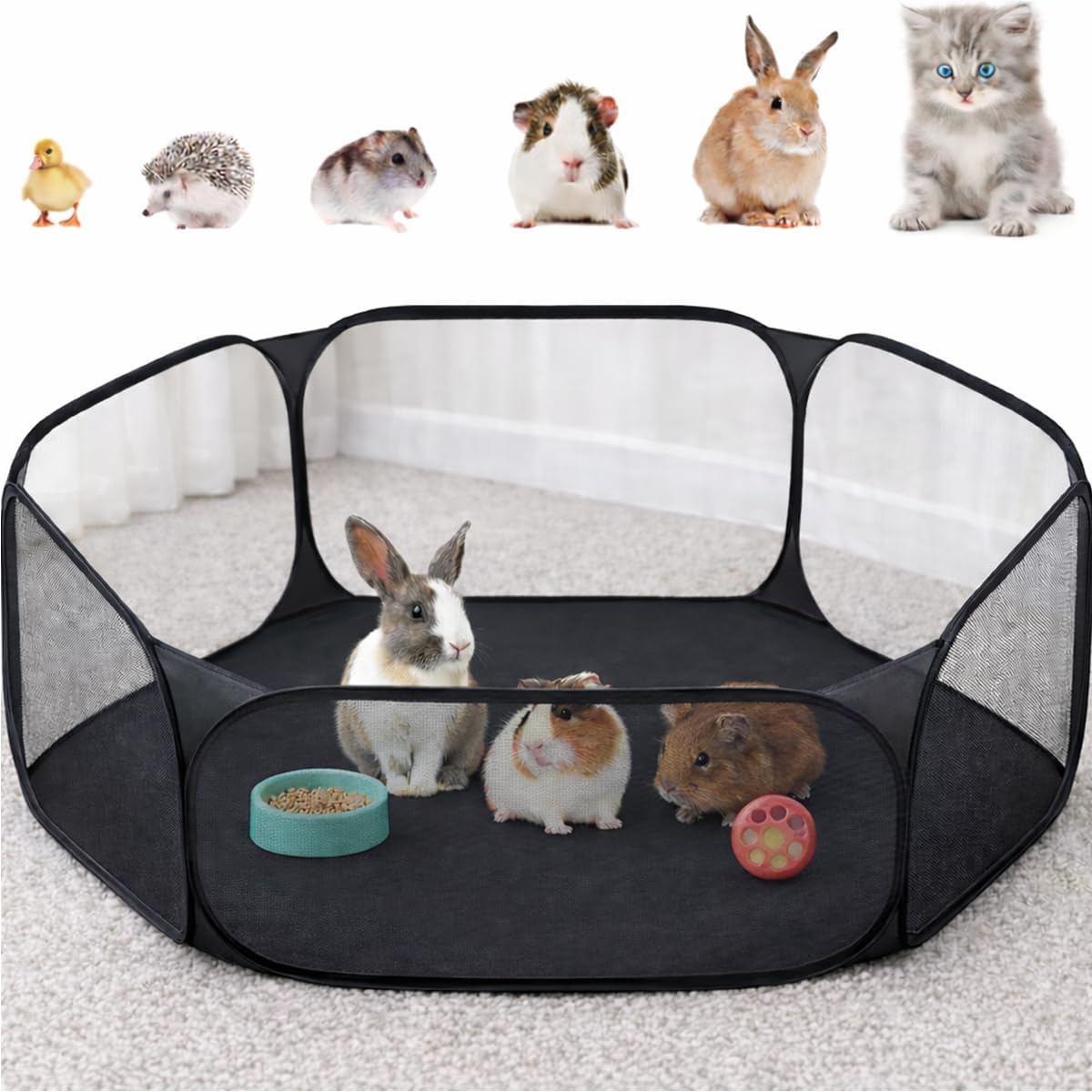
small pet carriers travel cages safe transport hamsters guinea pigs rabbits
What Actually Matters in a Small Pet Carrier
Ventilation
Ventilation is the first specification to check and the one most often overstated by sellers. A carrier should have airflow openings on at least two sides, and preferably three or four, so that air moves through the interior rather than stagnating. Mesh panels on soft carriers provide good airflow but also reduce structural rigidity. Hard-sided carriers typically use molded grille slots, which are more durable but can be blocked if the carrier is pressed against a seat or a wall. The practical test is straightforward: place the carrier where it will actually ride in the vehicle and confirm that no more than one side is obstructed. Never place a carrier in a trunk, and never cover all ventilation openings with a blanket, even in cold weather.
Species differ in how much ventilation they tolerate. Ferrets and rats are relatively tolerant of enclosed spaces, while rabbits and guinea pigs are prone to overheating and benefit from generous airflow. According to published small-mammal guidance, the safe ambient range for most small mammals is roughly 60 to 80 degrees Fahrenheit, or 15 to 27 degrees Celsius, and carriers should never sit in direct sunlight even briefly.
Floor Surface and Footing
A non-slip floor is not a comfort feature; it is an injury-prevention feature. Guinea pigs and rabbits have relatively little padding on their feet and no ability to grip smooth plastic. A textured floor, a removable fleece mat, or a shallow layer of familiar bedding gives them traction during turns and stops. The trade-off is cleaning: textured floors trap debris, and fleece mats must be washed between trips. A thin layer of paper bedding over a textured floor is a reasonable compromise for rabbits and guinea pigs, while hamsters generally do better with a small amount of bedding and a solid, chew-resistant floor.
Chew Resistance and Escape-Proofing
Rodents chew. This is not a behavioral flaw; it is how their incisors are maintained. Any carrier used for hamsters, gerbils, rats, or mice must be made from a material the animal cannot grip with its teeth. Smooth polycarbonate and molded polypropylene are effectively chew-proof. Oxford fabric, mesh, and zippers are not. For ferrets, the risk is not chewing but manipulation: ferrets are strong, flexible, and persistent, and a zipper that a human finds fiddly is often a zipper a ferret can work open. Look for locking zippers, metal hardware, or a hard-sided shell with a positive latch.
Size and Entry Configuration
Carrier sizing is a common source of error. The animal should be able to stand up, turn around, and lie stretched out without touching all four walls. For rabbits, this usually means a carrier at least 18 to 20 inches long, and for bonded guinea pig pairs, at least 22 by 16 inches of floor area. Top-loading access matters more than most buyers expect: lifting a rabbit or guinea pig out through a side door encourages it to brace and scramble, while a top opening allows a handler to support the animal from above and lift it out cleanly. Side-entry-only carriers are acceptable for short trips with calm animals but are harder to use in an emergency.
Restraint in the Vehicle
A carrier that is not secured becomes a projectile in a sudden stop. Hard-sided carriers with a seatbelt pass-through slot are the most stable option. Soft carriers and wire cages can be secured with a seatbelt threaded through the handle or placed on the floor of the passenger footwell, which keeps them low and contained. Placing a carrier on a seat without restraint is the most common mistake owners make, and it is also one of the most dangerous.
Carrier Types Compared
| Type | Material | Chew Resistance | Ventilation | Best Suited To |
|---|---|---|---|---|
| Hard-sided kennel | Molded polypropylene | High | Good, four-sided grilles | Rabbits, guinea pigs, ferrets, car and air travel |
| Wire cage with solid base | Metal wire plus ABS plastic | High | Excellent, 360 degrees | Chewing species, multi-pet households |
| Soft-sided carrier | Oxford fabric plus mesh | Low | Good, mesh panels | Calm rabbits, guinea pigs, short vet trips |
| Tube carrier | Polycarbonate | High | Moderate, end caps only | Hamsters, gerbils, mice |
| Backpack carrier | Fabric plus mesh | Low | Good, three-sided mesh | Hands-free transit for calm animals |
One Widely Used Option to Consider
Among the soft-sided carriers that appear frequently in owner discussions and in retail listings, the Marsheepy Small Animal Carrier is a representative example of the category. It uses a top-loading and side-entry zipper layout, mesh ventilation on three sides plus the top, a removable fleece mat, and an interior tether clip. Listed dimensions are around 17 inches long, which fits most guinea pigs and smaller rabbits but is tight for a large adult rabbit. The fleece mat is a genuine advantage for footing, and the tether clip helps prevent an animal from bolting when the carrier is opened.
The trade-off is durability with chewing species. Fabric and mesh are not appropriate for hamsters, gerbils, rats, or any animal with a history of chewing through soft materials, and the zippers on soft carriers can be worked loose by a determined ferret. For calm rabbits and guinea pigs making routine vet visits, this type of carrier is practical, easy to clean, and light enough to carry one-handed. Owners who need a carrier for a chewing species should look at hard-sided or wire options instead. Readers who want to examine the specifications and current pricing for this style can check the current price on Amazon.
Species-Specific Carrier Requirements
Hamsters, Gerbils, and Mice
Small rodents are the most likely group to chew through a carrier, and they are also the most likely to escape through a gap that looks insignificant. A carrier for these species should have openings no wider than about a quarter inch and should be made from smooth, hard plastic or wire with a solid base. Tube-style carriers work well because the enclosed shape matches the animal's burrowing instinct and reduces the panic response to open spaces. Bedding from the home cage should be transferred into the carrier so the scent is familiar. These species also chill quickly, so a small amount of bedding and a draft-free position in the vehicle matter more than they do for larger animals.
Guinea Pigs
Guinea pigs need more floor space than their size suggests, and bonded pairs should travel together whenever possible because separation is itself a stressor. A carrier with at least 22 by 16 inches of floor area suits two adults. The base should be deep enough to hold a thin layer of bedding, and the entry should be low so the animal is not lifted over a high lip. Guinea pigs are prone to heat stress and to foot injuries on smooth surfaces, so ventilation and a non-slip floor are both essential. High-moisture vegetables such as cucumber or romaine can provide hydration on longer trips, but food should not be left to spoil in a warm carrier.
Rabbits
Rabbits are strong for their size and can injure themselves badly if they kick free during handling. A carrier should be long enough for the rabbit to lie fully stretched out, with top access for lifting. Hard-sided kennels with textured floors and four-sided ventilation are the most common recommendation for rabbit transport, and they are also the type most likely to be accepted for air travel. Soft-sided carriers are workable for calm rabbits on short trips but offer less protection in a collision. Because rabbits are prone to gastrointestinal stasis triggered by stress and reduced food intake, carriers should be lined with familiar bedding and the animal should have access to hay before and after travel.
Ferrets
Ferrets are escape artists. They are strong enough to force weak zippers, flexible enough to squeeze through gaps that appear too small, and persistent enough to keep working at a closure for a long time. A ferret carrier should have metal hardware, locking zippers, or a hard shell with a positive latch. Fabric should be machine-washable because ferrets have a strong natural odor and because carriers used for ferrets accumulate oils quickly. Ferrets also sleep deeply and travel relatively well when the carrier is dark and secure, so a light cover over part of the carrier is often helpful as long as ventilation is not blocked.
Rats and Chinchillas
Rats are intelligent, curious, and prone to chewing, so a hard-sided or wire carrier with a solid base is the safer choice. Chinchillas are sensitive to heat and to noise, and they benefit from a carrier that blocks some light and sound while maintaining airflow. Chinchillas also overheat easily, so a carrier with generous ventilation and a cool, shaded position in the vehicle is important, and trips should be scheduled for the cooler parts of the day in warm weather.
Travel Safety Checklist
- Ventilation check: Confirm that airflow reaches the carrier from at least two unobstructed sides once the carrier is in its travel position. Never place a carrier in a trunk or a fully enclosed cargo area.
- Temperature check: Most small mammals do best between roughly 60 and 80 degrees Fahrenheit. Pre-cool or pre-warm the vehicle before loading the animal, and never leave a carrier in direct sun.
- Restraint: Secure the carrier with a seatbelt, a seatbelt pass-through slot, or place it low in the passenger footwell. A loose carrier can become a projectile.
- Familiarization: Introduce the carrier at home one to two weeks before travel. Leave it open in or near the habitat with familiar bedding inside, and offer treats inside it regularly so the carrier is not associated only with vet visits.
- Identification: Attach a label with the animal's name, the owner's phone number, and any relevant medical notes. This matters most during moves and air travel.
- Trip length: Plan stops every 60 to 90 minutes on long drives to check on the animal, offer water, and confirm the carrier has not shifted.
Maintenance and Cleaning
Carriers should be cleaned after every trip, not just when they look soiled. Urine and droppings leave residue that holds odor and can harbor bacteria, and small mammals are sensitive to respiratory irritants. Hard-sided carriers can be washed with warm water and a mild dish soap, rinsed thoroughly, and air-dried completely before the base is reassembled. Soft carriers with removable mats should have the mat washed according to the manufacturer's instructions, and the fabric body wiped down and allowed to dry fully. Wire cages should be scrubbed at the base where bedding and waste collect. Avoid harsh disinfectants that leave strong fumes; if a disinfectant is used, rinse and dry the carrier completely before the animal is placed back inside.
Inspect hardware regularly. Zippers, latches, hinges, and wire joins are the parts most likely to fail, and a carrier that worked well a year ago may have a zipper that no longer closes fully or a latch that no longer seats. Any carrier involved in a collision or a fall should be retired rather than repaired unless the manufacturer explicitly supports replacement parts.
Common Mistakes
The most frequent error is buying a carrier that is too small. Owners often choose a carrier based on how compact it looks on a shelf, but the animal needs room to turn around and lie down. A second common mistake is using a fabric carrier for a chewing species; the carrier may survive the first trip and fail on the third. A third is failing to secure the carrier in the vehicle. A fourth is covering the carrier completely with a blanket in cold weather, which traps heat and blocks airflow; a partial cover that leaves ventilation open is safer. Finally, owners sometimes introduce the carrier only on the day of the vet visit, which guarantees that the carrier is associated with a stressful event. Gradual introduction at home makes a measurable difference in how calmly most small mammals travel.
Frequently Asked Questions
Can a cat carrier be used for a rabbit or guinea pig? Yes, provided it has top-loading access, a solid non-slip floor, and adequate ventilation. Many hard-sided cat carriers meet these requirements, and some are widely used for rabbits and guinea pigs. The main limitation is size: a carrier sized for a cat may be too short for a large rabbit to stretch out.
How should a small pet be kept comfortable on a long trip? Stop every 60 to 90 minutes to check on the animal, maintain a vehicle temperature between roughly 65 and 75 degrees Fahrenheit, and cover part of the carrier with a light blanket to reduce visual stress without blocking airflow. Offer water or a high-moisture vegetable at stops, and avoid feeding a large meal immediately before travel.
What carrier is most likely to be accepted for air travel? Hard-sided kennels that meet the airline's published dimensions are the most widely accepted, and the specific size limits vary by carrier. Soft-sided carriers may be accepted in-cabin on some airlines for small animals, but dimensions and policies differ, so the airline's current rules should be checked before booking.
My hamster chewed through a soft carrier. What should be used instead? A polycarbonate tube carrier or a wire carrier with a solid base. Smooth polycarbonate cannot be gripped by hamster teeth, and wire cages with a deep plastic base resist chewing while providing excellent ventilation. Fabric carriers should not be used for hamsters, gerbils, rats, or mice.
How often should a carrier be replaced? There is no fixed schedule, but any carrier with a failing zipper, a latch that does not seat positively, cracked plastic, or exposed wire ends should be replaced. Carriers involved in a collision should be retired.
Where to Buy
As an Amazon Associate, PawCritic earns from qualifying purchases.
Final Considerations
Carrier choice should follow species, not price. A rabbit or guinea pig does best in a hard-sided kennel with a textured floor and top access, sized so the animal can lie stretched out. A hamster or gerbil needs a chew-proof tube or wire carrier with narrow gaps. A ferret needs locking hardware and washable materials. A chinchilla needs generous ventilation and a cool, shaded position in the vehicle. The soft-sided carrier described above is a reasonable example of the category for calm, non-chewing animals on routine vet visits.
Whatever carrier is chosen, the same three rules apply across species: secure the carrier in the vehicle, keep ventilation open on at least two sides, and introduce the carrier at home well before it is needed. Owners with questions about a specific animal's transport tolerance, especially for animals with heart or respiratory conditions, should consult an exotics veterinarian. Species-specific care information is also available through the ASPCA pet care library.
small pet carriers travel cages safe transport hamsters guinea pigs rabbits
Affiliate Disclosure: PawCritic.com participates in the Amazon Services LLC Associates Program. As an Amazon Associate, PawCritic earns from qualifying purchases.