Why Hay Feeding Method Matters for Small Pet Health
Rabbits, guinea pigs, chinchillas, and degus are hindgut fermenters, meaning their digestive systems are built to process a continuous flow of high-fiber grass hay — timothy, orchard grass, meadow hay, or oat hay — across a full 24-hour feeding cycle. A wild rabbit spends an estimated six to eight hours per day grazing, moving from patch to patch and consuming small quantities continuously. Their teeth are open-rooted: incisors grow at roughly 2-4 mm per week and molars at 3-5 mm per month, and the grinding action of chewing fibrous hay wears teeth down at approximately the same rate they grow. Without constant hay consumption, dental disease — malocclusion, sharp spur formation on molars, and tooth-root abscesses — becomes very difficult to avoid in small herbivores. According to the Merck Veterinary Manual's exotic and laboratory animal section, dental and gastrointestinal problems are among the most common reasons pet rabbits and guinea pigs present to veterinarians, and both are strongly linked to insufficient fiber intake.
The practical problem most owners run into is simple: hay is messy. Loose hay scattered on the cage floor becomes soiled by urine and feces within hours. Soiled hay is unappetizing and effectively inedible, so pets refuse it, fiber intake drops, and the dental and digestive consequences follow. A hay feeder or hay rack addresses this by holding hay off the floor, keeping it clean and dry, presenting it in a way that encourages natural pulling-and-grazing behavior, and reducing waste from hay falling onto the substrate and being trampled.
A well-designed hay feeder does four things well. It keeps hay clean by preventing urine and fecal contamination. It reduces waste, since hay stays contained rather than being ground into bedding. It encourages natural foraging, because pulling hay through bars, slots, or mesh mimics the grazing motion that helps keep teeth worn evenly. And it positions hay at a comfortable height — small herbivores do best when the feeding opening sits at roughly shoulder height, letting them eat in a natural head-up posture instead of crouching, which matters particularly for guinea pigs and senior animals with joint stiffness.
Hay Feeder Types: What You Need to Know
- Cage-mounted hay racks: Metal or plastic bins that attach to the side of the enclosure, with barred or slotted faces the pet pulls hay through. Advantages: hay stays contained, refills are easy, and the footprint inside the cage is minimal. Disadvantages: hay fragments accumulate at the bottom and can mold if the rack is topped off rather than emptied between refills, and poorly finished designs can have sharp edges that injure mouths or paws.
- Hay bags: Fabric or mesh bags that hang inside the cage. Advantages: lightweight, portable, no sharp edges, machine washable, and they collapse flat for storage. Disadvantages: some animals shred the fabric, they are less sturdy than metal, and determined pets can pull them off the cage bars.
- Hay mangers and baskets: Freestanding or hanging open baskets. Advantages: the most natural presentation, since the pet can eat from any angle without navigating bars. Disadvantages: the highest waste rate of any type, since hay falls out freely, and active pets can tip a freestanding basket over.
- Litter box hay feeders: Combined units where the hay holder sits directly above or beside a corner litter pan, exploiting rabbits' natural tendency to graze while resting in one spot. Advantages: space-efficient and aligned with natural behavior. Disadvantages: hay can fall into the soiled litter, and full cleaning requires disassembling the feeder.
- DIY feeders: Homemade builds from modified litter boxes, hanging baskets, or pipe sections. Advantages: customizable and cheap. Disadvantages: potential sharp edges, inconsistent hay retention, and a shorter service life.
A Concrete Example: The Kaytee Hay and Pellet FeederCage-mounted wire hay feeder example
Cage-mounted wire hay feeder example
Because wire cage-mounted racks are the most common and broadly compatible category, it helps to look at one concrete, widely available example: the Kaytee Hay and Pellet Feeder. This is a powder-coated wire basket with a solid back panel and a barred front face the pet pulls hay through. Manufacturer specifications describe an open-top design that allows refilling from above without unmounting the unit, a solid back panel that prevents hay from falling behind the feeder against the cage wall, and simple hook mounting that fits standard wire cages without tools. The listed dimensions come in two sizes — a small version around 6 by 6 by 5 inches and a large version around 10 by 8 by 6 inches — which tells you most of what you need to know about fit before ordering. You can check the current price on Amazon to compare sizes and confirm stock.
Verified owner reports consistently describe this style of feeder as easy to fill, durable against chewing, and simple to clean, with the main complaints centering on small fragments accumulating at the bottom of the basket and on mounting hooks that may not reach over unusually tall cage pan edges. That pattern of feedback is genuinely useful: it tells you the design trade-off you are accepting. Wire racks in this category — whatever the brand — exchange some floor waste for durability and easy cleaning, and they suit rabbits and guinea pigs in conventional wire cages very well. If your setup uses a glass tank, a bin cage, or C&C grids, you will want to view this option on Amazon and check the mounting hardware details against your enclosure before buying.
How to Evaluate Any Hay Feeder: Materials and Construction
Material choice determines longevity, safety, and how the feeder behaves in a humid cage environment. Powder-coated steel is the standard for good reason: it resists rust in cages where water bottles drip and hay holds moisture, and the coating prevents bare metal exposure if the animal chews the bars. Look for welded rather than spot-welded joints, since spot welds can separate under pressure from a rabbit that pushes against the rack while pulling hay. Untreated galvanized wire is cheaper but can corrode over years of exposure to urine and moisture, and plastic feeders, while inexpensive, are vulnerable to destruction by chewers — and ingested plastic fragments are a genuine health risk. Fabric feeders made of cotton canvas or mesh are quiet and washable but have a finite lifespan against determined chewers; owner reports typically describe three to six months of daily use before replacement is needed.
Bar or mesh spacing is the single most important dimensional spec. Around 1 inch of spacing works well for rabbits and guinea pigs: they can pull stems through comfortably, but the feeder does not function as an open bin they can climb into and soil. Spacing of 1.5 to 2 inches makes pulling easier and suits larger-stemmed hays, but increases the amount of hay that drops to the floor. Spacing under about 0.75 inches frustrates some animals enough that they yank hay out entirely rather than eating from the feeder — one of the most common causes of the 'hay everywhere but the pet is hungry' problem. For chinchillas and degus, choose a design with an opening small enough that the animal cannot climb inside; acrobatic species will otherwise treat a large rack as a bed, soiling the hay and risking urine scald.
Sizing and Placement
Capacity should match your pets' consumption. An adult rabbit of a medium breed eats roughly a packed cup or more of hay per day, and guinea pigs eat proportionally large amounts for their size — a pair can empty a small rack quickly. A large-capacity rack holding close to a pound of hay can mean one refill per day instead of two, which matters for busy households. But bigger is not automatically better: an oversized feeder in a small enclosure eats floor or wall space that should go to movement, and enclosure space guidelines from organizations like the Association of Exotic Mammal Veterinarians emphasize that exercise area is a health priority, not a luxury, for rabbits and guinea pigs.
Placement rules are consistent across species. Mount the feeding opening at shoulder height so the animal eats in a natural, head-up posture; floor-level feeders force crouching and can push food into cheek pouches in guinea pigs. Keep the feeder at least six inches from water bottles and bowls, because damp hay grows mold within one to two days and mold spores pose serious respiratory risks to small herbivores. Avoid mounting a standard feeder directly over soiled litter unless the unit is specifically designed as a litter box feeder — hay that absorbs ammonia odors from urine-soaked substrate will simply be refused. In multi-pet enclosures, place hay sources at opposite ends so a dominant animal cannot block access to all of them at once. For senior guinea pigs with arthritis, a slightly elevated position on a low platform makes eating far more comfortable.
Species-Specific Considerations
Rabbits generally accept any well-placed feeder and pair especially well with litter box integrated designs, since their grazing-while-resting instinct is strong. Guinea pigs need lower mounting and wider access, and they do better with racks whose spacing accommodates their blunt faces; two-tier or dual-compartment designs let you offer two hay types at once, which helps picky eaters keep their fiber intake up. Chinchillas and degus need climb-proof designs and benefit enormously from chewable materials — a woven willow basket, for example, is fully edible, provides dental enrichment in its own right, and avoids the aromatic-oil hazards of pine and cedar, which should never be used around small pets. If you are unsure whether a material or wood is safe for your species, the ASPCA Animal Poison Control resource is the right place to verify before introducing it.
Maintenance and Cleaning
The core maintenance mistake is topping off a partially full feeder. Compacted, stale hay at the bottom of a rack is where moisture collects and mold starts, and pets will refuse it long before you can see a problem. Empty the feeder completely every two to three days, shake out fragments, and refill with fresh hay. Once a week, wash the unit with hot water and a small-pet-safe disinfectant — diluted white vinegar at roughly one part vinegar to three parts water is a common household choice — then rinse thoroughly and dry completely before refilling. Fabric hay bags should be machine washed weekly and dried fully. Inspect metal feeders during each cleaning for rust spots, bent bars, or sharp edges that develop over time; a small burr on a wire end can injure a mouth. Replace rather than repair chew-damaged components, and discard any feeder whose powder coating has worn through in areas the animal mouths regularly.
Choosing Hay to Go With the Feeder
Grass hays are the foundation of the diet for adult small herbivores: timothy is the most common, orchard grass is softer and often accepted by picky eaters, meadow hay offers varied texture, and oat hay has thicker stems with more chewing resistance. Long-stem hay, with stems roughly four to eight inches, works best in feeders; heavily chopped hay falls through wire spacing and creates waste, so it belongs in fabric bags or solid-bottomed holders. Alfalfa is a legume hay, not a grass hay — it is too high in calcium and protein for adult rabbits and guinea pigs and is associated with bladder sludge and weight gain, but it is appropriate for juveniles under about six months and for pregnant or nursing does. General feeding guidance from the ASPCA pet care library and exotic-mammal veterinary sources is consistent on this point: unlimited grass hay should form the overwhelming majority of the diet, with pellets and greens as smaller supplements.
Common Mistakes to Avoid
- Buying a feeder the pet will not use. Some animals prefer pulling hay through bars; others want an open basket. Start with one inexpensive, versatile design, observe behavior for a week, and adjust. You can view this option on Amazon as a low-cost starting point if you want a standard wire rack to begin with.
- Ignoring mounting compatibility. Hook-on wire racks need exposed cage bars or pan rims. Check the hook depth against your cage pan height before ordering, or you will be returning the feeder.
- Positioning under a water source. This is the fastest route to moldy hay and a potentially serious respiratory episode.
- Choosing spacing for the wrong species. What suits a rabbit may admit a chinchilla entirely, and what suits a chinchilla may frustrate a rabbit.
- Treating the feeder as self-cleaning. No design eliminates the need for complete emptying every few days.
Troubleshooting: When Pets Pull Hay Out Without Eating It
This widespread complaint usually has one of four causes. First, stale or poor-quality hay: animals rifle through the rack seeking the best stems and discard the rest — solve it by emptying completely and refilling with fresh, fragrant hay. Second, bar spacing too narrow: the pet can grab hay but not comfortably eat it in place, so it drags everything out — switch to wider spacing of 1.5 to 2 inches. Third, wrong height: an awkwardly mounted rack encourages pets to relocate hay to a comfortable eating spot, so readjust to shoulder level. Fourth, boredom: some rabbits pull-and-drop hay as play. Redirecting that energy with cardboard, willow tunnels, or forage mats usually resolves it without changing the feeder at all.
Transitioning From Floor Hay to a Feeder
Pets accustomed to loose floor hay may ignore a new feeder at first. Transition gradually: for the first week, place a handful of hay in the feeder and another handful on the floor beside it, then reduce the floor portion over seven to ten days. Placing a small treat — a parsley sprig or a dried herb — inside the feeder on day one builds a positive association quickly. Most rabbits and guinea pigs are investigating the new device within two or three days, since curiosity about novel foraging opportunities is a strong instinct in these species.
The Bottom Line
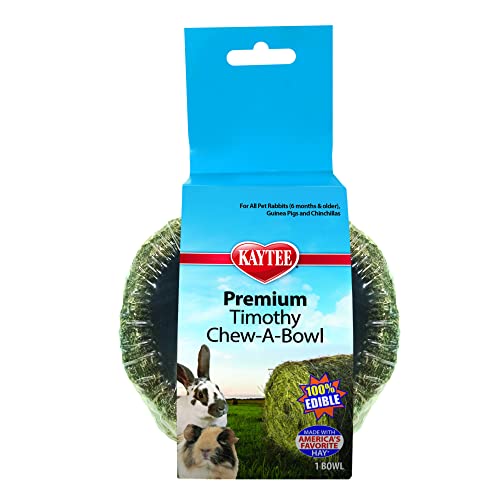
Example wire hay feeder for small pets
For most owners of rabbits and guinea pigs in standard wire cages, a powder-coated wire rack like the Kaytee Hay and Pellet Feeder is the sensible default: inexpensive, durable, top-filling, hook-mounted without tools, and available in two sizes to match common enclosures. Its known limitations — fragment buildup at the bottom and short hooks for tall pan edges — are manageable with routine emptying and a quick fit check before purchase. For specialized needs, look at other categories on their merits: fabric hay bags for quiet bedroom cages and safety around mouth-injury-prone chewers, large-capacity hinged racks for multi-pet households, two-tier units for compact cages and hay variety, woven edible baskets for naturalistic setups and heavy chewers, and litter box integrated feeders for trained rabbits. Whatever you choose, the measure of success is simple and observable: your pet should be eating hay for a substantial part of every day, with clean hay always available. If that is happening, the feeder is doing its job. If you want to start with the example model covered above, you can check the current price on Amazon.
Affiliate Disclosure: PawCritic.com participates in the Amazon Services LLC Associates Program. We may earn commissions from qualifying purchases at no extra cost to you.