Why Snakes Need Special Enclosures
Snakes are escape artists by nature, and this is not a casual exaggeration but a well-documented behavior pattern that shapes every serious enclosure recommendation in the hobby. A determined snake can push a screen top off a glass tank, squeeze through gaps that look too small to matter, and apply surprising sustained strength against weak latches and unsecured lids. Keepers who frequent reptile communities routinely share stories of snakes found behind bookshelves, inside furniture, or under floorboards weeks after an escape, and many escapes are never resolved at all. Because of this, a secure enclosure is the single most important purchase a snake owner will make, ahead of heating, decor, or even the snake itself. This buying guide covers what matters when choosing a snake enclosure for ball pythons, corn snakes, kingsnakes, boas, hognose snakes, and other popular pet species, based on manufacturer specifications, published husbandry guidance, and aggregated owner reporting rather than any form of hands-on evaluation.
General husbandry context is worth grounding in veterinary sources from the start. The Association of Reptilian and Amphibian Veterinarians resources pages collect species-care material written by exotic veterinarians, and the Merck Veterinary Manual section on exotic and laboratory animals covers reptile housing principles such as thermal gradients, humidity, and escape security in a clinical format. Both are worth bookmarking before you spend money on a cage, because they explain the why behind nearly every feature recommended below.
How to Think About Enclosure Materials
The material of the enclosure walls drives three of the biggest practical outcomes in snake keeping: heat retention, humidity retention, and visibility. Glass tanks are cheap, widely available, and give a full view of the animal, but glass conducts heat readily and a screen top vents warm, humid air straight into the room. That means a glass setup in a dry climate typically needs stronger heating equipment and more frequent misting to reach the same conditions a PVC cage maintains passively. For tropical species like ball pythons, which published care guidance places at roughly 50 to 60 percent ambient humidity, that difference translates directly into shedding problems, stuck eye caps, and respiratory risk when humidity runs consistently low.
PVC enclosures are the default recommendation in most experienced keeper communities for exactly this reason. Closed PVC panels with limited ventilation hold both heat and humidity far better than glass, which lowers energy costs for heating and makes stable conditions easier to achieve. The trade-offs are price and lead time: quality PVC cages often cost two to three times what a comparable glass tank costs, and the custom-built segment of the market frequently ships on multi-week timelines. Wood or melamine enclosures sit somewhere in the middle on insulation but require careful sealing against moisture damage and are heavier to move. There is no universally correct material; the right choice depends on your species, your room climate, and how much display value you place on full glass viewing.
Essential Features to Demand From Any Snake Enclosure
- Secure locking mechanism: Snakes investigate their enclosure boundaries persistently, especially at night. Key locks or positive slide-locks on front-opening doors are considered non-negotiable by most experienced keepers; friction-fit doors and unclipped screen lids are the leading causes of escapes reported in owner communities.
- Front-opening access: Reaching in from above mimics the approach of an aerial predator and triggers defensive behavior in many species. Front-opening doors let you service the enclosure at snake level, which published handling guidance generally describes as less stressful for the animal.
- Heat and humidity retention: PVC and sealed wood outperform glass substantially. If you keep a tropical species in glass, plan on a partial screen cover, stronger heating, and a hygrometer so you can verify actual numbers.
- No gaps larger than the snake's head: Any opening a snake's skull can fit through is an escape route, and snakes can compress far more than new keepers expect. Check corners, door tracks, cable pass-throughs, and where panels join.
- Controlled ventilation: Tropical species do best with limited, strategically placed ventilation; arid and high-activity species generally tolerate or benefit from more airflow. Match the ventilation design to the species, not the other way around.
- Thermostat compatibility: Whatever heating method you use, the enclosure needs a clean way to route probes and cords without leaving gaps a snake can exploit or wrap around.
Two Concrete Examples Worth Looking At
Rather than a ranked list of seven cages, this guide points to two representative products that illustrate the two most common paths keepers take: a front-opening PVC-style enclosure suited to adult snakes, and an affordable glass starter tank suited to juveniles and small colubrids. Neither is the only option in its category, and neither replaces doing your own sizing and species homework before buying, but each is a useful concrete reference point for what to evaluate. You can check the current price on Amazon for the front-opening option and compare its listed dimensions and features against the criteria above.
A Front-Opening PVC-Style Enclosure for Adult Snakes
This style of enclosure, sold under several brands in knock-down or pre-assembled form, is the category most often recommended for adult ball pythons, corn snakes, and kingsnakes. Typical listings in this class advertise solid PVC side and back panels, sliding glass front doors, and pre-cut openings for heating and thermostat probes. Owner reviews across these products consistently highlight two strengths: heat and humidity stability that outperforms glass tanks, and a sliding-glass front that makes routine servicing calm and predictable. Assembly times in the twenty-to-forty-five minute range are commonly reported for the flat-shipped versions, with no special tools beyond a screwdriver usually required.
The honest trade-offs reported by owners are worth weighing before purchase. Thinner panel material compared to premium custom brands means the cages are lighter and somewhat more flexible, and some reviewers mention needing to adjust door alignment occasionally after moving the enclosure. There is no included heating or lighting in this category, so the purchase price is only part of the total budget; plan for an under-tank or radiant heat source, a thermostat, a hygrometer, and substrate. For keepers moving a snake from a juvenile glass tank into its permanent adult home, this class of enclosure is usually the most cost-effective way to get PVC-level performance, and you can view this option on Amazon to confirm current sizing, stock, and pricing before committing.
A Glass Starter Tank for Juveniles and Small Species
For a hatchling corn snake, a young hognose, or a small kingsnake, a standard glass aquarium-style tank with a secure screen lid remains a legitimate and widely used starting point, typically costing far less than any PVC alternative and available at nearly any pet store. The specific tank referenced here ships with a locking screen cover, which addresses the single biggest weakness of glass tanks as snake housing: the push-off lid escape. Owner feedback on locking-lid glass tanks is generally positive for the juvenile stage, praising the low cost, full visibility, and easy availability of replacement parts and accessories sized to standard tanks.
The limitations are real, though, and they compound as the snake grows. Glass sheds heat quickly, screen tops vent humidity rapidly, and the tank will need replacing once the animal reaches adult size, which is why most experienced keepers treat a starter tank as a temporary stage rather than a final home. Top-opening access is also more stressful for the snake than front doors, particularly for defensive or shy species. Used correctly, with screen clips or locks always engaged, a hygrometer inside the tank, and an upgrade planned for adulthood, this is a sensible budget entry point. If it matches your situation, you can check the current price on Amazon and verify the exact dimensions against your species' adult size before buying.
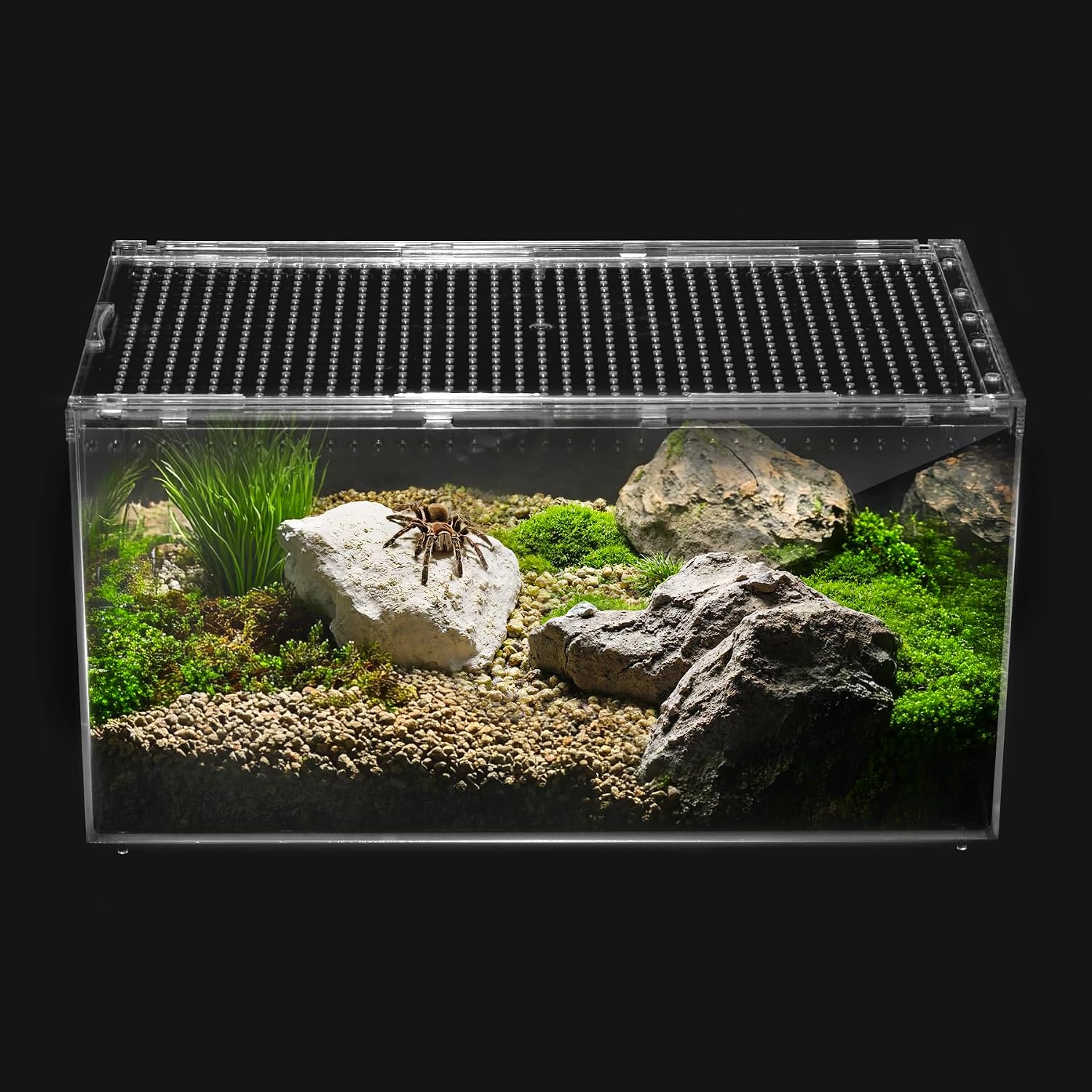
snake enclosures
Size Guide by Snake Species
Sizing is where new keepers most often go wrong in both directions: too small is obviously harmful, but an enclosure that is too large and too open can also stress shy species like ball pythons, especially as juveniles. A widely used rule of thumb in published care sheets is that the enclosure's length plus width should at least equal the snake's adult length, with more floor space always welcome for terrestrial species and extra height for semi-arboreal ones like carpet pythons. The table below reflects commonly cited minimums and recommended adult sizes across mainstream care guidance; always cross-check against a care sheet specific to your animal, because localities within a species can vary substantially in adult size.
| Species | Average Adult Length | Minimum Enclosure | Ideal Adult Enclosure |
|---|---|---|---|
| Corn Snake | 3-5 feet | 20 gal Long | 40 gal breeder (36x18 inches) or larger |
| Ball Python | 3-5 feet | 40 gal breeder | 48x24x18 inch PVC |
| Kingsnake | 3-4 feet | 20 gal Long | 40 gal breeder |
| Hognose | 1.5-3 feet | 10 gal (juveniles) | 20 gal Long (adults) |
| Boa Constrictor | 6-10 feet | 72x24x24 inches | 8x3x2 foot PVC |
| Carpet Python | 5-8 feet | 48x24x24 inches | 6x2.5x3 foot tall PVC |
Note that boa constrictors and carpet pythons are a different commitment class entirely. Enclosures at the six-foot-and-up scale are expensive, heavy, difficult to move through standard doorways, and often built to order with multi-week lead times. Anyone considering a large boid should budget for the adult enclosure before acquiring the animal, not after, because improvising housing for a six-foot snake is how escapes and injuries happen.
Heating, Thermostats, and Humidity Management
Every snake enclosure needs a thermal gradient: a warm end where the animal can digest and a cooler end it can retreat to, because snakes regulate body temperature by moving rather than by internal metabolism. Exactly what temperatures count as correct varies by species, and getting this wrong is one of the most common reasons new keepers end up at an exotics vet, which is why cross-referencing the Merck Veterinary Manual's reptile husbandry material and species-specific care sheets matters. The non-negotiable piece of equipment across nearly all setups is a thermostat or dimmer controlling whatever heat source you use; unregulated heat mats and heat lamps can reach surface temperatures hot enough to cause serious burns, and snakes do not always move away from a burn source before injury occurs.
Humidity requirements track the species' native habitat. Ball pythons, rainbow boas, and other tropical species need sustained ambient humidity in the 50 to 70 percent range, which is where glass tanks struggle and closed PVC excels. Arid species like some colubrids and hognose snakes do fine at normal household humidity and can actually develop skin problems if kept too damp. Measure with a real hygrometer placed at substrate level rather than trusting the sticky dial gauges that ship with some tanks, which owner reports frequently describe as inaccurate. If humidity runs low, the usual fixes are a larger water bowl placed on the warm side, a moisture-friendly substrate like cypress mulch, and a partial cover over screen tops; if humidity runs high, increase ventilation before anything else.
Safety Practices That Prevent Escapes and Injuries
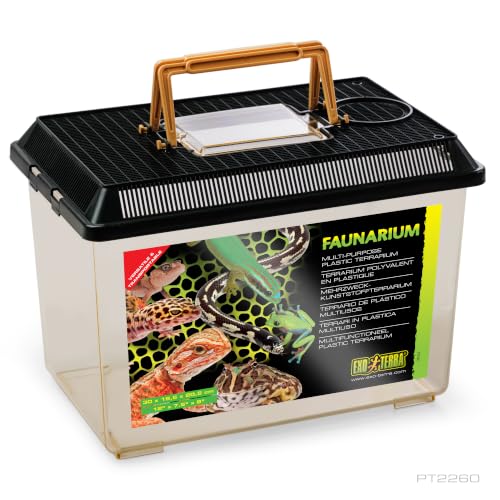
snake enclosures
- Check latches and locks daily: Snakes spend hours probing enclosure boundaries at night. A latch that is merely closed but not locked is a project, not a barrier, for a persistent animal.
- Secure cords and thermostat probes: Snakes will wrap around dangling probe wires and can pull them out of position, which silently breaks your temperature control. Route cords through secured pass-throughs and anchor probes the snake cannot dislodge.
- Never use exposed tape inside the enclosure: Loose tape is one of the most commonly reported causes of serious scale and mouth injuries in owner communities. If tape is needed for equipment mounting, keep it fully covered and inspect it regularly.
- Weight or clip screen lids: For top-opening glass tanks, use locking clips on all corners. A lid resting by gravity alone is not secure against even a modest-sized snake pushing at the rim.
- Check for gaps after any maintenance: A gap the width of a pinky finger is an escape route for most pet species. Re-check door tracks, corner joints, and panel seams whenever the enclosure is moved or disassembled.
- Quarantine new snakes: Keeping new acquisitions in a simple, secure, easy-to-disinfect enclosure separate from established animals for a period is standard practice among breeders and is recommended in veterinary guidance on disease prevention.
Maintenance and Cleaning
Enclosure design affects cleaning workload more than most buyers anticipate. Non-porous surfaces like glass, sealed PVC, and molded plastic can be wiped down and disinfected with reptile-safe products, which is one reason molded and PVC cages dominate breeding collections where cages are cleaned constantly. Unsealed wood and porous decor absorb moisture and waste and eventually harbor bacteria, so any wood inside or part of the enclosure should be sealed and periodically inspected. Spot-clean soiled substrate as it appears, do a full substrate change on a regular schedule appropriate to your species and substrate type, and disinfect water bowls weekly at minimum. Avoid harsh household chemicals and anything with strong residue; rinse thoroughly after disinfecting, and let enclosures fully dry and air out before returning the animal.
Common Mistakes New Snake Keepers Make
Several failure patterns recur across beginner help threads and deserve explicit mention. Buying an enclosure for the snake's current size with no plan for the adult size is the most common, and it gets expensive twice. Skipping the thermostat to save thirty dollars is the most dangerous, because it converts a heating element into a burn hazard. Trusting a heat mat's sticker temperature rating rather than measuring the actual surface with appropriate equipment leads to the same burns. Over-ventilating a tropical enclosure, then fighting chronic low humidity with constant misting, is a design mistake rather than an effort problem. And finally, relying on gravity-held lids and unlatched doors causes the escapes that give the hobby its most painful stories; a lock costs very little compared to a lost animal.
What to Avoid When Shopping
Avoid enclosures with plastic latches that can fatigue and crack over time, screen doors that flex outward under pressure, and any used enclosure whose history you cannot verify, particularly for quarantine-sensitive collections. Be skeptical of all-in-one kits that bundle enclosures with heat rocks, which veterinary guidance consistently flags as burn hazards, or with dial gauges of unknown accuracy. Be equally skeptical of marketing that emphasizes aesthetics while saying nothing about ventilation design, door security, or panel thickness, because those three invisible factors determine whether the cage actually works as snake housing. If a listing does not publish exact internal dimensions, ask; nominal tank sizes and actual floor space do not always match.
The Bottom Line
For the average pet snake such as an adult ball python or corn snake, a front-opening PVC enclosure with locking sliding doors is the category most keepers converge on for its heat retention, humidity stability, and escape resistance, and the example linked above is a reasonable place to see what that category costs and specifies today. For hatchlings and small colubrids, a locking-lid glass tank is an acceptable budget start, provided you treat it as a stage rather than a destination and plan the adult enclosure from day one. Whichever path you take, verify sizing against your species' adult length, never run a heat source without a thermostat, measure your actual humidity, and lock everything. A secure, correctly sized enclosure is the difference between a pet snake and a missing-poster search of your neighborhood.
Affiliate Disclosure: PawCritic.com participates in the Amazon Services LLC Associates Program. We may earn commissions from qualifying purchases at no extra cost to you.