Your Cat Is Probably Not Drinking Enough, and It Is Not Your Fault
Watch a dog after a walk: head down in the bowl, tongue going like a paddle wheel, half the water gone in thirty seconds. Now watch a cat. Many cats visit the water bowl two or three times a day for a few polite sips, and some act like the bowl exists purely as furniture. Owners of newly adopted cats email us constantly in a mild panic: my cat never drinks, is something wrong? Usually, nothing is wrong. Cats are running ancient software. They descend from small desert hunters in North Africa and the Middle East, animals that got almost all their moisture from the bodies of their prey and rarely encountered a puddle worth visiting. Their kidneys concentrate urine far better than a dog's can, and their thirst response kicks in much later. That combination kept their wild ancestors alive in dry country, and it still shapes every house cat alive today. The problem is that the modern house cat eats dry kibble from a bowl instead of mice that are roughly seventy percent water. The desert physiology stayed; the moisture source did not. The result is a species that lives chronically close to the edge of mild dehydration, and owners who cannot tell a lazy drinker from a sick one. This guide walks through how much water a cat actually needs, the signs of dehydration worth learning, why vets keep hammering on this topic, and the fixes we recommend when a cat simply refuses to drink.A Short Lesson in Feline Plumbing
To understand why cats drink the way they do, it helps to know what their kidneys are doing behind the scenes. A healthy cat can produce urine that is far more concentrated than a human's or a dog's, pulling water back out of the filtrate and into the bloodstream before waste leaves the body. Veterinarians measure this as urine specific gravity, and a normal cat routinely sits in a range that would flag trouble in other species. It is an elegant adaptation, and it is exactly why a cat can eat dry food, sip water a few times a day, and still appear completely fine. The catch is the margin. That water-saving machinery works beautifully right up until it does not. A cat vomiting through a hot afternoon, or a senior cat whose kidneys are slowly losing concentrating power, has very little reserve to draw on. Because the thirst trigger arrives late, a cat often will not drink meaningfully until it is already several percent dehydrated. Dog owners reading this need to recalibrate their instincts entirely: with cats, visible drinking behavior is a lagging indicator, not a leading one. There is a second quirk worth knowing. Cats are also sensitive about where and how they drink. In multi-cat homes, a timid cat may avoid a bowl positioned next to the dominant cat's food station. Some cats dislike drinking right beside their food, an instinct that in the wild kept carcass bacteria out of the water source. Others are put off by deep, narrow bowls that press their whiskers against the sides. None of this is fussiness for its own sake; it is instinct overlapping with modern furniture placement.How Much Water Does a Cat Actually Need?
The working number most veterinary nutrition references use is roughly sixty milliliters of total water per kilogram of body weight per day, counting all sources. For a four-and-a-half kilogram cat, that is about 270 milliliters, or a bit over one cup, spread across food and water combined. The key phrase is total water. Very few owners realize how much of that can come from food instead of the bowl. This is where diet changes the entire picture. Canned cat food runs about seventy-five to eighty percent moisture. Dry kibble sits near ten percent or less. A cat eating an all-wet-food diet takes in most of its daily water with every meal and may genuinely barely touch the bowl, which is normal and nothing to worry about. A cat eating only dry food has to pull that same volume from the bowl, which means it needs to drink roughly two to three times more than its canned-food housemate just to break even. If you remember one comparison from this article, make it that one. This is also why the question 'is my cat drinking enough?' cannot be answered without looking at the diet. The panicking owner of a wet-fed cat who drinks three sips a day and produces modest puddles in the litter box is usually describing a healthy animal. The owner of a dry-fed cat who never sees their pet at the bowl at all is in a very different situation, and one that deserves action rather than reassurance. Water intake and food type are the same question wearing two hats.The Dehydration Signs Most Owners Miss
Cats hide illness the way their ancestors hid weakness from predators, so by the time a cat looks sick it usually is. Dehydration is no exception. Before we list the fixes, learn these checks; they take less than a minute and they work on any cat. The classic move is the 'skin tent test'. Gently lift the skin between your cat's shoulder blades, pull it up slightly, and let go. On a hydrated cat it snaps back immediately, like a rubber band. On a dehydrated cat it returns slowly or, in more serious cases, stays tented for a second or two. One caution: this test gets less reliable in older cats simply because skin loses elasticity with age, so interpret a slow return in a senior with some caution and check the other signs too. Next, look at the gums. Lift the lip and touch the gum with a clean finger. Healthy gums are pink and slick. Dehydrated gums feel tacky or sticky, like touching a sticker that has lost its wetness. Combine that with any of the following and you have a pattern worth acting on: lethargy that goes beyond a normal nap, sunken-looking eyes, a loss of appetite, or panting and drooling. According to the ASPCA, overheated cats can deteriorate fast, and dehydration sits at the center of that picture: a cat that has been in a hot space, is panting, is drooling, and is refusing water needs cooling and veterinary attention rather than a wait-and-see approach. Keep this trio in mind every summer. Heatstroke and dehydration feed each other, and cats trapped in sunrooms, cars, or apartments with failed air conditioning are the classic cases. One more thing worth saying plainly. These tests tell you about the present moment, not the trend. A cat can pass the skin tent test on Tuesday and still be chronically under-hydrated in a way that quietly stresses its kidneys for years. The checks are for acute situations. For the long game, you need the fixes later in this article, plus one habit: glance at the litter box. Steadily smaller or drier clumps over weeks are one of the earliest clues owners can see without a lab.Why Vets Take This So Seriously: Kidneys and Plumbing
If this topic sounds like an obsession of ours, there is a reason. Chronic kidney disease is one of the most common serious conditions in older cats, and the Cornell Feline Health Center estimates that it affects a substantial share of cats over ten years old, with some estimates running as high as thirty to forty percent in that age group. Damaged kidneys lose the ability to concentrate urine, so affected cats urinate more, drink more to compensate, and slowly wear themselves out in a vicious loop. Anything that keeps a cat well hydrated across its life is working to protect the single organ most likely to eventually fail it. Hydration also matters lower down the plumbing. Under-diluted urine concentrates minerals, which raises the risk of crystals and bladder stones, and it is one of the contributing factors behind feline idiopathic cystitis, an inflammatory bladder condition that is painful, frequently recurrent, and famously triggered by stress. Male cats carry a specific extra risk: their narrow urethras can plug with crystals or debris, which is a genuine same-day emergency. A blocked male cat can die within twenty-four to forty-eight hours, and inadequate water intake is one of the few risk factors owners can directly influence. Add constipation to the list, because dehydrated cats pull water from the colon and produce hard, painful stools, and you have the full picture. Almost every condition on this list is more common in cats that run dry. None of it requires panic, and much of it is manageable when caught early, but the cheapest intervention for all of it is simply more water moving through the system every day.The Fixes That Actually Move the Needle
We have read a lot of advice on getting cats to drink, and some of it is decoration. Here is what genuinely works, roughly in order of impact.1. Feed More Wet Food. This Is the Big One.
No fountain, additive, or trick comes close to the raw math of switching a cat from dry food to canned. Going from ten percent moisture to seventy-eight percent moisture moves hundreds of milliliters of water per day into the cat without it ever lifting a tongue to a bowl. If your cat is a dry-food addict and a lazy drinker, this single change does more for its long-term kidney and bladder health than every other item on this page combined. If a full switch is not practical, even replacing one meal a day with wet food shifts the numbers meaningfully. You can also go one step further and stir a tablespoon of warm water into canned food; many cats accept it without complaint, and it turns every meal into a hydration event.2. Fix the Bowl Situation
Cats have opinions about tableware. Narrow, deep bowls brush the whiskers on every dip, and plenty of cats refuse to drink past a certain depth because of it. Switch to wide, shallow bowls that let a cat lap without bending its whiskers. Material matters too: plastic can hold scratches that harbor bacteria and is associated with feline chin acne, so ceramic, glass, or stainless steel are the safer choices. Then look at placement. Set up more than one water station, at least one per floor of your home, and keep bowls away from litter boxes. In multi-cat households, avoid clustering every resource in one corner, because a subordinate cat that has to cross the dominant cat's territory to drink will simply drink less. Spread the stations out and watch total traffic increase.3. Keep It Fresh, Cool, and Full
Cats can detect stale water, and many will let a bowl sit untouched until it gets cloudy. Rinse and refill bowls at least once a day. Some cats prefer running tap water and will show up the moment they hear the faucet, which is a clue about what comes next. A few cats like a couple of ice cubes floating in the bowl, particularly in warm weather. There is no universal preference here, which is exactly why variety of stations, shapes, and temperatures beats any single clever trick.Do Water Fountains Actually Work?
Movement attracts cats. Moving water catches light, makes sound, and signals freshness in a way a still bowl cannot, and plenty of cats who ignore their bowl will come running at the sound of a pump. That said, we want to be honest about the evidence: the studies on fountains are small and mixed, and some cats, particularly seniors set in their ways, never warm up to them. Our position is that a fountain is a cheap, low-risk experiment rather than a guaranteed fix, and it works best alongside the food and bowl changes above, not instead of them. If you try one, the two designs we point owners to most often are a large-capacity gravity setup and a quiet pump-driven fountain. The Veken 95oz cat water fountain is the budget-friendly classic: a 2.8 liter reservoir, a triple-filtration system, and a flow that most cats investigate within a day or two.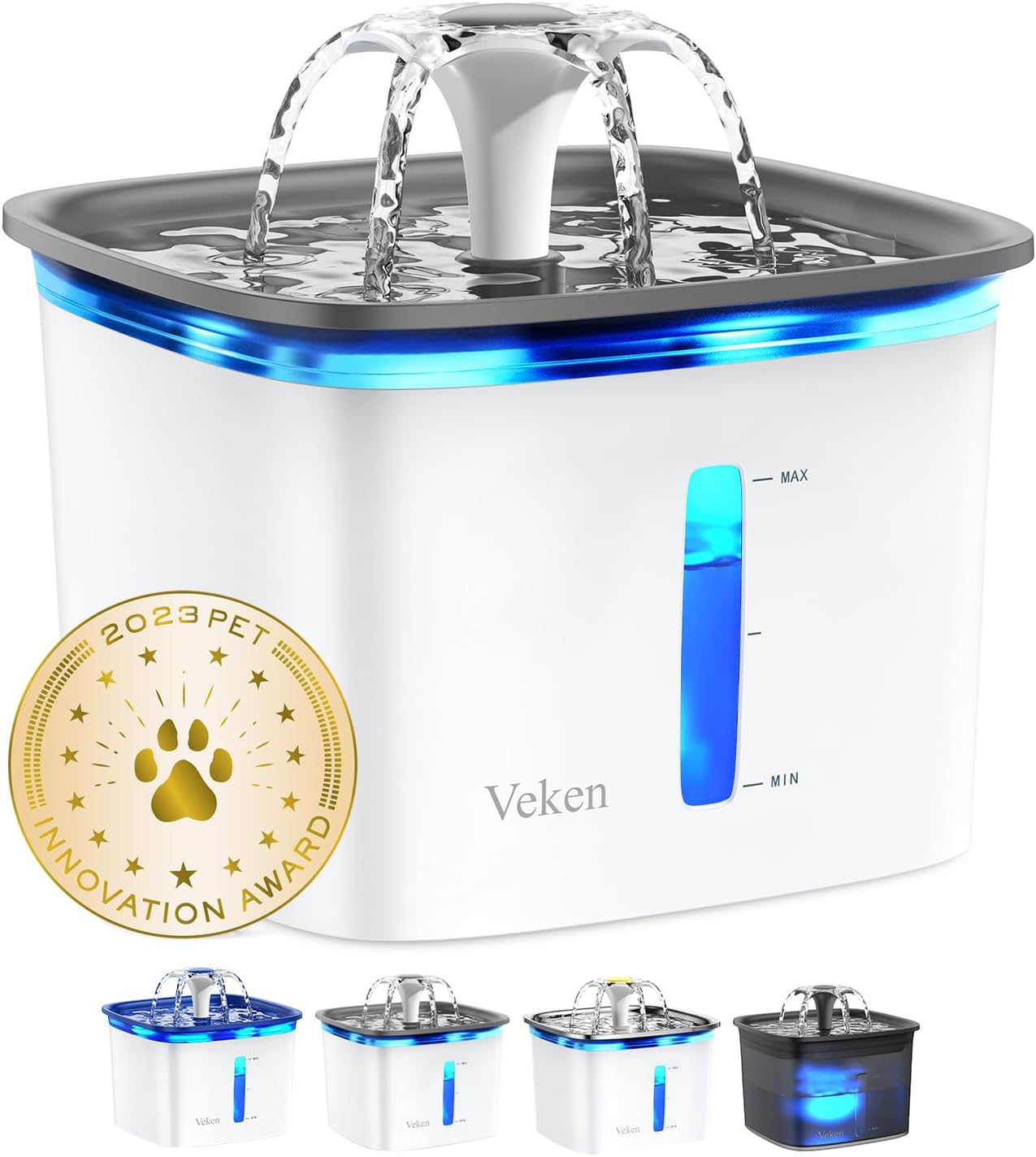 The large tank matters more than people expect, because a bigger volume stays fresh longer and buys you margin if you travel for a weekend.
For cats with sensitive chins or owners tired of scrubbing plastic, this stainless steel cat water fountain is the upgrade we suggest. The 74-ounce stainless bowl resists the biofilm that builds up on plastic surfaces, it ships with three filters, and the metal surface is genuinely easier to keep hygienic over months of use.
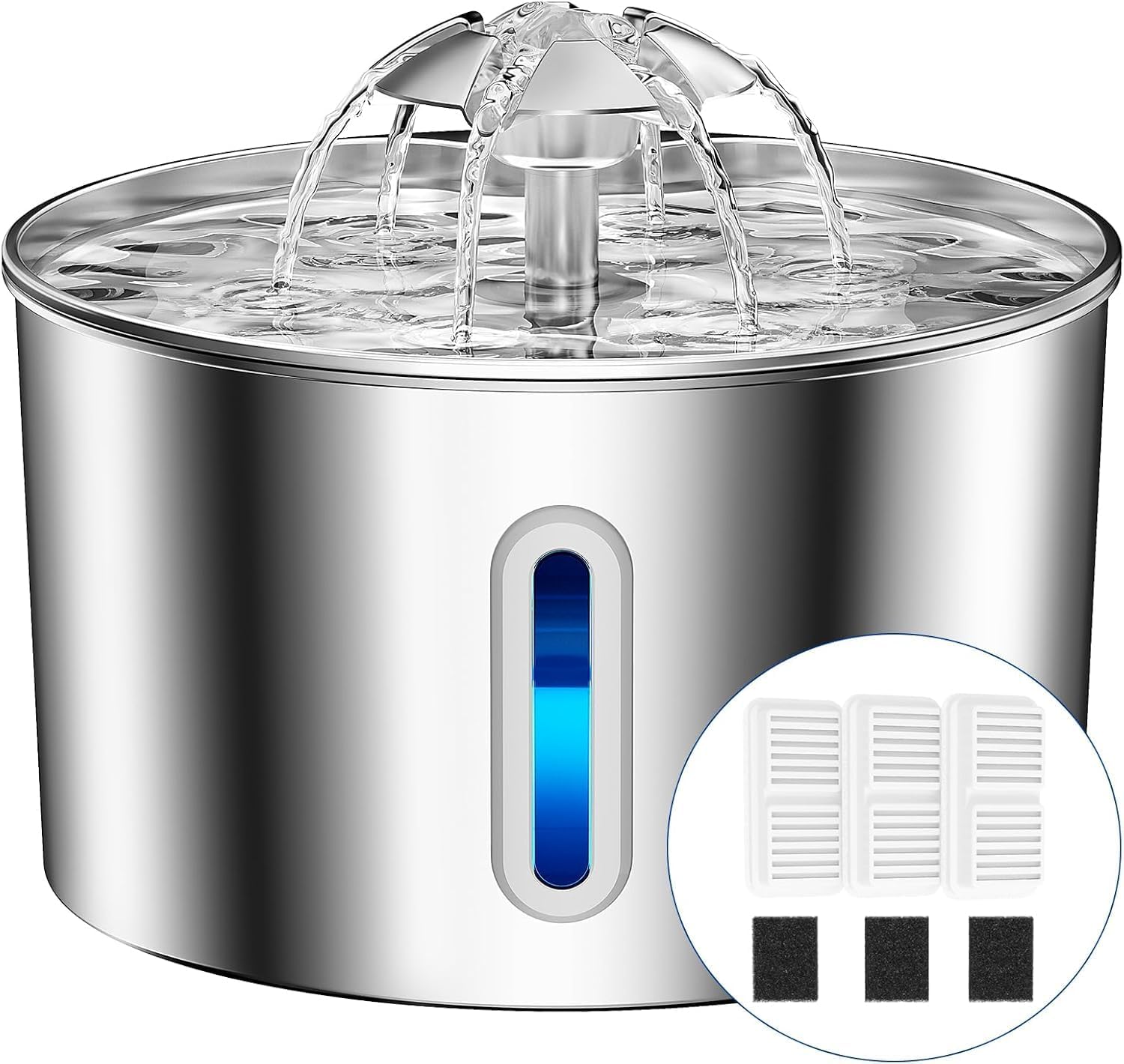 Whichever model you choose, the maintenance matters as much as the purchase. Pumps need rinsing weekly, filters need replacing on the schedule in the box, and the whole unit needs a real scrub every couple of weeks or it becomes a slimy biology experiment that any sensible cat will boycott. A dirty fountain is worse than a clean bowl, so only buy one if you will actually keep it up.
Flavor Tricks and Small Levers
Beyond the big three fixes, there are a handful of small levers worth knowing. A spoonful of unsalted tuna juice or low-sodium chicken broth stirred into water can tempt a reluctant drinker; just never use broth with onion or garlic, both of which are toxic to cats. Some cats will eat wet food mixed with extra water to a gravy consistency long before they will visit a bowl. Growing a pot of cat grass is a minor lever at best, but it costs almost nothing and some cats seem to drink more on days they graze. And if your cat is hypnotized by the bathroom faucet, a pet-safe recirculating fountain placed where the faucet used to fascinate it is a fair trade for your plumbing. What does not work: scolding, spraying water as a deterrent anywhere near the water station, or expecting a cat to change its habits because you rearranged the furniture once. Cats respond to environment and repetition, not lectures. Give any change at least two weeks before judging it, and change one thing at a time so you can tell what is actually working.When Low Water Intake Is an Emergency
Most hydration problems are chronic and boring, but a few presentations need a same-day call. Go to a vet promptly if your cat is not drinking and also vomiting repeatedly, has gone more than twenty-four hours without eating, is a male cat straining in the litter box or producing nothing at all, is lethargic with tacky gums and a positive skin tent, or spent time in a hot environment and is now panting or drooling. Cats with known kidney disease, diabetes, or hyperthyroidism dehydrate faster than healthy cats, so their owners should hold a lower threshold for calling. Also flag any sudden change in the other direction. A cat that abruptly starts drinking dramatically more than usual is not finally getting healthy; increased thirst is one of the classic early signs of kidney disease, diabetes, and hyperthyroidism, and it is exactly the change owners should report to their vet with dates and rough volumes. More is not automatically better in cats. It is often the first symptom of something that needs bloodwork.A One-Week Plan to Get Your Cat Drinking
If you want a concrete sequence instead of a list of options, here is how we would deploy the advice above over one week. Days one and two: add a second and third water station in quiet locations away from food and litter, using wide, shallow ceramic or stainless bowls, and start rinsing and refilling every morning. Days three and four: introduce wet food if you are not already feeding it, starting with one meal a day, and stir a spoonful of warm water into it. Day five: set up the fountain in a spot your cat already frequents, but leave the old bowls in place so there is no pressure. Days six and seven: watch which stations get traffic, note the litter box output, and adjust placement based on what you see rather than what looks tidy to you. By the end of that week you will know your cat's preferences instead of guessing, and you will have made the two changes with the highest payoff: more moisture in the food, and more fresh water in more places. Do that, keep an eye on the litter box, and run the skin tent and gum checks when something seems off. Your cat's desert genes are not going anywhere, but with a wetter diet and a friendlier water setup, they no longer have to work overtime.Related Reading
Want more on this topic? Check out our guides on best cat scratch deterrents furniture protectors, indoor vs outdoor cats which is safer, best cat litter box enclosures hidden furniture.