Common Aquarium Fish Diseases: Symptoms, Treatment, and How to Prevent Them
Disclosure: PawCritic is reader-supported. Some links below are Amazon affiliate links, which means we may earn a small commission if you buy through them — at no extra cost to you.
Fish don't cough. They don't whimper or limp to the door. By the time a fish looks obviously sick, it has usually been sick for three or four days already, and you missed every early signal because you were looking at the tank instead of watching it. That distinction is the whole game.
I lost an entire school of cardinal tetras my second year in the hobby. Twelve fish, gone in nine days. I treated for ich, then for fungus, then dumped in a broad-spectrum antibiotic because panic makes people do stupid things. The actual problem? A heater that had failed open and was running the tank at 84°F while my nitrite crept to 0.5 ppm after a filter media swap. I medicated a water quality problem. That's the single most common mistake in this hobby, and I'd bet money most of you reading this have made it too.
So here's the honest guide. What the common diseases actually look like, what genuinely works to treat them, and — the part nobody wants to hear — why prevention does about 90% of the work.
Before You Diagnose Anything: Test the Water
Rule one. Non-negotiable. Before you buy a single bottle of medication, test your water for ammonia, nitrite, nitrate, and pH, and check your temperature with a thermometer you trust — not the sticker on the glass.
Why? Because ammonia and nitrite poisoning look almost identical to disease. Gasping at the surface. Clamped fins. Red or purple gills. Lethargy. Loss of appetite. Sudden death in an otherwise "healthy" tank. Every one of those symptoms shows up on disease charts, and every one of them shows up in a tank with 0.5 ppm ammonia.
The other reason: most medications are hard on your biofilter. Antibiotics in particular can wipe out nitrifying bacteria, spiking ammonia in a tank that was previously stable. So if you medicate blindly, you can create the very water quality crisis that then kills the fish you were trying to save. I've watched it happen in other people's tanks more times than I can count.
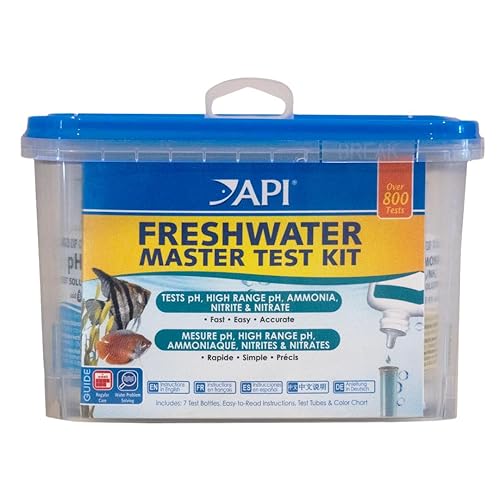
Test strips are fine for a fast daily glance — dip, wait, compare. But strips drift as they age and they're notoriously vague on ammonia. For anything you're going to make a treatment decision on, use a liquid reagent kit. The API Freshwater Master Test Kit is the one most fish keepers end up with, and there's a reason: it does roughly 800 tests, the reagents last years if you cap them properly, and the ammonia test is actually readable. Keep a pack of quick-dip test strips alongside it for the 20-second daily check, and reach for the liquid kit whenever something looks off.
Your target numbers, no debate:
- Ammonia: 0 ppm. Not 0.25. Zero.
- Nitrite: 0 ppm. Same deal.
- Nitrate: under 40 ppm for hardy community fish, under 20 ppm for anything sensitive.
- pH: stable matters more than any specific number. A rock-solid 7.8 beats a 6.8 that swings to 7.6 every week.
- Temperature: species-appropriate and steady. Swings of more than 2°F in a day are stressing your fish.
If any of those are off, fix the water first. Do a 30–50% water change with dechlorinated, temperature-matched water and re-test in 12 hours. A surprising number of "diseases" resolve on their own once the water is right. If you're still fuzzy on how a biofilter actually works, our guide to cycling an aquarium covers the nitrogen cycle properly, and it's worth twenty minutes of your time.
Ich (White Spot Disease)
What you'll see: Tiny white dots, like grains of salt or sugar, scattered across the body and fins. Fish flashing — darting sideways and scraping against decor, substrate, or the heater. Clamped fins. Rapid gill movement. In heavy infections, fish hang near the filter outflow gulping.
What it actually is: Ichthyophthirius multifiliis, a ciliated protozoan parasite. And here's what most people don't understand: the white spots you see are the parasite burrowed under the fish's skin, where medication can't touch it. You cannot kill ich while it's in that stage. You can only kill it during the free-swimming theront stage after it drops off the fish and reproduces.
That single fact explains every failed ich treatment. Somebody doses once, spots disappear in three days, they stop treatment — and then the parasite comes roaring back at 10x the numbers because they killed one generation and let the next mature undisturbed.
Treatment that works:
- Raise the temperature slowly to 82–86°F over 24 hours (only if your species tolerates it — this will kill some coldwater fish and stress others). Heat speeds up the parasite's life cycle so the vulnerable free-swimming stage arrives faster and more often.
- Add aeration. Warm water holds less oxygen and sick fish need more of it. Air stone, bumped-up filter flow, whatever you've got.
- Dose an ich-specific medication — malachite green with formalin is the classic, or copper for scaleless-tolerant systems. Follow the label dosing and keep dosing for a minimum of 3 days after the last visible spot disappears. This is the step everyone shortcuts.
- Remove carbon from your filter before dosing. Activated carbon strips medication straight out of the water. I've watched people dose for a week and wonder why nothing happened.
- Vacuum the substrate during water changes. Cysts sit in the gravel between generations.
Fair warning on scaleless fish: Corydoras, loaches, plecos, and most tetras are sensitive to full-strength medication. Half-dose them and extend the treatment period. Read the label — good manufacturers spell this out.
Fin Rot
What you'll see: Fin edges look ragged, frayed, or eaten away. Often a white, cloudy, or reddish margin at the damaged edge. Progresses inward toward the body. In advanced cases you'll see red streaking at the fin base.
What it actually is: Almost always a bacterial infection — Aeromonas, Pseudomonas, or Flavobacterium — that took hold because something else weakened the fish. Fin rot is a symptom of a husbandry problem 95% of the time. Dirty water. Overcrowding. Aggressive tank mates nipping fins. Chronic stress from wrong parameters.
Treatment:
- Fix the water first. Large water change, then daily 25% changes for a week. Mild fin rot often heals with clean water alone — the fish's immune system just needed a break.
- Identify and remove the stressor. If a barb is shredding your betta's tail, no antibiotic on earth will fix that.
- Aquarium salt at 1 tablespoon per 5 gallons can help mild cases (skip it for salt-sensitive species like corys and many loaches).
- For advanced cases with body involvement or red streaking, you need a real antibiotic — and here's where I'll be blunt. The U.S. Food and Drug Administration has repeatedly flagged that most antibiotics sold over the counter for aquarium fish are unapproved products with no verified efficacy or dosing data. If your fish is valuable to you, talk to an aquatic vet. They exist, and they can prescribe medicated feed that actually works.
Recovery note: Fins regrow. It takes weeks to months, and regrown tissue often comes back a slightly different color or slightly shorter. That's cosmetic, not a treatment failure.
Velvet (Gold Dust Disease)
What you'll see: A fine gold, rust, or yellowish dust across the body — much finer than ich spots. It's genuinely hard to see. The trick: turn off the tank lights, wait a minute, then shine a flashlight at the fish from the side at an angle. The dusting lights up.
Other signs come first, though: rapid gill movement, flashing, clamped fins, and fish that suddenly stop eating. Velvet attacks the gills before it becomes visible on the body, which is why it kills so fast.
What it actually is: Oodinium (or Amyloodinium in saltwater) — a parasitic dinoflagellate. It's photosynthetic, which is a strange and useful detail.
Treatment: Copper-based medication is the standard. Because the parasite photosynthesizes, blacking out the tank completely for the duration of treatment genuinely helps — cover it with a blanket, lights off, for 7–10 days. Raise the temperature a few degrees if the species allows. And treat fast. Velvet moves quicker than ich and can empty a tank in under a week.
Copper is lethal to invertebrates. If you've got shrimp, snails, or a reef setup, you must move the fish to a bare treatment tank instead of dosing the display.
Dropsy
What you'll see: The fish swells up. Scales stick out from the body so it looks like a pinecone when you view it from above. Bulging eyes. Pale gills. Lethargy.
The hard truth: Dropsy isn't a disease. It's a symptom — fluid accumulating in the body cavity because the kidneys or internal organs are failing. By the time you see the pinecone look, the prognosis is genuinely poor. I don't say that to be grim; I say it because a lot of people spend three weeks and $60 on medications for a fish that was never going to recover, and the humane call is often euthanasia.
If you want to try: Quarantine tank, aquarium salt (Epsom salt at 1/8 teaspoon per 5 gallons can help draw out fluid), pristine water, and a broad-spectrum antibiotic in medicated food if the fish is still eating. Success rate in my experience is maybe one in five, and only when caught extremely early.
Prevention matters more here than anywhere else: Dropsy correlates strongly with chronic poor water quality, overfeeding, and old age. Keep nitrates low and don't overfeed.
Swim Bladder Disorder
What you'll see: Fish floating at the surface unable to descend, sinking to the bottom unable to rise, swimming upside down, or listing sideways. Extremely common in fancy goldfish and bettas.
Causes, in rough order of frequency:
- Constipation and overfeeding. Especially with dry flake and pellet food that expands in the gut. This is the #1 cause and the easiest to fix.
- Gulping air at the surface while eating floating food.
- Body shape. Fancy goldfish have been bred into a compressed body shape that literally crowds the swim bladder. Some individuals will always have issues.
- Bacterial infection or physical injury. Less common, harder to fix.
The fix that usually works: Fast the fish for 3 days. Genuinely — no food at all. A healthy adult fish handles this fine. Then feed a blanched, deshelled green pea (frozen peas, microwaved 20 seconds, skin removed, cut into bite-size pieces). Peas act as roughage. Switch to soaking dry food in tank water for 60 seconds before feeding so it expands before it goes in the fish instead of after. Raise the temperature slightly to speed digestion.
If it hasn't improved in a week, you're likely looking at an infection or a structural issue, and the outlook is more mixed.
Columnaris (Cotton Mouth)
What you'll see: White or grayish-white patches, often on the mouth, back, or gills. Frequently described as "cotton" or "mold-like," but it's fuzzier and flatter than true fungus. A saddle-shaped lesion across the back is classic. Frayed gills and rapid breathing.
Why it's dangerous: Flavobacterium columnare is a bacterium, not a fungus, and it moves fast. In warm water above 85°F, an aggressive strain can kill a fish in 24 hours. It's frequently misdiagnosed as fungus and treated with antifungals, which do nothing.
Treatment: Lower the temperature — this is one of the few situations where cooling the tank helps, because columnaris thrives in warmth. Drop to the low end of your species' tolerance. Use an antibacterial medication, not an antifungal. Increase aeration. Move fast; hesitation kills here.
The Quarantine Tank: The Thing Nobody Wants to Set Up
Here's my strongest opinion in this entire article: if you keep fish and you don't quarantine new arrivals, you will eventually have a disease outbreak. Not maybe. Eventually.
A quarantine tank doesn't need to be nice. Mine is a 10-gallon with a sponge filter, a heater, a thermometer, a piece of PVC pipe for cover, and nothing else. Bare bottom, because it's easier to clean and you can see waste. Total cost, if you buy used, is under $60.
The protocol:
- Every new fish sits in QT for a minimum of 14 days. 21–30 is better for anything expensive or wild-caught.
- Watch daily. Eating? Breathing normally? Fins open? Any spots, patches, or flashing?
- Don't prophylactically medicate unless you have a specific reason. Blanket dosing breeds resistance and stresses already-stressed fish.
- Match the QT water parameters to your display tank so the eventual transfer isn't another shock.
Seeding the quarantine filter is the tricky part, since a QT sits empty between uses and the bacteria die off. Two options: keep a spare sponge filter running permanently in your display tank so you can grab a fully-colonized one on demand, or use a bottled nitrifying bacteria product to jumpstart it. Tetra SafeStart Plus is the one I keep on the shelf for exactly this — it won't replace a mature filter, but it buys you the two weeks a quarantine period actually needs. Test daily either way.
The same tank doubles as your hospital tank when something does go wrong, which means you can medicate a single sick fish without nuking the biofilter or the invertebrates in your display.
Prevention: The 90%
Every experienced fish keeper eventually arrives at the same conclusion — you don't treat your way to a healthy tank, you maintain your way there. According to the University of Florida IFAS Extension, the overwhelming majority of ornamental fish disease outbreaks trace back to environmental stressors rather than pathogen exposure alone; the organisms are frequently already present and only become a problem when the host's immune defenses drop.
Which means your job is straightforward:
Water changes. 25% weekly for a moderately stocked tank. More if you're heavily stocked. Always dechlorinate, always temperature-match. This one habit prevents more disease than every medication on the shelf combined.
Don't overstock. The "inch per gallon" rule is garbage — a 10-inch oscar does not belong in a 10-gallon tank. Research adult size and bioload for every species before you buy. Crowded fish are stressed fish, and stressed fish get sick.
Don't overfeed. Feed what your fish finish in 2 minutes, once or twice a day. Uneaten food rots and drives ammonia. Most fish in home aquariums are overfed, not underfed. A skipped day per week is genuinely good for them.
Stable temperature. A reliable heater with a separate thermometer to verify it. Heaters fail, and they usually fail stuck-on, which cooks the tank. Check it weekly with your own eyes.
Feed a varied diet. A quality staple pellet plus rotating frozen foods — bloodworms, brine shrimp, daphnia, mysis. Nutritional deficiency is invisible until it isn't.
Buy from good sources. Look at the whole store tank, not just the fish you want. Dead fish in the system? Fish flashing in adjacent tanks? Walk out. Shared filtration means shared pathogens.
Keep a working test kit and use it. Not once when you set up the tank. Weekly. Our roundup of aquarium water test kits and conditioners breaks down what's worth owning, and if you want a deeper look at treatment options before you need them, the fish medications guide covers what belongs in a well-stocked fish first-aid box.
Quick Symptom Reference
| What You See | Most Likely Cause | First Move |
|---|---|---|
| Salt-grain white spots | Ich | Raise temp, ich medication, treat 3+ days past last spot |
| Fine gold/rust dust | Velvet | Copper medication, black out tank, act fast |
| Ragged, eroding fins | Fin rot | Water quality first, remove stressor, antibacterial if advanced |
| Cotton-like patches on mouth/back | Columnaris | Lower temp, antibacterial (not antifungal), urgent |
| Pinecone scales, swollen body | Dropsy | Quarantine, Epsom salt, poor prognosis |
| Floating, sinking, upside down | Swim bladder | 3-day fast, then blanched peas, soak dry food |
| Gasping at surface, red gills | Ammonia/nitrite poisoning | Test water, big water change, do NOT medicate |
| Bulging eye, one side only | Popeye (injury or infection) | Clean water, Epsom salt, check for tank mate aggression |
| Stringy white feces | Internal parasites | Medicated food with metronidazole or praziquantel |
| Flashing with no visible spots | Gill flukes or early parasite | Test water first, then consider praziquantel |
When to Actually Call a Vet
Most people don't know aquatic veterinarians exist. They do — the World Aquatic Veterinary Medical Association maintains a directory, and a growing number of small-animal practices will see fish. Worth the call when:
- You've got a valuable fish (koi, a large cichlid, a prized betta line) and you're guessing at diagnosis
- Multiple fish are dying and water parameters are confirmed clean
- You need a prescription antibiotic that actually has efficacy data behind it
- You're seeing something genuinely unusual — tumors, growths, severe deformities
A vet can do a gill scrape or skin biopsy and look at it under a microscope. That's a real diagnosis in ten minutes versus your three weeks of guessing. For anyone running an expensive tank, it's cheap insurance.
My Take
Stop buying medication as your first response. Buy a test kit, learn what your numbers look like when the tank is healthy, and then you'll notice the deviation days before your fish shows a symptom. That's the whole skill. Everything else is just knowing which bottle to reach for once you've already ruled out the thing that's actually causing 90% of the problem.
And set up the quarantine tank. You'll resent it right up until the day it saves your display tank, and then you'll never go without one again.
Related reading: Aquarium Frozen & Freeze-Dried Fish Food, Aquarium Fish Food, Aquarium Heaters 2026: Keep Your Tropical Fish Thriving, Aquarium Fish Nets & Breeder Boxes, Aquarium Fish Acclimation Drip Acclimators (2026), Aquarium Ornaments & Safe Fish Tank Decorations, Aquarium Gravel vs Sand: Which Substrate Is Actually Better?, How to Cycle an Aquarium: The Complete Nitrogen Cycle Guide for Beginners, Aquarium Water Test Kits & Conditioners, Aquarium Wavemakers & Circulation Pumps, Aquarium Algae Control Products & Cleaning Tools and Aquarium Quarantine & Hospital Tank Systems.