How to Choose a Parrot Cage: Sizing, Bar Spacing and Setup That Keeps Birds Safe
Disclosure: PawCritic is reader-supported. A couple of links below are Amazon affiliate links, and we may earn a small commission if you purchase through them at no extra cost to you.
A parrot's cage is where it will spend the majority of its life. Most parrots are inside their cages 12 or more hours a day, every day, for 20, 40, even 60 years. That makes the cage the single most important purchase a bird owner will make, and it is also the purchase most often made badly. Pet stores sell cages sized for shipping and display, not for living, and the packaging rarely tells you the specifications that actually determine whether a bird will be safe in it. This guide walks through the numbers and materials that matter, in the order they should be considered.
Step 1: Size the Cage for Wingspan, Not Body Length
The most common sizing mistake is measuring the bird and buying a cage that is merely larger than the bird. A cage needs to be big enough for the bird to fully extend its wings and flap without touching the bars. That is the absolute minimum, not a target. Most parrots also need room for at least two perches at different heights, food and water bowls, and toys, and still have space left to move around without colliding with any of it.
Published minimums by bird size, expressed as length by width by height:
- Budgies and parakeets: 18 by 18 by 24 inches minimum. Many cages sold as starter cages are smaller than this. A pair needs meaningfully more.
- Cockatiels: 20 by 20 by 28 inches minimum. Cockatiels climb a great deal, so height helps, but horizontal room still matters more than most owners assume.
- Lovebirds and parrotlets: 20 by 20 by 24 inches minimum. Small bodies, high activity levels, and a real need for horizontal space to fly short distances.
- Conures: 24 by 24 by 30 inches minimum for smaller species. Sun conures and nandays need larger.
- African greys and Amazons: 24 by 24 by 36 inches minimum. Realistically, larger than that.
- Macaws and large cockatoos: 36 by 36 by 60 inches or larger. These birds need substantial space, and there is no way around it.
Notice what is missing from that list: any version of the rule that says one inch of cage per inch of bird. That rule undersizes nearly everything it is applied to. A better practical check is simple. The bird should be able to fully spread its wings inside the cage without touching either side. If it cannot, the cage is too small, regardless of what the label claims.
These figures are minimums, not goals. Bigger is always better, and a flight cage, meaning one that is longer than it is tall, suits most small-to-medium parrots because it provides horizontal flying room. Parrots fly side to side rather than up and down, so a tall narrow cage gives a bird very little usable space even when it looks impressive in a photograph.
Step 2: Bar Spacing Is the Safety Detail People Skip
Bar spacing is the specification most often ignored and the one most likely to cause serious injury. If the bars are too far apart for the bird's head, the bird can wedge its head between them. Panic follows, and a panicking bird thrashes, which can result in a broken neck, a broken wing, or a fractured beak. If the bars are too close together, a bird can trap a toe or foot between them. Birds that can get their beaks around a bar may also chew on it persistently, which damages the beak over time.
Safe ranges by species size:
- Budgies, parrotlets, finches: one quarter inch to one half inch
- Cockatiels and lovebirds: one half inch to five eighths of an inch
- Conures: five eighths of an inch to three quarters of an inch
- African greys and Amazons: three quarters of an inch to one inch
- Large macaws and cockatoos: one inch to one and a half inches
The governing rule is that the bird's head should never fit between the bars. When in doubt, choose narrower spacing. A budgie housed in a cage with one inch bar spacing is an accident waiting to happen, and this configuration does appear in discount cages that advertise themselves as suitable for multiple species at once.
Step 3: Cage Material Is a Health Decision
Material determines both durability and toxicity, and the difference between safe and unsafe options is not subtle.
Powder-coated steel is the standard for most quality cages. It is durable, safe while the coating is intact, and easy to wipe down. The coating can chip over time, and a chewed spot exposes bare metal underneath, so cages of this type need regular inspection, particularly with heavy chewers such as cockatoos.
Stainless steel is the material most veterinary and aviculture sources recommend for large parrots. It is non-toxic, essentially unchewable, lasts for decades, and is the easiest cage material to sanitize thoroughly. The cost up front is high, but for a bird that may live 40 years or more, the cost per year of use is modest.
Galvanized wire should be avoided unless it is specifically passivated for bird use. Galvanization involves zinc, and zinc is toxic to birds. Zinc poisoning is a documented cause of illness and death in pet birds, not a theoretical concern. Older galvanized cages turn up frequently at yard sales and through inheritances. Do not use one until the coating is confirmed to be bird-safe.
Bare brass, copper, and leaded materials should never be used. Copper and brass are toxic to birds, and lead is lethal. Vintage cages can contain lead paint, which is one more reason that a vintage cage is a poor choice for an animal that chews everything within reach.
Welds and finish deserve a close look as well. A cage with sharp burrs or poorly finished welds will eventually cut a bird's foot. Run a hand along the bars and around every joint before buying. A quality cage is smooth everywhere a bird could contact it.
Step 4: Features That Actually Matter
Once size, spacing, and material are settled, the cage should still pass these checks:
- Horizontal bars. Parrots climb using both beak and feet, and horizontal bars are what make climbing possible. A cage with vertical bars only leaves a bird unable to move around naturally.
- Adequate door size. The main door should be large enough to reach in and lift the bird out comfortably. A large front door or a top-opening design also makes cleaning far easier. Small doors make every interaction awkward.
- Removable bottom tray. The tray will be cleaned daily. One that slides out cleanly and can be washed in a sink or dishwasher turns a 20-minute chore into a 5-minute one.
- A grate above the tray. This keeps the bird away from old food and droppings, which matters for hygiene and for preventing disease.
- Feed cups accessible from outside. Reaching into the cage twice a day to change bowls stresses birds and invites bites. Outside-accessible cups are standard on quality cages.
- Secure locking mechanisms. Parrots are accomplished escape artists. A latch a cockatoo can open is not a latch. Padlock hasps or locking mechanisms that require two motions are worth the small extra cost.
The feature that does not matter is appearance. Birds do not care how a cage looks. A plain stainless cage beats a decorative powder-coated one whenever the plain cage is larger and safer.
Step 5: What Goes Inside the Cage
A cage is a frame. The interior is where the bird actually lives, and a bare cage, even a large one, is a poor environment. The following setup keeps birds active and physically healthy:
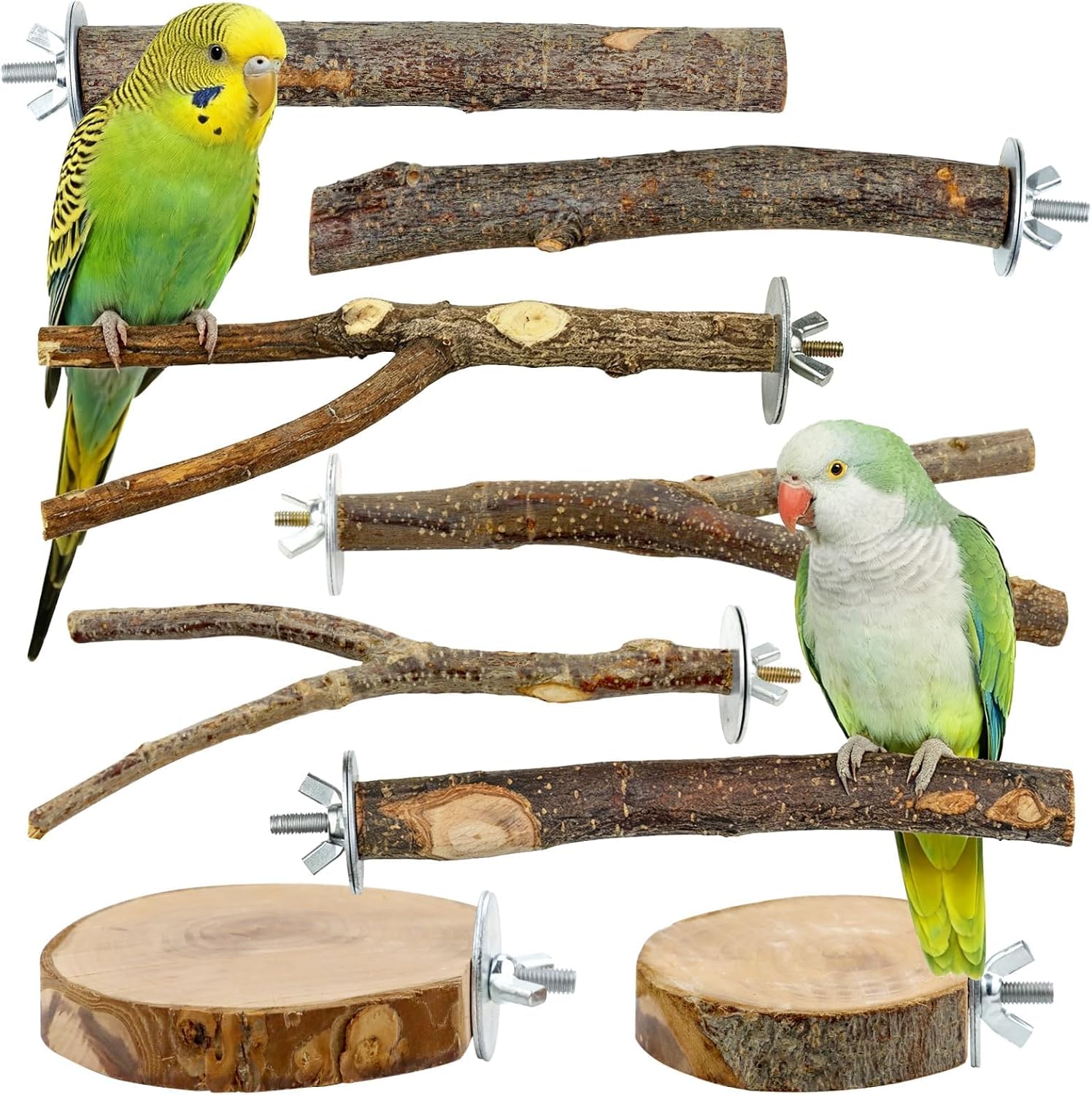
- Perches of varying thickness and material. Perches that are all the same diameter cause foot problems, including pressure sores and arthritis, because the bird's feet grip the same shape all day. Mix natural wood branches of different widths, rope perches, and a flat platform perch for resting. A set of check the current price on Amazon gives several diameters and textures at once, which is what bird feet need. Rope perches are comfortable but should be inspected for fraying, since loose threads can wrap around toes.
- Food and water bowls placed away from perches. Birds defecate where they sit, so bowls should not sit under a perch. Multiple water stations are useful because birds spill.
- Toys, rotated regularly. Foraging toys, shreddable toys, and items that make noise all serve a purpose. A parrot with nothing to do will often develop feather-plucking or excessive screaming. Rotate toys weekly so nothing becomes boring.
- Nothing that can trap a head or toe. Check every toy for gaps and rings. A common accident involves a bell with a gap between the clapper and the housing, or a chain link that catches a toe.
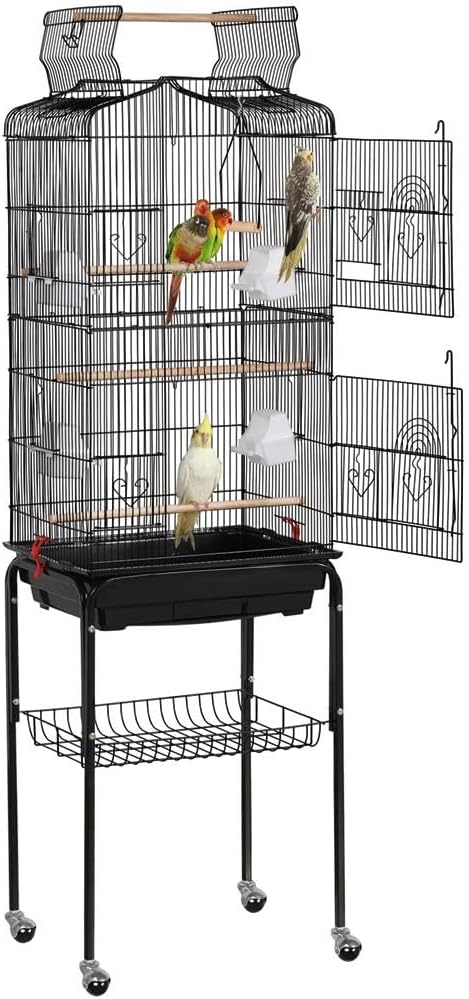
If the cage includes a play top, meaning a perch and toy hooks on the roof, it doubles as an out-of-cage hangout, which most birds enjoy. A play-top cage such as this option view this option on Amazon suits small-to-medium parrots when the bar spacing is appropriate for the species: it offers horizontal bars, a usable play area on top, and a layout that works for budgies, cockatiels, and conures. It is one concrete example of the configuration described throughout this guide, not a universal recommendation, and the specifications should still be checked against the bird in question.
Step 6: Where to Put the Cage
A cage that is perfect on paper can fail in the wrong location. Placement should be considered before purchase, because size and weight determine where a cage can realistically go.
Parrots are social flock animals. The cage belongs somewhere the bird can see the household, usually a living room or main living area, but not in the middle of constant traffic. The practical rules:
- Against a wall, not in front of a window. A bird placed in a window experiences a constant parade of perceived predators and significant temperature swings. Having one wall against a solid surface provides a sense of security.
- Out of direct sun and away from drafts. No unshaded windows, no air conditioning vents pointed at the cage, and no exterior doors that blast cold air each time they open.
- Away from the kitchen. This one saves lives. Cooking fumes, particularly from non-stick cookware heated too high, release compounds that are rapidly lethal to birds. The ASPCA Animal Poison Control Center documents overheated non-stick cookware as a cause of sudden bird death. The kitchen is the most dangerous room in the house for a parrot, and the cage should not be in it.
- High enough to feel safe. Birds feel vulnerable at floor level. Waist height or higher, on a stand or table, is appropriate. A cage on the floor houses a stressed bird.
The cage also needs to be somewhere the owner will actually interact with the bird. A cage in a rarely used spare bedroom produces a bird that slowly loses its quality of life through isolation. Visibility from the family's living space is part of the bird's mental health, not a luxury.
Budget Realities: Where to Spend and Where to Save
Cages range from roughly 40 dollars to well over 1,500 dollars, and the price difference reflects more than branding. Spend on size, material safety, and construction quality. Those are the cage's actual job. A cheap cage that is too small or poorly built creates constant problems, including rust, chipping coating, and sharp edges, and it will be replaced, which means paying twice.
Save on accessories. The matching toy bundle from the pet store is rarely necessary. A few natural branches from a bird-safe, pesticide-free tree, simple foraging toys, and paper liners do the job for a fraction of the price. Birds care about variety and activity, not the brand printed on a toy.
The math that convinces most people is straightforward. A quality stainless cage for an African grey or a macaw costs several hundred to over a thousand dollars and lasts 30 to 40 years. A cheap cage costs a couple hundred dollars and lasts perhaps five years, during which the bird lives with rust and chipping coating. Over the bird's lifetime, the expensive cage is the less expensive one.
Common Cage Mistakes
The following errors appear repeatedly in real homes:
- The starter-cage trap. Pet stores sell small cages with a bird illustration on the box. They are sized for shipping and display, not for living. Measure the interior dimensions rather than trusting the box.
- Round cages. Birds use corners to feel secure. A round cage leaves a bird exposed from every angle, and the curved bars make climbing awkward. Square or rectangular, always.
- One toy in a large cage. A large cage with nothing in it is worse than a small cage with enrichment. Fill the space.
- Dowels only. An all-dowel cage is a foot-problem factory. Mix perch diameters and materials.
- Buying for the bird you have rather than the bird it will become. A juvenile cockatiel grows into an adult cockatiel with the same space requirements. Buy the adult size now.
- Ignoring bar spacing because the cage is a bargain. There is no bargain in a cage that can trap a bird's head. This is the one specification that is genuinely non-negotiable.
Species-Specific Notes
Some species have requirements that deserve separate mention. Budgies are highly social and do best in pairs or small groups, which means the cage should be sized for more than one bird from the start. Cockatiels are prone to night frights, sudden panic episodes in the dark, and a cage with enough room to move without striking bars reduces the risk of injury during those episodes. African greys are among the most cognitively demanding companion parrots and need substantial foraging and problem-solving opportunities, which means a cage large enough to hold a rotating assortment of enrichment items. Macaws are powerful chewers, and for them stainless steel is close to mandatory, because powder coating will not survive their beaks for long.
General avian care guidance from the Association of Avian Veterinarians emphasizes housing appropriate to the species, along with regular veterinary attention, and the two are connected. Many of the injuries and illnesses seen in companion parrots trace back to housing that was too small, made of the wrong material, or configured without regard for the bird's natural behaviors.
Maintenance and Inspection
A cage is not a purchase that can be forgotten once assembled. Daily maintenance includes replacing liner paper, washing food and water bowls, and spot-cleaning droppings from perches and bars. Weekly maintenance includes a full tray clean, a wipe-down of bars and the grate, and a check of every toy for loose parts, sharp edges, or gaps that could trap a beak or toe.
Monthly, inspect the cage structure itself. Look for chipped powder coating, rust at welds, loose screws, and any spot where a bird has been persistently chewing. A cage that is developing rust or exposed metal at chew points is a cage that needs repair or replacement. For owners of large parrots, this inspection habit is what determines whether a cage lasts five years or thirty.
Cleaning products matter as well. Birds have sensitive respiratory systems, and strong household cleaners can cause harm even when used near, rather than on, a cage. Plain hot water, mild dish soap, and a bird-safe disinfectant are sufficient. The Merck Veterinary Manual section on exotic and laboratory animals covers housing and husbandry requirements for a range of species and is a useful reference for owners who want a clinical source rather than a retail one.
What to Avoid
Beyond the material and spacing issues already covered, several categories of cage and accessory are best avoided entirely. Cages with decorative paint or applied finishes can chip and be ingested. Cages with sharp interior hardware, exposed screws, or unfinished wire ends present injury risks. Cages with spring-loaded or guillotine-style doors can catch a bird's head or foot and should be replaced or secured. Nest boxes and snuggle huts made of fabric can fray and entangle birds, and some birds ingest the fibers, which can cause digestive blockages. Scented cage liners and scented cleaning products add airborne compounds that a bird's respiratory system is not built to handle.
Finally, avoid any cage purchased without knowing its bar spacing and material. Those two specifications determine safety more than any other feature, and a cage sold without them listed is a cage sold without accountability.
The Takeaway
Choosing a parrot cage comes down to five numbers and one idea. The numbers: wingspan clearance for size, correct bar spacing for head safety, safe material such as stainless steel or intact bird-safe powder coat, horizontal bars for climbing, and a location away from the kitchen. The idea is that the cage is the bird's home for decades, so the right approach is to buy the largest safe cage the budget allows and fill it with a life rather than simply a bird.
A bird that can flap, climb, forage, and retreat within its cage is not merely housed. It is living. That is the entire point of getting the specifications right before the purchase rather than after.