Disclosure: PawCritic is reader-supported. Links below are Amazon affiliate links, and we may earn a small commission if you purchase through them at no extra cost to you.
Walk into any pet store bird aisle and you will see the debate playing out on the shelves: bags of fortified pellets on one side, cheerful sacks of seed mix on the other. The pellets claim complete nutrition. The seeds claim to be what birds love. And somewhere in the middle stands every confused bird owner who just wants to feed their parrot something that will not shorten its life.
Here is the honest version, minus the marketing: seeds are what birds crave, and pellets are what birds need. The entire debate is really a question of how you manage that gap, because a bird's preference and a bird's health point in different directions, and pretending otherwise is how owners end up with a bird that is obese, malnourished, or both at once.
The Association of Avian Veterinarians and most avian nutrition specialists have been consistent on this for decades: a balanced diet for most pet parrots should be built around a high-quality formulated pellet, supplemented with vegetables and occasional fruit, with seeds playing only a small supporting role — never the foundation. That position is not a fad. It reflects decades of clinical experience with seed-related illness. But there is far more nuance than the shorthand of pellets good and seeds bad, and that nuance is where birds actually thrive or decline.
Why Seeds Got Their Bad Reputation
Seeds are not poison. A bird eating seeds is not a tragedy in progress. The problem is that a seed-based diet — meaning seeds as the primary or exclusive food — is missing things birds need and overloaded with things they do not.
Most commercial seed mixes are heavy on sunflower seeds, safflower, and millet: high in fat, high in calories, and low in several vitamins and minerals, especially vitamin A and calcium. Vitamin A deficiency is among the most common nutritional problems avian veterinarians report in seed-fed birds, and it typically shows up as respiratory issues, eye and sinus problems, and poor feather quality. Calcium deficiency is equally common and contributes to egg-binding in laying females and to weak, fragile bones. The Merck Veterinary Manual documents these deficiency patterns across pet and exotic species, and the clinical picture is remarkably consistent.
And here is the part that makes seeds insidious: they are functionally addictive to a bird. Parrots are like toddlers — given the choice, they will eat the fatty option and refuse the broccoli. A bird that picks out all the sunflower seeds and leaves the rest is eating a diet even worse than the mix's label suggests, because the fattest items are gone first and the fortified smaller seeds are left behind. Owners watch this happen for years and conclude the bird is just picky. The bird is eating a junk-food diet and, per published veterinary guidance, is likely to live a shortened, disease-prone life on it.
The AAV is blunt about this: seed-only diets are among the leading causes of preventable illness in pet birds. The list of seed-diet consequences reads like a veterinary textbook chapter — obesity, hepatic lipidosis (fatty liver disease), atherosclerosis, vitamin deficiencies, poor plumage, and reproductive disorders. None of it is inevitable. All of it is avoidable with a deliberate diet change.
What Pellets Actually Are
Pellets are the bird world's equivalent of nutritionally complete dog food. Every pellet in a bag is identical, which is precisely the point — each one contains the same balanced mix of nutrients, so the bird cannot pick out the fatty pieces and skip the rest. High-quality pellets are formulated by veterinary nutritionists to meet the needs of parrot species, and they are the closest thing to guaranteed complete nutrition that exists in the bird food aisle.
The upsides are well documented. A bird on a good pellet diet receives consistent vitamin A, calcium, and protein. Feather quality tends to improve. Obesity risk drops. Fatty liver disease — a major killer of pet parrots — becomes far less likely on a formulated base diet. For owners, pellets remove the need to act as an amateur nutritionist calculating micronutrients every day, because the manufacturer has already done that work and printed the analysis on the bag.
The downsides are real too, and they are worth understanding before you switch. First, pellets are processed food — uniform, soft, and quickly eaten, so they provide none of the foraging and chewing variety that whole foods and seeds in the shell do. Second, many birds refuse them outright at first, and converting a stubborn adult can take months of patience. Third, pellet quality varies enormously between brands. The cheapest supermarket pellets are often just extruded corn meal with a synthetic vitamin spray, which is not meaningfully better than seeds. Look for brands with an established reputation, a published guaranteed analysis, and formulations developed with avian nutritionists involved.
If you are starting fresh with a young, recently weaned bird, pellet-first from day one is strongly recommended — raising a bird on pellets is dramatically easier than converting an adult later. Diet should genuinely be part of the species-selection decision, because some species (budgies, cockatiels, amazons) are notorious seed junkies while others take to pellets with little resistance.
The Head-to-Head: Pellets vs Seeds Compared
| Factor | Pellets | Seeds |
|---|---|---|
| Nutritional completeness | Complete — every pellet is balanced | Incomplete — birds select favorites, leaving gaps |
| Vitamin A | Fortified, consistent | Often deficient in seed-heavy diets |
| Calcium | Fortified | Low; contributes to egg-binding and weak bones |
| Fat content | Controlled, typically modest | High — sunflower and safflower are fat-dense |
| Obesity risk | Low with proper portions | High — birds overeat the fatty seeds |
| Foraging and enrichment value | Low — uniform, no shell to crack | High — shells, cracking, and variety engage natural behavior |
| Palatability | Birds often resist initially | Most birds love them instantly |
| Cost | Higher per pound, but less waste | Cheaper per pound, but birds waste a lot |
| Shelf life and storage | Needs airtight storage; can go stale | Oils go rancid; needs cool, dark storage |
| Risk of selective eating | Essentially zero — all pellets identical | Guaranteed — birds pick favorites |
That table tells the story: pellets win on health outcomes, seeds win on enjoyment and enrichment. The solution is not picking a side — it is building a diet that captures both strengths while limiting each weakness.
The Real Answer: A Diet, Not a Single Food
Here is what avian vets generally recommend for most pet parrots, in rough proportions:
- 60-70% high-quality pellets — the nutritional foundation of everything else.
- 20-30% fresh vegetables — dark leafy greens, bell peppers, broccoli, carrots, squash. Chop them small; variety across the week matters more than any single vegetable.
- 5-10% fruit — as a treat, not a staple. Fruit is sugar, and sugar adds up.
- Small amounts of seeds, nuts, grains, and legumes — as treats, foraging rewards, and training incentives.
Seeds within this model are not the enemy — they are the enrichment. A sprinkle of seed mix hidden in a foraging toy, a sunflower seed given as a training reward, a few nuts packed into a puzzle feeder: that is how you use seeds the way birds evolved to use them, as a valued resource that requires effort to obtain. Owner reports and behavioral literature both describe birds that work for treats valuing them more, foraging more actively, and getting more physical exercise in the process. A bird that spends an hour extracting seeds from a puzzle toy is living far closer to its natural behavior pattern than one that eats a free bowl of mix in ten minutes.
How to Convert a Seed-Junkie Bird to Pellets
This is the section that matters most, because simply swapping the food bowl will fail with most adult birds. Countless owners describe putting a bowl of pellets next to a bowl of seeds, watching the bird ignore the pellets for a week, and concluding the bird will not eat pellets. The bird was not refusing pellets — it was waiting out the owner. Birds are patient. They know the seeds are coming back.
The conversion protocol recommended across avian veterinary resources looks like this:
- Start with a mix. Never go cold turkey. Mix pellets into the seed bowl in increasing proportion over two to four weeks. Many birds begin eating pellets by accident while picking through the seeds. For birds from a seed-heavy background, you can check the current price on Amazon for a conversion-formula pellet — these products are designed specifically to be more palatable to seed-trained birds, which is exactly what this stage calls for.
- Crush or moisten the pellets. Some birds accept crumbled pellets more readily than whole ones. A few drops of water or a bit of mashed fruit on top can mask the unfamiliar texture and scent.
- Make seeds a reward, not a staple. Once the bird is eating some pellets reliably, move the seed portion into foraging toys and training sessions instead of the main bowl. The bird still gets seeds — it just has to work for them.
- Monitor the weight. Weigh the bird daily during conversion using a gram scale. A bird that is losing weight needs the conversion slowed down, and a bird that refuses all food for more than 24-48 hours needs a veterinarian immediately, not a waiting game. Small birds have fast metabolisms and limited reserves.
- Be patient for weeks, not days. Full conversion of a stubborn adult can take two to three months. That timeline is normal and well within published recommendations. Persistence wins.
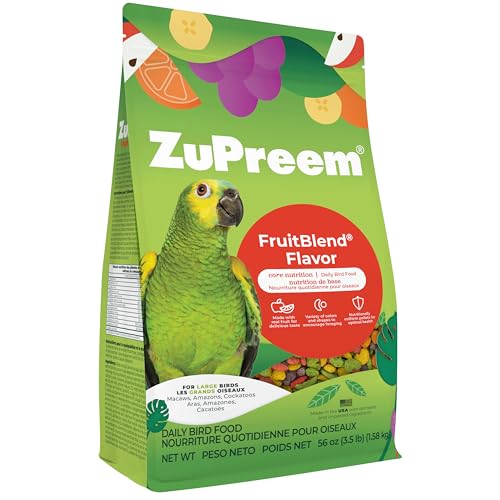
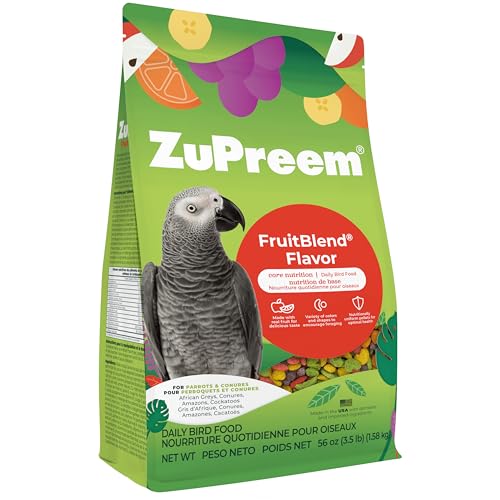
For most owners starting the process, you can view this option on Amazon for a high-potency pellet formula sized to your bird. The size grade genuinely matters — small birds like budgies and cockatiels need small or crumbled pellets they can manage, while macaws and cockatoos handle large morsels — and high-potency formulas are denser in nutrition per gram, which helps during the conversion window when the bird is eating less overall.
Sizing, Storage, and Everyday Practicalities
Pellet sizing deserves more attention than it usually gets. A pellet that is too large for the bird gets dropped, crushed, or ignored; a pellet that is too small may not register as food to a large parrot accustomed to cracking seeds. Manufacturers typically label their products by species or beak size, and following those labels is the simplest reliable guide. As a rule of thumb, budgies, canaries, and finches do best with fine or crumble textures, cockatiels and conures with small pellets, amazons, greys, and eclectus with medium, and macaws and cockatoos with large or extra-large formats.
Storage matters more than most owners realize. Pellets contain fats that oxidize, and vitamins that degrade with heat, light, and time. Keep the working portion in an airtight container in a cool, dark cupboard, and store bulk bags sealed or frozen. Buy sizes your bird will finish within roughly six to eight weeks of opening rather than the giant economy bag, because stale, nutrient-degraded pellets defeat the entire purpose of feeding them. Seeds have the same rancidity problem — their oils spoil faster than most owners expect, and a rancid seed mix smells faintly like old paint or crayons when you learn to recognize it.
Portion control is the other everyday discipline. Follow the manufacturer's feeding chart on the bag as a starting point, then adjust to the bird's body condition. A bird's keel — the ridge of the breastbone — should be palpable with a thin layer of muscle on either side, not buried in fat or razor-sharp. Regular weighing on a gram scale, weekly once the diet is established, catches drift long before it becomes visible in the feathers.
Seed-Only Red Flags: When It Is Already a Problem
If your bird has been on a seed-only diet for a while, look for these signs that it is time to change — and probably time to see an avian vet:
- Poor feather quality — dull, brittle, broken, or discolored feathers; feather destructive behavior can have a nutritional component.
- Overweight or fatty lumps — especially fat deposits over the breast and abdomen. Birds hide obesity under fluffed feathers surprisingly well.
- Scaling or crusting around the eyes and nares — a classic presentation of vitamin A deficiency in companion parrots.
- Lethargy and reduced activity — a bird that sits more than it moves, particularly one that used to be active.
- Respiratory sounds — wheezing or clicking can reflect vitamin-A-related changes to respiratory tissues, not just an infection.
- Constant hunger with loss of condition — a bird that eats constantly yet loses muscle over the keel needs a vet visit, period.
A bird showing any of these on a seed diet needs two things: an avian veterinarian's evaluation and a gradual diet overhaul. Some conditions, like fatty liver disease, are reversible in early stages but progressive if the diet stays the same. Others, like advanced atherosclerosis, may already be permanent — which is exactly why prevention through diet is emphasized so heavily in veterinary guidance.
Which Approach Suits Whom
Pellet-first suits: new bird owners setting up their first diet; people who want reliable nutrition without becoming avian nutritionists; birds with existing health problems such as obesity, fatty liver, or an egg-binding history; and anyone whose bird is young enough to establish good habits early.
A balanced mix — pellets, vegetables, and seed treats — suits: almost everyone with a parrot. This is the destination diet. Pellet-only feeding misses the enrichment value of foraging; seed-only feeding misses the nutrition. The middle path is where birds live longest and behave most like birds, and it is what most avian veterinarians actually describe when asked for a practical feeding plan.
Seed-first suits: almost no one, long-term. The one legitimate use is as a temporary, monitored stage during conversion — and even then, it is a stage, not a destination. Even so-called species-appropriate seed mixes, when they form the whole diet, produce the same deficiency pattern over time. The AAV does not mince words on this: seeds alone are not a complete diet for any pet parrot species.
Fresh Food: The Forgotten Third Category
One thing the pellets-versus-seeds framing leaves out entirely is fresh food. Vegetables, sprouted seeds, and occasional fruit are not a compromise between the two camps — they are a separate, essential category that both sides need. A daily chop (finely chopped vegetable mix) gives birds moisture, fiber, natural vitamins, and the texture variety that neither pellets nor dry seeds provide. Sprouted seeds deserve special mention: sprouting partially consumes the seed's fat reserves and increases its vitamin content, which is why many experienced keepers describe sprouts as the one form of seed that approaches being a health food.
The practical setup most avian vets endorse looks like this: pellets available all day, a bowl of fresh chop offered in the morning and removed within a few hours before it spoils, and seeds and nuts reserved for training and foraging. That is the whole system. It is not complicated once the conversion phase is behind you.
Two safety notes on fresh food. Remove fresh items promptly — spoiled vegetables grow bacteria and mold quickly at room temperature, and birds are sensitive to both. And know the toxic list before offering anything new: avocado, chocolate, caffeine, alcohol, onion, garlic, and fruit pits are all documented hazards, and the ASPCA Animal Poison Control resources cover dangerous foods in detail. When in doubt about a food, do not offer it until you have checked an authoritative source.
Common Mistakes and What to Avoid
Beyond the pellets-versus-seeds question itself, a handful of recurring mistakes show up constantly in owner reports and veterinary case descriptions. Recognizing them is half the battle.
- Treating a fortified seed mix as a complete diet. Fortification helps on paper, but the bird still picks out its favorites and the vitamin coating often stays on the rejected seeds at the bottom of the bowl.
- Starving a bird into eating pellets. Withholding all other food is dangerous, not firm. Small birds can enter serious trouble within a day or two of not eating. Conversion is gradual by design.
- Buying pellets by price alone. The cheapest bags are frequently corn-heavy extrusions with minimal formulation behind them. Compare guaranteed analyses and look for brands with avian nutritionists on record.
- Ignoring water. A bird eating dry pellets drinks more than a seed-eater. Fresh water needs changing at least daily, more often if the bird baths in the bowl or drops food in it.
- Overfeeding fruit. Fruit is sugar with vitamins attached. It should look like dessert on the weekly menu, not a main course.
- Forgetting grit and supplements. Most parrots do not need grit, and calcium supplements should come from cuttlebone or mineral blocks unless a vet prescribes otherwise. Random supplements can cause as many problems as they solve.
The Bottom Line
The pellet-versus-seed argument has damaged plenty of owner-and-bird relationships — owners carrying guilt over years of seed feeding, birds being deprived of food by owners who read one article and switched everything overnight. Neither extreme is the answer.
The answer is unglamorous, which is probably why it does not sell as well: feed a quality pellet as the base, pile on the vegetables, use sprouted seeds where you can, and let dry seeds be the reward they evolved to be. A bird fed this way can be expected to live longer, molt into better feather condition, and — the part that surprises many owners — still get plenty of seeds. Just not as a meal. As a treasure.
Birds that work for their treats are busier, more engaged birds. And engaged birds, by most accounts from keepers and behaviorists alike, are the ones that eat their vegetables. The diet and the behavior reinforce each other, and both start with the same decision at the store shelf.