Why Substrate Choice Defines Your Aquarium
Substrate is not just decoration. It is the foundation of the entire aquarium ecosystem. A significant share of the tank's beneficial bacteria, and therefore its biological filtration, lives on and within the substrate bed. Rooted plants anchor themselves in it and, depending on the material, draw nutrients directly from it. Substrate can raise or buffer pH, soften or harden water, trap or release waste, and determine whether bottom-dwelling fish can feed naturally without injuring themselves. It also sets the entire visual tone of the tank, from pale riverbed sand to jet-black volcanic soil.
That is why a poor substrate decision made on setup day can constrain an aquarist for years. Changing substrate in an established tank almost always means a full teardown: draining, removing fish, uprooting plants, and recycling the biological filter. Choosing correctly the first time, based on your livestock, your planting ambitions, and your local water chemistry, saves enormous effort later.
This guide explains the main substrate categories, how much to buy, how layering works, which substrates suit which fish, and what to look for when comparing products. Rather than a ranked list, the focus is on the decision framework itself, with one concrete product example you can examine on Amazon to see how the principles apply to a real listing.
aquarium substrate
Types of Aquarium Substrate
Every commercial substrate falls into one of a handful of categories, defined by two properties: whether the material is chemically inert or active, and how coarse the grain is. Getting those two variables right eliminates most substrate mistakes before they happen.
- Inert gravel: Non-reactive rock that does not affect water parameters. Suited to African cichlids, goldfish, and any setup where the keeper wants to control chemistry entirely through water changes and additives rather than the substrate itself.
- Inert sand: Fine particles suited to bottom-dwellers such as Corydoras catfish, Kuhli loaches, and freshwater stingrays, which sift substrate through their gills as they feed. Sand is also standard in saltwater tanks and many aquascapes. Inert sand has no plant nutrition, so rooted plants depend on root tabs or water-column dosing.
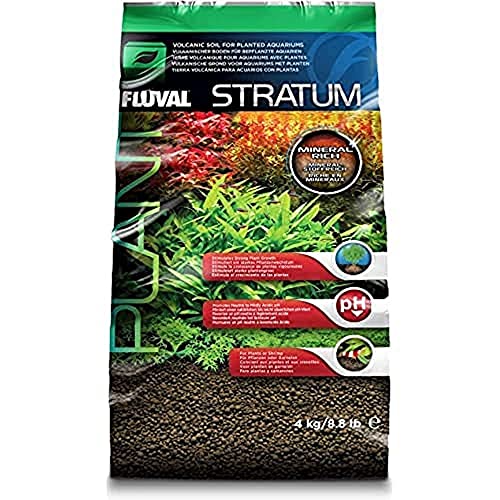
- Plant-active substrates: Soils and enriched gravels formulated to feed aquatic plants with added nutrients and humic substances. Many active soils also lower and buffer pH into soft, acidic territory. That buffering is desirable for shrimp and South American species but harmful to hard-water fish, so these substrates must be matched to livestock deliberately.
- Marine and reef sand: Aragonite-based sand that dissolves slowly to buffer pH at stable marine levels, roughly 8.1 to 8.4, and contributes to calcium and alkalinity balance in reef systems. It is unsuitable for freshwater tanks that need neutral pH.
- Nutrient-enriched inert substrates: Porous, fired-clay or volcanic gravels that carry plant-available iron and other nutrients without altering pH. Seachem's Flourite line and CaribSea's Eco-Complete are the two most widely cited examples in this class, and they suit planted tanks where the keeper wants plant nutrition combined with chemical neutrality.
How to Evaluate a Substrate Before Buying
When comparing products, the specifications that matter most are grain size, chemical activity, nutrient content, and longevity. Grain size determines both fish safety and planting behavior: grains under about one millimeter suit sand-sifting fish, while two-to-five-millimeter gravels are easier to plant into but can injure delicate barbels. Chemical activity is usually stated plainly on manufacturer pages, either as pH-neutral and inert, or as buffering to a stated range. Treat any listing that is vague about chemistry with suspicion, and verify against the manufacturer's own documentation.
Nutrient content matters only if you keep rooted plants. Inert substrates grow plants adequately when paired with root tabs, but enriched substrates support heavier root feeding with less supplementation. Longevity differs sharply by category: inert gravels and sands last indefinitely, while active soils are rated by their manufacturers to break down and exhaust within roughly one to two years, after which growth slows and aquascapers typically replace the bed during a rescape.
Owner reviews are a useful cross-check on manufacturer claims. Patterns worth looking for in verified reviews include how dusty a product arrives, how much rinsing it needs, whether it clouds water on initial fill and for how long, and how it behaves after several months of use. A single glowing or angry review means little; a recurring complaint across many reviewers usually reflects a real characteristic of the product.
A Concrete Example: Seachem Flourite Black Sand
To see these evaluation criteria applied to a real product, consider Seachem Flourite Black Sand, a long-established nutrient-enriched clay substrate that is widely available on Amazon. It is one of the most commonly recommended options for planted tanks that also house sand-preferring fish, because it combines a fine, sub-millimeter grain with plant-available nutrients while remaining pH-neutral and inert. According to the manufacturer, it is a porous clay gravel that supplies nutrients to plant roots and can be used alone or mixed with other gravels, and it does not need to be replaced over time.
This combination suits aquarists keeping Corydoras, Kuhli loaches, or other sifters alongside rooted plants, since the grain is fine and smooth enough to be safe for barbeled fish. The trade-offs reported by owners are consistent: the product is dusty out of the bag and typically needs several rinses, some initial clouding can persist for a day or two after filling, and because the particles are lighter than natural sand, a slightly deeper layer helps hold plants anchored until roots establish. Plant growth is generally described as solid but less explosive than what active soils such as ADA Amazonia produce, which is the expected trade for chemical neutrality. If this profile matches your tank, check the current price on Amazon.
The same evaluation framework applies to any competitor. If your water is already soft and acidic and you keep shrimp or South American fish, an active soil that buffers pH down may be preferable, at the cost of a limited lifespan and ammonia release during the first weeks. If you keep African cichlids or goldfish in hard water, an inert sand or gravel is the correct choice, with plant nutrition supplied separately through root tabs. If you run a reef tank, aragonite sand is effectively mandatory for pH stability. No single substrate wins every category; the right answer depends entirely on the livestock and water chemistry involved.
Comparison of Substrate Categories
| Category | pH Effect | Typical Grain | Lifespan | Best Suited To |
|---|---|---|---|---|
| Active soil (e.g. ADA Amazonia, Tropica) | Buffers soft/acidic, roughly 5.5-6.5 | Fine, 2-3mm | 1-2 years | Planted tanks, shrimp, aquascaping |
| Nutrient gravel (e.g. CaribSea Eco-Complete) | Neutral | 3-5mm | Indefinite | Planted tanks with hard-water fish |
| Nutrient sand (e.g. Seachem Flourite Black Sand) | Neutral | Under 1mm | Indefinite | Planted tanks with sand-preferring fish |
| Inert sand (e.g. CaribSea Super Naturals) | Neutral | 0.5-1mm | Indefinite | Community tanks, cichlids, sifters |
| Inert gravel (e.g. Estes quartz pebbles) | Neutral | 3-5mm | Indefinite | Goldfish, unplanted setups |
| Aragonite marine sand | Buffers to 8.1-8.4 | 0.5-1mm | Long-lived, dissolving slowly | Marine and reef tanks |
How Much Substrate Do You Need
aquarium substrate
A common rule of thumb is one to two pounds of substrate per gallon of tank volume for a one-to-two-inch layer, but calculating from the tank's footprint is more accurate because depth, not volume, drives the requirement. A workable approximation is one pound of substrate per twenty square inches of tank bottom per inch of depth.
For example, a standard 20-gallon long tank measures 30 by 12 inches, giving 360 square inches of bottom. Dividing by twenty gives about eighteen pounds per inch of depth, so a two-inch planted bed calls for roughly thirty-five pounds. Tall tanks of the same volume need less, and shallow breeder-style tanks need more. Because substrate is heavy and shipping small top-up bags is inefficient, it is usually better to buy the full amount up front.
Depth requirements vary by purpose. A decorative or bacteria-hosting bed in an unplanted tank works fine at one inch. Planted tanks generally want two to three inches so roots can establish and anchor, with deeper beds at the back for heavy root feeders. Marine reef tanks with deep sand beds for denitrification may go four inches or more in designated areas, though that is a specialized technique with its own maintenance demands.
Substrate Layering for Planted Tanks
Advanced aquascapers often layer substrates rather than using a single material. The classic structure has three parts. A bottom layer of nutrient-rich soil, roughly an inch deep, feeds deep roots. An optional middle amendment of root tabs, clay balls, or clean peat adds slow-release nutrition. A top cap of one to two inches of inert sand or fine gravel seals the nutrient layer beneath it so soil does not cloud the water column.
Layering can produce dramatic plant growth, but it is effectively permanent. Once the layers are disturbed and mixed, by rescaping, by digging fish, or by deep cleaning, they cannot be separated again. Anyone planning to rearrange a tank frequently should stick with a single uniform substrate and use root tabs instead.
Substrate and Fish Compatibility
Matching substrate to livestock is where most beginner mistakes happen, and the consequences are physical injuries rather than aesthetics. General husbandry references, including the Merck Veterinary Manual's exotic and laboratory animal coverage, stress that environmental matching to a species' natural habitat is fundamental to fish health, and substrate texture is part of that match.
- Corydoras, Kuhli loaches, and spiny eels: These fish feed by sifting substrate through their mouths and gills. Coarse or sharp gravel abrades their barbels and gill filaments, leading to infection. Fine sand under one millimeter is the safe choice.
- Goldfish: Goldfish pick up and spit substrate constantly, and gravel large enough to fit in the mouth can lodge in the throat. Use fine gravel of three to five millimeters or sand.
- African cichlids: Many rift-lake cichlids dig extensively and rearrange the bed. Inert sand is standard, and it also suits the hard, alkaline water these fish require, which rules out active soils.
- Bettas: Bettas tolerate any substrate, but smooth sand or rounded gravel eliminates the risk of fin tears on sharp edges.
- Geophagus and other earth-eaters: These species literally ingest substrate all day. Fine sand is mandatory; gravel causes chronic internal injury.
- Marine fish and invertebrates: Aragonite sand maintains marine pH, and fine grain supports burrowing gobies and Nassarius snails. For broader guidance on fish health and water quality management, the UF/IFAS Extension EDIS aquaculture publications are a reliable public resource.
Setup, Rinsing, and Maintenance
Most substrates should be rinsed before use. Place the material in a clean bucket, run water over it, agitate, pour off the cloudy water, and repeat until the water runs reasonably clear. This removes transport dust that would otherwise cloud the tank for days. Exceptions exist: manufacturers of some enriched substrates, including Seachem for the Flourite line, describe their products as ready to use directly from the bag, though many owners still give a quick rinse to reduce initial clouding, and a light rinse is all active soils should get, since aggressive rinsing strips their nutrient and humic content.
Long-term maintenance differs by type. Inert sand compacts over time and can develop anaerobic pockets that release toxic hydrogen sulfide when disturbed, so occasional gentle stirring or the presence of Malaysian trumpet snails is recommended. Active soils slowly deplete and break down into mud over one to two years; they still function but lose fertilizing capacity, and aquascapers commonly replace them during annual rescapes. Deep vacuuming of planted beds is generally avoided, since it uproots plants and removes the very nutrients they depend on; instead, hover the siphon over the surface to lift debris without penetrating the bed. General species care guidance from sources like the ASPCA pet care library reinforces the principle that consistent, low-stress husbandry beats reactive correction.
Common Mistakes to Avoid
Several substrate errors recur constantly in hobbyist forums. Mixing different grain sizes in a single bed is the most common: over time, sand sinks through gravel and the bed segregates into an unattractive, patchy mix. Intentional layering works because the layers are placed and capped deliberately; casual mixing does not. Choosing an active soil for hard-water fish is the second frequent error, producing a permanent chemical fight between the substrate's buffering and the keeper's target parameters.
Other avoidable mistakes include using garden soil without understanding the Walstad method, which risks ammonia spikes, pesticide contamination, and runaway algae; underestimating the ammonia released by new active soils, which mandates a fishless cycle of two to three weeks before livestock goes in; skipping rinsing on dusty products and spending a week fighting cloudy water; and buying too little material to reach the target depth, which leaves plants poorly anchored. Painted novelty gravels deserve caution as well: choose products with colorfast, non-toxic coatings, since flaking paint has no place in a living tank.
Frequently Asked Questions
Can I mix different substrates?
Generally no. Different grain sizes separate over time as sand sinks below gravel, producing a messy result. Deliberate layering with a proper cap is the exception, not mixing.
Do I need to wash substrate before using it?
For most products, yes, in a bucket until the rinse water runs clear. Active soils should get only a light rinse to preserve their nutrient content. Some enriched gravels are sold as rinse-free, though owners often rinse anyway to limit clouding.
How often should substrate be replaced?
Inert sands and gravels last indefinitely. Active soils are typically replaced every one to two years as their nutrient charge depletes and their structure breaks down.
Can I use soil from my garden?
Technically yes, using the Walstad or dirted-tank method, but it carries real risks from unknown fertilizers, pesticides, and organic load. Most hobbyists are better served by commercial aquatic soils formulated for the purpose.
Where to Look
If you want to compare specifications and current pricing on the concrete example discussed above, you can view this option on Amazon. Reading the manufacturer's description alongside verified owner reviews on the listing is a quick way to confirm grain size, chemical claims, and real-world dust behavior before committing to a full bed.
Final Thoughts
Substrate is one of the few aquarium decisions that is effectively permanent, so it deserves more deliberation than filter or heater choices, which can be swapped in an afternoon. Match the category to your livestock first: fine inert sand for sifters and cichlids, enriched neutral substrates for planted community tanks, active soils for soft-water planted and shrimp setups, aragonite for marine systems. Then verify grain size and chemistry claims against manufacturer specifications and review patterns before buying the full quantity.
For keepers pairing rooted plants with sand-loving fish, nutrient-enriched plant substrates like the Seachem Flourite example discussed here occupy a useful middle ground, and you can check the current price on Amazon to see whether it fits your plans. Whatever you choose, buy enough, rinse appropriately, cycle before adding livestock, and plan around the maintenance profile of the material rather than against it.
Affiliate Disclosure: PawCritic.com participates in the Amazon Services LLC Associates Program. We may earn commissions from qualifying purchases at no extra cost to you.