Bird Cage Accessories and Essentials: A Research-Based Buying Guide for 2026
Published on June 19, 2026 by PawCritic — Birds Category
Bringing a bird into a home is both a joy and a serious responsibility. Choosing the right cage is the first major decision, but it is the accessories inside that cage that shape a bird's daily quality of life. Food bowls determine how easily a bird eats and how often food is wasted. Water dispensers affect hydration and bacterial exposure. Perches influence foot health, nail length, and beak condition. Baths support feather maintenance. Cuttlebones supply calcium. Liners and foraging items round out hygiene and mental stimulation. Each category carries its own safety and material considerations, and published guidance from avian veterinarians and welfare organizations consistently emphasizes that accessories are not interchangeable decoration.
The 2026 market offers more variety than ever: ceramic slow-feed bowls, waterfall-style baths, UV-stabilized acrylic perches, and stainless steel crocks. With that variety comes confusion. This guide explains what to look for in each category, why specific materials and dimensions matter, and how to avoid common mistakes. Rather than ranking dozens of products, it focuses on the principles that apply across species and cage types, using one concrete example in the food and water category so readers can see how those principles translate into a real purchase decision.
Why Accessories Matter More Than Most Owners Realize
Avian medicine treats the cage environment as a primary health factor. The Association of Avian Veterinarians' bird owner resources repeatedly stress that many captive-bird health problems — bumblefoot, obesity, feather damage, respiratory irritation — trace back to housing and accessory choices rather than infectious disease. A bird that spends its life on a single smooth dowel perch of uniform diameter develops pressure points on the soles of its feet. A bird drinking from an open bowl positioned under a perch ingests droppings and feather dust with every sip. A bird without foraging opportunities develops stereotypic behaviors. None of these outcomes requires neglect; they simply require the wrong accessories.
The reverse is also true. Small, inexpensive changes — swapping one dowel for a natural branch, adding a second bowl, hanging a cuttlebone — produce measurable improvements in foot condition, feather quality, and behavior. That is why this guide treats accessories as health equipment rather than optional extras. The goal is not to fill a cage with objects but to satisfy specific physical and behavioral needs with the safest materials available.
Food Bowls: The Foundation of Good Nutrition
Food bowls are the accessory most owners replace last and regret most. Plastic bowls scratch easily, and those microscopic scratches harbor bacteria that survive ordinary washing. Plastic can also absorb odors and, in some formulations, leach chemicals over time. Stainless steel, by contrast, is non-porous, inert, and dishwasher safe. Published husbandry guidance from exotic-animal references, including the Merck Veterinary Manual's exotic and laboratory animals section, consistently favors non-porous, easily sanitized food and water containers for captive birds.
Size matters as much as material. A bowl that is too deep allows food to pile up and spoil unnoticed at the bottom. A bowl that is too shallow lets hookbills scoop food over the rim, wasting it and attracting pests. The practical rule is that the bowl should be wide enough that the bird can see the bottom and deep enough that a full portion does not spill during normal eating. For most small parrots, a 4 to 8 ounce bowl is adequate; medium parrots generally need 8 to 16 ounces; large macaws and cockatoos may need 32 ounces or more, particularly for fresh foods.
Mounting style deserves attention. Snap-in cups pop out for cleaning but can be dislodged by determined birds. Screw-on crocks are more secure but slower to remove. Bowl-and-hook designs sit in a ring attached to the cage bars and are the easiest of all to service, though they can be tipped by large birds if not seated properly. Whatever the style, bowls should be positioned away from perches so droppings cannot fall into them, and away from water sources so spilled food does not contaminate drinking water.
A Concrete Example: Stainless Steel Bowls
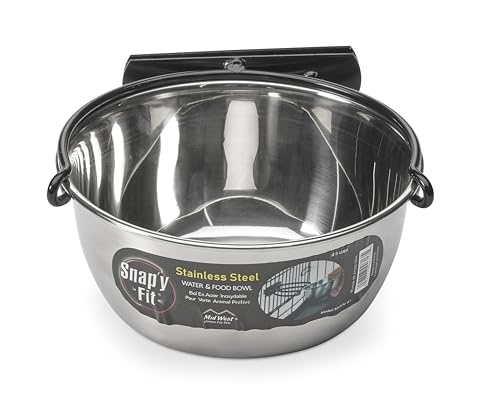
One widely available option that illustrates these principles is the Prevue Pet Products Silver Lining line of stainless steel bowls, which is manufactured in heavy-gauge 304 stainless steel and offered in cup, bowl, and crock mounting styles. The rolled rim design is intended to reduce seed scattering, and the bowls are listed as dishwasher safe. For owners who want a single, durable food and water container that resists rust and odor, this is a reasonable starting point. The trade-off is straightforward: stainless steel costs more than plastic up front and clangs audibly against cage bars, but it typically outlasts several plastic bowls and does not develop the scratch patterns that make plastic harder to sanitize over time.
check the current price on Amazon for the stainless steel bird bowls if you want to compare sizes and mounting styles directly. A second, smaller stainless cup option is also available at view this option on Amazon, which can be useful as a secondary fresh-food dish for smaller species.
Water Dispensers: Bottles, Bowls, and the Hygiene Trade-Off
Water is where accessory choices have the most immediate health consequences. Open bowls are convenient and allow bathing, but they collect seed hulls, droppings, and feather dust within hours. In warm rooms, bacterial counts in an open bowl can rise substantially over a single day. Sealed gravity-feed bottles with a ball-tipped sipper tube dispense water only when the bird drinks, keeping the reservoir closed to contamination. The trade-off is behavioral: not every bird recognizes a bottle as a water source, and some birds strongly prefer open water.
The practical compromise used by many experienced keepers is to offer both. A bottle serves as the primary clean water source, while a small open dish is provided for bathing and for birds that drink from dishes. If only a bowl is used, it should be changed at least twice daily and scrubbed with hot soapy water and a bottle brush each time. Bottles themselves need weekly disassembly and scrubbing of the sipper tube, since biofilm can form inside the tube even when the reservoir looks clear.
Bottle capacity should match species size. Small birds such as budgies and finches typically drink little and do well with an 8 ounce bottle. Cockatiels and lovebirds are usually comfortable with 16 ounces. Larger parrots may need 32 ounces or more, especially in warm climates. Mounting height matters too: the sipper tube should sit at roughly beak height when the bird is perched, so the bird does not have to stretch or crouch to drink.
Perches: Foot Health Starts Here
Perches are the most misunderstood accessory in bird keeping. A single smooth dowel of uniform diameter, sold with many cages, is the worst possible default because it concentrates pressure on the same points of the foot every time the bird sits. Over months, this leads to calluses, pressure sores, and in severe cases bumblefoot, a painful bacterial infection of the foot pad. Avian veterinarians consistently recommend multiple perches of varying diameter, texture, and material so that pressure points shift throughout the day.
Natural hardwood branches are the gold standard. Manzanita, dragonwood, and java wood are dense, resistant to rot, and naturally irregular in diameter, which exercises the foot's tendons and muscles. Manzanita in particular is extremely hard and resists chewing, making it suitable for larger parrots. Branches should be kiln-dried or otherwise treated to eliminate pests, and they should be inspected regularly for cracks or splinters as they age. Threaded metal end caps with wing nuts provide the most secure mounting, far more reliable than suction cups, which fail with temperature changes and can drop a bird unexpectedly.
Rope perches, often made of cotton or sisal, offer a soft alternative and are useful for birds with existing foot sensitivity. The trade-off is hygiene: rope absorbs droppings and moisture and must be replaced when frayed or soiled, typically every two to four months. Rope perches also pose an entanglement risk if loops develop, so they should be inspected frequently. Concrete or mineral grooming perches, sometimes called pedi-perches, help wear down nails naturally, but they should never be the only perch and should be positioned where the bird stands briefly rather than sleeps. Prolonged contact with an abrasive surface can cause abrasions on the sole.
The rule of thumb for diameter is that the bird's foot should wrap roughly two-thirds of the way around the perch. For budgies and finches, that means diameters around 0.4 to 0.6 inches. Cockatiels and conures typically need 0.5 to 0.8 inches. Amazon parrots, African greys, and similarly sized birds generally need 0.8 to 1.2 inches, while macaws and large cockatoos may need 1.2 to 1.5 inches or more. Every cage should include at least one natural branch with varying diameter, one flat platform perch for resting, and one textured perch for nail maintenance.
Baths and Bathing Accessories
Birds bathe to maintain feather structure, regulate temperature, and remove dust and dander. Species from humid climates, such as many parrots, often bathe enthusiastically; species from arid regions may bathe rarely or prefer dust bathing. A cage-mounted bath that hooks over the door is the most convenient option for daily use, and clear acrylic designs allow owners to monitor water depth and cleanliness. Water depth should be shallow — roughly 1.5 to 2 inches — so that even small birds can stand comfortably without risk.
For birds that refuse a mounted bath, a shallow dish on the cage floor or a gentle mist from a clean spray bottle often works. Water should be lukewarm, never cold, and bathing should never be forced. Two to four baths per week suit most species, with more frequent bathing during molting or in dry indoor air. Acrylic baths scratch if cleaned with abrasive pads, so a soft sponge and mild soap are preferable. After bathing, birds should be kept out of drafts until feathers dry.
Cuttlebones and Mineral Supplements
Cuttlebone is the dried internal shell of the cuttlefish and consists largely of calcium carbonate, along with trace amounts of other minerals. It serves two purposes: it supplies supplemental calcium, and it gives birds a firm surface to gnaw, which helps maintain beak shape. Published guidance from avian veterinarians notes that cuttlebone is particularly valuable for breeding females, whose calcium demands rise sharply during egg production, and for birds on seed-heavy diets that may be low in calcium. Birds on complete pelleted diets may need less supplemental calcium, but most still benefit from the enrichment value of gnawing.
Quality matters. Cuttlebones should be clean, free of artificial additives or binders, and mounted with a clip or holder rather than wedged loosely between bars. The soft side is the side birds typically consume; when it is gone, the remaining hard shell should be replaced. Cuttlebone dust falls to the cage floor and is harmless but messy, so placement above a tray simplifies cleaning. Mineral blocks and oyster shell grit serve similar purposes, though grit is not appropriate for all species and should be offered only according to species-specific guidance.
Cage Liners: Hygiene Without Hazards
Cage liners are a small accessory with an outsized safety profile. Sandpaper liners, once marketed as nail files, are now widely discouraged because they abrade the soles of birds' feet and can be ingested. Corncob, walnut shell, and pine shavings can harbor mold and contribute to respiratory irritation, particularly in dusty indoor environments. Unbleached paper liners, pre-cut to fit standard trays, are the safest everyday choice. They contain no inks, dyes, or fragrances and can be changed daily, which keeps droppings from accumulating and reduces ammonia exposure.
Newspaper with soy-based ink is an acceptable alternative for many owners, though some birds shred it quickly. Whatever liner is used, it should be changed daily and the tray itself washed weekly with hot soapy water or a bird-safe disinfectant. Liners are also a useful diagnostic tool: changes in dropping color, consistency, or volume are often first noticed on the paper, and those changes are frequently the earliest sign of illness.
For owners who want to understand what substances are genuinely toxic to birds — including many common household items that can contaminate a cage environment — the ASPCA Animal Poison Control maintains an updated reference list. The ASPCA pet care library also covers general bird husbandry topics that complement the accessory guidance here.
Foraging and Enrichment Accessories
Mental stimulation is not optional for captive birds. In the wild, parrots spend a large fraction of their waking hours searching for, manipulating, and extracting food. In a cage, that time is suddenly empty, and the resulting boredom frequently manifests as feather plucking, screaming, pacing, or aggression. Foraging accessories — hollow toys that can be stuffed with pellets, seeds, nuts, or fresh produce — restore some of that problem-solving work. Durable rubber foraging toys with pre-drilled holes of varying sizes are widely used because they can be filled differently each day and cleaned easily.
Foraging toys should be introduced gradually. Many birds ignore them at first because they do not recognize the toy as a food source. Starting with highly preferred treats visible in the openings, then gradually making extraction harder, is the standard approach. Toys should be cleaned every two to four weeks to prevent bacterial buildup, and hardware should be inspected for wear. Stainless steel chains and quick links are preferable to unsoldered or plated metal, which can flake or contain zinc. As with all accessories, rotation matters: swapping three to five toys in and out every one to two weeks keeps novelty high and prevents habituation.
Ladders, Platforms, and Cage Furniture
Ladders and platforms expand usable space in taller cages and encourage climbing, which is natural exercise for most parrots. Hardwood ladders with rounded, smooth-sanded rungs are gentle on feet and can be arranged as bridges, ramps, or climbing walls. The trade-off is durability: wood can be chewed, cracked, or splintered over time, so ladders should be inspected monthly and replaced when damage appears. Metal hooks that attach to cage bars should be checked for sharp edges and for fit, since very thick bars may not accept standard hooks.
Platform perches, flat surfaces that attach to cage bars, are valuable for birds with foot problems because they distribute weight evenly. They also serve as feeding stations or sleeping spots for species that prefer flat surfaces. As with all cage furniture, platforms should be positioned to avoid contamination from perches above and to leave enough open space for wing stretching and short flights within the cage.
Sizing by Species: A Practical Reference
Accessory sizing is species-specific, and using equipment that is too large or too small creates problems. The table below summarizes general guidance drawn from published husbandry recommendations and manufacturer size charts. Individual birds vary, so these figures are starting points rather than absolute rules.
| Species Group | Perch Diameter | Bowl Size | Bottle Size | Bath Depth |
|---|---|---|---|---|
| Finches, canaries | 0.3 to 0.5 in | 2 to 4 oz | 8 oz | 1 to 1.5 in |
| Budgies, parrotlets | 0.4 to 0.6 in | 4 to 8 oz | 8 oz | 1.5 in |
| Cockatiels, lovebirds | 0.5 to 0.8 in | 8 to 16 oz | 16 oz | 1.5 to 2 in |
| Conures, quakers | 0.6 to 0.9 in | 8 to 16 oz | 16 oz | 2 in |
| African greys, amazons | 0.8 to 1.2 in | 16 to 32 oz | 32 oz | 2 to 2.5 in |
| Macaws, large cockatoos | 1.2 to 1.5+ in | 32 oz or more | 32 oz or more | 2.5 in |
Materials to Choose and Materials to Avoid
Material safety is the single most important filter when buying accessories. Stainless steel is the preferred metal for bowls, hardware, and chains because it is inert, rust-resistant, and does not contain the zinc or lead found in some plated or galvanized metals. Natural hardwoods such as manzanita, dragonwood, and java wood are safe when clean and untreated; softwoods that splinter easily are less suitable, and any wood treated with paint, stain, or pesticide should be avoided. Food-grade acrylics and certain thermoplastic elastomers are acceptable for baths and flexible perches, provided they are non-porous and free of phthalates.
Materials to avoid include galvanized wire, which can contain zinc; lead weights and soldered joints; mirrors that can trigger obsessive behavior in some species; small bells with clappers that can be swallowed; frayed rope that can entangle toes; and any accessory with loose small parts. Sandpaper perch covers and sandpaper cage liners should be avoided entirely. When in doubt about a specific material, published toxicology references and avian veterinary guidance are the appropriate sources to consult rather than product marketing.
Cleaning and Maintenance Schedule
Accessories only deliver their benefits if they are kept clean. The schedule below reflects general guidance from avian husbandry sources. Individual cages may need more frequent attention depending on bird count, species, and diet.
- Daily: Wash food and water bowls with hot soapy water and rinse thoroughly; replace water; change cage liner; remove fresh food remnants.
- Weekly: Scrub perches with a brush and hot water; disassemble and clean water bottles with a bottle brush; wipe down cage bars and tray.
- Every two to four weeks: Clean foraging toys, ladders, and platforms; inspect rope perches and wooden items for damage.
- Monthly: Deep clean all accessories with a bird-safe disinfectant such as diluted vinegar or a veterinary disinfectant labeled for avian use; inspect hardware for rust or sharp edges.
- As needed: Replace cuttlebone when the soft side is consumed; replace grooming perches when the grit wears smooth; replace rope perches when frayed or soiled.
Cleaning products themselves must be bird-safe. Aerosol sprays, scented cleaners, and strong bleach solutions can irritate avian respiratory systems, which are highly efficient at absorbing airborne compounds. Accessories should be rinsed thoroughly and allowed to dry before returning to the cage.
Common Mistakes to Avoid
The most frequent accessory mistakes are predictable. Using a single smooth dowel perch is the classic error and the leading cause of foot problems. Placing water directly beneath a perch guarantees contamination. Using sandpaper liners or perch covers damages feet. Offering only one food bowl makes it impossible to separate dry and fresh foods and encourages spoilage. Skipping foraging opportunities produces boredom behaviors that owners often misattribute to personality. Using plastic bowls until they are visibly scratched allows bacterial buildup that ordinary washing does not remove. Finally, failing to rotate accessories reduces novelty and enrichment value, even when the accessories themselves are appropriate.
A second tier of mistakes involves sizing and mounting. Bowls that are too deep hide spoilage; bowls that are too shallow cause waste. Bottles mounted too high or too low discourage drinking. Baths that are too deep can frighten small birds. Ladders with hooks that do not fit the cage bars can fall. Each of these problems is easy to correct once identified, and most are visible within the first few days of use.
Frequently Asked Questions
How many food bowls does a bird need?
At minimum, provide three bowls: one for dry food, one for fresh foods, and one for water. Birds fed both pellets and seeds may need a fourth bowl to keep the two separate. Stainless steel is the safest and easiest material to sanitize.
Should a bird use a water bottle or an open dish?
Both have advantages. A bottle keeps water clean longer, which matters in warm rooms. An open dish allows bathing and suits birds that refuse bottles. Many keepers use a bottle as the primary source and a small dish that is changed twice daily.
How often should perches be replaced?
Wood perches should be replaced when they show significant chewing, cracking, or soiling that cannot be scrubbed clean. Grooming perches should be replaced when the grit surface wears smooth, typically after six to twelve months. Rope perches should be replaced every two to four months or sooner if frayed.
Is cuttlebone necessary?
Cuttlebone is not strictly required for birds on complete pelleted diets, but it provides enrichment, helps maintain beak shape, and supplies extra calcium that is especially valuable for breeding females. It is inexpensive and widely recommended.
What accessories are dangerous for birds?
Sandpaper perch covers and liners, mirrors for prone species, small bells with swallowable clappers, frayed rope, unsoldered metal chains, and any accessory containing zinc, lead, or loose small parts should be avoided. Published toxicology references are the appropriate source for specific material questions.
How often should accessories be cleaned?
Bowls daily, perches and bottles weekly, toys and ladders every two to four weeks, and a full deep clean monthly. Liners should be changed daily.
What if a bird refuses to bathe?
Offer a shallow dish of lukewarm water on the cage floor, try a gentle mist from a clean spray bottle, or bathe near a window with soft music. Never force a bird to bathe.
Do different species need different accessories?
Yes. Perch diameter, bowl size, bottle capacity, and bath depth all scale with the bird. The sizing table above provides starting points, and manufacturer size charts offer species-specific guidance.
Building a Complete Setup: A Step-by-Step Approach
Start with the essentials: two or three stainless steel bowls, a water bottle or a second bowl reserved for water, and at least three perches of different diameters and materials. Add a cuttlebone and a grooming perch. Add a cage bath if the species is known to bathe. Add one or two foraging toys and rotate them. Add a ladder or platform if the cage is tall enough to benefit from vertical connection. Then stop and observe. The bird's behavior will indicate what is working: a bird that uses all perches, drinks readily, bathes, and works at foraging toys is well equipped. A bird that avoids a perch, ignores a toy, or refuses a water source is signaling that something needs adjustment.
Upgrades should follow need rather than fashion. If a bird develops foot sensitivity, add a platform perch and a rope perch and remove abrasive surfaces. If water is consistently dirty, add a bottle. If feathers look dull, review bathing opportunities and diet before buying new toys. This need-driven approach keeps the cage safe, functional, and species-appropriate without accumulating unused accessories.
Final Considerations
A well-equipped cage is not the most expensive cage; it is the cage that meets a specific bird's physical and behavioral needs with safe materials. Stainless steel, natural hardwood, food-grade acrylic, and unbleached paper cover most of what a bird requires. Varying perch diameters, offering both a bottle and a dish, providing bathing opportunities, hanging a cuttlebone, and rotating foraging toys address the major health and enrichment categories. Cleaning on a predictable schedule keeps those accessories working as intended. Owners who follow these principles can build a setup that supports foot health, hydration, nutrition, hygiene, and mental stimulation — the five pillars of a healthy captive environment.
Affiliate Disclosure: PawCritic is a participant in the Amazon Services LLC Associates Program, an affiliate advertising program designed to provide a means for sites to earn advertising fees by linking to Amazon.com and affiliated sites. Recommendations are based on published guidance, manufacturer specifications, and verified owner reports. Purchases made through links help support independent research at no extra cost to the reader.
Last updated: June 19, 2026. Prices and availability are subject to change. Always verify current pricing on Amazon before purchasing.