Why Bird Cage Covers Serve a Biological Purpose, Not Just a Decorative One
Birds rely on a light-sensitive organ called the pineal gland to regulate their daily rhythms. This structure responds to the photoperiod, meaning the length of each daily light cycle, and it triggers the hormonal cascades that govern sleep and breeding behavior. When ambient light reaches a bird after natural sunset, the pineal gland interprets it as a continuation of daylight, suppressing melatonin production and delaying the onset of the sleep cycle. In the wild, birds settle at dusk. In a typical home, ceiling lights, television glare, street lamps filtering through curtains, and even the standby indicators on electronics can stretch the effective photoperiod to twelve, fourteen, or sixteen hours a day, sometimes longer. General avian care guidance, such as the resources published by the Association of Avian Veterinarians for bird owners, emphasizes consistent light management as a foundational part of companion bird husbandry, and chronic light pollution works against that goal in several documented ways.
- Chronic sleep deprivation: Most companion birds need roughly ten to twelve hours of darkness for restorative sleep. Artificial light can reduce actual rest to six or eight hours, a deficit comparable to a person sleeping only four or five hours a night for months on end.
- Hormonal disruption: An extended photoperiod can trigger breeding behavior in some species, particularly cockatiels and budgerigars. Chronically elevated reproductive hormones are associated with egg-laying in females without a mate, which depletes calcium reserves and can become life-threatening, as well as territorial aggression, persistent screaming, and feather destructive behavior.
- Feather plucking: Feather destructive behavior is among the most common behavioral disorders reported in companion parrots, and veterinary literature frequently links it to chronic stress, including inadequate sleep and hormonal imbalance. The Merck Veterinary Manual section on exotic and laboratory animals covers these behavioral and environmental relationships in depth for readers who want the clinical background.
- Immune suppression: Sustained sleep loss suppresses immune function, leaving birds more susceptible to respiratory infections and other illness.
A properly fitted cage cover blocks ambient light, creates a dark and enclosed sleeping environment, and helps deliver a consistent ten to twelve hour dark period. Used correctly, it is one of the simplest and least expensive management tools available for supporting hormonal balance and behavioral health in companion birds. This article is a category buying guide: an explanation of what matters when shopping for a cover, what trade-offs to expect, and where one concrete, widely available example fits into the picture, since the fundamentals apply regardless of which specific cover you ultimately buy.
What a Cage Cover Actually Needs to Do
Light Blocking
Blocking light is the primary function, and it is where cheap covers fail. A cover should block television glow, street lamps, household lighting, and electronic indicator lights from every angle. A practical check described repeatedly in owner communities: hold the fabric up to a bright window. If you can see light through the weave, the cover will not produce the darkness a sleeping bird needs. Look for fabric described as blackout or room darkening, ideally a three-pass construction, which sandwiches a light-blocking middle layer between two outer fabric layers. Single-layer dark fabric reduces light but rarely eliminates it, and the difference matters for light-sensitive species such as cockatiels and African greys.
Size and Fit
The cover must drape over the entire cage, including the top and all sides, because light entering from any angle undermines the purpose. Measure the cage width front to back, depth side to side, and height including seed guards, play tops, and external feeders, since protruding hardware is the most common reason covers ride up and leave gaps. Manufacturer sizing charts generally recommend ordering at least two to three inches larger than each measured dimension so the cover fully envelopes the cage without stretching. A cover that is too small leaves gaps at the corners where light pours in; a cover that is dramatically too large pools fabric on the floor where it collects dust, gets chewed, and becomes a tripping hazard. Measure before ordering rather than guessing, and if your cage is an unusual shape, a made-to-size or DIY approach may be the only route to full coverage.
Ventilation
A cover must never seal the cage into a stagnant box. Birds produce dust, dander, feather powder, and carbon dioxide throughout the night, and a cover with no airflow traps all of it in a stagnant microclimate around the sleeping bird. Even blackout fabrics retain some air permeability, and better designs include ventilation channels or mesh panels along the bottom edge that maintain circulation without creating a visible light path. As a rule of thumb, leaving one side of the cover open or loosely draped is a common practice among experienced keepers, giving the bird a choice between the darker covered side and the airier open side. Never wrap a cage in plastic sheeting or sealed material of any kind.
Washability
Bird dander, seed hull dust, feather powder, and the occasional stray dropping will soil the inside of a cover quickly. Machine washability is non-negotiable, because a cover that cannot be cleaned becomes a respiratory hazard rather than a health aid. The interior surface sits inches from your bird's face all night, so accumulated dust there is inhaled directly. Wash weekly in hot water with fragrance-free detergent, since birds have extremely sensitive respiratory systems and residual fragrances can cause distress. Tumble dry on low or hang dry. Expect a well-maintained cover to last roughly two to three years of daily use before elastic degrades, fabric thins, or light-blocking performance fades.
Durability Against Beaks
Beaks are powerful tools, and large parrots such as macaws, cockatoos, and amazons can shred lightweight fabric through cage bars out of boredom or curiosity. For these species, a tightly woven, heavier-weight fabric is the better choice, accepting the trade-off that heavier covers are more effort to put on and remove each night. For small birds such as budgies, finches, and canaries, fabric durability is a lesser concern, and lighter covers with elastic hems work well. If your bird has a documented history of fabric destruction, look for reinforced corners and heavier canvas-style weaves, and inspect the cover weekly for loose threads that could entangle toes.
Ease of Daily Use
If a cover is awkward to put on and take off every night, you will eventually skip nights, and inconsistent covering is worse than a simpler routine followed reliably. Elastic hems stretch over the cage and hold securely while remaining quick to remove. Hook-and-loop straps allow adjustment but can catch debris in the wash. Simple drape designs are the easiest of all to manage, though they can shift if a bird grabs the fabric through the bars. Whatever mechanism you choose, the routine needs to be sustainable for you, because the consistency of the dark period is what delivers the physiological benefit.
bird cage covers
A Concrete Example to Compare Against
Because the category is broad and sizing is highly cage-dependent, the most practical way to shop is to take one widely available blackout cover, check whether its listed dimensions and construction match your cage and species, and use it as a baseline for evaluating alternatives. One such option is a standard blackout cage cover constructed from triple-layer fabric with a light-blocking middle layer, sized for cages ranging from roughly 18 by 18 by 24 inches up to extra-large sizes around 38 by 26 by 60 inches. You can check the current price on Amazon and compare the listed size chart against your own measurements before deciding whether this style suits your setup.
This style of cover suits small-to-medium birds best: budgies, cockatiels, conures, caiques, poicephalus parrots, and similarly sized species housed in standard rectangular cages. The triple-layer construction eliminates most ambient light, the elastic hem holds the cover in place against drafts from ceiling fans, and bottom-edge ventilation channels maintain airflow without an obvious light path. Reported trade-offs from owners are consistent with the category as a whole: the fabric is generally not shred-proof against large macaws or cockatoos, elastic hems loosen after a couple of years of daily stretching and hot washing, and very bright rooms may still show a faint glow at the ventilation panels. If your situation matches those limitations, a heavier canvas-weight cover or a custom-sewn option may be the better route. For a first cover on a standard cage, this construction is a reasonable starting point, and you can view this option on Amazon to verify current sizing and pricing.
Cover Styles and Who Each One Suits
Standard Blackout Covers
These are the workhorses of the category: triple-layer or dense-weave fabric, elastic or hook-and-loop closure, rectangular cut, and a wide size range. They suit the majority of owners with standard rectangular cages and small-to-medium birds. The trade-off is moderate durability, since determined larger beaks will eventually work through the fabric, and light can leak at the bottom edge in very bright rooms.
Heavy-Duty Covers for Large Parrots
Built from canvas-weight, tightly woven material, these covers resist beak shredding from macaws, cockatoos, and amazons, and their sheer weight keeps them from shifting in drafts. The dense weave blocks the overwhelming majority of light, though not always to true blackout standard against a directly facing window. The trade-offs are daily handling effort, since heavy fabric is a two-handed job, and reduced breathability, which matters more in small or poorly ventilated rooms.
Decorative Patterned Covers
These place a printed or colored exterior over a blackout backing layer, so the bird-facing side stays dark while the outside blends with home decor. They suit living-room cages and owners who dislike the visual weight of a plain black box in the evening. Trade-offs include lighter-weight fabric, a single-layer blackout backing that underperforms triple-layer construction, and pattern fading after a few dozen wash cycles.
Cage-Specific Covers for Shaped Cages
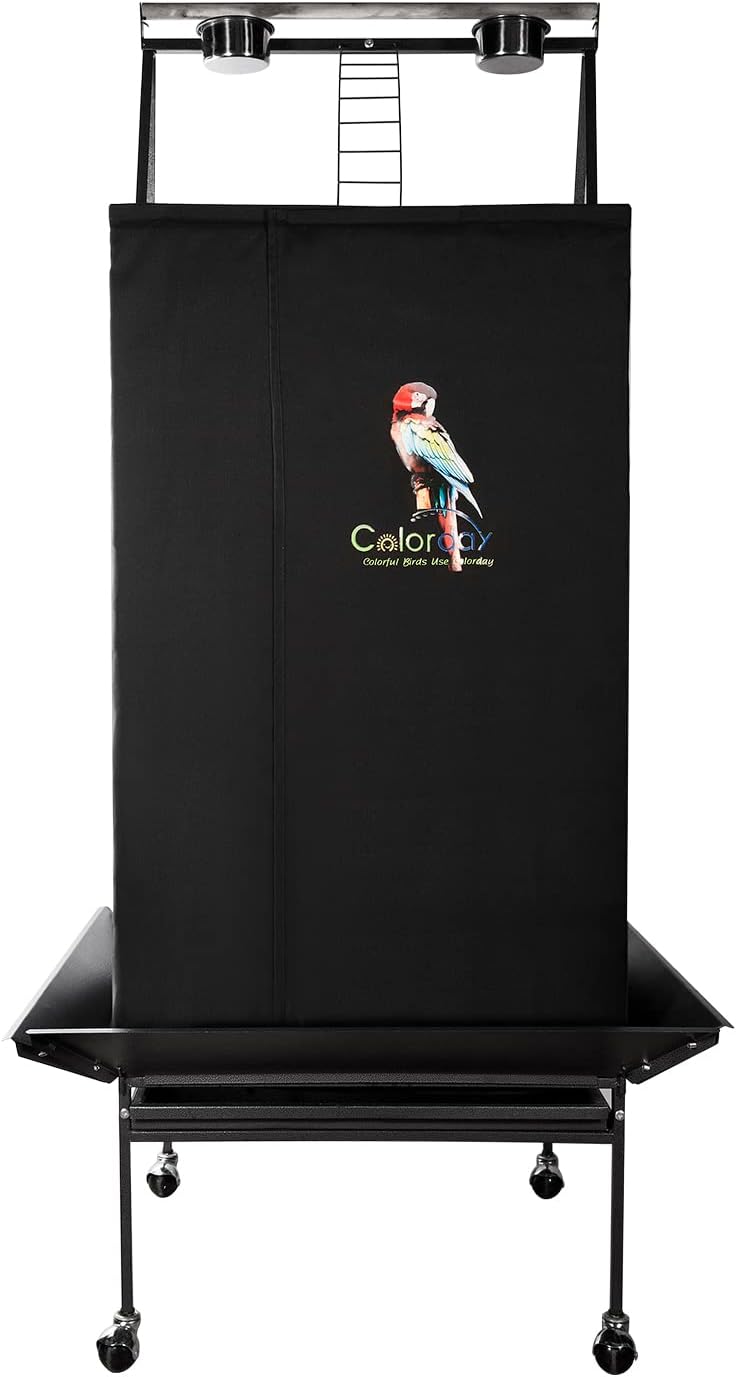
Some popular cage systems, particularly tall modular designs with angled roofs and narrow footprints, do not conform to standard rectangular covers at all. Manufacturers of these cages offer dedicated covers shaped to the exact contour, which is generally the only way to avoid light leaking around an angled roofline. The obvious limitation is that such covers fit only the intended cage models, so you must know your exact model number before ordering, and fabric quality is usually adequate rather than premium.
Noise and Thermal Layered Covers
Some covers add an acoustic or insulating middle layer to the standard blackout design. These are not professional soundproofing; typical reported reductions are on the order of a few decibels, noticeable but not transformative against household noise in the fifty to sixty decibel range. They suit birds kept near traffic, late-night television rooms, or drafty cold corners, where the thermal insulation is arguably the bigger benefit. The trade-offs are a thicker, heavier cover that is harder to handle, and an insulating layer that can compress and lose effectiveness after repeated machine washing.
DIY Covers from Blackout Curtain Fabric
For antique cages, custom-built aviaries, or cages with oversized play tops that defeat standard sizing, a DIY cover made from blackout curtain fabric is often the only route to a proper fit. Fabric stores sell three-pass blackout material at modest per-yard prices; cut it to your cage dimensions plus three to four inches of overlap per side, hem or pin the edges, and add elastic or clips if desired. The upside is a genuinely custom fit and unlimited fabric choice. The downsides are the labor, variable blackout quality between fabrics, and a less finished appearance than a sewn commercial product.
Species-Specific Considerations
Small birds such as budgies, canaries, and finches are light sleepers with modest beak strength, so a lightweight elastic-hem cover in the smallest standard size is usually sufficient, and ventilation is easy to maintain. Cockatiels and budgerigars deserve particular attention to photoperiod consistency because they are among the species most prone to hormonally driven chronic egg-laying when light exposure runs long, a condition veterinary sources treat as genuinely dangerous due to calcium depletion. Medium parrots such as conures and caiques benefit from moderate-weight covers and will test seams and hems with their beaks, so reinforced corners extend service life. Large parrots need the heaviest fabric you can manage comfortably, and lories and other dusty or nectar-feeding species soil covers faster than average, which pushes washing frequency above the weekly baseline. Nocturnal-leaning species and nervous birds often settle better with covers that block sound as well as light, though a consistent schedule matters more than any single fabric feature.
How to Cover a Cage Correctly
Cover the top of the cage first, since ceiling fixtures deliver the most ambient light from above, and make sure the fabric drapes with two or three inches of overlap on every side. Cover the front, back, and one side panel, leaving one side open or loosely draped for airflow so the bird can choose between fresh air and deeper darkness. Never seal all four sides tightly, because trapped air improve carbon dioxide and concentrates dust and dander. The bottom edge should hang two or three inches below the lowest sleeping perch so the resting area is fully enclosed while the tray stays accessible for morning cleaning. Cover at the same time each night, within roughly half an hour, and uncover at the same time each morning, aiming for ten to twelve hours of total coverage. Consistency is the operative word: an irregular covering schedule can be more disruptive than no cover at all, because the pineal gland responds to a reliable pattern, not simply to the presence of darkness on some nights.
Common Mistakes to Avoid
The most frequent mistake is buying by eye instead of by measurement, which produces gaps at corners and play tops. The second is covering all four sides snugly in pursuit of maximum darkness, which sacrifices ventilation and concentrates dander. The third is using a household towel or blanket permanently: towels block light adequately, but they are heavy enough to sag onto small cages, absorb moisture from breath and dander until they turn musty, and are not designed for nightly use. The fourth is washing with scented detergent or dryer sheets, which leaves residues that can bother a bird's respiratory system; if you suspect exposure to any airborne irritant, the ASPCA Animal Poison Control resource is an appropriate contact point. The fifth is abandoning the cover after a few nights of protest screaming, which is almost always an adjustment reaction rather than distress, and the last is keeping a cover long past its service life, when thinning fabric and dead elastic have quietly turned a blackout cover into a dim filter.
bird cage covers
Frequently Asked Questions
My bird screams when the cover goes on. Should I stop covering?
Almost always the screaming is protest at the end of activity, not distress. Most birds settle within five to ten minutes, moving to a sleeping perch, tucking one foot up, and going quiet. If protest lasts beyond half an hour consistently, check three things: light leaking through the fabric, household noise keeping the bird alert since covers block light rather than sound, and a covering time that is too early relative to the bird's natural sleepiness. Never stop covering because of a temporary adjustment period, because the long-term hormonal and behavioral benefits outweigh a short-lived reaction.
Can I use a towel or blanket instead?
In a pinch, yes, and many owners do. But towels are heavy, can collapse onto a small cage, hold moisture, and lack the tailored ventilation of a purpose-made cover. For daily long-term use, a proper cover in the fifteen to thirty dollar range is a better tool, with fabric chosen specifically for light blocking, breathability, and repeated washing.
How often should the cover be washed?
Weekly in hot water with fragrance-free detergent is the standard recommendation. Dust accumulates on the interior surface within one to two weeks and becomes a respiratory irritant for both bird and household. Replace the cover when fabric thins, holes appear from beak damage, or light begins to penetrate, which typically happens after two to three years of weekly washing and daily use.
Where to Look
If you want to compare a representative blackout cover against your own cage measurements and species needs, you can view this option on Amazon, where the size chart and current owner feedback will tell you most of what you need before buying. For large parrots, look toward heavier canvas-weight covers and accept the handling trade-off. For shaped or oversized cages, measure carefully and consider a custom or DIY blackout fabric approach. Whichever route you take, the routine matters as much as the product: ten to twelve hours of coverage nightly at a consistent time, one side left open for airflow, weekly washing in fragrance-free detergent, and replacement when the fabric stops performing. A cage cover remains the cheapest, simplest tool for supporting a companion bird's hormonal balance, sleep quality, and long-term behavioral health, and if you want to start with the example discussed here, simply check the current price on Amazon.
Affiliate Disclosure: PawCritic.com participates in the Amazon Services LLC Associates Program. We may earn commissions from qualifying purchases at no extra cost to you.