Why Nesting Materials Matter Even When You Are Not Breeding
Nesting behavior in companion birds is instinctive rather than optional. Increasing daylight hours, warmer temperatures, and indoor lighting schedules can all push parrots, finches, canaries, cockatiels, and budgies into a hormonal surge that drives them to seek nesting sites and build nests. Even a single hand-raised male cockatiel that has never seen a female of his species may shred paper, collect fibers, and attempt to build a nest in the corner of the cage. This is not a wish for chicks. It is reproductive programming expressing itself, and it is documented in general avian husbandry guidance such as the Association of Avian Veterinarians bird owner resources.
For breeders, nesting materials influence clutch success in direct, measurable ways. The substrate affects humidity around the eggs, and extremes in either direction cause problems: a nest that is too dry can desiccate embryos, while a nest that stays too wet encourages bacterial and fungal growth. Nest box design matters because a poorly shaped floor allows eggs to roll and crack, and a slick lining contributes to splayed legs in hatchlings. For owners who keep single birds or same-sex pairs, controlled nesting materials during breeding season can provide a healthy outlet for nesting urges. Shredding a coconut fiber mat or arranging paper strips gives the bird something to do with the instinct instead of redirecting it into feather plucking, cage-bar chewing, or laying eggs in unsuitable places such as the bottom of a food bowl, where eggs crack and where egg-binding risk rises.
This guide covers nesting boxes, safe nesting materials, and supportive breeding supplies for companion bird species. It also covers materials that must never go into a nest and explains how to manage breeding behavior in birds you do not intend to breed.
The Hormonal Triggers Behind Nesting Behavior
- Photoperiod: Twelve or more hours of light can trigger breeding hormones in many parrot species. In the wild, breeding aligns with spring and summer. In captivity, artificial lighting that stays on for twelve or more hours year-round can sustain chronic hormonal behavior, including chronic egg-laying, aggression, and feather destruction.
- Food abundance: Rich, high-fat, high-protein foods such as seeds, nuts, egg food, and sprouted seeds signal that there is enough food to raise chicks. A diet heavy in these foods outside breeding season can trigger unwanted hormonal behavior.
- Physical triggers: A nest box, a dark enclosed space, or even a pile of shredded material in a cage corner can trigger egg-laying. Some hens will lay into a food bowl when no nest box is available.
- Managing hormones in non-breeding birds: Limit daylight to ten to twelve hours, reduce high-fat and high-protein foods, remove enclosed spaces and shredding materials outside breeding season, and avoid petting the bird on the back or under the wings because that contact can stimulate breeding behavior.
Nest Boxes, Liners, and Breeding Supplies: A Buying Guide
bird nesting materials breeding supplies
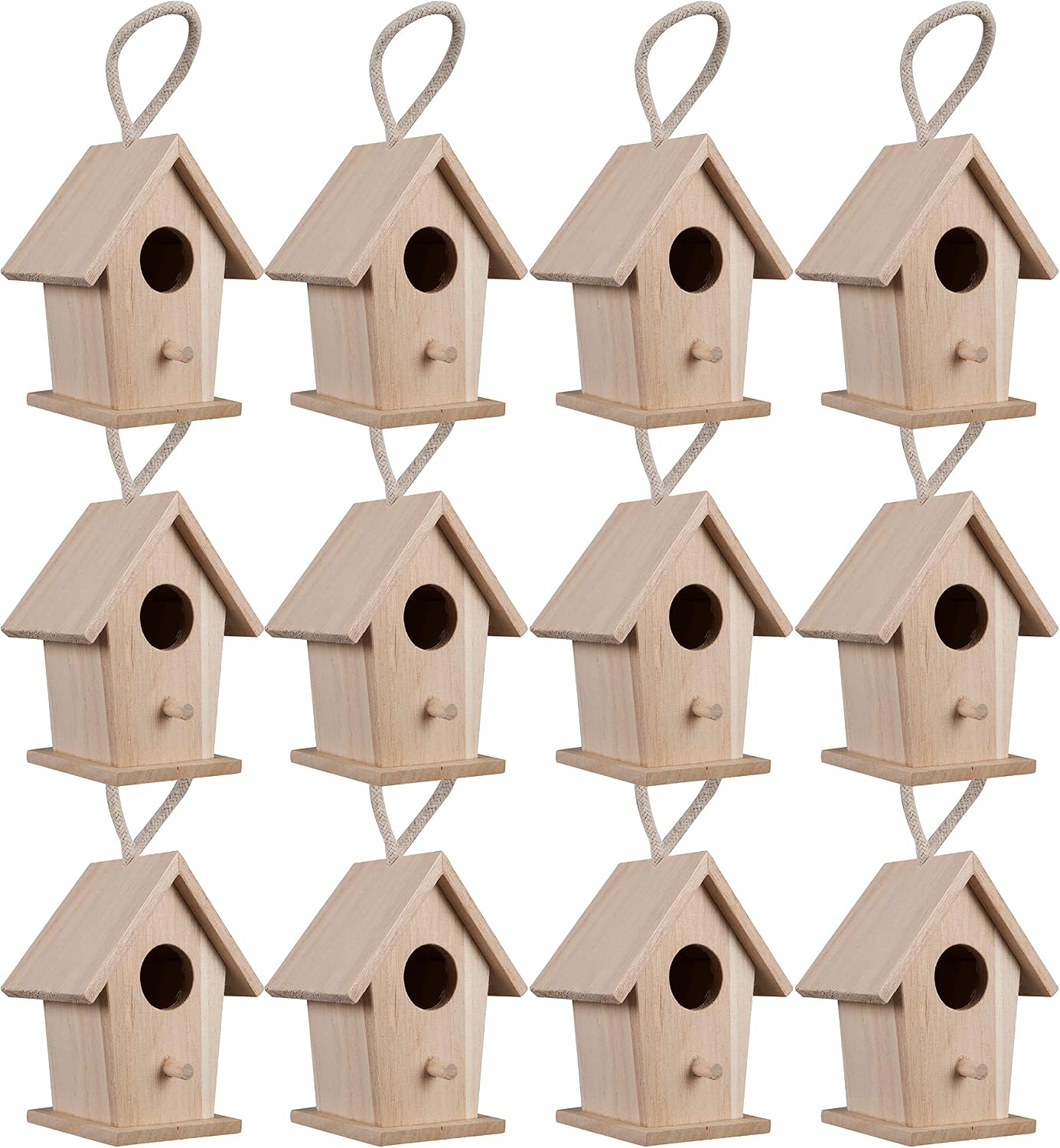
The nesting supply category breaks into a few functional groups: the nest box itself, the lining or loose material the bird arranges, the enclosure for a breeding pair, chick-rearing food, and calcium support for laying hens. A single Amazon listing is used below as a concrete example of the kind of wooden nest box this category includes. It is not a ranked pick and it is not a claim that one product beats all others. It is simply one option a reader can look at while comparing specifications.
Wooden Nest Boxes: The Standard Cavity for Small and Medium Parrots
Unfinished pine breeding boxes are widely used for budgies, cockatiels, lovebirds, parrotlets, and small conures. The typical design has a hinged top lid for inspection, a concave interior floor that keeps the clutch gathered under the brooding hen, and an entrance hole sized to the species. Pine is safe to chew, and birds will chew it, especially around the entrance. Wood also buffers humidity by absorbing excess moisture and releasing it slowly, which supports the roughly fifty to sixty percent relative humidity that parrot eggs are generally described as needing for successful incubation.
The trade-offs are practical. Wood is chewable, so a determined conure can enlarge the entrance hole or chew through a wall over multiple breeding cycles, and replacement every two to three seasons is common. Wood is not dishwasher-safe, so cleaning means scraping, sanding, and sun-drying rather than chemical disinfection. Wood also absorbs droppings and cannot be fully sterilized after a chick-rearing cycle, which is why some breeders use disposable cardboard boxes for one-time use when biosecurity is the priority. Finally, once a pair claims a box, removing it mid-season causes distress, so breeding season timing needs to be planned in advance.
For owners who want one concrete example of a wooden box in this category, check the current price on Amazon. Species-specific entrance hole sizing should be confirmed on the listing before purchase, because a hole that is too large invites predators and a hole that is too small prevents entry.
Coconut Fiber: The Most Natural Nest Lining
Compressed coconut coir bricks are among the most widely recommended nest linings. When soaked in water, a brick expands several times over and fills a standard nest box with soft, moisture-regulating fiber. The material absorbs excess moisture, which limits fungal growth, and releases moisture slowly when the nest becomes too dry, which reduces the risk of egg desiccation. Its grippy surface gives hatchlings traction, and that traction matters because chicks that cannot grip a slick surface are more likely to develop splayed legs, a condition in which the legs splay outward instead of sitting under the body.
Coconut fiber is not maintenance-free. It requires pre-soaking and then drying to the correct moisture level, which is damp rather than wet and not bone-dry. Coconut fiber can harbor mites if stored improperly, so many breeders bake or freeze new fiber before use as a biosecurity step. The fiber breaks down over time and should be replaced between clutches, and it scatters around the cage as the hen rearranges the nest to her satisfaction. None of these drawbacks change the fact that coconut coir is generally considered one of the safest and most natural linings available for breeding birds.
Bamboo Fiber: Loose Material for Birds That Build
Loose bamboo nesting fiber is a fluffy bundle of natural strands that birds shred, arrange, and weave. This matters behaviorally. For finches, canaries, lovebirds, and budgies, species that actively build rather than simply occupy a cavity, the act of shredding and arranging is part of the breeding sequence. Providing loose fiber can prompt the weaving instinct in a way that a pre-fabricated liner does not. For non-breeding birds, a small bundle during breeding season offers a shredding outlet, and it is generally preferable for a bird to shred bamboo fiber than to pluck its own chest feathers.
The limitations are worth knowing before purchase. Fiber strands can tangle around chick legs and toes if packed too densely, so the recommendation is a loose handful rather than a compressed brick, allowing the hen to arrange it herself. Birds scatter fiber across the cage floor, water bowl, food dish, and surrounding floor during nest-building week. Bamboo fiber is also not a complete nest lining on its own. A common approach is to pair it with coconut coir as a base layer and place the loose fiber on top for the hen to arrange. Some hens over-build, and removing excess fiber periodically prevents the clutch from being buried under inches of material.
Pre-Formed Grass Mats: The Efficiency Option
Pre-formed woven seagrass liners are rigid circular mats that fit directly into standard nest boxes and breeding cages. Unlike loose fiber, which the hen rearranges over days or weeks, a grass mat stays in place, providing a consistent nest surface that can be lifted out and replaced between clutches in seconds. The woven texture grips eggs and provides chick-leg traction, which helps reduce splayed legs. For breeders who prioritize cleanliness and efficiency over the nest-building enrichment experience, pre-formed liners simplify nest management considerably.
The trade-off is behavioral. The hen has no opportunity to shred, arrange, or build when a pre-formed liner is used, and some breeders regard that as a lost enrichment opportunity while others regard it as a reduction in variables. Grass mats fit only standard-sized boxes, so custom or oversized boxes are not compatible. The mats can harbor bacteria if not changed frequently, so replacement every one to two weeks during active breeding, and immediately after chicks fledge, is the usual guidance. Some hens reject pre-formed liners outright and insist on building their own nest from loose fiber, so keeping coconut fiber on hand as a backup is sensible.
Dedicated Breeding Cages: When a Pair Needs Its Own Enclosure
Stainless steel breeding cages are built for pairs rather than for single pets. Typical features include a divider panel to separate male and female during initial introduction, a built-in exterior nest box mounting panel so the box attaches outside the cage wall, and a slide-out grate and tray for waste management without opening the cage. Exterior mounting minimizes interior space loss and allows egg and chick inspection without disturbing the pair. Stainless steel is rust-proof, chew-proof, and fully sterilizable, which matters for preventing disease transmission between pairs in multi-pair operations.
The drawbacks are cost and weight. Stainless steel carries premium pricing compared with powder-coated cages, and it weighs significantly more. These cages are not starter equipment. They assume a commitment to breeding rather than a wish to accommodate a seasonal nesting urge. They also ship flat-packed and require assembly, commonly thirty to forty-five minutes with the included tools. Bar spacing is species-dependent, with half-inch spacing for small parrots and five-eighths-inch spacing for medium parrots being common specifications.
Hand-Feeding Formula: For Breeders Who Pull Chicks
Commercial hand-feeding formulas are complete, balanced powders that replace the crop milk and regurgitated food parent birds provide. The powder mixes with warm water to a smooth, syringe-feedable consistency and contains balanced protein, fat, carbohydrates, vitamins, and probiotics for chicks from day one through weaning. Size-specific versions exist, with different particle sizes and nutrient profiles for different species. For breeders who pull chicks to produce tamer pet-quality babies, or when parent birds abandon or reject chicks, formula is an essential supply.
Hand-feeding is the highest-risk activity in this entire category, and the risks are not exaggerated. Underfeeding, overfeeding, feeding too hot, feeding too cold, and aspiration of formula into the trachea are all documented causes of chick death or serious illness. Crop burn from overheated formula is a recognized emergency. Mixed formula spoils within about two hours at room temperature, so each feeding requires freshly prepared formula rather than batch preparation. Anyone preparing to hand-feed for the first time should learn from an experienced breeder or an avian veterinarian before the first chick is fed, and the Merck Veterinary Manual section on exotic and laboratory animals is a useful reference for the clinical risks involved.
Calcium and Vitamin D3: Support for Laying Hens
A single clutch of eggs demands more calcium than a hen's entire skeleton contains. Without adequate dietary calcium during breeding, a hen leaches calcium from her own bones to form eggshells. The consequences include thin-shelled eggs that crack during incubation, egg-binding, a life-threatening emergency in which a soft-shelled egg becomes stuck in the oviduct, and long-term metabolic bone disease. Powdered calcium formulated with vitamin D3 addresses this because D3 is required for calcium absorption, and without it, dietary calcium passes through the bird largely unabsorbed. The powder is typically tasteless and odorless when mixed into soft food such as egg food, chop, or sprouted seeds.
Dosing discipline matters in both directions. Overdosing calcium can cause kidney damage, so label guidelines should be followed precisely rather than exceeded for good measure. Powdered calcium is also not a sole calcium source. Cuttlebone and mineral blocks should remain available for free-choice intake. Supplement quality varies between brands, and inconsistent vitamin D3 levels in generic powders are a real concern. For laying hens, powdered calcium with D3 on soft food during egg-laying cycles is the standard approach, alongside free-choice calcium at all times.
Comparison of Nesting and Breeding Supply Types
| Supply Type | Function | Best For | Key Consideration |
|---|---|---|---|
| Wooden nest box (pine) | Cavity for nesting and brooding | Budgies, cockatiels, lovebirds, parrotlets, small conures | Chewable, replace every two to three seasons |
| Coconut coir brick | Moisture-regulating nest lining | All breeding birds | Requires pre-soak and correct drying; replace between clutches |
| Bamboo fiber bundle | Loose material for weaving | Finches, canaries, lovebirds, budgies | Use a loose handful, not a compressed brick |
| Seagrass mat liner | Pre-formed, replaceable nest surface | Efficiency-focused breeders | No building enrichment; fits standard boxes only |
| Stainless steel breeding cage | Dedicated pair enclosure | Serious breeders, multi-pair operations | Heavy, expensive, requires assembly |
| Hand-feeding formula | Chick rearing food | Breeders who pull chicks | Requires training; preparation and temperature are critical |
| Calcium with D3 powder | Nutritional support for laying hens | All breeding hens | Follow dosing precisely; keep free-choice calcium available |
Materials You Must Never Put in a Bird's Nest
bird nesting materials breeding supplies
- Cotton balls, cotton batting, and cotton string: Cotton fibers wrap around chick toes and legs, constricting circulation and causing tissue death. A chick can lose a toe or an entire foot within a day of a fiber wrapping around it. Cotton also holds moisture and promotes bacterial growth. No cotton products belong in a nest.
- Cedar and untreated pine shavings: Cedar contains aromatic oils that are toxic to avian respiratory systems and can cause respiratory distress and liver damage. Pine shavings that are not kiln-dried for pet use contain similar compounds at lower concentrations. Kiln-dried aspen is the wood shaving generally considered safe because it contains no aromatic oils.
- Human hair, dog or cat fur, and yarn: Hair and fur wrap around chick legs much as cotton does, and yarn frays into individual strands with the same effect. Dog and cat fur may also carry residue from topical flea and tick treatments, which are toxic to birds. The ASPCA Animal Poison Control maintains guidance on household substances that are hazardous to pets.
- Dryer lint: Dryer lint looks like soft nesting material, but it contains synthetic microfibers from clothing, residual detergent and fabric softener, and human skin cells that harbor bacteria. It should never be used.
- Colored or glossy paper: Black-and-white newsprint ink is generally soy-based, though newspaper is a poor nesting material. Colored ink, glossy magazine paper, and thermal-printed receipts can contain heavy metals and other compounds that should not be shredded into nesting material.
- String, twine, and thread: These present the same constriction danger as cotton, and synthetic strings are stronger and less likely to break when a struggling chick becomes entangled.
Materials generally considered safe include coconut coir, bamboo fiber, kiln-dried aspen shavings, seagrass, palm fiber, sisal fiber, unbleached paper strips, and timothy hay. Alfalfa hay is generally avoided because it is dustier. When in doubt, coconut coir and bamboo fiber are the two materials most often recommended because they are widely regarded as safe across species.
Sizing, Placement, and Maintenance Basics
Nest box size should match the species rather than the cage. A box that is too large allows the clutch to spread and cool, and a box that is too small crowds the hen. Entrance hole diameter is equally important: too large invites access by other birds or predators, and too small prevents the hen from entering comfortably. Boxes are typically mounted on the exterior of the cage wall at a height that approximates a natural cavity, and the mounting hardware should be checked periodically because a shifting box can crack eggs.
Maintenance between clutches is straightforward but non-negotiable. Linings are replaced, wooden boxes are scraped and sun-dried rather than chemically treated, and any box that has housed a sick chick should be retired rather than reused. Grass liners are replaced every one to two weeks during active breeding and immediately after chicks fledge. Coconut fiber is replaced between clutches because it breaks down over time. Loose bamboo fiber is replenished as the hen uses it and excess is removed if the nest becomes overbuilt.
Common Mistakes Owners Make
The most common mistake is providing a nest box to a single female bird without understanding the consequence. A nest box can trigger egg-laying even in an unpaired hen, and unfertilized eggs still carry the full health risks of egg production, including calcium depletion and egg-binding. For birds that are not intended to breed, shredding toys such as coconut fiber mats, palm leaf shredders, and paper rolls satisfy the shredding urge without providing a cavity that triggers laying.
A second mistake is removing eggs prematurely. When a hen is sitting on a clutch, removing the eggs can trigger her to lay a replacement clutch, which depletes calcium further. A common approach is to let her sit for the natural incubation period of roughly twenty-one days for many small parrot species, then remove the eggs and implement environmental changes immediately to prevent the next clutch. Chronic layers may need a hormone-suppressing implant administered by an avian veterinarian if environmental changes alone do not break the cycle.
A third mistake is assuming that a well-balanced pellet and vegetable diet provides enough calcium for a laying hen. It generally does not. The calcium demand of eggshell formation exceeds what a normal maintenance diet supplies, and powdered calcium with D3 on soft food during breeding season is the standard recommendation. Signs of calcium deficiency include thin or soft-shelled eggs, rough or irregular shell texture, straining to pass an egg, and smaller than expected clutches.
Frequently Asked Questions
A single female cockatiel keeps laying eggs in her food bowl. What stops this?
Chronic egg-laying is usually triggered by environmental cues: twelve or more hours of daylight, a high-fat or seed-heavy diet, and an enclosed space such as a deep or covered food bowl. Replacing the bowl with a shallow dish removes the cavity cue. Reducing daylight to about ten hours by covering the cage in the evening and uncovering it in the morning shortens the photoperiod. Reducing high-fat foods and seeds, removing shredding materials, and avoiding petting the bird on the back or wings all reduce hormonal stimulation. If eggs have already been laid, allowing the hen to sit for the natural incubation period before removing them avoids triggering a replacement clutch. A hormone-suppressing implant from an avian veterinarian is an option when environmental changes alone do not stop the cycle.
Does a non-breeding single bird need a nest box?
Generally no. A nest box provided to a single bird, especially a female, can trigger hormonal behavior including egg-laying, territorial aggression around the box, and chronic laying that leads to calcium depletion and reproductive disease. Shredding toys provide the enrichment without the cavity trigger. If a nest box is provided, the owner should be prepared for eggs and for the health risks that accompany egg production in a single hen.
How can an owner tell whether a breeding hen needs calcium supplementation?
All breeding hens need calcium supplementation, because the demand of eggshell formation exceeds what a normal diet provides. Signs of deficiency include thin or soft-shelled eggs that collapse when handled, rough or irregular shell texture, straining to pass an egg, and smaller than expected clutches. Powdered calcium with D3 on soft food during breeding season, plus a free-choice source such as cuttlebone or a mineral block at all times, is the standard approach. General pet care guidance from the ASPCA pet care library covers related topics for bird owners.
How often should nest linings be replaced?
Coconut fiber is replaced between clutches because it breaks down over time. Grass liners are replaced every one to two weeks during active breeding and immediately after chicks fledge. Wooden boxes are scraped and sun-dried between clutches rather than chemically treated. Any box that has housed a sick chick should be retired rather than reused.
What to Look For When Choosing Nesting Supplies
Start with the species. Small parrots need smaller entrance holes and smaller boxes than medium parrots, and the specifications differ enough that a general-purpose box is rarely ideal for every bird. Check the entrance hole diameter, the interior floor dimensions, and the mounting method against the species before purchase. For the lining, choose a material that regulates moisture and provides traction. Coconut coir and seagrass both fit that description, and bamboo fiber adds the behavioral component of weaving for species that build.
For the enclosure, decide whether a dedicated breeding cage is warranted. A stainless steel cage with a divider panel and exterior nest box mount is the professional option, but it is heavy, expensive, and unnecessary for a single pair in a home setting. For chick rearing, hand-feeding formula is only appropriate for breeders who have trained with an experienced breeder or avian veterinarian. For laying hens, powdered calcium with vitamin D3 is the one supplement that is consistently recommended across breeding guides.
One concrete example of a wooden nest box in this category is available for readers who want to compare specifications against the guidance above: view this option on Amazon. Confirm the entrance hole size and interior dimensions on the listing before ordering, and compare them against the species requirements rather than assuming one size fits all.
Final Considerations
A properly prepared nest box and the right nesting material support a successful clutch, but the wrong material can kill chicks within hours. Cotton fibers, cedar shavings, dryer lint, and pet hair are the materials most often cited as dangerous, and coconut coir, bamboo fiber, kiln-dried aspen, and seagrass are the materials most often recommended. For laying hens, calcium with vitamin D3 on soft food during egg-laying cycles is the supplement that prevents thin shells, egg-binding emergencies, and long-term metabolic bone disease.
For readers who want one concrete example of the wooden nest box style described below, check the current price on Amazon. For readers who want a second reference point on the same category, view this option on Amazon. The same listing appears in both places because only one product is used as an example below, and the goal is to give readers a single concrete reference rather than a ranked rundown.
Affiliate Disclosure: PawCritic.com participates in the Amazon Services LLC Associates Program. We may earn commissions from qualifying purchases at no extra cost to you.
As an Amazon Associate, PawCritic earns from qualifying purchases. This does not affect our reviews or recommendations.