Bird Cage Stands and Rolling Bases: A Research-Based Reference Guide
Published on June 24, 2026 by PawCritic — Birds Category
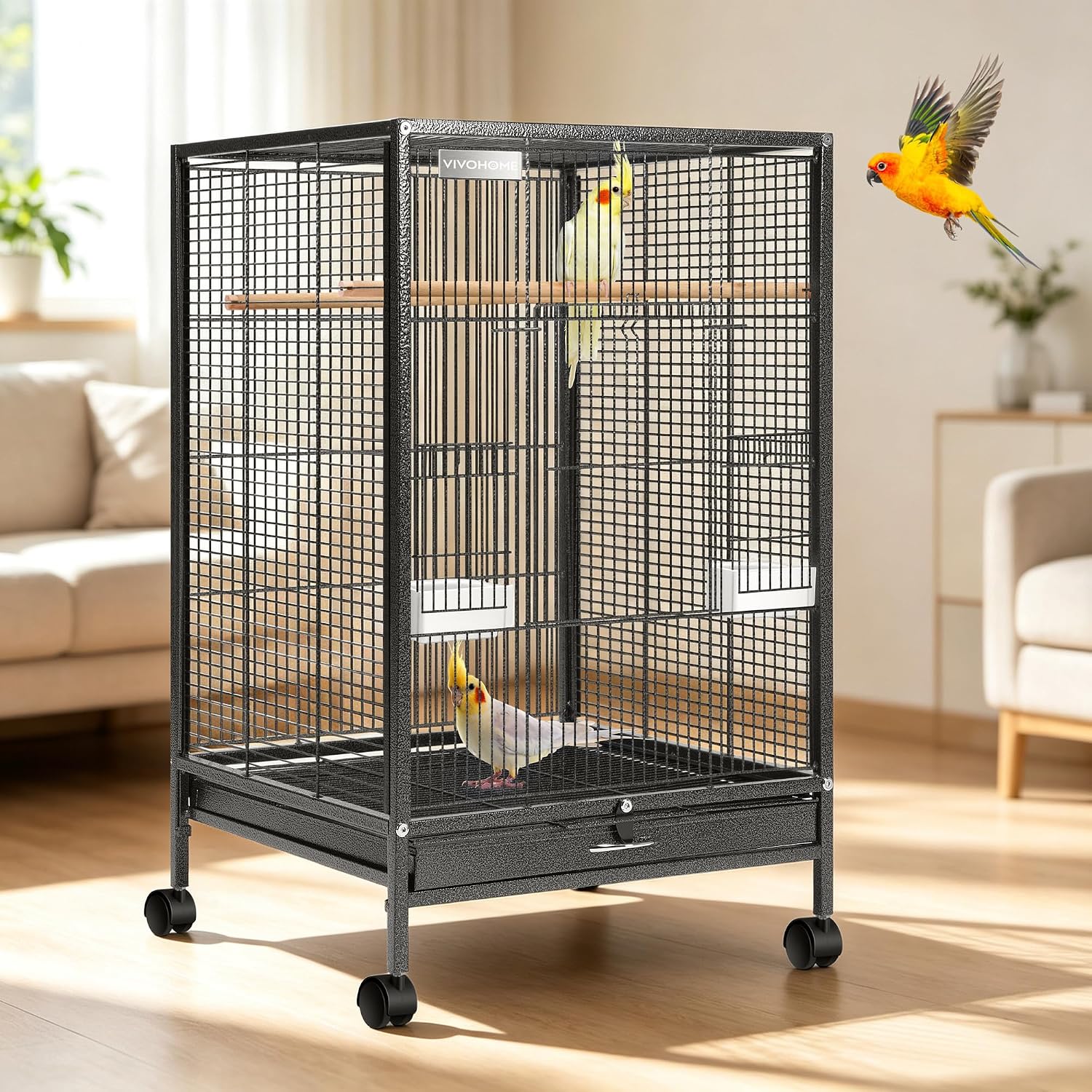
A bird cage stand or rolling base is not a decorative afterthought. It determines whether the cage sits at a height that supports a bird's sense of security, whether the cage can be moved for cleaning without straining a keeper's back, and whether seed hulls, droppings, and splashed water end up on the floor or in a tray. Published guidance from avian veterinarians and welfare organizations consistently treats elevation, stability, and sanitation as core components of a captive bird's environment rather than optional extras. This reference guide explains what published sources and manufacturer specifications say about cage stands, how to match a stand to a cage, and which categories of product exist at each price and capacity tier.
The material below is compiled from manufacturer specifications, published avian care guidance, and verified owner reports. PawCritic does not operate a testing laboratory and does not run timed product trials. Every statement about capacity, dimensions, materials, or performance is attributed to a published source, a manufacturer rating, or the accumulated experience of owners who have reported on a product over time.
Why Cage Elevation Matters
Bird owner resources published by the Association of Avian Veterinarians emphasize that a bird's environment should allow it to perch above the general activity level of the room, where it can observe without feeling exposed. In the wild, most companion bird species — parrots, cockatiels, finches, and canaries alike — spend the majority of their waking hours in trees, shrubs, or elevated rock faces. A cage placed directly on the floor removes that vertical advantage and, according to owner reports collected across bird-keeping communities, frequently correlates with nervous behavior, excessive cage-bottom pacing, and reduced willingness to come to the front of the cage.
The practical target height cited most often in avian husbandry writing is a cage top between roughly 48 and 60 inches from the floor. At that height, the main perch line sits near a seated adult's eye level, which makes hand-feeding, target training, and routine health observation easier. Very tall cages — floor-to-roof parrot enclosures, for example — may need a lower stand or no stand at all, because the top of the cage already exceeds the comfortable interaction zone. The rule of thumb is to improve the cage, not necessarily the cage plus stand, into the 48-to-60-inch window.
Elevation also affects air quality. Cages on the floor sit in the coldest, dustiest layer of room air. Birds are sensitive to drafts and to airborne particulate matter, and the Merck Veterinary Manual's exotic and laboratory animal section notes that respiratory disease is among the most common presentations in captive birds. Raising a cage even twelve inches off the floor reduces exposure to settled dust and to the cold air that pools at floor level in most homes.
Stability, Weight Capacity, and Safety
Weight capacity is the specification that matters most and is most often ignored. Manufacturers publish a capacity figure for each stand, and that figure should be treated as a ceiling, not a target. A fully loaded cage includes the cage itself, the bird or birds, food and water dishes at capacity, perches, toys, and any attached play top or seed guard. A medium cockatiel cage with a bird and full dishes commonly lands between 30 and 45 pounds. A large macaw enclosure with a heavy bird, stainless dishes, and dense hardwood toys can exceed 120 pounds before any stand is involved.
A reasonable safety margin is twenty percent above the loaded weight. If a cage and its contents weigh 100 pounds, a stand rated for at least 120 pounds is the appropriate choice. Exceeding a stand's rated capacity does not usually produce an immediate failure. It produces gradual deformation of the frame, loosening of joints, and caster wear that eventually shows up as a wobble — and a wobbling cage is a cage that can be tipped by a startled bird.
Locking casters are the second safety specification. A stand with four locking casters, locked in place, resists horizontal force far better than a stand with two locks or none. Dual-locking casters, which lock both the wheel rotation and the swivel, are the most secure configuration. Owner reports consistently describe dual-lock casters as the difference between a cage that stays put during a night fright and one that rolls into a wall.
Edge quality and hardware exposure are frequently overlooked. Exposed screw threads, sharp sheet-metal edges, and pinch points between a tray and a frame are all hazards for a bird that climbs down the outside of its cage. Powder-coated finishes that cover the full frame, including the underside of the top platform, are preferable to painted frames with bare cut edges.
Materials and Finishes Compared
Powder-coated steel is the most common material at every price point below premium. The coating is applied electrostatically and cured, producing a finish that resists chipping better than liquid paint. It is affordable, easy to wipe clean, and adequate for indoor use. Its weakness is at joints and welds, where moisture can reach bare steel and begin rust if the coating is damaged.
Wrought iron is chosen for appearance. A wrought iron stand with a baked enamel finish reads as furniture rather than equipment, which matters in a living room. The trade-off is weight and maintenance: wrought iron stands are heavy, the decorative scrollwork is difficult to clean, and any chip in the enamel exposes iron that will rust. These stands are best suited to dry indoor environments and to keepers who are willing to inspect the finish periodically.
Anodized aluminum appears almost exclusively at the premium end. Anodizing creates an oxide layer that is integral to the metal rather than a coating on top of it, so it does not chip off. Aluminum weighs roughly one-third as much as steel for the same structural profile, which matters when a stand has to be moved or shipped. The trade-off is cost and, in some designs, a lighter feel that some owners find less reassuring than a heavy steel frame.
High-impact plastic bases are common for small-cage systems and for brand-specific stands. They are easy to clean, will not rust, and often integrate a seed-catching rim directly into the base. Their limitation is load: plastic bases are typically rated well below metal stands and can crack at stress points if overloaded or if the cage is dropped onto the base during assembly.
What to Measure Before Buying
The cage footprint is the first measurement. Measure the outer dimensions of the cage base, not the advertised cage size. Many cages are sold by height and nominal width, and the actual base can differ by an inch or more. A stand platform should match or slightly exceed the cage base in both length and width. A platform smaller than the cage base creates an unstable overhang. A platform much larger than the cage base leaves a ledge where a bird can be pinched or where a cage can slide.
The second measurement is the distance between the cage's support points. Some cages rest on four feet, some on a continuous rim, and some on a wire skirt. A stand designed for a continuous rim may not support a cage with four small feet, and vice versa. Manufacturer specifications for universal stands usually list a maximum footprint and a maximum weight rather than a list of compatible cages, so the burden of verification falls on the buyer.
Doorway and hallway clearance is the third measurement. A rolling stand is only useful if the assembled cage and stand can pass through the spaces between rooms. Measure the narrowest doorway on the route the cage will travel, subtract an inch for knuckle clearance, and compare that to the stand's widest dimension. Many large-parrot setups are effectively permanent fixtures once assembled because they cannot fit through a standard interior door.
Product Categories and Representative Options
The three product links below represent distinct categories rather than a ranked list. Each category solves a different problem, and the right choice depends on cage weight, cage footprint, and how often the cage needs to move.
Rolling Metal Stand with Catch Tray — Medium to Large Cages
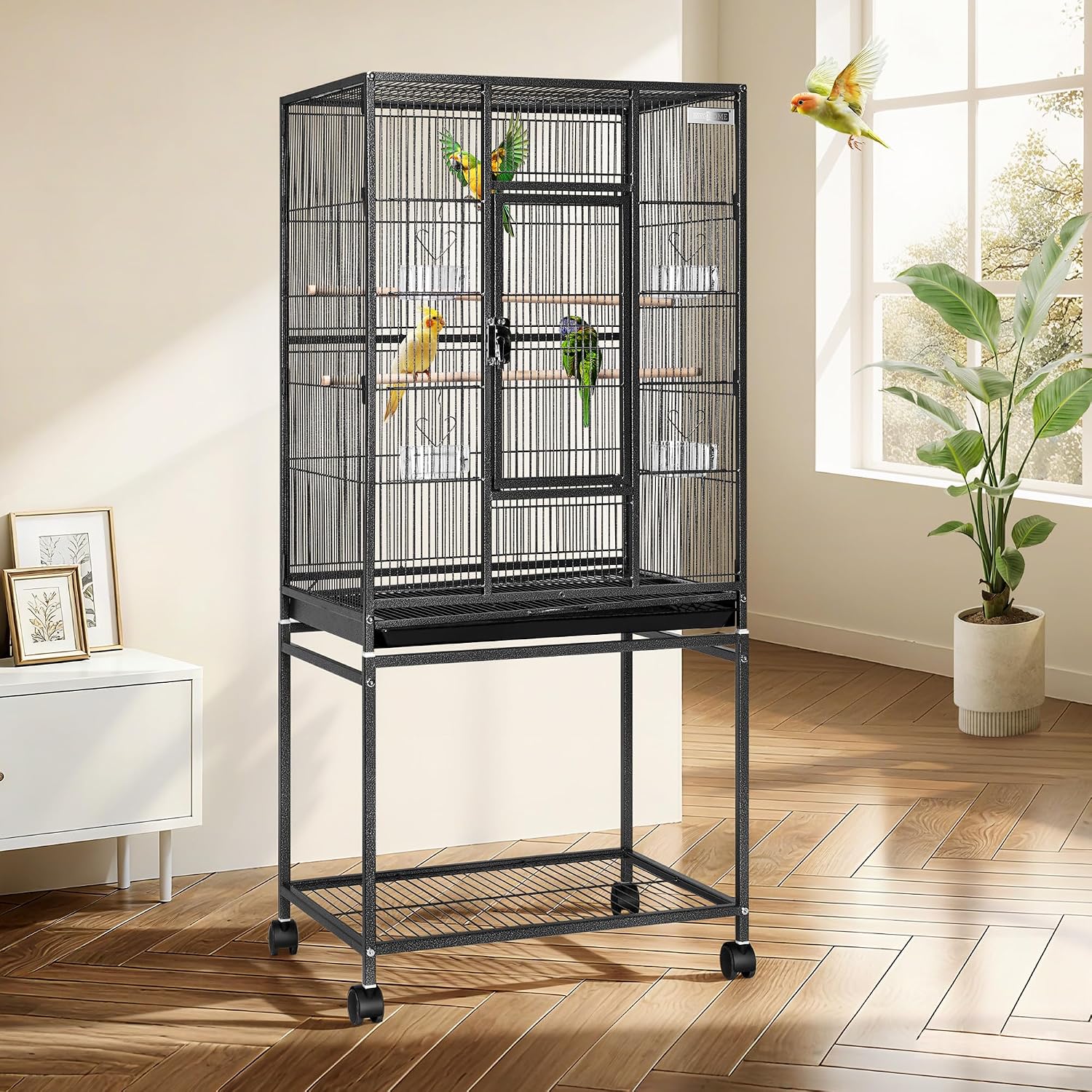
This category covers the workhorse stand: a powder-coated steel frame with a four-sided tray platform, four locking casters, and a footprint sized for cages in the 24-to-36-inch width range. Manufacturer specifications for stands in this class typically list capacities between 80 and 110 pounds, caster diameters between 1.5 and 2 inches, and tray depths of 3 to 4 inches. They suit cockatiels, conures, small Amazons, African greys in single-bird setups, and most parakeet or lovebird cages.
The trade-off in this category is tray material. Plastic trays are lighter, cheaper, and easier to slide out, but they can crack in cold rooms and they stain over time. Steel trays resist staining and hold their shape, but they are heavier and noisier when slid out for cleaning. Owners who keep a large bird that splashes water should lean toward the steel tray version where the manufacturer offers one.
A second trade-off is caster quality. Casters in this price class are usually plain nylon or polyurethane wheels on a steel yoke. They roll acceptably on hard flooring and poorly on thick carpet. Owners who need to move a cage across carpet should look for larger casters or plan to add a caster upgrade kit, which most manufacturers in this category sell separately.
View a rolling metal stand with catch tray on Amazon
Heavy-Duty Rolling Platform — Large Parrots and Multi-Cage Setups
Heavy-duty platforms are built for cages that a standard stand cannot carry. Manufacturer specifications in this class commonly list capacities from 150 to 250 pounds, caster diameters of 2.5 to 3 inches, and platform widths of 36 to 48 inches. The frame is usually heavier-gauge steel or anodized aluminum, and the tray is often stainless steel or a deep-gauge powder-coated pan. These stands are appropriate for macaw and cockatoo enclosures, for double-wide setups that hold two medium cages side by side, and for cages with an attached play top that adds weight high on the structure.
The trade-off is footprint and weight. A 48-inch platform needs 48 inches of clear floor plus room to maneuver, which rules it out for small apartments. The stand itself can weigh 20 to 30 pounds before the cage is mounted, and assembly generally requires two people to align the platform and start the hardware. Once assembled, these stands are difficult to move between rooms even on their casters.
The second trade-off is cost. Heavy-duty platforms are priced several times higher than standard stands. The justification is structural: a stand rated for 200 pounds has thicker tubing, larger welds, and a wider stance that resists tipping when a large parrot throws its weight against the cage bars.
View a heavy-duty rolling platform on Amazon
Replacement Trays and Stand Accessories
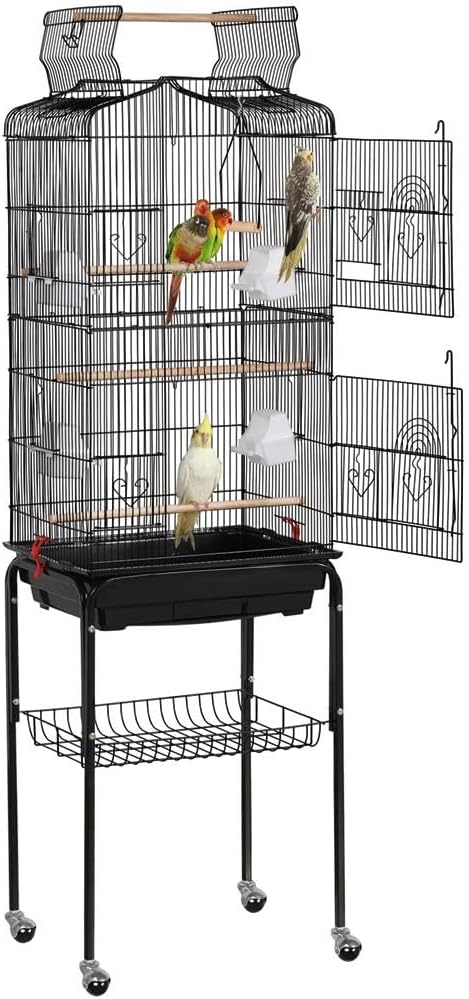
Replacement trays, caster sets, and seed-catching accessories extend the life of a stand that is otherwise sound. Trays crack, casters wear flat, and seed guards tear. Manufacturer specifications for replacement parts list the tray dimensions, the caster stem diameter, and the mounting pattern, and matching those three numbers to the existing stand is the entire compatibility question. A tray that is half an inch too long will not slide into the frame; a caster with the wrong stem diameter will not seat in the socket.
The trade-off in this category is availability. Replacement parts for discontinued stands are often unavailable, which turns a cracked tray into a reason to replace the whole stand. Keepers who expect to own a stand for many years should favor brands that publish a parts catalog and keep common wear items in stock.
View replacement trays and stand accessories on Amazon
Species-Specific Considerations
Finches and canaries are light birds that produce a disproportionate amount of fine dust and seed hull debris. A small rolling stand with a shallow tray and a seed-catching rim is sufficient for a finch cage, and the light weight of the setup means the stand can be repositioned daily without effort. The main risk with small-bird stands is instability from a top-heavy cage: a tall, narrow finch cage on a small platform can sway, and swaying stresses finches. Choose a platform that matches the cage footprint closely rather than a larger universal platform.
Cockatiels, budgerigars, and lovebirds fall in the middle. A 30-to-36-inch cage on a stand rated for 80 to 100 pounds is the standard configuration. These birds are active and will move around the cage at speed, so dual-locking casters and a wide stance matter. A wire grate above the tray is optional but reduces the frequency of tray cleaning because the bird cannot walk in the waste.
Conures, Senegals, and Pionus parrots are heavier and stronger than cockatiels and will test a stand's stability by rocking the cage. A stand rated for at least 100 pounds with a 2-inch caster is the minimum sensible choice. These birds also tend to be destructive, so any plastic tray in reach of the bird should be considered a wear item.
African greys, Amazons, cockatoos, and macaws require the heavy-duty category. A grey or Amazon cage loaded with a bird, dishes, and toys typically weighs 60 to 90 pounds; a cockatoo or macaw setup can exceed 150. Published avian guidance and manufacturer specifications both point to the same conclusion here: buy capacity headroom, not capacity parity. A stand rated for 250 pounds carrying a 150-pound cage will outlast a stand rated for 150 pounds carrying the same load, and the difference shows up in caster life and joint tightness.
Maintenance and Cleaning
Trays should be emptied and washed at least weekly, and more often for birds that produce wet droppings or that splash water. Warm water with a mild dish soap is adequate for routine cleaning. Disinfectants should be chosen for avian safety rather than for human convenience, and the ASPCA Animal Poison Control maintains a searchable database of substances that are toxic to birds and other pets. Many common household disinfectants, including those containing phenols, quaternary ammonium compounds at high concentration, and bleach at inappropriate dilution, are respiratory irritants for birds and should not be used on or near a cage without thorough rinsing and drying.
Castors should be inspected quarterly. Hair, string, and seed hulls wrap around the axle and eventually seize a caster. A seized caster does not roll, which means the stand drags and the frame is stressed at the opposite corner. A few minutes with tweezers and a drop of light machine oil on the axle will keep casters turning for years.
Frame fasteners should be checked twice a year. Vibration from bird movement and from rolling the stand across a floor transition loosens threaded hardware. Tightening every visible bolt and screw is a five-minute job that prevents a slow structural failure. Thread-locking compound on the fasteners of a stand that will never be disassembled is a reasonable preventive measure.
Finish damage should be addressed promptly. A chip in powder coat or enamel exposes bare steel, and bare steel in a humid room will rust. Touch-up paint formulated for metal appliances or for automotive use will seal a small chip. Larger areas of rust should be sanded to bare metal, primed, and refinished before the corrosion spreads under the surrounding coating.
Common Mistakes
Buying a stand by cage width alone is the most frequent error. Two cages advertised as 30 inches wide can have different base footprints and different support configurations, and a stand that fits one may not fit the other. Measure the actual base before ordering.
Ignoring the loaded weight is the second. A stand rated for 50 pounds carrying a cage, a bird, dishes, and toys that total 65 pounds is a stand that will fail early. Weigh the loaded cage if possible, or estimate conservatively and add margin.
Choosing a stand with two locking casters because it is cheaper is the third. Two locks on opposite corners leave the other two casters free to swivel, and a cage on a partially locked stand can rotate under a bird's lateral movement. Four locking casters, or dual-locking casters on all four corners, are worth the small price difference.
Skipping the tray is the fourth. A stand without a tray or a seed catcher deposits everything the bird drops directly onto the floor. A seed catcher apron or a washable floor mat is a cheap addition that reduces daily cleaning to a weekly task.
Placing the stand on an uneven floor is the fifth. An uneven floor defeats locking casters because the load is carried by two or three wheels instead of four. Shimming the low corner with a hard rubber pad restores even loading and eliminates the wobble that precedes a tip-over.
Frequently Asked Questions
Is a stand required for a bird cage?
Not strictly, but published avian care guidance and owner experience both favor elevation. A cage on the floor places the bird below human activity level, which is associated with nervous behavior, and exposes the bird to drafts and settled dust. A stand also makes cleaning and interaction easier.
What height should the cage top be?
Roughly 48 to 60 inches from the floor is the range most often cited. This places the main perches near a seated adult's eye level. Tall cages may need no stand at all, or a low platform, to keep the top within reach.
Can a furniture dolly substitute for a stand?
A dolly provides mobility but not elevation. A cage on a dolly sits near the floor, which does not address the height preference that most birds show. A stand with legs provides both mobility and elevation.
How much weight capacity is enough?
Weigh the fully loaded cage and add twenty percent. If the loaded weight is 80 pounds, choose a stand rated for at least 96 pounds. Capacity headroom extends the life of the frame and the casters.
Will a universal stand fit a specific cage brand?
Universal stands are universal only within a footprint and weight range. Measure the cage base length and width, and the distance between support points, and compare those numbers to the stand's published platform dimensions. Brand-specific stands, such as those made for Vision or King's Cages enclosures, fit only that brand's cages.
How often should the tray be cleaned?
Weekly at minimum, and more often for wet droppings or water splashing. A wire grate above the tray reduces how often the tray itself needs a full wash because the bird cannot walk in the waste.
Are wheels safe to leave locked permanently?
Yes. Locking the casters whenever the cage is in its home position is the recommended practice. Get only to move the cage for cleaning or repositioning, and check the locks periodically for loosening.
Summary
A bird cage stand is a load-bearing, safety-relevant piece of equipment. The three product categories linked below — a rolling metal stand with catch tray, a heavy-duty rolling platform, and replacement trays and accessories — cover the range from a single cockatiel cage to a macaw enclosure and the maintenance items that keep either setup in service. Match the stand's rated capacity to the loaded cage weight with margin, verify the platform dimensions against the actual cage base, insist on four locking or dual-locking casters, and maintain the tray, casters, and finish on a schedule. Published avian guidance on elevation and air quality, manufacturer specifications on capacity and dimensions, and the accumulated reports of owners who have lived with these stands all point to the same priorities: capacity, stability, and cleanability, in that order.
Affiliate Disclosure: PawCritic is a participant in the Amazon Services LLC Associates Program, an affiliate advertising program designed to provide a means for sites to earn advertising fees by linking to Amazon.com and affiliated sites. Purchases made through links below help support PawCritic's research-based publishing at no extra cost to the reader.
Last updated: June 24, 2026. Prices and availability are subject to change. Always verify current pricing on Amazon before purchasing.