Best Bird Heating & Winter Thermal Products 2026: Safe Cage Warmers and Radiant Panels for Parrots, Budgies & All Pet Birds
Published on June 26, 2026 by PawCritic — Birds Category
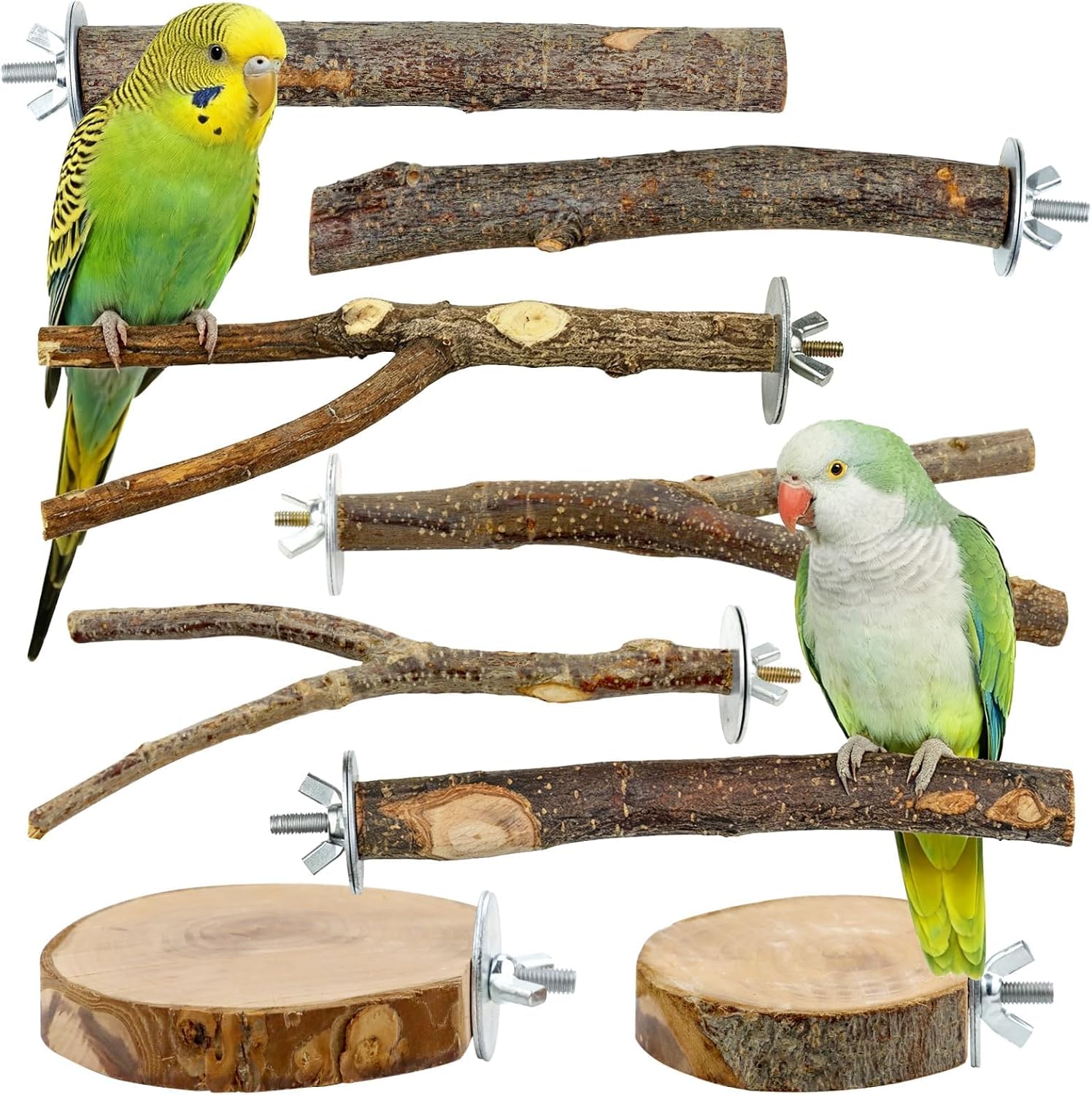
Birds maintain a resting body temperature between roughly 104 and 112 degrees Fahrenheit, markedly higher than that of mammals, and they burn significant energy holding that set point. Unlike mammals, birds cannot shiver effectively, so a cold bird is largely limited to fluffing its feathers and reducing blood flow to the extremities. When ambient temperatures fall much below about 60 degrees Fahrenheit, small species such as budgies, finches, and canaries, along with birds that are molting, elderly, or recovering from illness, can struggle to thermoregulate. General husbandry references such as the Merck Veterinary Manual's exotic animals section note that sick or stressed birds have narrower temperature tolerances and benefit from supplemental ambient warmth.
The 2026 market for avian heating offers several distinct categories, each with real trade-offs. Radiant heat panels mount to the outside of the cage and warm a zone without light. Heated perches warm the feet directly, taking advantage of the fact that a bird's legs and feet are its primary heat-exchange surfaces. Ceramic infrared emitters screw into a fixture and deliver deep, light-free warmth from outside the cage. Whole-room options such as oil-filled radiators raise the ambient temperature of an entire bird room. Which one is right depends on cage size, species, nighttime versus daytime needs, and how cold your room actually gets in winter. This guide walks through the categories, the safety rules that matter most, and the specific products that keep appearing in verified owner reports and manufacturer specifications.
Quick Comparison Table
| Product | Best For | Type | Wattage | Light Output | Thermostat |
|---|---|---|---|---|---|
| K&H Snuggle-Up Bird Warmer | Overall best cage heater | Radiant panel | 20W-40W | None | Built-in |
| K&H Snuggle-Up Large | Large cages and bigger parrots | Radiant panel | 40W | None | Built-in |
| Cord protection and accessories | Chew-proofing any heater setup | Accessory | N/A | N/A | N/A |
How to Think About Bird Heating Before You Buy Anything
The first decision is not which product to buy but what problem you are solving. A healthy budgie in a room that dips to 62 degrees overnight needs a very different solution from an elderly African grey in a drafty 55-degree room. Most pet birds are comfortable between roughly 65 and 80 degrees Fahrenheit, with tropical species preferring the upper half of that range. Sustained exposure below about 50 degrees is dangerous for nearly any companion parrot. If your room sits within the comfortable band most of the time and only dips at night, a low-wattage radiant panel near a favorite sleeping perch is usually sufficient. If the whole room runs cold, no cage-mounted device will fix it, and a room heater plus a panel is the sounder approach.
The second decision is day versus night. Birds need roughly 10 to 12 hours of dark, uninterrupted sleep for normal melatonin cycling, and any visible light source inside or near the cage can disrupt that. This is why zero-light products, including radiant panels and ceramic emitters, dominate winter nighttime heating. Red-tinted bulbs are sometimes marketed for nocturnal use with reptiles, but birds can see well into the red spectrum, and avian veterinarians generally advise against colored bulbs in bird rooms at night. The Association of Avian Veterinarians maintains owner resources on bird housing and environment that reinforce the importance of a dark, temperature-stable sleeping arrangement.
The third decision is safety, and here the stakes are genuinely high. The single most important rule: never use any heater, bulb, or appliance with a polytetrafluoroethylene coating, commonly sold under the Teflon brand, anywhere near birds. Overheated PTFE coatings release fumes that are rapidly lethal to birds even at concentrations a human cannot detect. The risk applies to some space heaters, non-stick cookware, and self-cleaning ovens sharing the same air space. The ASPCA Animal Poison Control and most avian veterinarians publish guidance on household airborne toxins, and PTFE consistently tops the bird-specific lists. Beyond that, any heating device placed near a cage needs a chew-proof cord arrangement, secure mounting outside the cage, and a stable power connection.
1. K&H Snuggle-Up Bird Warmer — Best Overall Cage Heater
The K&H Snuggle-Up Bird Warmer is the product most often recommended by avian vets and experienced owners for basic winter cage heating, and it earns that reputation through a simple, well-executed design. It is a low-wattage radiant heat panel that mounts to the side of the cage and warms a comfortable zone rather than the whole room. According to the manufacturer's specifications, the built-in thermostat holds the surface at approximately 100 degrees Fahrenheit, warm enough for a bird to press against comfortably but far below burn territory. The housing is described as waterproof, so ordinary spray from bathing and misting does not damage it. Verified owner reports consistently describe quick acceptance: birds typically settle next to the panel within days and treat it as a warm wall to sleep against, which matters because a heater a bird refuses to use is worthless.
The trade-offs are straightforward and worth knowing before buying. A radiant panel of this size only warms the area within several inches of its surface, so in a large cage the bird must choose to sit near it, and in a genuinely cold room 20 to 40 watts will not lift the ambient temperature meaningfully. The power cord is a standard flexible cord and must be routed outside the cage and protected from chewing, which is the most common complaint in owner reviews. For most small-to-medium parrots, cockatiels, conures, budgies, and similar species, the trade is worth it: running costs amount to pennies per day, there is no light to disturb sleep, and K&H backs the product with a multi-year warranty. For larger parrots or bigger cages, the large version covers more surface area. Check price and current sizing on the Snuggle-Up here.
2. K&H Snuggle-Up Large (40W) — Best for Big Cages and Bigger Parrots
The large version of the Snuggle-Up is functionally the same design scaled up: a 40-watt thermostatically controlled radiant panel intended for larger cages and larger birds such as African greys, Amazons, and macaws, where the smaller 20-watt panel simply does not cover enough surface. Manufacturer documentation lists the same roughly 100-degree thermostatically regulated surface and waterproof housing, and owner reports describe the same pattern of birds adopting it as a warm sleeping wall. The value of the larger panel is coverage rather than higher heat; both versions target the same surface temperature, but the 40-watt unit radiates across a wider area, which gives a big bird room to shift position during the night without leaving the warm zone.
The honest limitation is the same as with any panel heater: it is a supplemental zone heater, not a room heater. Owners of birds in cold basements or drafty rooms report needing to pair it with room-level heating. Cord protection remains essential with large parrots, whose beaks can strip insulation quickly, so budget for a metal or spiral cord guard as part of the installation. Check price on the Snuggle-Up Large here.
3. Chew-Proof Cord Protection — The Accessory Every Bird Heater Needs
Almost every failure mode reported with bird heaters, panels, perches, and emitters alike, involves the power cord rather than the heating element. Parrots chew, and a chewed cord is an electrocution and fire hazard. Spiral wire wraps, metal braided cord covers, and rigid cord raceways are inexpensive mitigations, and the best implementations route the cord entirely outside the cage with the heater mounted so the bird physically cannot reach the wire. Owner forums consistently identify chew-resistant cord protection as a standard companion purchase for any cage-mounted heater. If you already own a compatible guard, the same product link covers the replacement and multi-pack options. This is an unglamorous purchase, but skipping it is the most common serious mistake reported by bird owners installing their first heater.
Other Heating Categories Worth Understanding
Heated perches
Heated perches such as the K&H Thermo-Perch line warm a bird's feet directly, typically to a thermostatically controlled 95 to 100 degrees. Because birds exchange a meaningful share of body heat through their legs and feet, a warm perch can meaningfully raise core comfort at very low wattage, often under 20 watts. The trade-off is coverage: a perch warms only the bird standing on it, and some birds ignore a new perch for days before accepting it. Textured surfaces are important, since smooth plastic can cause pressure sores or slip. Heated perches suit elderly birds, arthritic birds, and cold-footed individuals, but should be considered a supplement to ambient or zone heat rather than a primary heater.
Ceramic infrared heat emitters
Ceramic emitters are dark-colored bulbs that produce infrared heat with zero visible light, making them the standard choice for overnight warmth in aviaries and larger setups. They screw into ordinary ceramic-socket fixtures, and the ceramic socket requirement is not optional: the emitter surface can exceed 200 degrees Fahrenheit, which damages plastic lamp housings and can melt standard sockets into a fire hazard. The emitter must be positioned outside the cage or behind a wire guard, ideally wired through an external thermostat or dimmer so the output can be tuned rather than running full tilt all night. With those precautions in place, owners report excellent results, deep warmth that penetrates feathers and long element life, often rated past 10,000 hours.
Whole-room heating
Oil-filled radiators are frequently recommended for bird rooms because they are silent, have no exposed glowing element, provide even convective heat, and tend not to dry the air the way forced-air heaters do. The trade-offs are power consumption in the 600 to 1500-watt range, slow warm-up, and a large footprint. Check that any room heater you consider carries no PTFE coating on its internal parts; manufacturers of bird-safe heaters typically state this explicitly, and if the manual is silent on the subject, treat that as a red flag. Position the heater so the bird cannot land on or near it, and never place a cage directly in the path of the radiator's hottest output.
Safety Rules That Apply to Every Bird Heating Setup
First, mount heat sources outside the cage or behind guards. A bird landing on a hot ceramic emitter or pressing against an unguarded high-wattage panel can be burned before it reacts. Second, protect every cord. Third, avoid Teflon and PTFE-coated appliances entirely; the fumes from an overheated coating can kill a bird within minutes and are one of the most common causes of sudden multi-bird household deaths reported to veterinarians. Fourth, do not rely on a cage cover as insulation. Covers trap a modest amount of warmth but reduce ventilation, and a covered cage with a light-emitting heat lamp inside is both a fire risk and a sleep disruptor. Fifth, monitor temperature rather than guessing: an inexpensive thermometer or a Wi-Fi thermo-hygrometer placed at cage level tells you what the bird actually experiences, which is often several degrees colder than the wall thermostat across the room. Humidity matters too, since heated indoor air in winter commonly drops below 40 percent, which contributes to dry, itchy skin and feather picking in some birds.
Species-Specific Considerations
Budgies, canaries, and finches are small with high surface-area-to-mass ratios, so they lose heat quickly and benefit most from a modest panel they can sit beside. Cockatiels and lovebirds fall in a similar category and generally accept panel heaters readily. Conures, poicephalus, and similarly sized parrots do well with a panel plus a heated perch for cold nights. African greys, Amazons, and macaws need the large panel size or room-level heat, and their chewing power makes cord protection non-negotiable. Elderly birds, birds with chronic illness, and birds recovering from surgery often need a warmer microclimate than the rest of the room provides; the Merck Veterinary Manual's coverage of exotic species husbandry notes that supplemental heat is a standard part of supportive care for debilitated birds, generally in the range of 80 to 90 degrees for genuinely sick animals, which is warmer than a healthy bird should be kept long term. If you are heating for illness, do that in consultation with an avian veterinarian.
Common Mistakes to Avoid
The most frequent mistakes reported by owners and veterinarians are: relying on a red or white light bulb for night heat; using a heat source with no thermostat and cooking the bird's immediate area; leaving cords exposed inside or within reach of the cage; placing a heater so it blows or radiates directly onto a sleeping perch with no escape zone; and assuming one product can both heat a cold room and provide a warm cage microclimate. A related mistake is overheating rather than underheating: a bird that is too warm pants, holds its wings away from its body, and becomes stressed, and constant overheating is its own welfare problem. Always give the bird a gradient, a warm zone it can move toward and a cooler zone it can retreat from, so the animal can regulate itself rather than being trapped at one temperature.
Maintenance and Long-Term Ownership
Radiant panels need little beyond occasional wiping with a damp cloth once unplugged and cooled; avoid spraying liquids directly onto any powered heater. Ceramic emitters should be checked periodically for hairline cracks in the ceramic body, since a cracked emitter can fail suddenly or shatter. Heated perches should be inspected where the cord meets the housing, a common failure point in long-term owner reports. Check mounting hardware monthly, as vibration and bird activity loosen clamps over time. Any heater that smells of burning, discolors, or cycles erratically should be retired immediately rather than repaired by the owner. In seasonal climates, unplug and store heaters in summer, and test them before the first cold night of autumn so you are not troubleshooting at midnight in January.
Frequently Asked Questions
What temperature is dangerous for pet birds?
Sustained exposure below roughly 50 degrees Fahrenheit is dangerous for most companion parrots. The comfortable band for healthy adult birds is about 65 to 80 degrees, with tropical species favoring the upper portion. Sick, elderly, or molting birds need the warmer end of that range.
Can I use a red heat lamp at night?
No. Birds perceive red light, so a red bulb is not darkness to them and interferes with sleep. For nighttime heat, use a zero-light option: a radiant panel, a heated perch, or a ceramic infrared emitter.
Is Teflon dangerous to birds?
Yes, and not marginally so. Overheated polytetrafluoroethylene releases fumes that are rapidly lethal to birds. Never use PTFE-coated heaters, cookware, or appliances in a bird's air space, and ventilate the room if any such item is used elsewhere in the house.
Should I cover the cage in winter?
A cover helps slightly with radiant retention and drafts, but it also reduces ventilation and is not a substitute for an actual heat source. A zero-light radiant panel combined with a partial cover is a better arrangement than a full cover alone.
How much does a cage heater cost to run?
A 20 to 40-watt panel running roughly 12 hours a night consumes well under half a kilowatt-hour per night, which translates to pennies per day at typical residential rates. Room heaters in the 600 to 1500-watt class cost considerably more and are the reason zone heating is usually preferred when the room itself is not dangerously cold.
Final Verdict
- Best overall cage heater: K&H Snuggle-Up Bird Warmer, low wattage, thermostatic, zero light, and widely accepted by birds.
- Best for large cages and big parrots: K&H Snuggle-Up Large, same proven design with wider coverage.
- Don't skip: chew-proof cord protection for any cage-mounted heater.
For most bird keepers facing an ordinary winter, the correct setup is a radiant panel mounted beside the sleeping perch, a protected cord, and a thermometer at cage level to confirm the bird's actual conditions. Add room-level heat only if the room itself falls outside the comfortable band, and always leave the bird a cooler zone to retreat to. Choose zero-light products for overnight use, verify that nothing in the bird's air space carries a PTFE coating, and consult an avian veterinarian when heating for a sick or elderly bird.
Affiliate Disclosure: PawCritic is a participant in the Amazon Services LLC Associates Program.
Last updated: June 26, 2026.