Why Bird Harnesses Matter for Captive Parrots
A bird harness is not a fashion accessory. It is a safety device that allows a companion parrot to experience the outdoors without the risk of flying away, and it is also one of the most effective enrichment tools available to owners. Parrots are intelligent, social, and highly active animals that evolved to spend hours each day flying, foraging, and exploring. A cage, even an oversized one, cannot replicate that range of experience, and birds that never leave it are more likely to develop screaming, feather destructive behavior, and territorial aggression.
Avian veterinarians consistently emphasize that environmental enrichment and supervised activity are core parts of parrot welfare. The Association of Avian Veterinarians owner resources outline how important mental stimulation, safe out-of-cage time, and species-appropriate exercise are for companion birds. A harness extends that out-of-cage time into the yard, the porch, or a quiet park, giving the bird natural sunlight that window glass filters out and a changing visual landscape that no toy can match.
Harnesses also serve birds that never go outside. Indoor free-flight and training sessions in a harness build trust, teach the bird to accept handling, and provide structured exercise. For owners who live in apartments or in climates with long winters, a harness can be the difference between a bird that gets twenty minutes of enrichment a day and one that gets two hours.
What a harness cannot do is replace training. A harness placed on an untrained bird is a stress event, not an enrichment tool. The sections below cover the design types, the materials that matter, how to size a harness correctly, how to introduce one without causing fear, and the safety rules that apply every single time the bird wears one.
Types of Bird Harnesses
Harnesses fall into a small number of design families, and the differences between them matter more than brand names. A figure-8 harness uses two loops that go over the wings and connect at a chest clip. It is the most common design, the easiest to find, and generally the most affordable. It works well for birds that tolerate having their wings handled, but it depends on a correct fit to stay secure.
A body suit, sometimes called a flight suit, encloses the bird's torso in lightweight fabric or mesh with openings for the legs and tail, and the lead attaches at the back. Once zipped or fastened, a properly sized body suit is extremely difficult for a bird to escape. The trade-off is that the bird has to accept being placed inside the garment, which some individuals resist strongly.
A jacket or vest style sits between the two. It buckles around the body like a tiny life vest and is often easier to put on than a full body suit while still covering more of the torso than a figure-8. An H-harness uses two wing loops connected by a single strap across the back, with no chest strap at all. It is the least intrusive option and is often chosen for birds that panic when anything presses against the breast, though it offers less escape resistance than a body suit.
Some harnesses combine features, such as a figure-8 front with a padded back strap or a body suit with a breakaway clip. When comparing options, focus on the closure system, the material of the lead attachment, and whether the design has any history of escape reports for birds of your species and size.
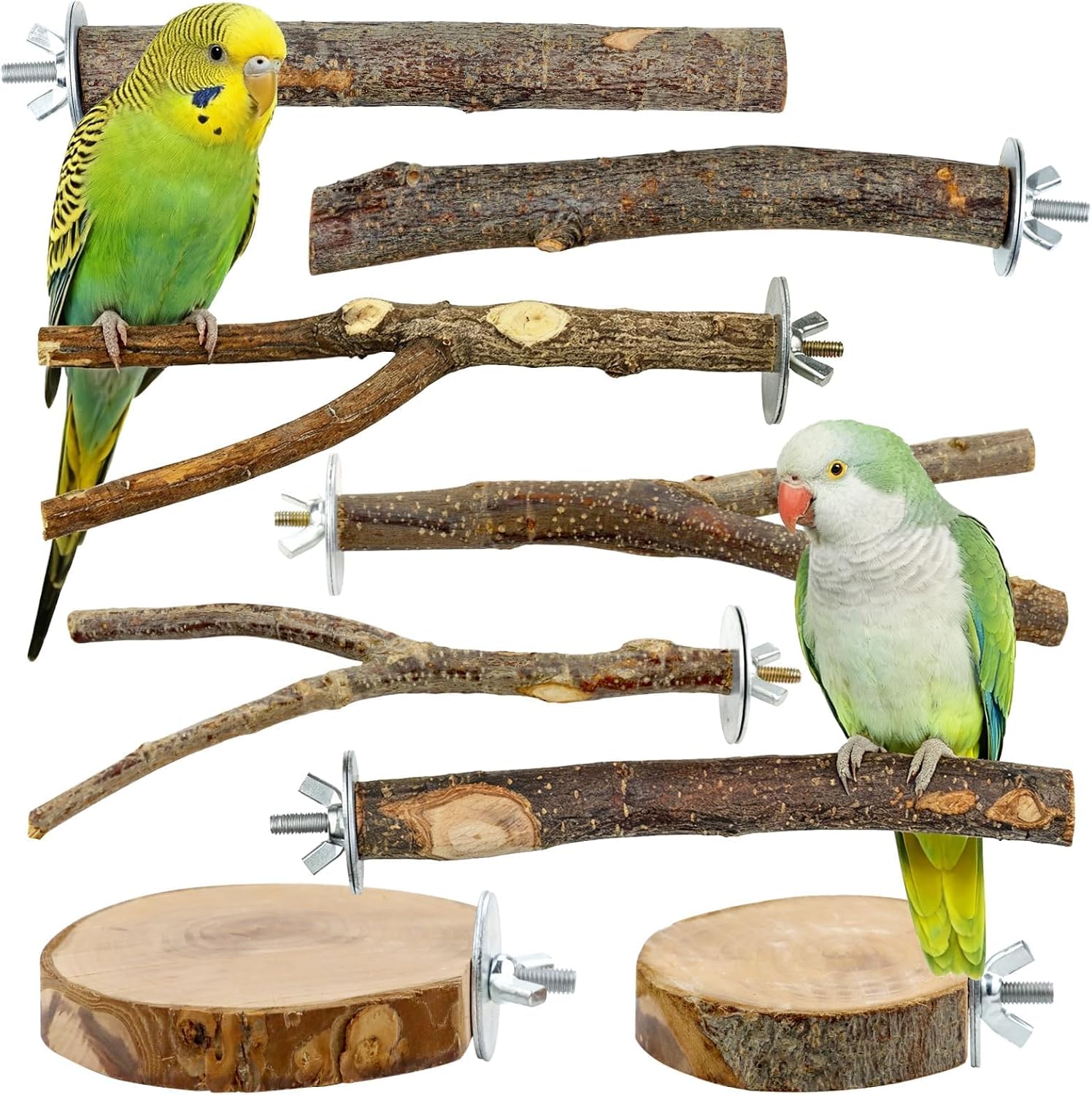
bird harnesses
What to Look For in a Bird Harness
Material of the Lead Attachment
The single most important specification is what connects the harness to the leash. Nylon cord is common on inexpensive harnesses and is adequate for small, calm birds such as budgerigars and cockatiels. It is not adequate for large parrots. A determined macaw or cockatoo can sever a nylon cord in seconds, and once the cord is cut, the harness is no longer a safety device. Braided stainless steel cable is the standard for medium and large parrots because it resists chewing and does not stretch under load. Some heavy-duty designs use welded chain links instead of cable, which is even more resistant but adds weight.
Padding and Contact Points
Any strap that touches the bird under the wings or across the chest can cause chafing during extended wear. Neoprene, fleece, or rolled fabric padding at those points reduces friction and distributes pressure. Unpadded nylon straps are acceptable for short sessions with small birds but become uncomfortable during longer outings, and repeated chafing can lead to skin irritation that makes the bird refuse the harness entirely.
Closure and Hardware
Plastic snap clips are lightweight and easy to operate, but they can crack in cold weather and some birds learn to press the release. Metal buckles and quick-release snaps are heavier but more durable. A breakaway clip at the leash attachment point is a genuine safety feature: if the lead snags on a branch or fence, the clip releases before the bird is injured. Check whether the hardware is rated for the weight and beak strength of your species.
Adjustability and Sizing Range
A harness that only comes in one size per weight range will fit some birds poorly. Look for designs with multiple adjustment points at the chest, back, and wing loops. Feather condition changes seasonally, and a bird that molts heavily may need a different adjustment than it did a month earlier. A harness that cannot be adjusted snugly is an escape risk, and one that cannot be loosened is a chafing risk.
Washability
Harnesses contact the skin under the feathers and pick up feather dust, dander, and occasional droppings. Machine washable or hand washable materials are easier to keep hygienic. Natural fiber harnesses such as cotton and hemp are comfortable and breathable but degrade faster with repeated washing and UV exposure than synthetic materials.
A Closer Look at One Popular Option
Among figure-8 style harnesses, one widely referenced design uses a braided stainless steel cable core, neoprene padding at the contact points, and a quick-release snap at the lead attachment. It is available in sizes spanning small parakeets up to macaws and is frequently mentioned in owner communities as a durable choice for birds that have defeated nylon harnesses. The trade-offs are typical of premium figure-8 designs: a higher price than budget harnesses, a fitting process that takes time on the first few uses, and the need to order online rather than buy from a local pet store. Owners who want a concrete example of a stainless steel cable harness should compare the specifications above.
For owners who prefer a body suit design or who have a bird that has escaped a figure-8, a different category of product applies. Body suits enclose the torso and attach the lead at the back, which makes escape far less likely once the suit is fastened. The trade-off is that the bird must accept being placed inside the garment, and some individuals never do. Owners curious about this style can view this option on Amazon as a starting point for comparing sizing and materials.
How to Size a Bird Harness Correctly
Sizing is where most harness problems begin. Manufacturers publish weight ranges and sometimes chest circumference measurements, but weight alone is not enough. Two birds of the same weight can have very different body shapes, especially across species. A cockatiel and a small conure may weigh similar amounts but carry their weight differently, and a harness that fits one may slip on the other.
The correct fit is snug but not tight. You should be able to slide one finger under each strap, no more. The wing loops should sit at the base of the wing where it meets the body, not out on the wing itself. The chest strap should rest against the breast without pressing into the crop area. If the harness can rotate around the bird's body, it is too loose. If the feathers around the straps are visibly compressed or the bird holds its wings slightly away from the body, it is too tight.
Measure before ordering. Use a soft measuring tape around the widest part of the chest, just behind the wings, and compare to the manufacturer's size chart. When a bird falls between two sizes, err toward the smaller size for figure-8 harnesses if the bird is calm, and toward the larger size if the bird is large and strong, because a too-small harness can restrict breathing while a slightly large one can be adjusted down.
Recheck the fit before every use. Feather loss during a molt, weight gain in winter, and weight loss during illness all change how a harness sits. A harness that fit perfectly in October may be dangerously loose by December.
Introducing a Harness Without Causing Fear
Harness training is a process measured in weeks, not minutes. The goal is for the bird to associate the harness with treats, praise, and calm attention. Rushing the introduction creates a fear response that can make future attempts impossible, and some birds carry that fear for years.
Start by leaving the harness in the bird's room, outside the cage, where it can be seen but not reached. Place favored treats nearby. After a few days, bring the harness closer during training sessions and reward the bird for looking at it without alarm. The next stage is touching the harness to the bird's back briefly and rewarding immediately, then gradually increasing the duration of contact. Only after the bird accepts contact should one wing loop be introduced, and only with a high-value treat in view. Each stage should be repeated until the bird shows no hesitation before moving to the next.
Once both loops are accepted, fasten the harness without attaching a lead and let the bird walk around indoors. Attach a short, light lead only after the bird is comfortable wearing the harness itself. The first outdoor session should be brief, in a secure enclosed area, and should end before the bird becomes tired or stressed. Ten minutes outside is a successful first outing; an hour is not the goal.
Some birds accept a harness in a week. Others take months. A small number never accept one, particularly birds with a history of trauma or certain cockatoos and rescue parrots. For those birds, a bird-proofed indoor free-flight room provides excellent enrichment without a harness, and forcing the issue is not worth the damage to the bird's trust.
Safety Rules for Every Harness Session
- Never leave a harnessed bird unattended. A lead can snag on furniture, branches, or door handles in seconds, and a panicked bird can injure itself trying to escape.
- Use a breakaway clip where possible. If the lead catches on something, the clip should release before the bird's body takes the force.
- Inspect the harness before every use. Check stitching, clips, cable, and padding for wear. Replace immediately if any component is compromised.
- Recheck the fit weekly. Seasonal feather changes and weight fluctuation alter how a harness sits.
- Watch for overheating. Body suits and padded harnesses trap heat. In warm weather, keep sessions short and provide shade and water.
- Avoid hot surfaces. Asphalt, metal, and concrete can burn a bird's feet on sunny days. Choose grass or shaded paths.
- Never use a harness as a tether. A harness is for supervised walks and stationary outdoor time, not for tying a bird to a perch or stand.
- Keep the bird away from other animals. Even a harnessed bird is vulnerable to dogs, cats, and wild predators. Maintain distance and stay alert.
Owners should also be aware of environmental hazards that affect birds more than mammals. The ASPCA Animal Poison Control maintains guidance on common household and outdoor toxins, and birds are especially sensitive to airborne irritants. The Merck Veterinary Manual section on exotic and laboratory animals describes the respiratory anatomy that makes birds vulnerable to fumes, aerosols, and smoke, which is relevant when choosing where to take a harnessed bird outdoors.
Common Mistakes Owners Make
The most common mistake is buying a harness and using it the same day. A bird that has never seen a harness will panic when one is placed on its body, and that first experience often determines whether the bird ever accepts one. The second most common mistake is choosing a harness by price alone. A ten dollar nylon harness may be fine for a budgerigar, but it is not a safe choice for a cockatoo, and the failure mode is a lost bird.
Another frequent error is fitting the harness too loosely because the owner is worried about tightness. A loose harness can rotate, slip over a wing, or allow the bird to work a leg through a loop. Snug but not tight is the correct standard. Conversely, some owners leave a harness on for hours because the bird seems comfortable. Extended wear increases the risk of chafing and overheating, and most sessions should last between twenty minutes and an hour depending on weather and species.
Owners also sometimes skip the lead attachment check. The clip that connects the harness to the leash is a wear point, and a clip that opens under load defeats the entire system. Inspect it every time. Finally, some owners assume that a clipped bird does not need a harness. Clipped birds can still glide, catch a breeze, and travel farther than expected, and a clipped bird that has never flown outdoors may panic and fly into traffic or a window. A harness with a lead is the only reliable outdoor safety measure.
Species-Specific Considerations
Small birds such as budgerigars, lovebirds, and parrotlets can wear lightweight figure-8 harnesses, but the hardware must be scaled down. A clip designed for a cockatoo is too heavy for a budgerigar and can affect balance. Small birds also lose heat quickly and should not be kept outdoors in cool weather even in a harness.
Medium birds such as cockatiels, conures, quakers, and small Amazons are the most common harness users. They are large enough to carry standard hardware and small enough that a well-fitted figure-8 is secure. Many of these species are also prone to becoming overweight in captivity, and harnessed walks provide valuable exercise.
Large parrots such as African greys, Amazon parrots, cockatoos, and macaws require the most attention to materials. African greys are strong chewers and intelligent enough to manipulate clips. Cockatoos are notorious for escaping figure-8 harnesses and often need a body suit. Macaws have the most powerful beaks among parrots and can destroy nylon in seconds; stainless steel cable or welded chain is effectively mandatory. The extra weight of heavy-duty hardware is a real consideration for the bird, and sessions should be shorter to compensate.
Maintenance and Storage
A harness should be inspected before every use and cleaned regularly. Fabric harnesses can be hand washed in mild soap and warm water, rinsed thoroughly, and air dried away from direct sunlight. Metal components should be wiped down and checked for corrosion, especially if the bird has been outdoors in humid conditions. Cable cores should be examined for fraying at the attachment points, where flexing stress concentrates.
Store the harness hanging or laid flat rather than crumpled in a bag, which can kink cable and deform padding. Keep it away from birds when not in use; a harness left within reach can be chewed, and a chewed harness is no longer safe. Replace any harness that shows fraying, cracked hardware, compressed padding, or stretched straps. A harness is inexpensive relative to the cost of losing a bird.
Frequently Asked Questions
Can a bird escape from a harness? Yes, if the harness is the wrong type, the wrong size, or improperly fitted. Large parrots in particular learn to manipulate clips and work wings out of loops. Body suits are the most escape-resistant design, followed by well-fitted figure-8 harnesses with stainless steel cable. Always verify the fit before outdoor use.
Is it safe to take a bird outside without a harness? No. Even clipped birds can glide significant distances, and a bird that has never been outdoors may panic and fly into danger. A harness with a lead is the only reliable protection.
How long can a bird wear a harness? Sessions of twenty minutes to an hour are typical, depending on weather and species. Body suits trap heat, so warm-weather sessions should be shorter. Remove the harness if the bird shows signs of overheating, such as open-mouth breathing or holding the wings away from the body.
What if my bird refuses the harness? Return to an earlier training stage and spend more time there. Do not force the harness on a struggling bird; forced experiences create lasting fear. If the bird has a trauma history or shows severe fear responses, consult an avian behaviorist. Indoor free-flight remains an excellent alternative.
Do I need a different harness as my bird grows? Yes. Young birds grow, and adult birds change weight and feather condition seasonally. Recheck the fit regularly and adjust or replace the harness as needed.
Where to Buy
As an Amazon Associate, PawCritic earns from qualifying purchases. This does not affect our reviews or recommendations.
Owners looking for a stainless steel cable figure-8 harness should compare sizes and materials against the points above. For a body suit style that offers greater escape resistance, view this option on Amazon as a starting point. Both categories have trade-offs in fit, weight, and ease of introduction, and the right choice depends on the species, temperament, and training history of the individual bird.
Final Considerations
A harness is a tool, not a solution. It works only when paired with patient training, correct sizing, and consistent safety practices. The owners who get the most from harnesses are the ones who treat the first month as training rather than as outdoor time, who inspect the equipment before every session, and who accept that some birds need a different design or a different approach entirely.
For most medium parrots, a well-fitted figure-8 harness with stainless steel cable and padded contact points covers the basics. For large parrots with destructive beaks, heavy-duty materials are non-negotiable. For birds that escape figure-8 designs, a body suit is the safer category. And for birds that never accept a harness, a bird-proofed indoor space provides meaningful enrichment without the stress. The goal is not to get the bird outside at any cost; it is to expand the bird's world safely, on the bird's timeline.
Affiliate Disclosure: PawCritic.com participates in the Amazon Services LLC Associates Program. We may earn commissions from qualifying purchases at no extra cost to you.
bird harnesses