Why Bird Supplements Matter Even on a Complete Diet
A high-quality pellet diet is the foundation of good avian nutrition, but a complete diet and a complete nutritional intake are not always the same thing. Pellets are formulated for average birds in average conditions, and the bird in front of you may not be average. Molting birds burn protein and calcium to build hundreds of new feathers. Breeding hens drain calcium from bone stores at a rate that can cause tremors and weakness within days. A bird recovering from illness has an immune system demanding resources that a maintenance diet was never designed to supply. Senior birds absorb nutrients less efficiently than they did at five years old, and a bird on medication may be losing nutrients faster than diet alone can replace them.
Published avian guidance from the Association of Avian Veterinarians consistently emphasizes that nutrition is one of the most important and most misunderstood aspects of companion bird care. Deficiencies rarely appear overnight. They develop quietly over weeks and months, often showing up only when a bird is already under stress from another cause. Understanding what supplements can and cannot do is the difference between supporting a bird through a demanding life stage and causing harm through well-intentioned over-supplementation.
Several factors make deficiencies more likely even when a diet looks complete on paper. Selective eating is common: many birds pick out favorite seeds and leave the balanced portions behind, which turns a complete mix into an incomplete meal in practice. Vitamin degradation matters too, because pellets and seeds lose potency over time. B vitamins degrade after roughly three to six months, vitamin A after six to nine months, and vitamin C in fruit-based treats degrades quickly. Stress from cage changes, new flock members, travel, and veterinary visits increases nutritional demand, and absorption issues in aging birds, birds with gastrointestinal problems, and birds on certain medications reduce how much of a nutrient actually reaches the tissues that need it.
Supplements are not a replacement for a good diet. They are targeted support for specific life stages and health conditions, and they should be chosen with the same care as the food bowl itself. This guide covers the main categories of bird vitamin and mineral supplements, when each type is appropriate, what the published evidence and manufacturer specifications say about them, and the safety limits that matter most.
Types of Bird Supplements
Complete multivitamin powders are broad-spectrum vitamin and mineral supplements intended to cover the full range of essential nutrients. They are typically added to food or water daily or several times per week and are most useful for birds on seed-heavy diets or during molting and breeding seasons. Calcium plus D3 supplements address bone health, egg production, and feather quality, and the D3 component matters because birds cannot absorb calcium efficiently without it, while indoor birds receive no UVB sunlight for natural D3 synthesis. Sprouting and enzyme boosters supply digestive enzymes and probiotics to improve nutrient absorption, which is especially relevant for birds recovering from illness or antibiotics that disrupt beneficial gut bacteria.
Molting support formulas contain extra amino acids, particularly methionine and cysteine, along with biotin and sulfur compounds that are critical while a bird is building protein structures at maximum metabolic rate. Iodine and mineral blocks support thyroid function, which regulates metabolism, and iodine is often needed for budgies kept on seed-only diets, where deficiency can manifest as goiter. Each category solves a different problem, and using a breeding formula on a non-breeding pet, or a daily multivitamin on a bird already eating D3-fortified pellets, can create problems rather than solve them.
How to Evaluate a Bird Supplement
The first thing to check is the label for a guaranteed analysis and a complete ingredient list. A credible avian supplement lists every vitamin and mineral with amounts, not just a proprietary blend. The second is species suitability. A formula designed for poultry or for mammals is not interchangeable with one designed for companion birds, because dosing is calculated per kilogram of body weight and a bird weighing 40 grams needs a fraction of what a chicken needs. The third is administration method, because water-soluble powders behave differently from oil-based liquids and from granular probiotics that require moisture to activate.
Storage and stability also deserve attention. Most avian vitamins degrade at room temperature within months, and some become less stable once a container is opened. Refrigeration after opening is recommended for many products, and expiration dates should be respected rather than treated as suggestions. Finally, consider the dosing schedule the manufacturer specifies. A product labeled for three to five days per week is not a daily product, and ignoring that distinction is one of the most common mistakes bird owners make.
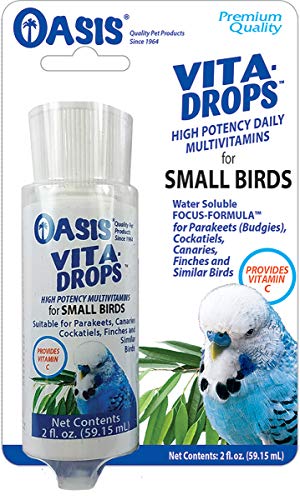
bird vitamins supplements
A Concrete Example: Hagen Prime Vitamin Supplement
Hagen Prime is a powdered multivitamin and mineral supplement that covers essential vitamins, minerals, amino acids, and antioxidants in a single product. Its distinguishing feature is water administration. The powder is added to drinking water, which means no dust on food, no rejection of treated pellets, and no uncertainty about whether a bird actually ingested the intended dose. Water-soluble vitamins are absorbed rapidly, and because the product is flavorless, most birds do not notice a change in their water. Hagen has been a fixture in avian nutrition for decades, and the brand is frequently referenced in bird-keeping communities and by veterinarians as a mainstream option.
The trade-offs are real and worth stating plainly. The powder must dissolve fully, because undissolved particles are wasted and make the actual dose unknown. Some birds drink less when water tastes different, so water consumption should be monitored for the first few days of use. Long-term use is limited to three or four days per week, because while excess water-soluble vitamins are excreted in urine, fat-soluble vitamins A, D, E, and K accumulate in the liver and can reach toxic levels. The product is also not ideal for nectar-eating species such as lorikeets, which receive ample vitamins from their diet and are at greater risk from excess intake. For a bird on a seed-based diet, during molting, during breeding, or after illness, it is a practical and widely used option. You can check the current price on Amazon to see the current formulation and sizing.
Calcium and D3: The Pair That Cannot Be Separated
Calcium is the mineral most likely to be deficient in companion birds, and the reason is not always a lack of calcium in the diet. Birds cannot absorb calcium efficiently without vitamin D3, and D3 synthesis requires exposure to UVB light, which indoor birds rarely receive in adequate amounts. This is why calcium supplements for birds almost always include D3, and why a bird eating a calcium-rich diet can still show deficiency signs. Egg-laying hens have the highest demand, because producing an eggshell requires a large and rapid mobilization of calcium. Heavy molters also need support, since feathers are protein structures that depend on calcium-dependent processes during growth.
Species differences matter here. African greys are well known among avian veterinarians for a predisposition to hypocalcemia, which can present as tremors, toe curling, weakness, and in severe cases seizures. Cockatoos are also frequently mentioned as calcium-sensitive. For these species, a calcium and D3 supplement during breeding or molting is often recommended by veterinarians. The critical caution is that D3 is not a harmless vitamin. It functions as a hormone that regulates calcium metabolism, and excess D3 causes calcium deposits in soft tissues including arteries, kidneys, heart, and brain. A bird already eating D3-supplemented pellets and receiving UVB lighting should not receive additional D3 without veterinary guidance.
Probiotics and Digestive Support
Probiotics for birds contain Lactobacillus and Bifidobacterium strains that occur naturally in healthy avian gut flora. Their most clearly defined role is recovery after antibiotic treatment, which kills beneficial bacteria along with the target infection. They are also used for digestive upset, crop slowdown, stress-related diarrhea after travel or environmental change, and chronic enteritis or inflammatory bowel conditions. Some veterinarians recommend a maintenance dose once or twice weekly for birds prone to digestive problems. The key distinction is that probiotics treat gut flora, not nutritional deficiencies, and they are not a substitute for vitamins or minerals.
Handling requirements are stricter than for vitamin powders. Because probiotics contain live bacteria, refrigeration after opening is typically required, and the product must be mixed with soft food such as mashed vegetables, egg food, or softened pellets rather than dry seed. Granular forms need moisture to activate, and dry application reduces effectiveness. Bird-specific strains are preferable to generic mammalian probiotics, because the bacterial species that colonize a bird gut are not identical to those in a dog or a human.
Molting Support
A heavy molt is one of the most nutritionally expensive events in a bird life. Feathers are roughly 90 percent protein, and a bird replacing a full set of feathers is simultaneously building hundreds of keratin structures while maintaining normal body function. Methionine, cysteine, and lysine are the amino acids most directly involved in keratin production, and biotin is the vitamin most closely associated with feather quality. Molting formulas typically improve these nutrients along with other supportive vitamins and minerals. The goal is to meet demand without overloading the liver with excess protein, which is why specialized molting blends exist rather than simply feeding a higher-protein diet.
Molting support is seasonal, used two or three times per year during active molt cycles, not as a daily supplement. Powdered formulas must be mixed thoroughly with food, because uneven distribution means uneven dosing, and some birds reject food with added powder until it is blended into a favored soft food. Owners who use molting support often report visible improvement in feather condition within three to five weeks, though this reflects normal feather regrowth as much as the supplement itself.
Mineral Grit: Species-Specific and Easily Misused
Mineral grit serves two functions. Insoluble grit such as granite or quartz aids mechanical digestion in the gizzard, while soluble mineral grit such as oyster shell or calcium carbonate provides calcium, magnesium, and trace minerals that can be absorbed. For granivorous species including canaries, finches, budgies, and cockatiels that naturally consume grit in the wild to grind seeds, this dual function supports both digestive efficiency and mineral intake. For parrots on pellet-based diets, most avian veterinarians advise against grit, because parrots hull their seeds and do not require mechanical grinding assistance, and because over-consumption can lead to crop complications.
When grit is appropriate, it should be offered in a separate dish rather than mixed into food, so the bird can self-regulate intake. Portion awareness matters, because some birds over-consume grit. The fine dust from a bag of mineral grit is also a respiratory concern for both birds and owners, so it should be handled carefully and kept away from cages during pouring.
Breeding Support
Breeding places demands on a bird that no maintenance formula is designed to meet. Egg production drains calcium stores rapidly, and raising chicks drains protein, fats, and micronutrients continuously for weeks. Breeding blends typically include elevated calcium, D3, vitamin E for reproductive health and fertility, essential amino acids, and additional energy sources to support the caloric cost of feeding nestlings. Vitamin E deserves specific mention because it is involved in reproductive function and is often included at higher levels in breeding formulas than in maintenance products.
These formulas are not appropriate for non-breeding pets. The higher energy content can contribute to obesity in a bird that is not expending the calories of reproduction, and the elevated calcium and D3 are unnecessary and potentially harmful for a bird on a balanced maintenance diet. Used correctly, during breeding season for pairs and laying hens, they fill a gap that standard products cannot.
Comparison Table
| Supplement Type | Administration | Typical Frequency | Best For |
|---|---|---|---|
| Complete Multivitamin | Water or food | 3 to 4 times weekly | Seed-based diets, molting, recovery |
| Calcium plus D3 | Water, liquid | 3 to 4 times weekly | Breeding hens, African greys, molting |
| Probiotic | Soft food | Daily during treatment | Post-antibiotic, GI recovery, stress |
| Molting Support | Food dusting | During molt only | Heavy molters, feather quality |
| Mineral Grit | Separate dish | Always available | Finches, canaries, budgies, cockatiels |
| Breeding Support | Water or food | Daily during breeding season | Breeding pairs, laying hens, chicks |
Critical Supplement Safety Rules
Never give daily multivitamins long-term. Fat-soluble vitamins A, D, E, and K accumulate in the liver and can reach toxic levels over weeks to months. The standard protocol is three to four days per week with three to four days off, or the specific schedule printed on the product label. Vitamin A toxicity from over-supplementation can cause skin lesions, feather loss, and liver damage that is frequently misdiagnosed as infection.
Treat D3 as a potent hormone, not a harmless vitamin. Excess D3 causes soft tissue calcification in arteries, kidneys, heart, and brain, a condition that is often fatal. A bird receiving UVB lighting and eating D3-supplemented pellets should not receive additional D3 without veterinary direction.
Replace water completely every day when using water-administered products. Vitamins degrade in water within 12 to 24 hours, and vitamin-enriched water is also a nutrient solution for bacteria. Bowls should be emptied, washed, and refilled daily during use. This also applies to any water-soluble product, including calcium liquids and breeding formulas.
Do not supplement without a diagnosis. A dull appearance is not a diagnosis. Blood work from an avian veterinarian is the only reliable way to identify a deficiency, and blind supplementation can mask or worsen an underlying problem. The Merck Veterinary Manual section on exotic and laboratory animals is a useful reference for understanding how nutritional disorders present in birds.
Store supplements correctly. Most bird vitamins degrade at room temperature within months and should be refrigerated after opening. Expired supplements should be discarded rather than used at higher doses to compensate for lost potency.
Keep all supplements away from other pets and children. Many avian products contain concentrated vitamins and minerals that are harmful if ingested in large quantities by mammals, and some contain ingredients that are toxic to other species. The ASPCA Animal Poison Control center maintains guidance on household substances that pose risks to pets, and any suspected ingestion should be treated as an emergency.
Common Mistakes and What to Avoid
The most common mistake is treating a supplement as a substitute for dietary improvement. A bird on an all-seed diet given a multivitamin is still eating an incomplete diet. The foundation should be a high-quality pellet with daily fresh vegetables and moderate fruit as treats, with supplements filling specific gaps rather than compensating for a poor base. The second most common mistake is using human vitamins. Human formulations are dosed for a body weight many times that of a bird, and some contain sweeteners such as xylitol that are dangerous to birds. Bird-specific products exist for good reason.
A third mistake is combining products that overlap. A bird eating D3-fortified pellets, receiving UVB lighting, and also getting a calcium plus D3 supplement is at risk of D3 excess. Similarly, stacking two multivitamins because a bird seems tired can push fat-soluble vitamins into toxic range. A fourth mistake is ignoring species differences. Nectar-eating birds such as lorikeets have different nutritional profiles and are more sensitive to excess vitamins than seed-eating species. A fifth mistake is assuming that more is better. In avian nutrition, the therapeutic window for several vitamins is narrow, and the difference between support and harm can be a single extra day per week of dosing.
Frequently Asked Questions
Does my bird need supplements?
It depends on diet and life stage. A bird eating a diet of at least 75 percent pellets with daily fresh vegetables and access to UVB lighting usually does not need additional supplementation. A bird on a diet that is 50 percent or more seed almost certainly does, because seeds are incomplete and lack adequate calcium, vitamin A, vitamin D3, iodine, and trace minerals. During molting, amino acid support is worth considering. During breeding, calcium and D3 support is often necessary. After antibiotics, probiotics are commonly recommended. Outside these situations, an avian veterinarian should guide the decision based on blood work rather than appearance.
Can I give human vitamins to my bird?
No. Human formulations are designed for a large mammal with a different metabolic system, and dosing is calculated per kilogram of body weight. A human dose will overdose a bird many times over. Some human supplements also contain sweeteners or other ingredients that are safe for people but toxic to birds. Always use products formulated for avian species.
Can supplements replace a good diet?
Never. Supplements fill gaps. They do not provide the base. A bird on a fully supplemented seed diet is still nutritionally incomplete, because seeds lack the complete protein, carotenoid diversity, and fiber that pellets and fresh foods provide. The foundation should be a quality pellet with daily fresh vegetables, and supplements should be used for specific, identified needs.
How long does it take to see results?
Water-soluble vitamins can produce measurable changes in blood levels within days, which is why water-administered products are sometimes used in recovery situations. Feather condition changes more slowly, following the natural growth cycle of new feathers, which can take three to five weeks or longer depending on species and molt stage. Owners should not expect visible improvement in feather quality before new feathers have had time to grow.
Where to Buy
Hagen Prime is widely available online and in pet specialty retailers, and pricing varies with container size. For a single concrete option to compare against other products, you can view this option on Amazon. Before purchasing any supplement, confirm the species suitability on the label and check whether the formula overlaps with nutrients your bird already receives from pellets or lighting.
As an Amazon Associate, PawCritic earns from qualifying purchases. This does not affect our reviews or recommendations.
When comparing products, look for a guaranteed analysis, a species-appropriate dosing schedule, and clear storage instructions. A product that lists every nutrient with amounts and specifies a maximum weekly frequency is easier to use safely than one that simply says to add it to food. If a label is vague about dosage or does not identify the target species, that is a reason to keep looking. You can also check the current price on Amazon to compare sizing and cost per serving against other options.
Owners who want a broader reference on general bird care, including housing, enrichment, and preventive health, can consult the ASPCA pet care library, which covers companion animal basics across species. The most reliable approach remains the same: build the diet first, identify specific gaps, and use supplements with the same care and restraint as any other health product. A supplement chosen for a real reason and dosed correctly supports a bird through demanding periods. A supplement used casually, daily, and without a clear purpose is more likely to cause harm than good.
bird vitamins supplements
Finally, remember that the most important supplement decision is often the decision not to supplement. Birds on well-formulated pellets with fresh produce and appropriate lighting are frequently already meeting their needs, and adding products on top of that can push fat-soluble vitamins into ranges that cause harm. When in doubt, blood work and veterinary guidance are worth more than any product on a shelf. For a concrete example of a water-administered multivitamin to discuss with your veterinarian, you can view this option on Amazon.