Why a Dedicated Bird Travel Carrier Matters
Bird owners face a transport problem that cat and dog owners never encounter: the animal inside the carrier can dismantle the carrier. Parrots open zippers, slide bolts, unscrew wingnuts, and chew through nylon mesh. A carrier that works perfectly for a rabbit may fail within minutes for a cockatoo. Published guidance from avian veterinarians and years of owner reports point to the same conclusion: birds need carriers designed around bird behavior, not adapted from small-mammal products.
The Association of Avian Veterinarians recommends annual wellness examinations for all companion birds, including fecal parasitology and blood work, because many avian diseases progress without obvious clinical signs until advanced stages. That recommendation means most bird owners will make at least one veterinary trip per year, and sick-bird visits can happen with little warning. A carrier that lives in a closet and only comes out on travel day is a carrier a bird will panic inside.
Transport also happens during emergencies. Evacuations, household repairs, and sudden moves all require a bird to leave its cage quickly. A carrier that is already assembled, already familiar, and already escape-proof removes one source of stress from an already stressful day. For parrots, which are intelligent animals capable of anticipating events and forming strong associations, the carrier itself becomes part of the experience. A carrier introduced slowly and used for positive outings produces a calmer bird than one that appears only when something frightening is about to happen.
What to Look For
Escape resistance is the first specification to evaluate, and it is not the same thing as latch strength. A parrot can defeat a latch that a human finds stiff if the parrot can reach it and has enough time. Published owner reports describe cockatoos and macaws opening slide bolts, unzipping soft carriers from the inside, and working loose wingnuts on cage hardware. The practical standard is a carrier that either has no reachable latch mechanism or has a latch that can be secured with a secondary clip, carabiner, or padlock. Zipper closures should be lockable by joining the pulls with a small clip.
Bar spacing or mesh gauge matters as much as the latch. Small birds such as budgies, finches, and canaries can squeeze through gaps that look too narrow to a human eye. Large parrots can bend or snap thin wire. Stainless steel mesh resists chewing far better than nylon or coated fabric, and it does not absorb moisture or odor. Solid panels with ventilation cutouts eliminate the chewing problem entirely, at the cost of weight and visibility.
A perch is not a luxury. Birds grip with their feet, and a bird forced to stand flat on a plastic or metal floor for an hour or more cannot rest its feet properly. A wooden dowel, a rope perch, or a molded perch sized to the species gives the bird a natural grip and reduces foot fatigue. Perches should be positioned so the bird can turn around without its tail pressing against a wall, and they should be removable for cleaning.
Ventilation needs to be adequate without creating drafts. Mesh panels or ventilation slots on at least two or three sides allow airflow, but a carrier with open mesh on all sides placed in a moving car creates a wind tunnel. Many carriers include roll-down covers or flaps that let the owner modulate airflow. A light cloth draped over part of the carrier can serve the same purpose, provided it never blocks all ventilation.
Cleanability is a daily-use concern, not a cosmetic one. Birds produce droppings frequently, and a carrier that cannot be wiped or hosed out becomes a bacterial reservoir. A removable floor tray, a slide-out drawer, or a smooth non-porous interior makes the difference between a carrier that gets cleaned after every trip and one that gets cleaned after every third trip. Fabric interiors absorb moisture and odor and are difficult to disinfect thoroughly.
Car safety deserves its own consideration. An unrestrained carrier becomes a projectile in a sudden stop. A seatbelt loop, a strap that threads through the vehicle seatbelt, or a carrier shape that sits securely in a footwell reduces that risk. Hard-sided carriers generally survive impacts better than soft-sided ones, but a soft carrier secured with a seatbelt can be acceptable for small birds. The carrier should never be placed on a seat where it can slide or where an airbag could strike it.
Bird Travel Carriers: A Focused Buying Guide
bird travel carriers
The market for bird travel carriers is narrower than the market for dog crates, and only a few designs are widely recommended by avian veterinarians and experienced owners. The two products linked below represent the two ends of the practical spectrum: a backpack-style carrier built for parrots and a simple wire travel cage for small birds. Neither is right for every household, and the sections that follow explain the trade-offs in detail.
Backpack-Style Carriers for Parrots
Backpack carriers solve a problem that traditional cages do not: hands-free transport. A bird owner navigating a veterinary clinic door, a flight of stairs, or a crowded sidewalk has limited hands available. A backpack carrier distributes the weight across both shoulders and leaves the owner free to manage leashes, doors, and paperwork. The trade-off is that backpack carriers are generally heavier than simple wire cages, and the frame that provides structure also adds cost.
The design that set the standard for this category uses a sturdy internal frame, stainless steel mesh panels, a removable floor grate over a slide-out tray, and a molded perch sized to the species. Stainless steel mesh is the critical specification because parrots cannot chew through it, unlike nylon or coated fabric. Sizes range from small birds up to macaws, with bar spacing adjusted per species. Owners who have used this style for years report that the combination of a familiar perch, limited but not zero visibility, and a secure closure produces a calmer bird than open wire cages on the same trip.
The trade-offs are real. A carrier of this type typically costs between roughly 120 and 280 dollars depending on size, which is several times the price of a basic wire travel cage. Many are made to order, so a buyer planning a trip next week may not receive the carrier in time. Empty weight runs five to eight pounds, which is manageable on the back but awkward if carried by hand for long distances. For a bird that travels monthly, the cost is easy to justify. For a bird that travels once a year to the vet, a simpler option may be sufficient.
An example of this category is available to view here: check the current price on Amazon. Buyers should confirm the size chart against their bird's length from beak to tail before ordering, because a carrier that is too small forces the tail against the back panel and a carrier that is too large allows the bird to be thrown around in a sudden stop.
Simple Wire Travel Cages for Small Birds
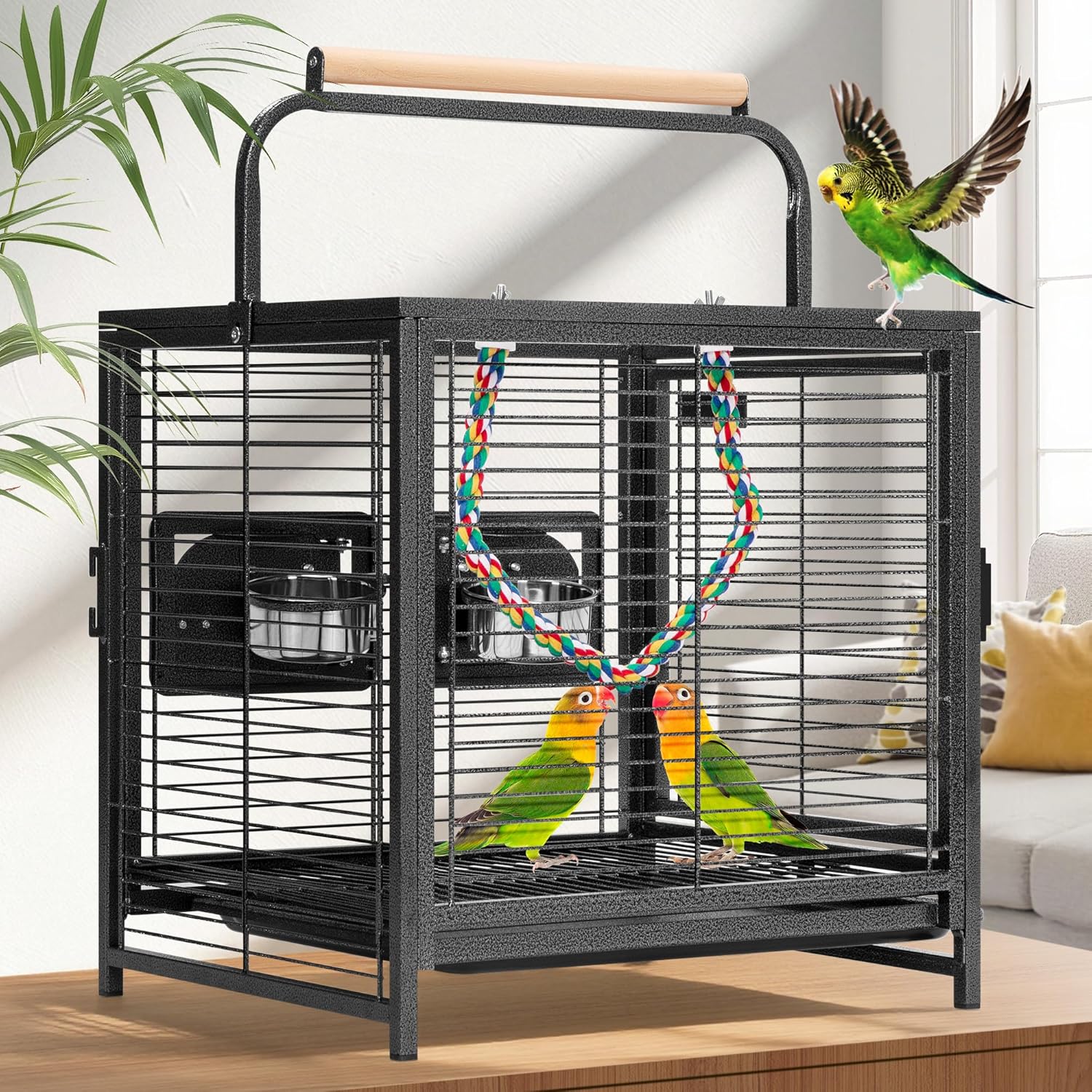
Wire travel cages cover the basics at a fraction of the cost. A typical example includes a wooden perch, two plastic feeding cups, a slide-out bottom tray, and a folding frame that stores semi-flat. Weight is usually under three pounds, which makes the carrier easy to carry by a thin wire handle for short distances. Bar spacing on these cages is sized for small-to-medium birds such as budgies, cockatiels, and conures.
The limitations are predictable and worth stating plainly. The door latch on most wire travel cages is a simple sliding or hook mechanism that a large parrot can open. Bar spacing that suits a cockatiel is too wide for a finch or canary, which can slip between the bars. There is no insulation, so cold drafts pass straight through, and there is no seatbelt strap, so the cage must be secured by threading the vehicle seatbelt through the frame or placing the cage in a footwell. The thin wire handle becomes uncomfortable during a long carry.
For an owner who needs an occasional carrier for a small bird and does not want to spend more than thirty dollars, a wire travel cage is a reasonable choice. It is not a suitable carrier for a macaw, a cockatoo, or any bird large enough to work the latch. An example of this category can be viewed here: view this option on Amazon. Buyers should measure their bird and compare against the listed bar spacing rather than relying on the species names in the product description.
Hard-Sided and Aluminum Carriers
For large parrots with powerful beaks, the carrier must be chew-proof. Aircraft-grade aluminum panels with ventilation cutouts resist even a determined macaw, and slide-bolt latches secured with a secondary clip eliminate the escape route that soft carriers leave open. These carriers are heavy, often twelve to twenty pounds empty, and expensive, sometimes three hundred dollars or more. They do not fold for storage. The aluminum surface also absorbs heat in direct sun, so the carrier must be shaded during outdoor use.
Hard plastic transport boxes offer a middle path. Molded from high-impact polypropylene, they are lightweight, stackable, and easy to sanitize. Breeders and bird-show exhibitors use them because a smooth interior with no fabric or wood can be wiped down between birds. The limitations are that most do not include a perch, the clear door can stress shy birds, and the standard sizes fit small birds rather than medium or large parrots. A clear door can be covered with a towel to reduce visual stress, provided ventilation slots remain open.
Hard-sided cat and dog kennels can sometimes serve as bird carriers if the bar spacing is narrow enough and the door latch is secure. The Association of Avian Veterinarians and other avian resources generally recommend purpose-built carriers because most small-animal kennels lack a perch and have latch designs that birds can defeat. A kennel used for a bird should have a perch added, ideally a rope perch zip-tied to the wire door, and the latch should be secured with a clip.
Soft-Sided Carriers
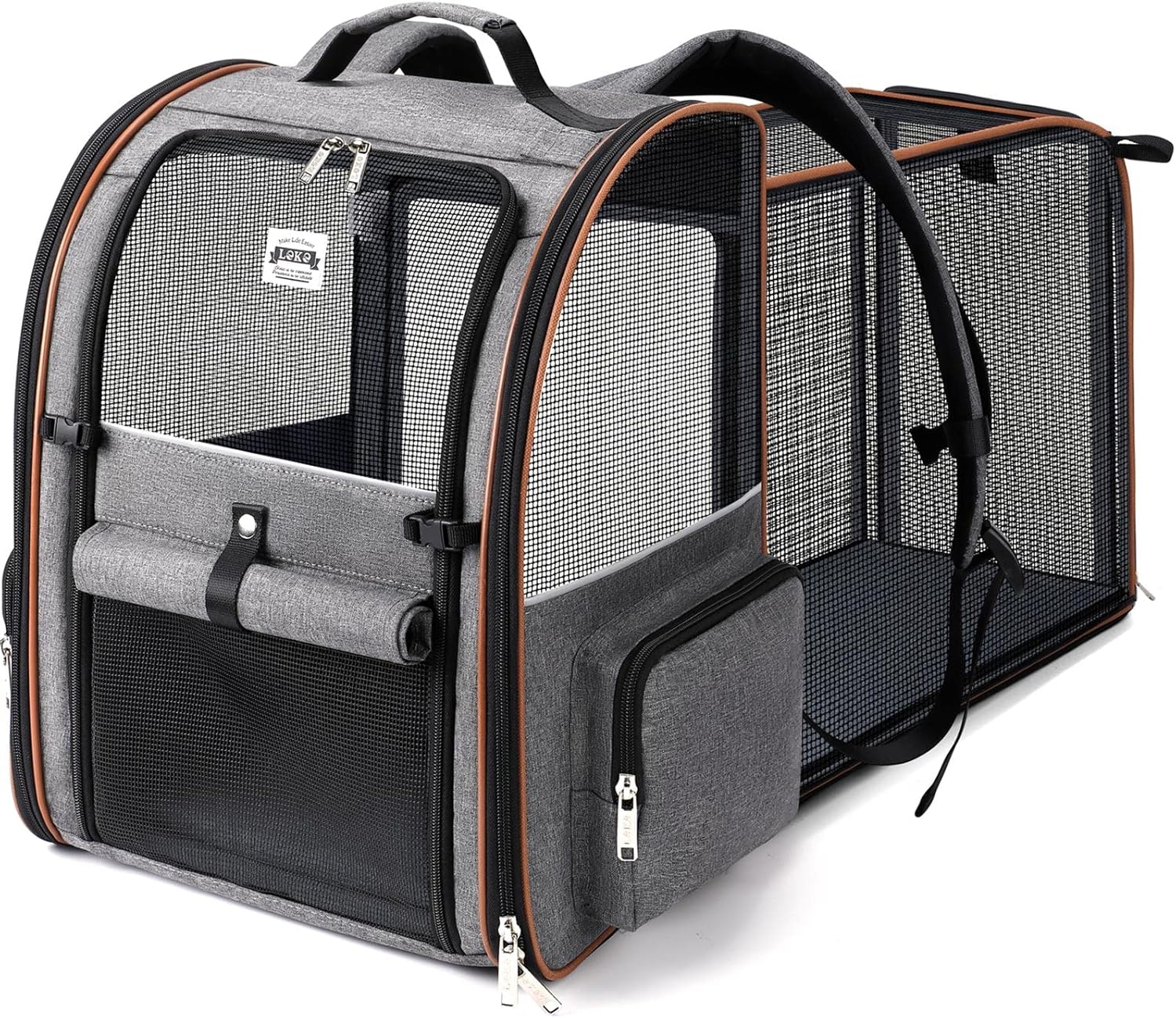
Soft-sided carriers with an internal steel frame offer visibility, light weight, and a shoulder strap at a moderate price. A mesh exterior over a steel frame holds shape, and an interior perch and seatbelt loop make the carrier practical for car travel. The critical limitation is the mesh. A cockatoo or macaw can shred nylon mesh in minutes, and even a smaller parrot may learn to work the zipper from the inside. Soft carriers are appropriate for cockatiels, conures, and similar small-to-medium birds that are not heavy chewers, and zipper pulls should always be joined with a small clip.
Fabric interiors absorb spills and odor, so a soft carrier should not be used with an open water dish. A shallow dish or a piece of moist fruit provides hydration without soaking the interior. Owners who travel frequently with a soft carrier often keep a spare liner or towel on hand to replace a soiled one mid-trip.
Comparison of Carrier Types
| Type | Typical Price | Escape Resistance | Perch Included | Best Suited To |
|---|---|---|---|---|
| Backpack with steel mesh | $120 to $280 | High | Yes | Parrots of all sizes, frequent travel |
| Wire travel cage | $25 to $35 | Low for large birds | Yes | Small birds, occasional trips |
| Aluminum panel carrier | $150 to $300 | Very high | Yes | Macaws, cockatoos, large chewers |
| Hard plastic transport box | $30 to $40 | High | No | Breeders, shows, small birds |
| Soft-sided with steel frame | $35 to $55 | Moderate | Yes | Non-chewing small parrots |
| Hard-sided kennel | $25 to $40 | High | No | Medium parrots, car travel |
Travel Safety for Birds
bird travel carriers
Never leave a bird in a parked car. Even ten minutes in mild sun can raise the interior temperature of a vehicle to a level that is fatal to birds, which are more sensitive to heat stress than many mammals because of their high metabolic rate and limited ability to dissipate heat through skin. The Merck Veterinary Manual section on exotic and laboratory animals describes avian thermoregulation and the narrow range of temperatures that companion birds tolerate, and parked-car conditions routinely fall outside that range.
Cover the carrier partially with a light cloth to reduce visual stress, but never block ventilation. Some birds travel more calmly when they can see out, and others settle when the view is limited. A carrier with a roll-down cover lets the owner adjust based on the individual bird. Watch for signs of overheating such as open-mouth breathing, wing drooping, or restlessness, and pull over to cool the bird if any appear.
Secure the carrier with a seatbelt or place it in a footwell where it cannot slide. An unrestrained carrier becomes a projectile in a sudden stop, and the bird inside can be injured even if the carrier survives. For hard-sided carriers, threading the seatbelt through the handle or frame is usually sufficient. For soft carriers, a seatbelt loop is the intended attachment point. Never place a carrier on a seat where a deploying airbag could strike it.
Bring familiar treats such as millet spray or a favorite seed mix for reassurance. A bird that is eating during travel is a bird that is not in a state of acute panic. For longer trips, plan stops where the carrier can be placed in a safe, temperature-controlled environment while the bird is checked and offered water.
For air travel, check airline regulations before booking. Some carriers allow small birds in the cabin under the seat, while others restrict birds to cargo. Policies vary by airline and can change, so a phone call ahead of the trip is more reliable than a website summary. A carrier that meets cabin size requirements is usually smaller than what a bird would use at home, and the bird should be acclimated to it well before the flight.
Acclimate the bird to the carrier one to two weeks before travel day. Leave the carrier open near the cage with treats inside so the bird can enter and exit on its own. A carrier that has been explored becomes a familiar space rather than a trap. Birds that are introduced to a carrier for the first time on the morning of a vet visit often arrive stressed, and stress can improve results on some diagnostic tests.
Health and Poisoning Considerations During Travel
Travel exposes birds to hazards that do not exist in a controlled home environment. A bird that is allowed to walk on a hotel floor or a veterinary waiting room floor can pick up residues from cleaning products, and birds groom their feet with their beaks. The ASPCA Animal Poison Control Center maintains a list of household and environmental toxins, and several common items are especially dangerous to birds. Aerosol sprays, scented candles, nonstick cookware fumes, and many essential oils can cause respiratory distress in birds at concentrations that are unnoticeable to humans.
During travel, avoid using air fresheners in the vehicle, and do not place the carrier near a heater vent or in direct sun. If a bird must be boarded or kept in a temporary location, confirm that no nonstick cookware is used in the same building, because overheated polytetrafluoroethylene releases fumes that are lethal to birds. The ASPCA pet care library covers general companion-animal safety topics that apply to birds as well, including the importance of fresh water and species-appropriate food during travel.
Water during travel should be offered in a shallow dish that cannot spill, or replaced with moisture-rich food such as a piece of apple or melon. A bird that is not drinking during a long trip can become dehydrated, but an open water dish in a moving vehicle soaks the carrier and the bird. Many experienced owners offer water only during rest stops, when the carrier is stationary and the bird can drink without the risk of spillage.
Common Mistakes
Buying a carrier that is too large is a common error. A bird in an oversized carrier slides around during turns and stops, and the extra space provides no benefit during a short trip. The carrier should be large enough for the bird to turn around and perch comfortably, but not so large that the bird is thrown against the walls. For species with long tails, such as macaws and cockatiels, the carrier must be long enough that the tail does not press against the back panel.
Assuming a latch is secure without testing it is another common mistake. A latch that resists a human hand may still yield to a parrot beak, which is stronger than it appears and is backed by a brain that treats every latch as a puzzle. The practical approach is to assume the bird will attempt to open the carrier and to add a secondary lock before the first trip. A small carabiner through the zipper pulls of a soft carrier, or a quick-link through the door latch of a wire cage, costs a few dollars and removes the most common escape route.
Using a carrier only when something unpleasant is about to happen trains the bird to fear the carrier. Owners who leave the carrier out between trips, with the door open and a treat inside, report that birds enter voluntarily and travel more calmly. The carrier becomes a familiar object rather than a signal that a vet visit is coming.
Neglecting to clean the carrier between trips is a hygiene problem. Droppings, food residue, and moisture create conditions for bacterial and fungal growth. A carrier with a removable tray can be cleaned in a few minutes, and a carrier without one requires more effort, which is one reason tray design is worth checking before purchase.
Frequently Asked Questions
Can a cat carrier be used for a bird?
Sometimes, for short trips, if the bar spacing is narrow enough and the latch is secure. Bar spacing of about half an inch to five-eighths of an inch suits small birds, and three-quarters of an inch to one inch suits large parrots. Most cat carriers lack a perch, and their latches are designed for cats rather than for animals that deliberately work latches open. A dedicated bird carrier is the safer choice for any bird large enough to manipulate hardware.
How do I keep a parrot from escaping the carrier?
Join zipper pulls with a small carabiner or C-clip. For wire cages, add a quick-link or small padlock to the door latch. Assume the bird can open any single latch given time, and double-secure accordingly. Cockatoos in particular are described in owner reports as able to unscrew wingnuts, slide bolts, and pick simple locks, so a single point of failure is not enough.
How long can a bird stay in a travel carrier?
A healthy bird can typically tolerate several hours in a properly sized carrier with a perch, ventilation, and access to water during rest stops. Longer trips require planning, including opportunities for the bird to drink and eat in a safe, temperature-controlled location. Birds that are ill, very young, or very old may have less tolerance, and a veterinarian should be consulted before a long trip with a bird in any of those categories.
What size carrier does my bird need?
The carrier should allow the bird to stand upright without the head touching the top, turn around without the tail bending against the walls, and perch without the feet slipping. Measure the bird from beak to tail and add a few inches of clearance. A carrier that is slightly too small is safer than one that is much too large, because the bird cannot be thrown around during vehicle movement.
Where to Buy
As an Amazon Associate, PawCritic earns from qualifying purchases. This does not affect our reviews or recommendations.
The two carriers described below represent the backpack-style solution for parrots and the simple wire travel cage for small birds. Both are examples of their category rather than the only options available, and buyers should compare specifications against their own bird before purchasing.
Backpack-style carrier for parrots: check the current price on Amazon.
Wire travel cage for small birds: view this option on Amazon.
For owners who travel frequently with a parrot, the backpack-style carrier with stainless steel mesh is the more durable choice because the mesh resists chewing and the frame holds its shape. For owners who need an occasional carrier for a budgie or cockatiel, the wire travel cage covers the essentials at a lower cost. Either way, test the latch, add a perch if one is not included, secure the carrier with a seatbelt, and introduce the bird to the carrier well before travel day.
Affiliate Disclosure: PawCritic.com participates in the Amazon Services LLC Associates Program. We may earn commissions from qualifying purchases at no extra cost to you.