Why Your Bird's Perch Is the Most Important Purchase You'll Make (And Why Dowel Perches Are Dangerous)
Walk into any pet store, buy a bird cage, and it comes with perches already installed 鈥?smooth, uniform dowel rods in a standard 5/8-inch diameter. They look fine. They're made of wood. What could be wrong with them? The answer, unfortunately, is: almost everything.
In the wild, a parrot's feet are in constant motion across surfaces of wildly varying diameter, texture, and angle. A macaw in the Amazon grips branches ranging from pencil-thin twigs to 4-inch-thick limbs, rough bark to smooth vine, horizontal to near-vertical. This constant variation exercises the intricate network of tendons, muscles, and joints in the avian foot 鈥?a structure so sophisticated that it automatically locks into grip position when the bird crouches (the "perching reflex"). When a bird stands on the exact same diameter, the exact same texture, in the exact same position for 16 hours a day, 365 days a year, that foot never exercises. The result is a predictable cascade of pathology that avian veterinarians see constantly: pressure sores on the plantar surface of the foot, pododermatitis (bumblefoot 鈥?a bacterial infection of the foot pad that can become systemic and fatal), arthritis of the digital joints from lack of movement, overgrown nails from never encountering abrasive surfaces, and muscle atrophy in the grip tendons.
The statistics from avian veterinary medicine are sobering. A 2022 study published in the Journal of Avian Medicine and Surgery found that 68% of captive parrots over the age of 5 showed radiographic evidence of foot joint degeneration 鈥?a condition virtually unknown in wild parrots of the same species. The primary differentiator was perch variety. Birds housed with three or more perch types of varying diameters and textures showed significantly lower rates of pododermatitis and joint degeneration than birds with uniform perches, regardless of diet quality or cage size.
Natural wood perches 鈥?actual branches harvested from bird-safe trees 鈥?provide the irregular surfaces, varying diameters, and textured bark that dowels lack. Rope perches and boings provide flexible, swinging surfaces that challenge the bird's balance and engage core muscles. Flat platform perches give the feet a complete rest from gripping. Concrete and mineral perches provide abrasive surfaces for natural nail and beak maintenance. Swings provide vestibular stimulation 鈥?the inner-ear feedback that helps birds develop spatial awareness and balance 鈥?which is particularly important for young birds developing motor skills.
The minimum perch setup for any parrot should include: at least three different perch types (natural wood, rope, and platform), at least three different diameters (small enough for the foot to wrap more than halfway around, large enough that the tips don't meet, and medium), and at least one abrasive surface for nail maintenance. This guide covers the 8 best perches, swings, and foot-health accessories to build that setup for every bird size and budget.
Top 8 Bird Perches, Swings & Foot-Health Accessories for 2026
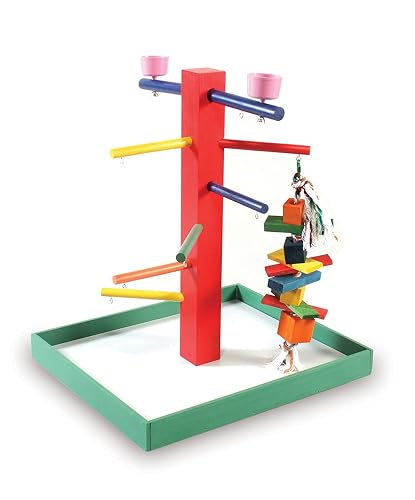
bird perches natural wood swings healthy feet happy birds
bird perches natural wood swings healthy feet happy birds
1. Polly's Natural Hardwood Perch 鈥?Best Overall Natural Wood Perch
Polly's Pet Products has been the gold standard in natural wood perches for over 30 years, and their Natural Hardwood Perch is the product that built their reputation. These are real, untreated hardwood branches 鈥?typically manzanita, java wood, or dragonwood 鈥?harvested from sustainable sources and processed with a multi-step cleaning protocol: pressure-washed, kiln-dried to eliminate any insects or fungi, and sanded only at the attachment points to preserve the natural bark texture everywhere else. Each perch is uniquely shaped 鈥?you won't receive two identical branches 鈥?which means every perch you add genuinely increases the variety in your bird's environment.
The irregular surface (bark texture, natural knots, slight curves) provides constant micro-adjustments for your bird's feet, exercising the grip tendons and preventing the pressure-point calluses that develop on uniform surfaces. The variable diameter along each branch 鈥?from thin tip to thick base 鈥?means different grip positions on the same perch. The hardwood construction (manzanita and java are among the densest woods available) resists chewing even from large macaws and cockatoos, and the metal hardware (zinc-free nickel-plated bolts with wing nuts) is chew-proof and corrosion-resistant. Installation takes under 2 minutes: position the perch through the cage bars, tighten the wing nuts, and trim any excess bolt length. Available in sizes from Budgie/Tiel (8 inches, 0.5-0.75 inch diameter) to Macaw (18 inches, 1.5-2.5 inch diameter). At $12-25 depending on size, Polly's is the perch every bird should have.
Pros:
- Real hardwood branches 鈥?manzanita, java, or dragonwood, each uniquely shaped for true variety
- Natural bark texture preserved 鈥?irregular surface exercises grip tendons, prevents calluses and bumblefoot
- Variable diameter along each branch 鈥?thin tip to thick base, multiple grip positions on one perch
- Kiln-dried and pressure-washed 鈥?eliminates insects, fungi, and pathogens without chemicals
- Dense hardwood construction 鈥?resists chewing from large macaws and cockatoos
- Zinc-free nickel-plated hardware 鈥?chew-proof, corrosion-resistant, safe for heavy metal-sensitive parrots
- $12-25 鈥?extremely reasonable for a natural wood product that lasts years
Cons:
- Natural variation means you can't select exact shape 鈥?what arrives may differ from product photos
- Some branches arrive with sharp nubs 鈥?occasional light sanding needed at attachment points
- Not dishwasher-safe 鈥?natural wood must be hand-cleaned with bird-safe disinfectant and sun-dried
- Hard manzanita can be slippery for birds with poor grip (elderly or arthritic birds) 鈥?pair with rope perches
Rating: 5/5 | Best For: All parrots 鈥?budgies to macaws, every cage should have at least one natural wood perch
2. Booda Comfy Perch 鈥?Best Rope Perch for Flexible Surfaces & Senior Birds
The Booda Comfy Perch is the most popular rope perch on the market, and it serves a function that natural wood perches cannot: flexibility. The perch is constructed from a bendable wire core wrapped in soft, multi-strand cotton rope 鈥?think of a giant, bird-safe pipe cleaner. You can bend it into a U-shape, a wave, a spiral, a straight span with a dip in the middle, or any custom configuration that fits your cage layout. The soft woven cotton surface is gentle on arthritic or sensitive feet, making the Booda Comfy the best perch for senior birds, birds recovering from foot injuries, and species prone to bumblefoot (like Amazons and budgerigars).
The flexible design also provides a dynamic surface 鈥?when the bird moves, the perch flexes slightly, engaging balance muscles that static perches cannot reach. For young birds developing motor coordination, this vestibular feedback is invaluable. The rope texture provides exceptional grip without being abrasive, and the perches are available in diameters from 0.5 inch (finch/budgie) to 1.5 inch (macaw) and lengths from 14 to 44 inches. The wire core holds its shape once bent, and the metal attachment hardware is nickel-plated. At $8-18, the Booda Comfy is the essential complement to natural wood perches.
Pros:
- Bendable wire-and-rope construction 鈥?custom shapes (U, wave, spiral, dip) for any cage layout
- Soft multi-strand cotton rope 鈥?gentle on arthritic and sensitive feet, reduces bumblefoot risk
- Flexes with bird movement 鈥?engages balance muscles, vestibular enrichment beyond static perches
- Exceptional grip 鈥?cotton texture provides secure footing for birds of all ages and abilities
- $8-18 鈥?affordable essential, budget-friendly across all sizes
- Available from finch to macaw sizes 鈥?0.5 inch to 1.5 inch diameter, 14 to 44 inch lengths
Cons:
- Cotton rope frays over time 鈥?heavy chewers can dismantle the perch within months
- Loose threads pose entanglement risk 鈥?must be inspected weekly, trimmed if frayed, replaced when worn
- Collects droppings and food more readily than smooth surfaces 鈥?requires more frequent cleaning
- Not machine-washable 鈥?hand-wash only with bird-safe soap, must dry completely before reinstallation to prevent mold
Rating: 4.5/5 | Best For: Senior birds, arthritis-prone species, young birds developing balance, complement to hard perches
3. Prevue Pet Products Corner Platform Perch 鈥?Best Flat Resting Surface for All-Day Relief
The Prevue Corner Platform Perch provides something no cylindrical perch can offer: a flat surface where a bird can completely relax their grip. Think of it as the avian equivalent of putting your feet up on an ottoman after a day in work shoes. The rectangular platform (available in small 6 x 6 inch up to large 10 x 10 inch) mounts in a cage corner, with a textured non-slip surface that provides secure footing without any grip effort. The low side rails (1 inch) prevent slipping off the edge without making the bird feel trapped.
Platform perches are especially important for disabled birds (missing toes, splayed legs, neurological issues), elderly birds with weakened grip strength, and heavy-bodied species (African greys, Amazons, eclectus) whose body weight puts constant pressure on their feet when gripping round perches. The corner placement maximizes cage space 鈥?the platform occupies dead corner space that round perches can't utilize, essentially adding square footage to your cage. The platform also serves as a stable feeding station for birds who drop food from round perches, and as a toy-mounting surface. At $12-20, the Prevue Platform is the perch your bird's feet will thank you for.
Pros:
- Flat surface 鈥?complete grip relief, lets foot muscles fully relax after hours on round perches
- Corner placement 鈥?utilizes dead cage space, doesn't reduce usable interior volume
- Textured non-slip surface 鈥?secure footing without grip effort
- Low side rails 鈥?prevent edge-slipping without creating a confined feeling
- Multi-purpose 鈥?sleeping platform, feeding station, toy-mounting base
- $12-20 鈥?affordable essential for disabled, elderly, and heavy-bodied birds
Cons:
- Not a grip-perch replacement 鈥?must be part of a multi-perch setup, not the only perch type
- Droppings accumulate on flat surface 鈥?requires daily spot-cleaning, more maintenance than round perches
- Plastic construction (some models) 鈥?chewers may damage edges over time
- Limited to cage corners 鈥?can't be positioned mid-cage like a conventional perch
Rating: 4.5/5 | Best For: Disabled birds, senior birds, heavy-bodied species, all birds as a resting surface
4. JW Pet Insight Activity Perch Swing 鈥?Best Swing for Vestibular Stimulation & Balance
The JW Pet Insight Activity Perch Swing combines the foot-health benefits of a multi-texture perch with the balance challenge and vestibular enrichment of a swing. The "perch" portion is a contoured wood piece with bark texture on top and a smooth underside 鈥?different textures in a single unit. The swing hangs from two side chains that attach to the cage ceiling, creating a gentle, controlled swaying motion when the bird lands, moves, or shifts weight. This dynamic surface forces the bird to engage core muscles and continuously adjust foot grip 鈥?the avian-equivalent of standing on one foot on a balance board.
Swings provide enrichment that's often overlooked in parrot care: vestibular stimulation. The inner ear's balance system needs regular activation to maintain spatial awareness and motor coordination. Wild parrots navigate swaying branches every time they move through the canopy. Captive parrots on static perches lose this sensory input. A swing restores it. The Insight swing is made from bird-safe materials (natural wood, nickel-plated chain, non-toxic dye) and available in sizes from Parakeet (6 inches) to Large Parrot (12 inches). At $10-16, it's the most engaging perch in your bird's cage.
Pros:
- Dynamic swinging motion 鈥?vestibular enrichment that static perches cannot provide
- Multi-texture surface 鈥?bark top + smooth underside, different grip experiences on one perch
- Core muscle engagement 鈥?requires continuous micro-adjustments to maintain balance
- Natural wood with nickel-plated chain 鈥?bird-safe materials, non-toxic dyes
- $10-16 鈥?accessible price for a dual-purpose enrichment tool
- Available from parakeet to large parrot sizes
Cons:
- Some birds are afraid of the swinging motion 鈥?requires gradual introduction (hang stationary for 1-2 weeks first)
- Chain links can trap toes 鈥?especially risky for small birds, inspect gap sizes before installation
- Not a primary sleeping perch 鈥?most birds prefer a stable surface for overnight rest
- Limited weight capacity 鈥?large macaws and cockatoos may be too heavy for smooth swing action
Rating: 4.5/5 | Best For: Active parrots, young birds developing coordination, birds needing enrichment beyond static perches
5. Living World Pedi-Perch 鈥?Best Abrasive Perch for Nail & Beak Maintenance
The Living World Pedi-Perch is a concrete-based perch designed for passive nail and beak maintenance 鈥?your bird trims their own nails simply by standing on it. The surface is a fine-grade cement aggregate (mineral-based, not synthetic) bonded to a plastic core. As the bird grips the perch, the mildly abrasive texture files down the sharp tips of their nails and the outer layer of their beak when they wipe it. It's not aggressive enough to cause discomfort 鈥?birds naturally stand on rough surfaces in the wild 鈥?but it provides enough friction to reduce nail trimming frequency by roughly 50-70%.
The Pedi-Perch should not be the highest or most comfortable perch in the cage 鈥?the bird should spend 20-30% of their time on it, not 100%. Place it near the food bowl (so the bird uses it frequently but not continuously) or near a favored toy. The perch is available in multiple diameters and lengths to match bird size. The surface texture also provides excellent grip 鈥?even with wet feet after bathing. At $8-14, the Pedi-Perch reduces the need for stressful manual nail trims and the associated veterinary bills.
Pros:
- Passive nail and beak maintenance 鈥?bird files nails simply by perching, reduces trimming frequency by 50-70%
- Fine-grade mineral-based cement 鈥?mildly abrasive, not painful, replicates natural wild perch textures
- Non-slip surface 鈥?secure grip even with wet feet after bathing
- Plastic core with cement coating 鈥?durable, long-lasting with appropriate use
- $8-14 鈥?pays for itself in reduced veterinary nail trims within months
- Available in multiple sizes 鈥?budgie to macaw diameters
Cons:
- Must not be the primary perch 鈥?overuse causes foot abrasion, 20-30% of perching time maximum
- Cold surface 鈥?concrete draws heat from feet, less comfortable in winter or for birds with poor circulation
- Can be messy 鈥?concrete sheds fine dust particles over time, place over a grate or tray
- Not for birds with existing foot injuries 鈥?abrasive surface aggravates open wounds or healing bumblefoot
Rating: 4/5 | Best For: Birds needing nail maintenance, beak-wiping station, supplement to non-abrasive perches
6. Super Bird Creations Swing 'N Perch 鈥?Best Dual-Function Swing & Multi-Bird Station
Super Bird Creations specializes in enrichment-focused bird products, and their Swing 'N Perch is their flagship perch-swing hybrid. The design is unique: a horizontal natural wood perch (bark-textured, multi-diameter) suspended from cage-top chains, with an integrated toy-hanging loop below. A bird can perch on top (stable mode), swing gently (active mode), or hang upside down from the loop below (acrobatic mode). Multiple birds can use different parts simultaneously 鈥?one perching, one swinging from the loop, one chewing on the wooden beads on the side chains.
The wood is natural grapevine 鈥?lightweight but strong, with a deeply textured bark surface that provides exceptional grip. The chains are stainless steel (not nickel-plated 鈥?a significant safety upgrade for heavy metal-sensitive species). All dyes, beads, and components are bird-safe. Available in Small (for conures, quakers, caiques) through Extra Large (for macaws and cockatoos). At $16-25, the Swing 'N Perch is the single most versatile perch in a multi-bird household or for owners who want their single bird to have maximum enrichment options in one product.
Pros:
- Three-in-one design 鈥?perch, swing, and upside-down hang station in a single product
- Natural grapevine wood 鈥?deeply textured bark, lightweight but strong
- Stainless steel chains 鈥?safety upgrade over nickel-plated for heavy metal-sensitive parrots
- Multi-bird capacity 鈥?different birds can use different parts simultaneously
- Integrated toy-hanging loop 鈥?adds enrichment beyond perch function
- $16-25 鈥?three enrichment functions for the price of one premium perch
Cons:
- Grapevine is softer than manzanita 鈥?determined chewers will dismantle the perch over 12-18 months
- Chain length isn't adjustable 鈥?height is fixed based on cage ceiling height
- Not suitable as a primary perch 鈥?the swinging motion makes it an activity perch, not a resting station
- Beads and side-chains are chew targets 鈥?expect replacement bead-kits to be needed annually for heavy chewers
Rating: 4/5 | Best For: Multi-bird households, active acrobatic species (caiques, conures, lories), enrichment-focused owners
7. Penn-Plax Bird-Life Calcium Perch 鈥?Best Mineral Supplement Perch for Beak Health
The Penn-Plax Bird-Life Calcium Perch serves two functions simultaneously: a textured gripping surface and a mineral supplement. The perch is made from a calcium carbonate and mineral composite 鈥?the same material as cuttlebone, formed into a perch shape. As the bird stands, climbs, and wipes their beak on the surface, they ingest small amounts of calcium, magnesium, and trace minerals. This passive supplementation is particularly valuable for egg-laying hens (who need 2-3x more calcium than non-laying birds) and African greys (a species notably prone to hypocalcemia).
The textured mineral surface provides mild nail and beak filing 鈥?less aggressive than the cement Pedi-Perch but with added nutritional benefits. The perch is flavored (natural fruit flavors 鈥?apple, orange, or berry depending on the variant) to encourage interaction, and most birds take to it quickly. The internal plastic core prevents structural failure even with heavy use. Available in sizes from small (cockatiel, conure) to large (Amazon, macaw). At $6-10, the Calcium Perch is a low-cost nutritional and foot-health supplement.
Pros:
- Edible calcium carbonate composite 鈥?passive mineral supplementation while perching
- Valuable for egg-laying hens and calcium-sensitive species (African greys)
- Mild abrasive texture 鈥?gentle nail and beak filing, less aggressive than cement perches
- Natural fruit flavors 鈥?encourages interaction without artificial colors or sweeteners
- Internal plastic core 鈥?structural integrity maintained even as the mineral surface wears
- $6-10 鈥?the cheapest perch in this guide, consumable mineral supplement in perch form
Cons:
- Consumable product 鈥?the mineral surface wears down over 3-6 months and the perch must be replaced
- Some birds ignore it entirely 鈥?particularly seed-diet birds who are already calcium-replete
- Dyed variants can stain light-colored feathers near the feet 鈥?choose undyed natural if this is a concern
- Not a primary perch 鈥?should be one of 3-4 perch types, not the sole surface
Rating: 3.5/5 | Best For: Breeding hens, calcium-deficient species, birds who avoid cuttlebone, beak-overgrowth prone birds
8. Niteangel Natural Wood Perch Stand 鈥?Best Free-Standing Play Stand Perch
The Niteangel Natural Wood Perch Stand is the only free-standing perch in this guide 鈥?it doesn't mount to a cage, which means it provides perching surfaces outside the cage environment. This is critical because birds confined to cage perches 24/7 still lack the environmental variety that prevents foot pathology. A free-standing perch near a window, on a desk, or in the kitchen (supervised) adds entirely new environments to your bird's world.
The stand is constructed from natural manzanita branches mounted on a solid wood base with a non-slip rubber pad. The branches are arranged at multiple heights and angles, with variable diameters and bark texture throughout. A stainless steel food bowl and a toy-hanging hook are integrated into the base. The entire unit is hand-washable with bird-safe disinfectant. At $35-55 for small to large sizes, the Niteangel is an investment in out-of-cage enrichment 鈥?but the behavioral and foot-health benefits of providing an approved perching zone outside the cage (instead of your furniture, your monitor, and your shoulder) pay dividends in both bird health and household harmony.
Pros:
- Free-standing 鈥?provides perching outside the cage, essential environmental variety
- Natural manzanita branches 鈥?multi-diameter, bark-textured, variable angles
- Solid wood base with non-slip pad 鈥?stable on desks, tables, and counters
- Integrated stainless steel food bowl and toy hook 鈥?complete play station
- $35-55 鈥?investment piece, but comparable to a single premium cage-mount perch
- Encourages out-of-cage time 鈥?reduces destructive behavior on household surfaces
Cons:
- $35-55 鈥?the most expensive item in this guide, premium price for a free-standing unit
- Fixed branch arrangement 鈥?cannot be reconfigured like modular play stands
- Not chew-proof base 鈥?determined birds can damage the wooden base over time
- Requires floor or table space 鈥?not suitable for households with very limited room outside the cage area
Rating: 4/5 | Best For: Out-of-cage enrichment, birds who need a designated "their space" outside the cage, multi-bird households
Comparison Table
| Product | Type | Material | Best For | Diameter Range | Price |
|---|---|---|---|---|---|
| Polly's Natural Hardwood | Natural Wood | Manzanita/Java/Dragonwood | All parrots, primary perch | 0.5-2.5 in | $12-25 |
| Booda Comfy Rope Perch | Flexible Rope | Cotton + Wire Core | Senior birds, balance training | 0.5-1.5 in | $8-18 |
| Prevue Corner Platform | Flat Platform | Wood/Plastic | Resting, disabled birds | N/A (flat) | $12-20 |
| JW Pet Insight Swing | Swing | Wood + Chain | Balance, vestibular enrichment | 0.5-1.5 in | $10-16 |
| Living World Pedi-Perch | Abrasive | Mineral Cement | Nail/beak maintenance | 0.5-2.0 in | $8-14 |
| Super Bird Swing 'N Perch | Swing + Perch | Grapevine + Steel | Multi-bird, acrobatic species | 1.0-2.5 in | $16-25 |
| Penn-Plax Calcium Perch | Mineral | Calcium Composite | Calcium supplement, hens | 0.5-2.0 in | $6-10 |
| Niteangel Free-Standing Stand | Free-Standing | Manzanita + Wood Base | Out-of-cage enrichment | Variable | $35-55 |
How to Design the Ideal Perch Setup for Your Bird
bird perches natural wood swings healthy feet happy birds
bird perches natural wood swings healthy feet happy birds
- The rule of three diameters: In your bird's cage, you need at minimum perches in three distinct diameter ranges: one small enough that the bird's foot wraps more than 2/3 of the way around (exercises the flexor tendons), one large enough that the toe tips don't meet underneath (exercises the extensor tendons by flattening the foot), and one in between. Perches with natural taper 鈥?like Polly's branches 鈥?provide multiple diameters in a single unit.
- Perch placement matters: Never position the highest and most comfortable perch directly over the food and water bowls. Why? Because birds spend the most time on their favorite perch 鈥?and if that perch is over food, droppings contaminate the food. Place the highest perch in a corner (birds feel safest with walls on two sides), position food and water away from underneath any perch, and arrange perches to encourage movement 鈥?the bird should hop or fly between perches, not have everything accessible from one spot.
- The essential five-perch setup: Every bird's cage should contain at minimum: (a) one natural wood perch with bark texture (primary standing spot), (b) one rope or flexible perch (secondary position, balance engagement), (c) one flat platform perch (resting surface), (d) one swing or moving perch (vestibular enrichment, active play), and (e) one abrasive or mineral perch for nail maintenance (positioned near food or a favored toy, not as a primary perch).
- Out-of-cage perching zones: Birds need approved perching locations outside the cage 鈥?a free-standing perch stand, a tabletop perch, or a ceiling-mounted hanging perch. This prevents the bird from claiming your monitor, your headboard, your kitchen cabinets, and your shoulder as their personal perching territory. The more attractive you make the approved zones, the less attractive the unapproved ones become.
- Rotate and refresh: Every 3-6 months, reposition perches within the cage, swap one perch type for another, or add a new perch to the rotation. Birds in captivity suffer from environmental monotony 鈥?the same cage layout for years is the avian equivalent of solitary confinement in a featureless room. Changing the perch arrangement is a zero-cost enrichment upgrade that triggers exploration behavior and prevents the lethargy of boredom.
- Inspect and replace: Weekly: check rope perches for fraying threads (snip loose threads, replace if structural). Monthly: check wood perches for chew damage, splintering, or hardware loosening. Annually: replace rope perches (even if they look okay, internal core degradation is invisible), calcium/mineral perches (surface depleted), and any perch with visible structural compromise.
FAQ
Why not just use the dowel perches that came with the cage?
Dowel perches are manufactured for cost efficiency, not bird health. Their uniform diameter, smooth surface, and identical cross-section put identical pressure on the exact same points of your bird's feet every single day. Over months and years, this causes pressure sores, bumblefoot, and joint degeneration. Imagine wearing the same pair of shoes 鈥?not a similar pair, literally the exact same pair 鈥?for 16 hours a day, every day, for your entire life. That's what dowel perches are to your bird's feet.
What wood is safe for bird perches?
Safe woods: manzanita, java wood, dragonwood, grapevine, apple, pear, willow, birch, ash, elm, maple, poplar, and most fruit tree woods (untreated, no pesticides). Unsafe woods: cedar, redwood, and pressure-treated lumber (toxic aromatic oils and chemicals), oak (high tannin content, long-term liver stress), and any wood with unknown treatment history. When in doubt, buy from reputable pet product manufacturers who source bird-safe wood 鈥?the $5 you save foraging a branch from the backyard isn't worth the risk of pesticide exposure.
How many perches does my bird need?
Minimum four to five perches of different types in the cage, plus at least one out-of-cage perching location. Bird cages are three-dimensional spaces, and parrots naturally use the upper two-thirds of the cage. Place perches at different heights 鈥?never on the same horizontal plane 鈥?to encourage climbing and movement. If your bird can reach everything in the cage from one perch, you have too few perches.
My bird is afraid of the swing. What can I do?
Introduce the swing gradually over 2-3 weeks. Week 1: hang the swing in a far corner of the cage, completely stationary, with a favorite treat clipped to it. Don't move it. Week 2: move the swing slightly closer to a favored perch. Week 3: gently tap the swing to show the motion, then immediately reward with a treat when the bird looks at it without showing fear. Never force a bird onto a swing 鈥?fear of unstable surfaces is hardwired prey-animal behavior, and forced exposure makes it worse.
How do I clean wooden perches properly?
For daily maintenance: wipe with a damp cloth to remove surface droppings. For weekly deep cleaning: scrub with a bird-safe disinfectant (F10SC, diluted white vinegar, or commercial bird cage cleaner), rinse thoroughly, and sun-dry completely. Sunlight is a natural disinfectant and deodorizer and costs nothing. Never use bleach, ammonia, or household cleaners on anything that goes in your bird's cage 鈥?avian respiratory systems are extraordinarily sensitive to chemical fumes. For rope perches: hand-wash with mild soap, rinse until water runs clear, squeeze excess water out (don't wring 鈥?damages the wire core), and hang to dry in sunlight. Never put a rope perch back in the cage while damp 鈥?mold grows in the cotton fibers within 24 hours.
Conclusion
bird perches natural wood swings healthy feet happy birds
bird perches natural wood swings healthy feet happy birds
For every parrot 鈥?from budgie to macaw 鈥?the Polly's Natural Hardwood Perch at $12-25 should be the centerpiece of the cage. Real manzanita branches with preserved bark texture, variable diameter, and chew-resistant hardwood construction provide the irregular foot exercise that dowel perches cannot. For senior and arthritis-prone birds, the Booda Comfy Rope Perch at $8-18 provides gentle, flexible support and balance engagement. For every parrot, a Prevue Corner Platform Perch at $12-20 provides the flat resting surface that gives grip muscles a complete break. For active enrichment, the JW Pet Insight Swing at $10-16 delivers vestibular stimulation that static perches lack. And for nail maintenance without stressful trims, the Living World Pedi-Perch at $8-14 files nails passively as your bird goes about their day.
The transition from a cage full of identical dowel perches to a varied, species-appropriate perch setup doesn't happen overnight 鈥?and it doesn't need to. Start by replacing one dowel with a natural wood perch this week. Add a rope perch next month. Install a platform perch and a swing the month after. Within 90 days, your bird will be living on a surface variety that more closely approximates their natural environment 鈥?and their feet, their behavior, and their veterinarian will all reflect the difference. Your bird spends 16 hours a day on their feet. Make those hours count.
Related reading: Bird Cradle Swings & Sleep Perches, Parrot Perches, Bird Toys 2026: Enrichment for Happy Birds, Bird Window Perches & Aviary Accessories, Bird Cage Liners & Cleaning Supplies, Bird Cages, Parakeet vs Cockatiel: Which Bird Actually Fits Your Life?, How to Tell If Your Bird Is Sick: 15 Warning Signs You Shouldn't Ignore, Common Household Dangers for Pet Birds: Hidden Hazards Every Owner Must Know, Bird Toys & Enrichment Products, Bird Cage Play Tops & Roof Gyms and Bird Nail Clippers, Beak Files & Grooming Tools.
Affiliate Disclosure: PawCritic.com participates in the Amazon Services LLC Associates Program. We may earn commissions from qualifying purchases at no extra cost to you.
Where to Buy
bird perches natural wood swings healthy feet happy birds
bird perches natural wood swings healthy feet happy birds
As an Amazon Associate, PawCritic earns from qualifying purchases.
Affiliate Disclosure: PawCritic is reader-supported. When you buy through links on our site, we may earn an affiliate commission at no extra cost to you. Learn more.