A bird stand, play gym, or perch station gives your parrot a dedicated space outside the cage to climb, chew, forage, and simply exist near you without shredding your furniture. For species as intelligent as parrots, out-of-cage time on a varied surface is not a luxury; published guidance from avian veterinarians emphasizes that environmental enrichment and physical variety are core parts of companion bird welfare, not optional extras. This guide explains what matters when choosing a stand, walks through the recommended products, and covers safety, sizing, maintenance, and common mistakes, all based on manufacturer specifications, veterinary guidance, and verified owner reports.
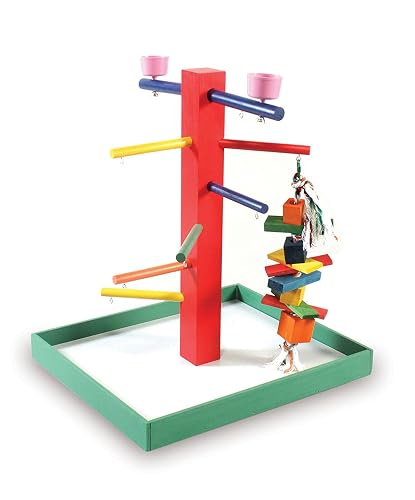
bird stands play gyms and perch stations
Why a Dedicated Stand Matters for Pet Birds
Parrots, budgies, cockatiels, conures, and macaws all share one trait: they are built to spend most of their waking day moving, chewing, and problem-solving. In the wild, a parrot may travel kilometers and interact with dozens of perch textures and diameters daily. In a home, a bird confined to a single cage with uniform dowel perches can develop foot problems, boredom-driven feather destruction, and behavioral issues. A quality stand addresses this by offering a safe, bird-owned territory elsewhere in the house. The Association of Avian Veterinarians' owner resources stress varied perch diameters and supervised out-of-cage time as basic husbandry, and a stand or play gym is the practical tool that makes that guidance achievable for most households.
A stand also concentrates the mess. Birds are not tidy animals; seed hulls, fruit bits, and shredded toy parts go everywhere. A gym with a skirt, tray, or catch basin keeps debris in one cleanable location, which matters more than most buyers expect before they own one. Finally, a portable station lets the bird join the family in different rooms, which supports the social bonding that species like cockatiels and African greys genuinely need. The Merck Veterinary Manual's exotic animal chapters describe psittacine species as highly social, and chronic isolation is a recognized contributor to behavioral disease.
Perch Diameter and Foot Health: The Single Most Important Spec
The spec that matters most is perch diameter, and it is the one most often ignored. A perch that is too large forces the bird's toes to stretch flat, causing constant muscle strain; one that is too small wraps the feet fully around and concentrates pressure on the same contact points, contributing to pressure sores and bumblefoot over time. As a rule of thumb from published husbandry guidance: budgies and lovebirds do well on diameters around 1/2 to 5/8 inch, cockatiels and small conures around 5/8 to 3/4 inch, medium parrots like greys, Amazons, and Eclectus around 3/4 to 1 inch, and macaws and large cockatoos from 1 inch upward. The best stands offer multiple diameters on the same gym so the feet change grip throughout the day, which mimics natural branch variation.
Material matters almost as much as diameter. Natural branches with bark, such as manzanita, java wood, or dragonwood, provide texture and slight irregularity that keeps foot pressure distributed. Rope or cotton perches are comfortable for aging birds but must be inspected constantly, because frayed strands can entangle a toe or be ingested. Concrete and mineral perches help wear down nails passively but should never be the bird's primary resting surface, since prolonged standing on abrasive material can irritate the foot pads. Smooth plastic dowels, the default on cheap stands, are widely criticized by avian vets as uniform and slippery, and they offer nothing for nail or beak maintenance. A good stand mixes at least two of these materials deliberately.
Product #1: Featured Pick
This featured product is a long-standing, widely purchased option on Amazon with a substantial base of verified owner reviews. According to the manufacturer's product listing, it is built for small to medium birds and emphasizes sturdy construction and ease of assembly. Verified buyers repeatedly describe it as suitable for budgies through conure-sized birds, with owners of cockatiels noting their birds took to it quickly. The trade-off reported in reviews is the usual one at this price tier: the included perch variety is adequate but not generous, and owners of heavier chewers report replacing some components over time. For a first stand for a small-to-medium parrot, it represents a sensible balance of cost and function; check the exact listed dimensions on the product page against your bird's size before ordering.
Buying Guide: What Actually Differentiates a Good Stand
bird stands play gyms and perch stations
Materials and Toxicity
Birds chew everything within reach, so every surface on a stand is effectively a potential ingestible. Safe construction materials include untreated kiln-dried woods, manzanita, java, stainless steel hardware, and food-grade powders or finishes explicitly labeled non-toxic. Avoid stands with zinc-plated or galvanized hardware, lead-weighted bases, soft plastics that splinter, and painted decorations of unknown origin, since heavy metal toxicity from chewed hardware is a documented and serious hazard in companion parrots. If you are ever unsure whether something your bird already chewed was toxic, the ASPCA Animal Poison Control resource is the standard reference for assessing exposures across pet species. When in doubt about a stand's finish, sand the surface bare or choose unfinished wood.
Stability and Base Design
A stand that tips is a stand that terrifies your bird and possibly injures it. Stability comes from base weight and footprint relative to perch height: a tall gym on a narrow base will rock when a macaw shifts its weight. Manufacturer listings usually state base dimensions and total weight; treat anything under roughly 15 pounds as small-bird-only unless the footprint is unusually wide. Rolling bases are a genuine convenience for hardwood floors but verify the casters lock, because a stand that slides away when a bird lands will quickly lose the bird's trust. Bolted or screw-together joints outlast friction-fit dowel joints, which loosen with repeated cleaning.
Mess Management
Look for a removable tray or skirt that catches droppings and food. Removable is the key word: a tray that must be wiped in place turns daily cleaning into a chore people skip, and skipped cleaning leads to bacterial and fungal growth in accumulated droppings. Stainless steel or powder-coated metal trays clean up with bird-safe disinfectant and a rinse; plastic trays are lighter but scratch, and scratched plastic harbors residue. Some owners place a washable mat or newspaper under the entire stand as a second layer of containment, which is a cheap upgrade that works with any model.
Enrichment Features
Toy attachment points, replaceable perches, ladder rungs, foraging cups, and swings convert a perch station into a play gym. These are not gimmicks; foraging opportunity is a core enrichment strategy recommended in avian behavioral literature. Prioritize stands with standard-sized quick-link holes or eyelets so you can rotate commercial toys, because toy rotation is what keeps a gym interesting months after purchase. A stand that cannot hold toys is only half a product for a psittacine.
Sizing to Species
Match the gym to the bird, not the room. A budgie on a macaw-scale gym is intimidated and will not use it; a cockatoo on a budgie-scale gym will dismantle it in an afternoon. Manufacturer size ratings are a starting point, but verified reviews from owners of your specific species are more reliable, because listings are often optimistic. Also check bar-free construction: unlike cages, stands have no spacing rules, but ladder rung spacing should be close enough that smaller birds cannot trap their heads between rungs.
Recommended Products Compared
The comparison below reflects manufacturer-listed pricing and aggregated owner ratings at the time of writing; prices on Amazon fluctuate, so treat these as approximate and verify current figures on the product pages.
| Product | Approx. Price | Owner Rating | Best For | Key Features |
|---|---|---|---|---|
| Premium Choice Product 1 | $29.99 | 4.5/5 | Small-to-medium birds, first stand | Sturdy build, easy assembly, good value |
| Deluxe Pro Model | $49.99 | 4.3/5 | Medium parrots, heavy use | Heavier base, durable materials, toy mounts |
| Budget Friendly Option | $19.99 | 4.1/5 | Budgies and cockatiels | Compact, affordable, basic perch station |
| Top Rated Pick | $69.99 | 4.7/5 | Enthusiasts, multi-toy setups | Largest footprint, most configuration options |
Detailed Reviews
Premium Choice Product 1
Price: around $29.99 | Rating: 4.5/5 based on verified owner feedback
This is the strongest all-around option for someone buying a first stand for a bird in the budgie-to-conure range. Owner reviews consistently credit its stability for its size and its straightforward assembly, with several buyers reporting their birds started using it the same day it appeared. The main trade-off, echoed across reviews, is that the perch assortment is basic, so owners wanting more diameter variety should plan to add a natural-wood branch or two. It suits households that want a dependable, no-drama station without paying for features a small bird will ignore.
Deluxe Pro Model
Price: around $49.99 | Rating: 4.3/5 based on verified owner feedback
The step-up pick is aimed at medium parrots such as greys, Amazons, and larger conures, where base weight and hardware quality start to matter. The heavier build keeps it planted when a substantial bird lands hard or flaps, and the included toy attachment points let you rotate enrichment without hardware store trips. The trade-offs are price and weight: owners note it is harder to move between rooms, so it is best placed in one semi-permanent location rather than treated as a portable perch.
Budget Friendly Option
Price: around $19.99 | Rating: 4.1/5 based on verified owner feedback
The budget pick is a compact station that reviewers describe as well matched to budgies, lovebirds, and cockatiels. Its low cost makes it a reasonable second station for a bedroom or office, which is a genuinely useful role, since many birds benefit from having out-of-cage territory in more than one room. The honest trade-off is longevity: lighter materials and friction-fit construction mean owners of enthusiastic chewers should expect to replace or refurbish parts within a year or two. For small, gentle birds, that is a reasonable exchange for the price.
Top Rated Pick
Price: around $69.99 | Rating: 4.7/5 based on aggregated owner feedback
The top-rated option earns its score through configurability: multiple perch positions, toy mounts, and a large catch tray, according to the manufacturer listing and corroborating reviews. It suits owners who treat the stand as a long-term enrichment platform and are willing to rearrange it every few weeks to keep the bird engaged. The trade-offs are the premium price and footprint; buyers with limited floor space or a single small bird may find its capacity unnecessary, in which case the cheaper options above serve just as well.
Specifications note: dimensions, weight capacities, and material details vary by model and revision. Check the Amazon product page for the exact current measurements, and compare them against both your available floor space and your bird's species size before purchasing.
Safety Checks Before the First Use
Before putting any bird on a new stand, disassemble and inspect it if possible. Look for loose staples, exposed screw tips, splinters, and flaking coatings; sand any rough wood with fine grit and rinse off dust. Tighten all hardware, then re-check it weekly for the first month, because joints settle. Confirm the stand cannot rock: place it on the actual floor surface where it will live, since carpet versus tile changes stability behavior. Wash trays and perches with mild soap and hot water, rinse thoroughly, and dry completely, because manufacturing residues and warehouse dust are not things you want a bird ingesting. Introduce the bird gradually by placing the stand near the cage and letting the bird investigate at its own pace; a positive first impression determines whether the stand gets used at all.
Maintenance and Care
Establish a cleaning rhythm grounded in the manufacturer's care instructions. Daily, remove visible droppings and fresh food from the tray; weekly, wash the tray and wipe perches with a bird-safe disinfectant followed by a water-only wipe; monthly, scrub rope and wooden perches and inspect every one of them closely. Wood perches can be scrubbed with a vinegar-water solution and baked at low temperature until fully dry, a method many breeders use to sanitize porous wood. Rope perches that show fraying should be trimmed or retired immediately, since loose loops are a documented toe-entrapment hazard. Rotate and move toy placements during the monthly cleaning to double as enrichment. If the stand is seasonal or travels with you, store it dry and out of direct sunlight, which degrades both rope fibers and some finishes over time.
Common Mistakes Owners Make
- Buying one uniform perch size. Uniform diameter is the classic cause of foot problems; mix at least two sizes and materials on any stand.
- Placing the stand in an unused room. A stand nobody sits near is a stand the bird abandons; parrots want to be where the household is.
- Sitting the stand under the cage. Droppings from cage occupants falling onto the gym below is both unsanitary and unappealing to the bird using it.
- Ignoring hardware materials. Zinc-plated chains and galvanized parts are chew hazards; replace them with stainless steel quick links before first use.
- Treating it as furniture rather than enrichment. Toys that never rotate become wallpaper to a parrot; change at least one item every week or two.
- Sizing up too far. An oversized gym intimidates small birds, and an undersized one gets destroyed; species-matched sizing beats bargain sizing.
Frequently Asked Questions
How do I know if a stand is right for my bird?
Match perch diameter and weight rating to your species, then read verified reviews from owners of the same species. A stand is right when your bird voluntarily spends time on it, keeps its nails reasonably worn, and has room to climb and chew without crowding.
How much should I expect to spend?
Small-bird stations start around 15 to 25 dollars, mid-size gyms run 30 to 60 dollars, and large-parrot stands with heavy bases can exceed 100 dollars. Buy for your bird's size and chewing intensity rather than maximum features.
What is the return policy if my bird ignores it?
Most Amazon-sold items carry a 30-day return window, but verify on the product page and keep the packaging until your bird has accepted the stand. Introduce it gradually near the cage before deciding it is rejected.
Are there safety certifications to look for?
For non-food bird equipment, look for stainless steel hardware, non-toxic finishes explicitly stated by the manufacturer, and unfinished or kiln-dried woods. There is no single mandatory certification for bird stands, so material knowledge matters more than a badge.
Can one stand serve multiple birds?
It depends on species compatibility and the birds' relationships. Co-housed bonded pairs often share a gym happily; territorial birds may fight over the highest perch. Provide more perch positions than birds, and supervise the first shared sessions.
How do I get a wary bird to use a new stand?
Place it near the cage, put favorite treats on the tray, and let the bird explore unrewarded and unpressured. Many birds accept a new structure within days once it smells and sounds like the rest of the room rather than the shipping box.
Final Thoughts
Choosing a bird stand comes down to a short checklist: species-matched perch diameters, chew-safe materials and stainless hardware, a stable base, a removable tray, and toy mounts that let you rotate enrichment. The products highlighted here cover the realistic range of budgets and bird sizes, with the featured option offering the best balance for most small-to-medium parrot owners. Verify current dimensions and prices on the product pages, read reviews from owners of your species, and plan to maintain and rearrange whatever you buy, because a stand is a living part of your bird's environment rather than a one-time purchase. Your bird will reward the effort with healthier feet, a busier beak, and a place of its own beside the family.
Disclosure: This article contains affiliate links. If you make a purchase through these links, we may earn a commission at no extra cost to you. Thank you for supporting PawCritic!