Your sofa is shredded at the arms, the curtains have a ladder running up one side, and the cat is now eyeing the doorframe. This is the most ordinary problem in cat ownership, and it has an ordinary solution: a scratching post the cat actually wants to use. A scratching post is not a furniture-saving gadget bolted on as an afterthought. It is the outlet for a behavior cats perform daily, and the quality and placement of that outlet determines whether your furniture survives.
If you have already tried a post and your cat ignored it, the post is usually the problem, not the cat. Height, stability, material, and location each matter, and getting one of them wrong is often enough for a cat to walk away. This guide covers the specifications that matter, the materials worth paying for, the sizes that fit different cats, and the common mistakes that make people give up on scratching posts entirely.
Why Scratching Is Not Optional
Scratching is a normal feline behavior with several functions. It removes the dead outer sheath of the claw as the new claw grows underneath, which is part of how cats maintain their claws without assistance. It also deposits scent from glands in the paw pads, leaving both a visible mark and a chemical signal that other cats can detect. Scratching stretches the muscles of the shoulders, forelegs, and back, which is one reason cats often scratch right after waking from a nap.
Because the behavior is tied to claw health, scent marking, and stretching, it will happen whether or not you provide a surface for it. The Cornell Feline Health Center treats scratching as a normal and necessary behavior and recommends providing acceptable scratching surfaces rather than attempting to stop the behavior. A cat that is punished for scratching learns to scratch somewhere you cannot see, which is worse for everyone.
Indoor cats need a dedicated scratching surface more than outdoor cats do. An outdoor cat has tree bark, fence posts, and rough ground available. An indoor cat has upholstery, carpet edges, and the corner of the couch. If the only scratchable surfaces in the house are the ones you want to protect, the cat will use them.
What to Look For in a Scratching Post
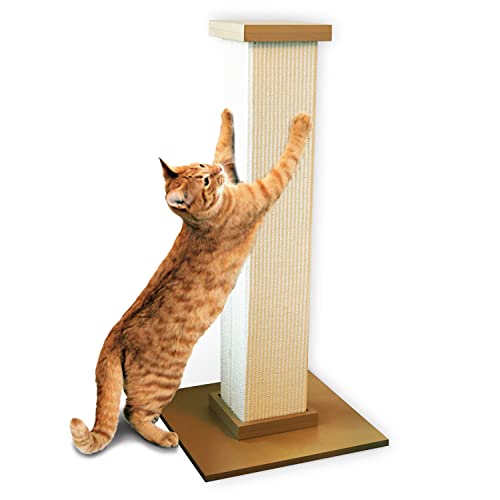
cat scratching posts top 5 reviews ultimate buying guide
Height: The Spec Most People Get Wrong
A scratching post has to be tall enough for the cat to stretch fully upright with the front paws extended overhead. If the post is too short, the cat either scratches in a cramped crouch or abandons the post. For most adult cats, that means a post at least 30 to 36 inches tall, and many behavior references recommend closer to 32 inches as a minimum. Large breeds such as Maine Coons and Norwegian Forest Cats often need 40 inches or more.
Discount-store posts are frequently 18 to 20 inches tall. They are inexpensive for a reason, and they are the single most common reason a cat ignores a new post. If you are replacing a short post, measure the cat, not the post. A cat standing on the hind legs and reaching up will tell you the minimum height you need.
Stability: A Wobbling Post Will Not Be Used
Cats will not put their full weight into a surface that moves under them. A post that rocks, slides, or tips during a stretch gets abandoned quickly. Look for a base that is wide relative to the post height and heavy relative to the cat. Base weight is often listed in the specifications, and it is one of the few numbers worth checking before buying.
For tall posts, a broad square or round base is better than a narrow one, and a base that can be weighted or anchored is better still. Some wall-leaning and wall-mounted designs solve the stability problem by transferring force into the wall, which works well in apartments but requires landlord permission and a stud finder.
Material: Sisal, Cardboard, Carpet, and Wood
Sisal rope wrapped tightly around a post is the most common scratching surface, and for good reason. It is durable, it has a rough texture cats tend to accept, and it does not resemble your upholstery. Tightly wound sisal lasts far longer than loosely wound rope, which can unravel within weeks. When examining a sisal post, check the winding tension at the top and bottom, where loosening usually starts.
Sisal fabric, a flat woven sheet rather than rope, offers a different texture that some cats prefer and that is easier to clean. Cardboard scratchers are inexpensive and widely accepted, but they shed and need replacing every few months. Carpet-covered posts are soft and quiet, but they can teach a cat that carpet is an acceptable scratching surface, which is exactly the lesson you do not want taught in a house with carpeted stairs. Natural wood and bark surfaces appeal to some cats and are extremely durable.
Size and Configuration for Different Cats
A single cat in a small apartment can be served by one tall, stable post. A multi-cat household needs more vertical real estate and more than one scratching surface, because cats in shared homes often compete for resources and a single post becomes a point of tension. A common recommendation is one scratching post per cat plus one extra, placed in different rooms.
Kittens and senior cats need lower, more accessible surfaces. A kitten cannot stretch as high as an adult, and a senior cat with arthritis may avoid jumping onto a platform. For these cats, a lower post, a ramp, or a floor-level cardboard scratcher works better than a tall tower. Large cats need both more height and a wider base, and a post rated for a small cat may wobble under a 15-pound cat mid-stretch.
How to Choose a Scratching Post for Your Home
Start with the cat, then the room. Measure your cat standing and reaching, and treat that number as the minimum post height. Consider how many cats will use it and whether they share space willingly. Then look at the room where the cat already scratches. That room, not the room where you would prefer the post to live, is where the post should go first.
Floor space is the next constraint. A tall post with a wide base takes up more floor than a wall-mounted panel, but wall-mounted systems require installation and a wall that can take anchors. Renters often prefer freestanding posts for this reason. Households with dogs or small children should favor heavy bases that will not tip during accidental contact.
Budget matters, but the relationship between price and usefulness is not linear. A 30-dollar post that is tall, stable, and wrapped in tight sisal will outperform a 150-dollar tower that wobbles. Replacement parts matter too: a post with a replaceable sisal sleeve can be refurbished for a fraction of the cost of a new unit.
A Concrete Example to Compare Against
For readers who want a specific reference point, one widely sold option in this category is a sisal-wrapped post with a weighted base, and you can check the current price on Amazon. Treat it as a benchmark rather than a recommendation: compare its listed height, base dimensions, and material against the criteria above and against your own cat. What matters is whether the numbers fit your situation, not the brand on the box.
Placement: Where the Post Goes Decides Whether It Gets Used
Cats scratch in socially significant locations. A post placed in a back bedroom where the cat never goes will be ignored, while a post placed next to the couch the cat already scratches will be used within days. Start by placing the post directly beside the furniture under attack, even if that means the post sits in the middle of the living room for a while. Once the cat is using it reliably, the post can be moved a few inches at a time toward a location you prefer.
Posts near sleeping spots get used because cats often stretch and scratch immediately after waking. Posts near windows and doors get used because those are high-traffic territory-marking locations. In multi-cat homes, posts should be spread out so that no single cat can guard all of them. A post placed in a dead-end corner with no escape route may be avoided by a lower-ranking cat in the household.
Encouraging a Cat to Use a New Post
Even a well-chosen post can sit untouched for a week or two. Several low-effort techniques reliably speed up acceptance. Rubbing the post with catnip or silver vine is the most common first step. Dragging a wand toy along the post so the cat attacks it and contacts the surface with the claws also helps, because it associates the post with play rather than with a stranger object in the room.
Do not physically place the cat's paws on the post. That approach creates resistance rather than acceptance. Do not punish scratching on furniture, because punishment does not teach an alternative and often increases stress, which can increase scratching. Instead, make the furniture temporarily unpleasant with double-sided tape or a fitted cover, and reward the cat calmly whenever the post is used. Some cats take days, some take weeks, and a few need the post moved before they commit.
Maintenance and When to Replace
Sisal posts need little maintenance but benefit from occasional attention. Vacuuming the rope removes loose fiber and dust. Rotating the post periodically spreads wear across the surface instead of concentrating it on one side. Checking the base and any connecting hardware monthly catches loosening before it becomes a wobble that drives the cat away.
Replaceable sisal sleeves are worth the small extra cost, because a worn sleeve can be swapped without replacing the whole unit. Cardboard scratchers are consumable and should be replaced when they become soft or start shedding heavily. A post should be retired when the sisal is frayed to the point that the underlying core is exposed, when the base can no longer be tightened, or when the cat stops using a post it previously used despite no change in placement.
Common Mistakes and What to Avoid
The most common mistake is buying a post that is too short. The second most common is placing it where the human wants it rather than where the cat scratches. A third is buying a carpet-covered post in a carpeted home, which blurs the line between acceptable and unacceptable surfaces. A fourth is buying a single small post for a multi-cat household and expecting all the cats to share it peacefully.
Other mistakes include ignoring stability in favor of appearance, skipping the introduction period and concluding the cat hates the post after two days, and removing the old damaged furniture or covering it without offering an alternative first. Cats need the replacement behavior in place before the old target is blocked, or the scratching simply moves to a new piece of furniture.
Safety is worth a brief note. Any post that can tip should be anchored or replaced, particularly in homes with kittens that climb. Loose rope or frayed fabric should be trimmed so it cannot be swallowed. If a cat ingests a foreign material, contact the ASPCA Animal Poison Control or a veterinarian promptly. General feline health questions are well covered by the Merck Veterinary Manual cat owner reference, which is a useful starting point before calling a clinic.
Comparison Table: Matching the Post to the Cat
cat scratching posts top 5 reviews ultimate buying guide
| Cat or Home Situation | What Matters Most | Configuration to Look For |
|---|---|---|
| Single adult cat, small apartment | Height and stability | One tall sisal post, 32 inches or more, weighted base |
| Multi-cat household | Number of surfaces and spread | Two or more posts in different rooms, plus a tower |
| Kitten | Accessibility and safety | Lower post, no tip risk, supervised climbing |
| Senior cat | Low jumping demand | Floor-level scratcher or low post with a ramp |
| Large breed | Height and base width | 40 inches or more, wide heavy base |
| Renter, limited floor space | Footprint | Freestanding narrow post or removable wall panels |
| Carpeted home | Surface confusion | Sisal or cardboard, avoid carpet-wrapped posts |
Frequently Asked Questions
How tall should a scratching post be?
The post should let the cat stretch fully upright with the front paws extended. For most adult cats that is at least 30 to 36 inches, and large breeds often need 40 inches or more. Measure your cat reaching upward and use that as the minimum.
Is sisal better than carpet?
Sisal is generally the better choice because it is durable, it has a texture cats accept, and it does not resemble the carpet you are trying to protect. Carpet-covered posts can encourage scratching on carpeted floors and stairs, which defeats the purpose.
How many scratching posts does a cat need?
A single cat can usually be served by one good post, though two in different rooms is better. A common guideline for multi-cat homes is one post per cat plus one extra, placed so no cat has to pass a rival to reach one.
My cat ignores the post. What should I change first?
Check height first, then stability, then placement. A short or wobbly post is the most frequent cause of disinterest. If the post is tall and stable, move it next to the furniture the cat already scratches and give it two to three weeks before concluding it does not work.
How often should a scratching post be replaced?
A well-made sisal post can last several years. Replace or refurbish when the rope is frayed to the core, when the base can no longer be tightened, or when a previously used post is abandoned for no apparent reason.
Can I make a scratching post myself?
Yes. A sturdy wooden post or heavy cardboard tube wrapped tightly with sisal rope and set into a wide, heavy base works well. The two requirements are tight winding and a base that will not tip, since a loose wrap or a light base will make the effort pointless.
Where to Buy
As an Amazon Associate, PawCritic earns from qualifying purchases. This does not affect our reviews or recommendations.
Final Verdict
There is no single best scratching post, because the right one depends on the cat's size, age, and household. What does not vary is the checklist: tall enough for a full stretch, stable enough that the cat will commit its weight, wrapped in a material that does not resemble your furniture, and placed where the cat already scratches. Get those four things right and most cats will use the post within a few weeks.
If you are replacing a post that failed, change the height and the placement before you change anything else. Those two variables account for most of the failures people blame on their cats. A post that meets the specifications and sits in the right spot is not a luxury purchase. It is the cheapest way to keep a cat's claws healthy and your furniture intact at the same time.
Affiliate Disclosure
PawCritic is reader-supported. When you purchase through links on our site, we may earn an affiliate commission at no extra cost to you. Our editorial content is not influenced by advertisers or affiliate partnerships. Recommendations are based on published guidance, manufacturer specifications, and verified owner reports rather than hands-on testing. As an Amazon Associate and participant in other affiliate programs, we earn from qualifying purchases. This helps support our mission to provide pet owners with honest, helpful product reviews and buying guides.