Cat Strollers and Outdoor Exploration Gear 2026: A Safe, Comfortable Way to Give Your Indoor Cat Fresh Air
Published on June 27, 2026 by PawCritic — Cats Category
The debate over indoor-only cats continues to evolve. According to widely cited veterinary guidance, keeping cats indoors dramatically increases their lifespan, with indoor cats commonly living 12 to 18 years compared with roughly 2 to 5 years for cats allowed to roam freely. Resources such as the Cornell Feline Health Center document the many hazards outdoor cats face, including traffic, predators, toxins, territorial fights, and parasites. Yet many cats still clearly crave stimulation: fresh air, new sights, natural sounds, and the changing scenery beyond the living room window. A cat stroller offers a middle path. It lets your cat experience the outdoors without the dangers of free-roaming — no cars, no loose dogs, no poison exposure, and no chance of wandering off and failing to return home.
Not every cat is a candidate, but several groups benefit from stroller time. Cats that are leash-trained but tire quickly on long walks can ride the return leg in comfort. Elderly or arthritic cats that still enjoy fresh air get gentle outings without strain. Anxious or nervous cats gain a secure, enclosed portable hideaway that functions a bit like a mobile den. And cats recovering from surgery, or cats with conditions such as feline immunodeficiency virus that make unrestricted outdoor exposure risky, can still enjoy supervised sensory enrichment. For general feline health and behavior background, the Merck Veterinary Manual's cat owner section is a solid reference covering enrichment, aging, and common conditions.
The 2026 cat stroller market has matured considerably. In earlier years, most owners simply bought a dog stroller and hoped the cat tolerated the ride. Today's cat-specific models typically feature enclosed mesh cabins with ventilation on multiple sides, removable and washable fleece bedding, under-seat storage baskets for treats and toys, all-terrain wheels for parks and light trails, and one-hand folding mechanisms for car transport. Prices range from around $40 at the budget end to over $300 for premium and jogging-style models, so the decision genuinely deserves some research into your cat's size, temperament, and your own lifestyle. This guide walks through everything that matters, and points to one concrete example you can inspect on Amazon so you can see how the specs below map onto a real product listing.
What a Cat Stroller Is — and What It Is Not
A cat stroller is a wheeled, enclosed carrier mounted on a push frame, roughly analogous to a baby stroller but built around a mesh cabin. The enclosure matters more for cats than for dogs: cats are escape artists, they startle easily, and they feel safest in partially enclosed spaces where they can see out without being exposed. A well-designed cat stroller therefore differs from a typical dog stroller in a few concrete ways — fuller mesh coverage, smaller and more secure entry points, and often an interior tether that clips to a harness as a backup in case a zipper is left partly open.
What a stroller is not, importantly, is a substitute for exercise or environmental enrichment indoors. It is a supplement. If your goal is burning off a bored cat's energy, interactive play and puzzle feeders at home do that far better than a passive ride. The stroller's real value is sensory: new smells, moving scenery, birdsong, breeze, and the mental engagement of watching the world go by. Many owners of leash-trained cats describe the stroller as the tool that extended their cat's outdoor time, since a cat that walks 100 meters and then flops down can still enjoy another 40 minutes of riding.
Key Buying Factors, Explained
Cabin Size and Weight Capacity
The single most important check is whether your cat can stand up, turn around, and lie down fully stretched inside the cabin without touching the roof. For most domestic cats in the 8 to 12 pound range, a cabin of roughly 20 by 12 by 20 inches is sufficient. Large breeds such as Maine Coons, Norwegian Forest Cats, and Ragdolls generally need something closer to 22 by 14 by 23 inches or larger. Measure your cat's length from nose to the base of the tail, and height from floor to shoulder, then compare those numbers against the manufacturer's published cabin dimensions rather than the folded dimensions, which some listings emphasize more prominently.
Weight capacity is a separate specification and should be treated as a hard limit, not a suggestion. Most single-cat strollers are rated between 15 and 25 pounds; multi-pet and wagon-style designs reach 35 to 50 pounds. Add a mental 2 to 3 pounds for bedding, a harness, and any toys your cat brings along. Overloading a stroller stresses the frame, accelerates wheel-bearing wear, and in tipping-prone designs can cause genuine stability problems on curbs and inclines. If your cat's weight plus accessories approaches the limit, size up.
Enclosure Security
Cats bolt. The most common failure scenario reported by owners is a partially zipped door meeting a startled cat, so examine the entry system carefully. Double-zipper doors, where two zipper pulls can meet at the top and be clipped together, are harder to defeat than single sliders. No-zip designs that use magnetic snap closures eliminate the zipper problem entirely and are frequently recommended for confirmed escape artists. Whatever the closure type, an interior tether that attaches to a properly fitted harness — never to a collar — is the last line of defense. Some strollers also include a zip-down weather or privacy cover that can seal the cabin visually if a loose dog approaches, which experienced owners describe as one of the most useful features in practice.
Ventilation and Climate
Mesh panels on multiple sides are essential for airflow, and coverage matters more than panel count. Check photographs of the actual product from multiple angles: some budget models advertise four-sided mesh but have large solid fabric sections that block flow. Cats dissipate heat poorly, and a small enclosed cabin in direct sun can warm quickly. General safety guidance on heat and household hazards from sources like the ASPCA Animal Poison Control is worth reviewing for outdoor outings generally — warm weather limits, toxic plants along walk routes, and chemical residues on lawns all apply to stroller walks. In cold or wet weather, a roll-out weather cover helps, but ventilation should never be fully sealed for long periods.
Wheels and Terrain
Match the wheel specification to where you will actually walk. For paved sidewalks and smooth paths, 6 to 7 inch rubber or EVA foam wheels are adequate and keep the stroller light. For grass, gravel, and dirt trails, look for 7 to 8 inch all-terrain wheels with tread and preferably a front swivel wheel that can be locked straight for stability over rough ground. For jogging or serious trail use, dedicated jogging strollers with 12 to 16 inch pneumatic (air-filled) bicycle-style tires, a hand brake, and a wrist strap are the appropriate class — standard strollers are not built for running speeds, and using one that way is unsafe for the cat. The trade-off with pneumatic tires is maintenance: they need occasional inflation and can puncture, whereas solid EVA foam wheels never go flat but ride more harshly.
Fold, Weight, and Storage
If you live in an apartment or transport the stroller by car, foldability and folded size matter as much as cabin size. One-hand folds that allow the stroller to stand upright when collapsed are considerably easier to store in a hallway closet or trunk. Check the stroller's own weight, too: lightweight models under 15 pounds are easy to lift but often use lighter frames and smaller wheels; heavy-duty models can exceed 20 pounds and feel like furniture. Measure your car trunk before buying, since some of the larger cube and wagon designs require folding the back seats to fit. Convertible 3-in-1 designs that transform from stroller to car seat to hand carrier reduce the amount of gear you own, at the cost of some compromise in each mode.
A Concrete Example Worth Inspecting
Rather than a long ranked list, it is more useful to look at one well-regarded example and check how it measures against the criteria above. A commonly recommended convertible model in this category is the 3-in-1 all-terrain cabrio style of stroller, which converts from a full stroller to a pet car seat to a carrier, with a listed weight capacity of around 30 pounds, 8 inch all-terrain wheels with a front swivel lock, a one-hand fold, a mesh cabin with a roll-down weather cover, and fleece-lined bedding. This design suits multi-purpose households — owners who want one purchase covering neighborhood walks, car travel, and vet trips — and the 30 pound capacity plus roughly 21 by 13 by 22 inch cabin accommodates large breeds that rule out smaller strollers. The honest trade-offs reported by owners are the premium price, the stroller's own weight of around 18 pounds, a storage basket smaller than some competitors offer, and the fact that car seat mode requires threading a seatbelt through the frame, which some find fiddly. check the current price on Amazon and compare the published cabin dimensions against your own cat's measurements before deciding. If your needs are narrower — say, only short paved walks for a 9 pound cat — a smaller and cheaper model may serve just as well, and view this option on Amazon mainly to calibrate what a full-featured listing looks like. Owner reviews on the listing page are also worth reading for durability reports beyond the first month, since manufacturer specifications say nothing about long-term frame wear.
Backpack Carriers: The Other Half of Outdoor Gear
Strollers are not the only route to outdoor time. Backpack carriers with mesh panels and a bubble window suit hikers, commuters, and owners making vet trips on foot. A typical backpack carrier in this class weighs 2 to 4 pounds, holds cats up to 15 or 20 pounds, and offers top, front, or side entry. The bubble window is genuinely popular with curious cats, giving a wide forward view, and the padded straps make longer carries manageable for the human. The limitations are real, though: ventilation is far more limited than in a stroller, interiors warm quickly on hot days, some cats dislike the enclosed bobbing motion, and the weight rides entirely on your shoulders. For hot climates and long outings, a stroller with full mesh coverage is the better tool; for trails too narrow for wheels and for short trips, a backpack wins. A few owners use both, keeping the backpack in the car for backup.
How to Introduce Your Cat to a Stroller
Cats are creatures of habit, and most will be suspicious of a new rolling object at first, so plan a gradual introduction spanning one to two weeks. Set the stroller up indoors with the door open and leave it in a room your cat uses. Place treats, catnip, and familiar bedding inside so the cabin acquires reassuring smells. Let your cat enter and exit freely without closing the door. Once your cat sits inside voluntarily, close the door briefly, roll the stroller a meter or two indoors, and reward calm behavior with treats. Only then move to short outdoor trips of about five minutes in a quiet area, avoiding traffic noise and off-leash dogs on early outings. Extend trip length gradually. Cats that love window-watching often take to strollers readily; cats that hide from visitors may prefer the more enclosed feel of a backpack carrier. There is no shame in a cat who ultimately declines the whole enterprise — the stroller then becomes an expensive cat bed, which is a time-honored outcome.
Safety on the Walk
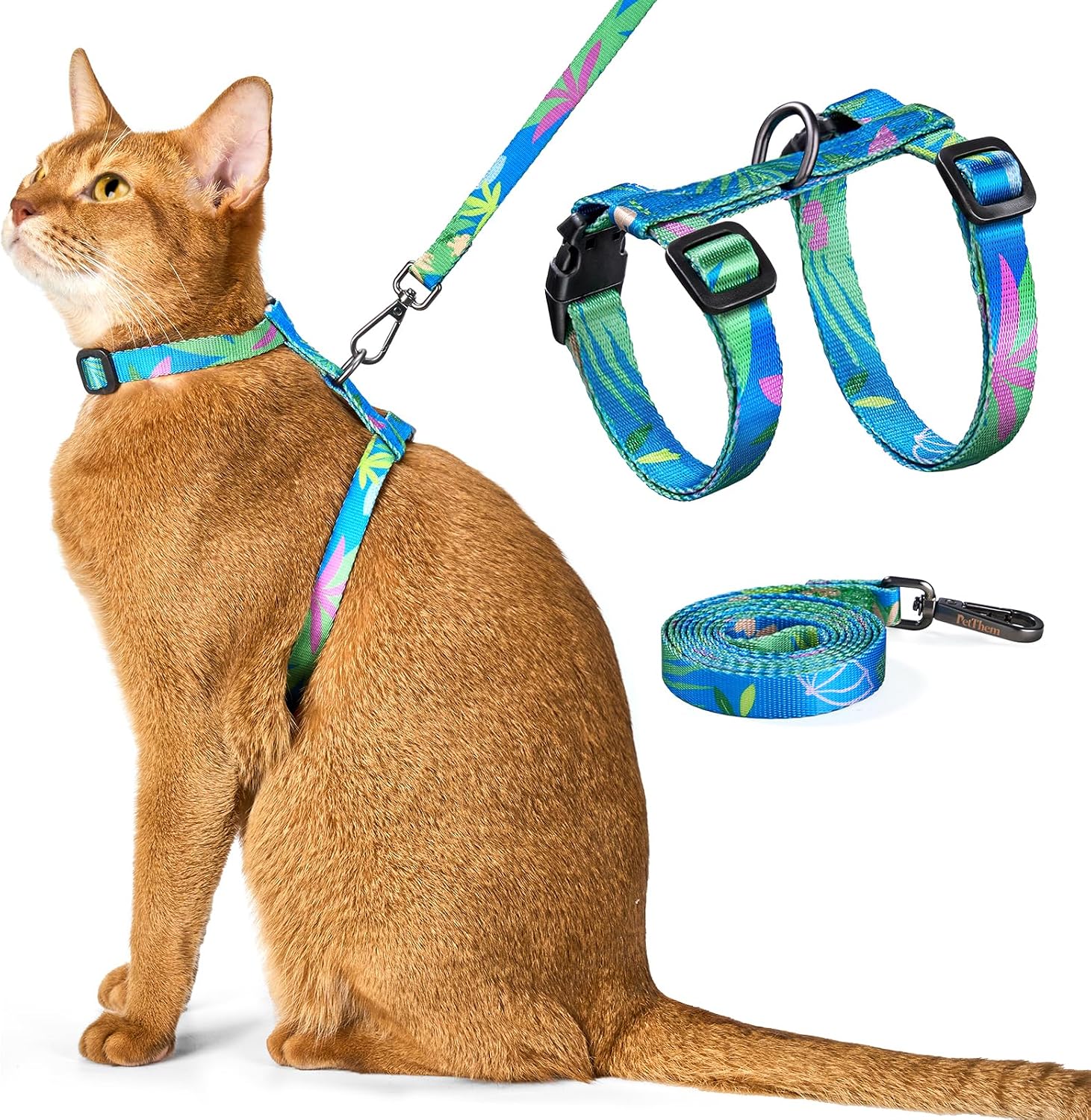
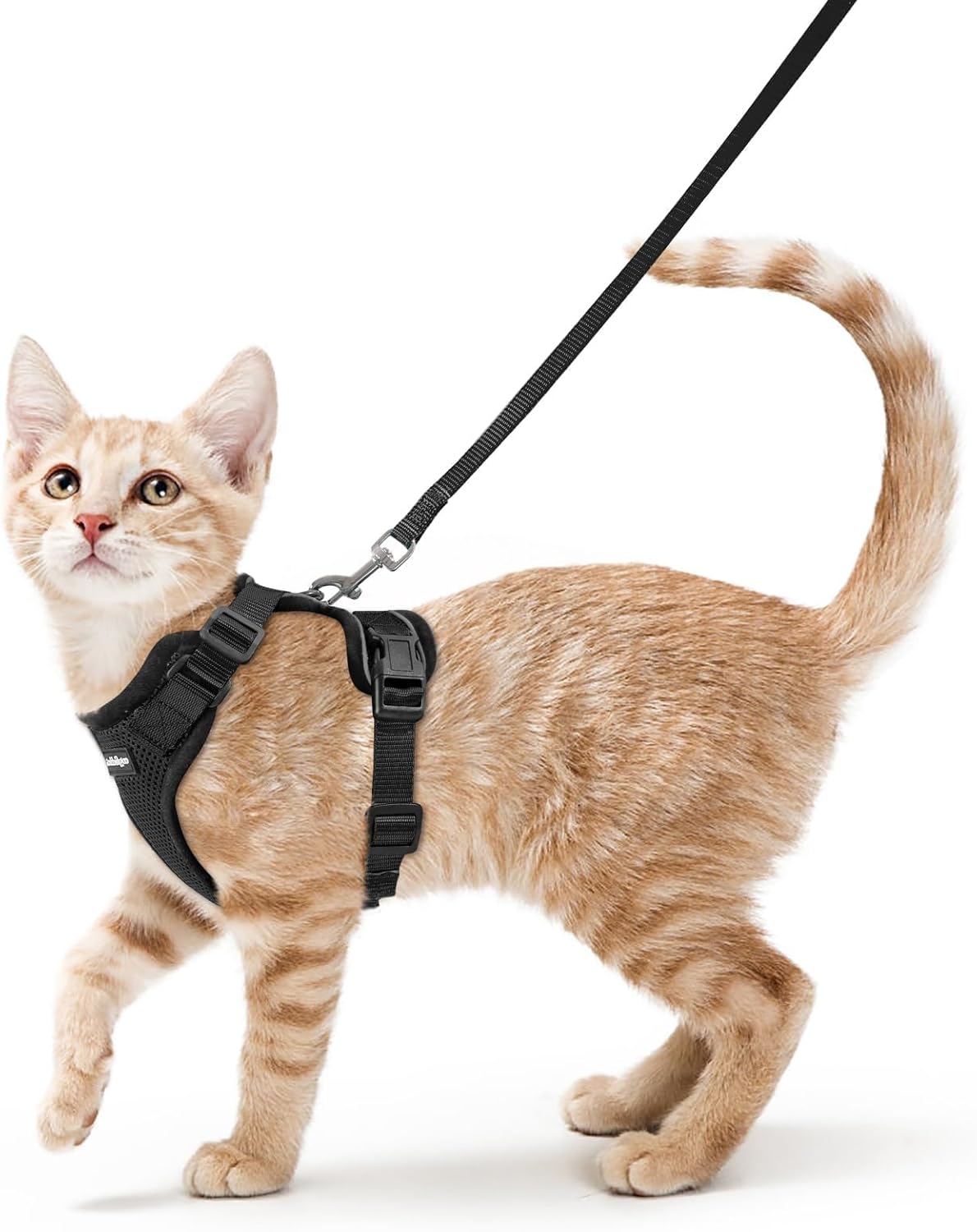
A few practices consistently appear in safety guidance for outdoor cat handling. Always use a harness rather than a collar, and clip the harness to the interior tether as a backup to the enclosure. Check all zippers and closures before every outing — a door left one inch open is an invitation. Avoid walking in temperature extremes; if the pavement is too hot for your hand, it is too hot an outing for a small enclosed cabin. Keep walks away from lawns displaying pesticide warning flags and from roadsides where chemical de-icing residue collects in winter. If a loose dog approaches, deploy the weather cover to block your cat's view and create a physical and visual barrier, and position yourself between the dog and the stroller. Finally, attach identification to your cat's harness regardless of the enclosure — microchipping plus a tag remains the standard recovery advice.
Cleaning and Maintenance
Maintenance for a cat stroller is straightforward but easy to neglect. Most models have removable fleece pads that are machine washable; wash them weekly or so with mild detergent, since cats shed and dander accumulates quickly in fabric cabins. Wipe the frame with mild soap and water, and spot-clean mesh with a damp cloth rather than scrubbing, which can tear panels over time. For lingering odors, use a pet-safe enzyme cleaner rather than strongly scented products, which many cats find aversive. Check wheel bearings every month or two and lubricate if rolling becomes stiff; on pneumatic-tire models, check tire pressure periodically. Store the stroller fully dry in a ventilated space to prevent mold in the fabric — a damp stroller closed in a trunk is a common way to ruin the bedding and the cabin in a single season.
Common Mistakes to Avoid
Several recurring mistakes show up in owner reports. Buying too small is the most frequent — a stroller sized to a kitten that fits a 14 pound adult six months later is wasted money, so buy for your cat's expected adult size. Skipping the harness and tether is the second, and it is the one that ends in a lost cat. A third is overloading the storage basket under the cabin, which can destabilize the frame on curbs. Fourth is expecting a cat to accept the stroller on day one; forced early outings can create a lasting aversion that patient introduction would have avoided. Fifth is using a standard stroller for jogging, which the frames and wheel bearings are not built for. And sixth is ignoring the weather cover until the first rainstorm, rather than practicing deploying it at home before it is needed in the field.
Frequently Asked Questions
Will my cat actually enjoy being in a stroller?
Many cats enjoy stroller rides once properly acclimated, particularly cats that already spend hours watching the world from windows. The key is gradual introduction indoors, then short, quiet outdoor trips, then longer outings. Cats that dislike open exposure often prefer a backpack carrier, which offers a more den-like enclosure. Realistically, a minority of cats never accept either, so temper expectations and consider borrowing or buying budget first if you are unsure.
Can I use a dog stroller for my cat?
You can, but cat-specific designs have advantages: fuller enclosed mesh cabins that suit a cat's preference for partial enclosure, entry points sized for smaller and more flexible animals, and interior treads and tapers designed around harnesses. Dog strollers often have larger, more open fronts. That said, a fully enclosed dog stroller with good mesh coverage will work fine for many cats, so the category label matters less than the actual specs.
Is it safe to take my cat outside in a stroller?
A stroller is among the safest ways to give an indoor cat outdoor access. The enclosure protects against traffic, loose animals, and escape, and prevents contact with most toxins and parasites compared with free-roaming. Use a harness and tether, check closures each trip, avoid temperature extremes, and be alert to approaching dogs. As with any outdoor plan, general feline welfare guidance from veterinary sources such as Cornell's feline health materials is worth consulting.
What is the typical weight limit?
Single-cat strollers usually support 15 to 25 pounds, while multi-pet and wagon-style designs support 35 to 50 pounds. Always verify the manufacturer's stated limit and budget a few pounds for bedding and accessories. Exceeding the rating risks frame damage and tipping, especially on slopes and curbs.
How much should I expect to spend?
Functional budget models start around $40 to $60 and are adequate for small cats and paved surfaces. Mid-range all-terrain models generally run $100 to $180. Premium convertibles, jogging strollers, and wagon styles can exceed $250 to $300. The extra money typically buys capacity, wheel quality, and fold convenience rather than any fundamental safety difference, so a modest budget spent on the right size class is not a compromise.
Final Thoughts
The best stroller is the one your specific cat will actually use, sized correctly, closed securely, and introduced patiently. Match the cabin dimensions to your cat, the wheels to your terrain, the fold to your storage situation, and the enclosure style to your cat's temperament. If you are unsure of your cat's tolerance, start modestly before committing to a premium convertible. For a look at how one well-reviewed all-terrain convertible stacks up against the criteria above, view this option on Amazon and read through the owner reviews with an eye toward long-term durability. And if the answer turns out to be a backpack instead of wheels, or a catio instead of both, that is a perfectly good outcome — the goal is safe enrichment, not the gear itself. You can check the current price on Amazon at any time; prices and availability change often.
Affiliate Disclosure: PawCritic is a participant in the Amazon Services LLC Associates Program, an affiliate advertising program designed to provide a means for us to earn advertising fees by linking to Amazon.com and affiliated sites. Purchases made through our links help support our research-based guides at no extra cost to you. Thank you for your support.
Last updated: June 27, 2026. Prices and availability are subject to change. Always verify current pricing and specifications on Amazon before purchasing.