Cat Vitamin Supplements 2026: A Practical Buying Guide to Support Your Cat's Health
Vitamin and mineral supplements for cats occupy a strange corner of the pet market. On one hand, a cat eating a complete and balanced commercial diet should, by definition, already be receiving every nutrient she needs in the correct proportions. On the other hand, real life intervenes: cats on homemade diets, cats recovering from illness, senior cats with reduced absorption, cats with chronic kidney disease, and notoriously picky eaters can all develop genuine gaps that a targeted supplement may help fill. This guide walks through when supplementation actually makes sense, what the labels mean, which forms are easiest to administer, and what to be skeptical of, so you can make an informed decision rather than an impulse purchase.
cat vitamin supplements boost your cats health
Because PawCritic is a research-based publication rather than a testing lab, every recommendation here is grounded in published veterinary guidance, manufacturer specifications, and verified owner reports rather than hands-on trials. Where a claim comes from a veterinary authority, we say so. Where it comes from owners describing their own experience, we say that too. And where the honest answer is 'ask your veterinarian before doing anything,' that is exactly what you will read.
Start With the Diet, Not the Supplement
The single most important fact about cat vitamins is that most cats on a complete commercial diet do not need them. Any food labeled as complete and balanced for a given life stage must meet nutrient profiles established by the Association of American Feed Control Officials, the body that sets model standards for pet food in the United States. You can review those standards directly at the AAFCO website, which explains what the labels mean and how to verify that a food covers your cat's life stage. If your cat's food carries an AAFCO statement for growth, adult maintenance, or all life stages, adding a general multivitamin on top can actually push certain nutrients past safe upper limits.
This is counterintuitive for many owners, because the marketing of supplements implies that more nutrients are always better. In cats, that is demonstrably false. Fat-soluble vitamins in particular, such as vitamins A and D, are stored in body tissue rather than excreted quickly, and chronic over-supplementation can cause toxicity over months or years. Excess vitamin D, for example, can raise blood calcium to dangerous levels and damage the kidneys. Calcium and phosphorus additions can interfere with each other's absorption and matter enormously in cats with kidney disease, one of the most common feline conditions in cats over ten years old. So the first question is never 'which supplement is best' but 'does my cat have a documented deficiency or condition that a supplement would address.'
The cats who most often do have legitimate needs include: cats eating homemade or raw diets prepared without a veterinary nutritionist's oversight, cats diagnosed with intestinal disease that impairs nutrient absorption, cats with chronic kidney disease who need managed phosphorus and often B vitamin support, cats with arthritis where joint supplements are sometimes recommended, cats recovering from surgery or serious illness, and cats whose picky eating has narrowed their diet to a single food that may not be ideal. If any of these describe your cat, that is the point at which a conversation with your veterinarian becomes genuinely useful, because the right supplement depends on the right diagnosis.
What Veterinary Sources Say About Feline Nutrition
Rather than relying on marketing copy, it helps to anchor your expectations in what veterinary medicine actually publishes. The Cornell Feline Health Center maintains accessible owner-facing material on feline nutrition, including the fact that cats are obligate carnivores with requirements for nutrients such as taurine and arachidonic acid that come naturally from animal tissue. Taurine deficiency is the classic cautionary tale in cat nutrition: commercial diets formulated without adequate taurine in the 1980s led to epidemics of dilated cardiomyopathy and blindness in cats, and it permanently changed how cat foods are regulated. It also explains why taurine appears in nearly every cat supplement on the market today, even though deficiency is vanishingly rare in cats eating commercial food.
The Merck Veterinary Manual's cat owner section is another free, reputable reference covering normal nutrition, feeding across life stages, and the signs of common deficiencies and excesses. Reading these sources before shopping will do more for your purchasing decisions than any product listing, because you will learn to recognize when a label is promising benefits that only apply to deficient cats. A supplement that 'supports healthy vision through taurine' is technically true and practically meaningless for a cat eating standard commercial food, and knowing the difference saves real money.
Types of Cat Vitamin Supplements and Who They Suit
General Multivitamins
Multivitamin pastes, powders, and chewable tablets are the most widely sold category and the least necessary for most cats. They suit cats whose diets are genuinely incomplete, such as a cat who will only eat a single unbalanced food, or a cat on a home-prepared diet while transitioning to a formulated recipe. The trade-off is dosing precision: a multivitamin adds a little of everything, which is fine when nothing in particular is missing but problematic if your cat already receives adequate or elevated levels of certain nutrients. Veterinarians generally advise against stacking a multivitamin on top of a therapeutic or prescription diet, precisely because those diets are already formulated with modified nutrient levels for a medical purpose.
B Vitamin Complex
B vitamins are water-soluble, which changes the risk calculus considerably: excesses are excreted in urine rather than stored, so the margin of safety is wider than with fat-soluble vitamins. B complex supplementation is most often discussed for cats with chronic kidney disease, where urinary losses of these vitamins increase, and for cats with poor appetite generally, since B vitamins play a role in energy metabolism. Owners of cats with kidney disease frequently report that veterinary-prescribed B supplementation is part of the management plan. This is a case where following your veterinarian's specific guidance beats any over-the-counter guesswork, because kidney disease management involves balancing fluids, phosphorus binders, potassium, and appetite support as a whole system.
Taurine
As noted, taurine deficiency in cats eating commercial food is rare because AAFCO profiles require it. Supplementation becomes relevant for home-prepared diets, and any homemade cat diet should be formulated with a board-certified veterinary nutritionist or a service such as BalanceIT, because taurine content in meat varies with handling and freezing. Taurine supplements are inexpensive and have a wide safety margin, but buying one for a cat eating complete commercial food is essentially paying for expensive urine.
Joint Supplements
Glucosamine, chondroitin, and green-lipped mussel products are marketed heavily for senior cats. The evidence base in cats is thinner than in dogs, but veterinary interest is real, particularly for cats with documented osteoarthritis, which studies suggest affects a large share of cats over twelve even though cats hide lameness well. Joint supplements generally carry a good safety profile; the trade-off is patience and cost, since any effect develops over weeks to months and placebo-by-proxy is a genuine phenomenon when owners are watching for improvement. If your senior cat is stiff or reluctant to jump, a veterinary exam and possibly imaging should come first, because pain management options for cats have improved substantially and a supplement alone may under-treat real pain.
Skin, Coat, and Omega-3 Fatty Acids
Fish oil and other omega-3 sources are among the better-supported supplements for cats, with relevance to skin conditions, coat quality, and as adjuncts in kidney disease and joint inflammation. The practical considerations are product quality and dosing: omega-3 content varies enormously between products, and some cheap oils are diluted or oxidized. Look for a stated concentration of EPA and DHA per dose rather than a vague 'fish oil blend' claim, store the product away from heat and light, and note that rancid oil is both unpalatable and counterproductive. Cats on blood thinners or with bleeding disorders should not receive high-dose omega-3s without veterinary approval.
Calming and Behavioral Supplements
This category includes L-theanine, alpha-casozepine, and pheromone-adjacent products. Evidence varies by ingredient, effects tend to be modest, and safety margins are generally acceptable. These suit situational stressors like travel or new pets more than chronic anxiety, which often needs environmental management or veterinary behavioral care. Be wary of anything that promises sedation-level effects from a chew.
How to Read a Cat Supplement Label
Supplement labeling is less tightly regulated than food labeling, so skepticism is a skill worth practicing. Look for a stated concentration of each active ingredient per dose, not just a proprietary blend total. Check whether doses are expressed per chew, per pump, per scoop, or per kilogram of cat, and do the arithmetic for your cat's actual weight, because dosing instructions written for an average cat may be off by half for a small female or a large male. Verify the form of the nutrient where it matters: for example, the form of a B vitamin or the source of omega-3s genuinely affects bioavailability.
Third-party verification matters more in supplements than in almost any other pet category. Products carrying the National Animal Supplement Council seal, or manufactured in facilities following FDA current good manufacturing practices for supplements, offer at least some assurance that the bottle contains what the label claims. This matters because independent analyses of pet supplements have repeatedly found products whose active ingredient content diverges from the label. Manufacturer transparency about sourcing, batch testing, and contact information is a good sign; a label with no company information and no batch codes is not.
Expiration dating and storage instructions deserve a glance at purchase time, not after the bottle has sat on a windowsill for a season. Fatty acid supplements in particular degrade with heat, light, and air. Probiotics, which are a related but distinct category, should state the number of live organisms and the strains involved, and should have been stored appropriately in the supply chain.
A Concrete Example to Look At
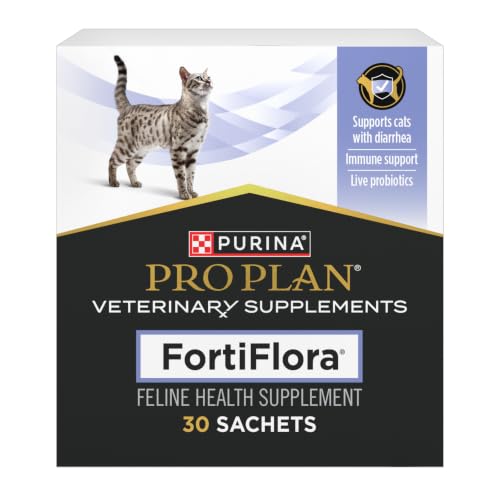
Rather than presenting a numbered rundown of picks, this guide points you to one concrete product so you can see what a competently specified supplement listing looks like. You can check the current price on Amazon and evaluate the listing directly: read the guaranteed analysis, the feeding directions, the ingredient list, and the verified owner reviews with a critical eye. Verified owner reports are genuinely useful here, especially for practicalities that no lab report captures, such as whether cats actually accept the flavor, whether the powder mixes into wet food without detection, and whether the packaging survives daily use. Treat five-star summaries with caution and pay closest attention to detailed reviews from owners whose cats resemble yours in age, health status, and pickiness.
When you review any listing, including this one, run through the same checklist: does the label state nutrient amounts per dose, does the manufacturer provide contact information and quality claims you can verify, is there an expiration date, and do the reviews mention outcomes rather than just enthusiasm. If the answer to the first question is no, that is a reason to keep shopping regardless of price. If your veterinarian has recommended a specific nutrient at a specific dose, bring the label to the appointment and confirm the product actually delivers that dose at the recommended serving size.
Form Factor: Getting a Supplement Into a Cat
The best-formulated supplement in the world is worthless if you cannot get it into your cat, and this is where owner reports are most valuable. Chews are convenient but acceptance is idiosyncratic; a flavor one cat devours, another will bury under a rug. Powders that mix into wet food work well for food-motivated cats but fail with cats who detect and refuse altered food, a surprisingly common outcome for a species with keen odor sensitivity. Pastes and gels administered directly by mouth bypass food objections but require a cooperative patient. Liquids can be added to food or given by syringe, though dosing small liquid volumes accurately takes care.
Whichever form you choose, introduce it gradually and watch intake. A cat who eats around supplemented food is not receiving the dose, and an owner who assumes otherwise is managing a deficiency that is not actually being treated. If administration becomes a daily battle, the stress can outweigh the benefit, and switching form factor is usually more effective than escalating force. For multi-cat households, food-mixed supplements create a dosing problem: you cannot control which cat eats what, so individually administered forms or separating cats at mealtimes may be necessary. Free-feeding complicates this further and is worth reconsidering for any household where precise supplementation matters.
Safety Considerations and Common Mistakes
The most common and most dangerous mistake in cat supplementation is assuming that products safe for dogs or humans are safe for cats. Cats differ profoundly in their metabolism. They cannot convert certain precursors efficiently, they require preformed vitamin A from animal sources rather than beta-carotene, and their handling of some compounds is unique among mammals. Never give a cat a human multivitamin: several formulations contain nutrients at levels toxic to cats, and iron toxicity from human supplements is a documented emergency in pets. If you suspect your cat has ingested something harmful, the ASPCA Animal Poison Control resource maintains lists of toxic substances and operates a consultation line for suspected poisonings.
The second most common mistake is doubling up. Multivitamin plus joint supplement plus skin supplement plus a fortified treat can collectively deliver several times the intended dose of overlapping nutrients. Keep a simple written list of everything your cat receives, including treats and prescription diets, and review it with your veterinarian at least annually. The third mistake is expecting supplements to substitute for veterinary care. Weight loss, poor coat, lethargy, increased thirst, vomiting, or litter box changes are symptoms, not nutrient deficiencies, and treating them with a supplement delays diagnosis of conditions where early treatment matters, such as hyperthyroidism, kidney disease, and diabetes.
A final practical point: track start dates. When you begin any supplement, note the date and, if you are watching for a specific outcome such as coat condition or mobility, take a dated photo or short video each week. Without a baseline, both improvement and deterioration are easy to imagine. If nothing changes after a reasonable trial, discussed in advance with your veterinarian, discontinuing is a legitimate outcome, not a failure.
Budgeting and Value
General cat vitamin products cluster in the ten to thirty dollar range for a one to two month supply, with targeted products such as prescription kidney support or concentrated omega-3 oils running meaningfully higher. Price within a category correlates only loosely with quality; what you are paying for at the upper end should be verifiable potency, third-party testing, and stability, not packaging. Cost per dose is the number worth comparing, calculated from the servings per container and the number of servings your cat's weight requires. A thirty dollar container of sixty chews dosed at two chews daily for your cat costs more per month than a forty dollar container of a more concentrated powder. Also factor in waste: a powder your cat refuses is a full loss regardless of its price per dose.
Satisfaction guarantees are worth noting at purchase. Several established manufacturers will refund a purchase if your cat refuses the product, which removes the main financial risk of trying a new form factor. Check the listing or manufacturer site for the policy before buying rather than after, since guarantee terms vary and some require retaining packaging and receipts.
cat vitamin supplements boost your cats health
Frequently Asked Questions
Does my cat need a vitamin supplement at all?
If your cat eats a commercial diet labeled complete and balanced for her life stage, probably not, and adding a general multivitamin can risk excesses of fat-soluble vitamins. Supplementation makes the most sense for home-prepared diets, diagnosed medical conditions, documented deficiencies, or periods of recovery. Your veterinarian can assess this from diet history and, where warranted, bloodwork.
Can supplements replace a veterinary visit?
No. Symptoms like weight loss, increased thirst, vomiting, poor coat, or behavior change usually indicate disease, not vitamin shortage. Supplements can play a supporting role in diagnosed conditions, but a diagnosis has to come first.
Are human vitamins safe for cats?
Generally no. Human multivitamins can contain nutrient levels and compounds that are toxic to cats, whose metabolism differs significantly from ours. Only use products formulated for cats, and only at feline-appropriate doses.
How long before I see results from a supplement?
It depends on the outcome you are watching. Coat changes from fatty acids typically take four to eight weeks. Joint supplements are usually trialed for one to two months before judging. Calming products may show situational effects within an hour. Set a specific timeline with your veterinarian before starting.
What safety certifications matter?
For supplements, look for National Animal Supplement Council involvement and FDA current good manufacturing practice compliance. Any product making food claims should relate to AAFCO nutrient profiles. Report adverse reactions to the manufacturer and to your veterinarian.
My cat refuses everything I try. What now?
Change the delivery rather than the product category: switch from powder to chew, from chew to gel, or ask about compounding. Some cats accept a supplement hidden in a favored treat or a small amount of strong-smelling wet food given separately from meals. Persistence usually beats force.
The Bottom Line
Cat vitamin supplements are tools with narrow, well-defined uses, not general health insurance. The decision sequence is simple: confirm the diet is complete, identify any actual deficiency or condition through a veterinarian, choose a product whose label states real doses and whose manufacturer is transparent, pick a form factor your cat will actually accept, and evaluate honestly against a baseline over a defined period. If you want a starting point for browsing, you can view this option on Amazon and apply the label-reading checklist above. For most cats, the most valuable supplement is a good conversation with their veterinarian, and that one is free.
Disclosure: This article contains affiliate links. If you make a purchase through these links, we may earn a commission at no extra cost to you. Thank you for supporting PawCritic!