Cockatiel Cages in 2026: A Buyer's Guide to Safe, Comfortable Housing
Cockatiels are small parrots with large personalities, and the cage they live in shapes nearly every part of their daily life. A cockatiel cage is not simply a container. It is the bird's sleeping quarters, exercise space, feeding station, and the place it retreats to when it feels unsure. Published guidance from avian veterinarians and welfare organizations consistently stresses that cage size, bar spacing, and material safety matter more than decorative features. This guide explains what to look for in a cockatiel cage in 2026, how to evaluate the specifications that manufacturers publish, and where common buying mistakes tend to happen.
The Association of Avian Veterinarians maintains owner resources that cover housing, nutrition, and preventive care, and its guidance is a useful starting point for anyone setting up a first cage. You can review those materials at the Association of Avian Veterinarians bird owner resources. The general principle repeated across avian welfare literature is straightforward: buy the largest cage your space and budget allow, then make sure the bar spacing and materials are safe for a bird of your species' size.
Why Cage Choice Matters More Than Most Owners Expect
Cockatiels are active, lightweight birds that evolved to move through open woodland and scrub. In captivity, they cannot fly across a room unless an owner provides supervised out-of-cage time, so the cage becomes the primary environment. A cage that is too small limits wing extension, discourages climbing, and makes it difficult to place perches at varied heights. A cage that is too large for the owner's cleaning routine tends to become dirty faster than it can be maintained, which creates its own health problems.
Bar spacing is the single most important safety specification. A cockatiel's head is small, and bars spaced too widely allow a bird to push its head between them and then panic when it cannot pull back. Spacing that is too narrow creates a different hazard, because toes and nails can become trapped. Most published cockatiel housing guidance settles on roughly one half inch to five eighths of an inch as the safe range. Anything over three quarters of an inch is generally considered unsafe for cockatiels, and anything under three eighths of an inch risks toe entrapment.
Material matters just as much as dimensions. Powder-coated steel and stainless steel are the two finishes most often recommended because they resist corrosion and do not flake easily. Zinc-coated or galvanized cages are widely discouraged for parrots, because a bird that chews on the bars can ingest zinc, and zinc toxicity is a recognized veterinary emergency in pet birds. The Merck Veterinary Manual section on exotic and laboratory animals documents heavy-metal toxicosis in caged birds and is worth reading before purchasing any cage with an unclear finish description.
Minimum and Recommended Dimensions
There is no single correct cage size, but there are widely cited minimums. For a single cockatiel, a cage measuring at least 24 inches long, 18 inches wide, and 24 inches tall is often described as the absolute floor, and it is genuinely a floor rather than a target. A more comfortable working size for one bird is 30 inches long, 18 inches wide, and 36 inches tall, which leaves room for vertical climbing and for perches at several heights.
For two cockatiels housed together, the common recommendation is to add roughly fifty percent more space rather than simply doubling it, though many experienced keepers argue that doubling is closer to the truth once toys and feeders are accounted for. Horizontal space matters more than vertical space for flight attempts, but cockatiels also climb, so height is not wasted. A tall, narrow cage with a small footprint is usually a poorer choice than a shorter cage with a longer horizontal run.
Quick Reference: Sizing and Spacing
- Absolute minimum for one cockatiel: 24 inches long x 18 inches wide x 24 inches tall
- Recommended for one cockatiel: 30 inches long x 18 inches wide x 36 inches tall or larger
- Two cockatiels: add roughly 50 percent more volume, and more if the birds are not closely bonded
- Safe bar spacing: 1/2 inch to 5/8 inch
- Too wide: over 3/4 inch, which allows head entrapment
- Too narrow: under 3/8 inch, which risks toe and nail injuries
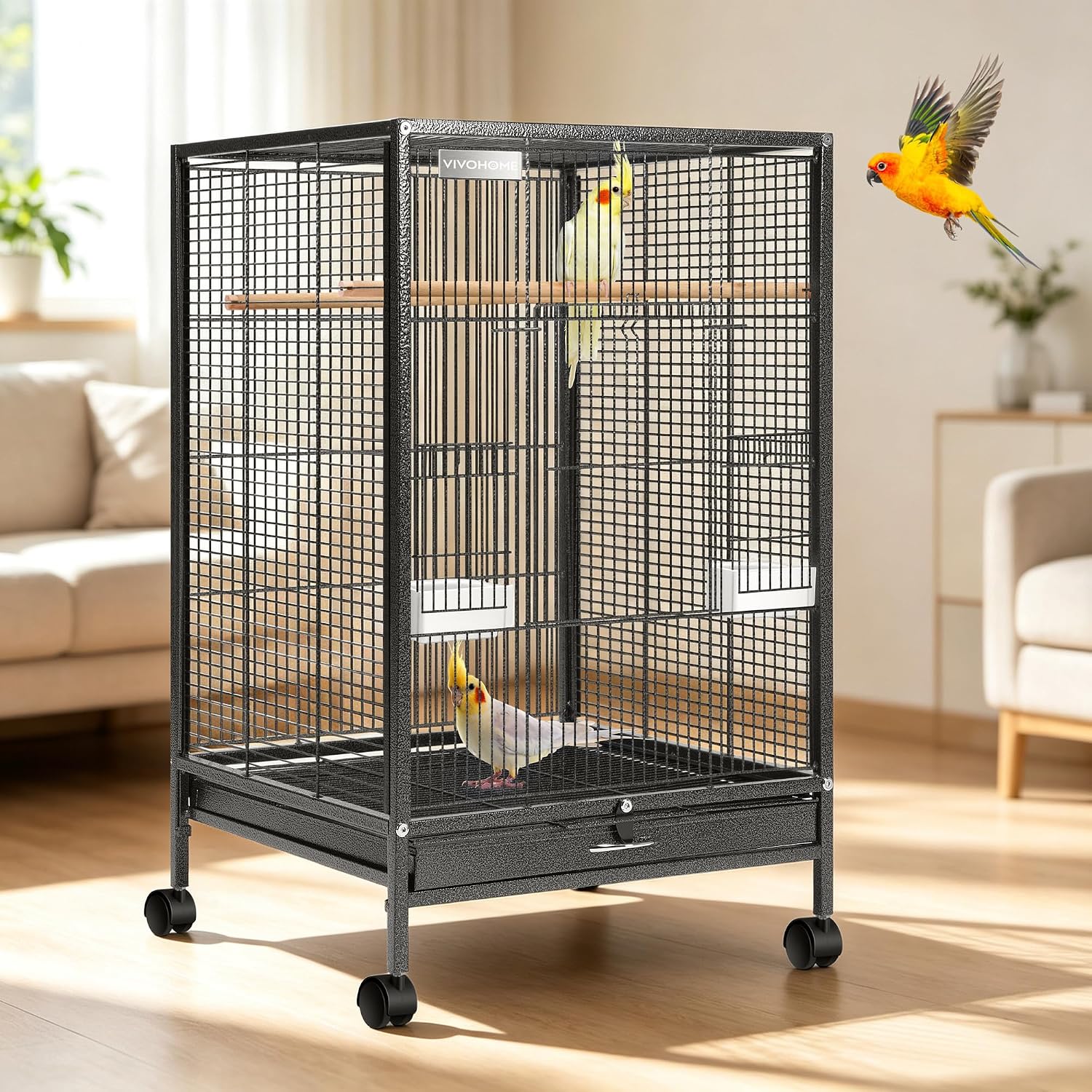
A 30-inch wrought iron cage on a rolling stand, representative of the mid-size class discussed above.
Shape, Doors, and Access
Square and rectangular cages are strongly preferred over round cages. Round cages give a bird no corner to retreat into, which appears to increase stress, and they make perch placement awkward because perches tend to converge at the center. A rectangular cage also fits against a wall more predictably and accepts standard accessories such as seed guards and play tops.
Door design is an underrated specification. A cage with a single small door forces the owner to reach through a narrow opening to change food, water, and tray liners, which increases the chance of a bird escaping. Two large front doors, or one wide door plus a smaller feeder door, make daily maintenance faster and safer. Latch quality matters too. Cockatiels are capable of learning to push at loose latches, and verified owner reports frequently describe birds escaping through sliding doors that were not secured with a secondary clip.
Materials, Finishes, and What to Avoid
Powder-coated steel is the most common finish in mid-range cockatiel cages. A properly cured powder coat is durable and does not chip easily, but cheaper cages sometimes show flaking at weld points and along the base within a year. Stainless steel costs considerably more but avoids coating failure entirely and is the finish most often recommended for birds that chew persistently. Wooden cages are generally unsuitable for cockatiels because the bird can chew through the frame and because wood absorbs moisture and droppings.
The base and tray deserve separate attention. A plastic base is lighter and easier to remove for cleaning, but it can crack if the cage is dropped or if a heavy play top rests on it. A metal tray slides out for liner changes but can rust if it is not dried thoroughly. Whichever design you choose, the tray should slide out without requiring the owner to reach inside the cage, because that is what determines whether daily cleaning actually happens.
Non-stick coatings are a serious hazard in any room where a bird lives. Polytetrafluoroethylene fumes released from overheated non-stick cookware and some space heaters are a well-documented cause of acute respiratory death in pet birds. The ASPCA Animal Poison Control resource is a useful reference for household toxins, and it is worth reviewing before placing a cage near a kitchen.
Perches, Feeders, and Interior Layout
A cage is only as good as its interior layout. Cockatiels need perches of varying diameter so their feet are not always gripping the same surface, and natural wood branches with slight variation in thickness are generally preferred over uniform dowels. Dowel perches are common in starter cages and are not dangerous by themselves, but a cage furnished only with dowels encourages pressure sores on the foot pad.
Perches should be positioned so the bird can move between them without its tail touching the cage floor, and at least one perch should sit high enough to serve as a sleeping spot. Feeders should be reachable without the bird having to climb down past its own droppings. Stainless steel or ceramic food and water dishes are easier to disinfect than porous plastic, and they resist the chewing that eventually destroys thin plastic cups. Four feeder cups is a common configuration and is generally sufficient for one or two birds.
Cleaning and Maintenance Realities
Daily spot cleaning, weekly thorough cleaning, and monthly deep disinfection is the schedule most avian care references describe, and cage design determines how realistic that schedule is. A slide-out tray with a disposable liner can be changed in under a minute. A cage with a deep base that must be lifted off the frame takes considerably longer, and owners who find cleaning tedious tend to skip it.
Debris guards, sometimes called seed catchers or skirts, wrap around the lower portion of the cage and catch discarded seed hulls and droppings before they reach the floor. They genuinely reduce mess, but they also need to be wiped down regularly, and on some cages they interfere with tray removal. Verified owner reviews of cages with integrated debris guards generally describe the feature as helpful for owners in apartments or carpeted rooms, with the trade-off being a bulkier footprint.
Casters are another practical consideration. A large flight cage with a play top can weigh well over fifty pounds once perches, toys, and feeders are added, and moving it for cleaning is difficult without wheels. Locking casters are preferable because a rolling cage can shift if a bird startles and lands heavily on one side.
Common Mistakes Buyers Make
The most frequent mistake is buying a cage sized for a budgie or finch and assuming it will suit a cockatiel. Cockatiels are longer birds with proportionally longer tails, and a cage marketed for small birds often leaves no room for a tail to clear the floor. A second common error is choosing a cage with attractive decorative scrollwork that creates gaps wider than the stated bar spacing, which reintroduces the head-entrapment risk the spacing specification was meant to prevent.
A third mistake is prioritizing a play top over interior space. Play tops are genuinely useful, but a cage with an elaborate roof gym and a cramped interior is a worse purchase than a plain cage with generous internal dimensions. A fourth mistake is ignoring assembly difficulty. Some large cages ship flat with hundreds of parts and instructions that owners describe as unclear, and a cage that is assembled incorrectly can have uneven bar alignment that creates new gaps.
Finally, many buyers underestimate the ongoing cost of accessories. A cage that includes only two dowel perches and two plastic cups will need additional perches, dishes, and toys, and those additions can add a meaningful amount to the total cost of the setup.
A Representative Option to Compare Against
Because specifications vary so much between listings, the most practical approach is to pick one cage as a reference point and compare every other candidate against its dimensions, bar spacing, finish, and door configuration. A concrete example that illustrates the flight-cage category is available here: you can check the current price on Amazon. Treat it as a benchmark rather than a universal recommendation, and verify the listed bar spacing and finish against the manufacturer's own specification sheet before ordering.
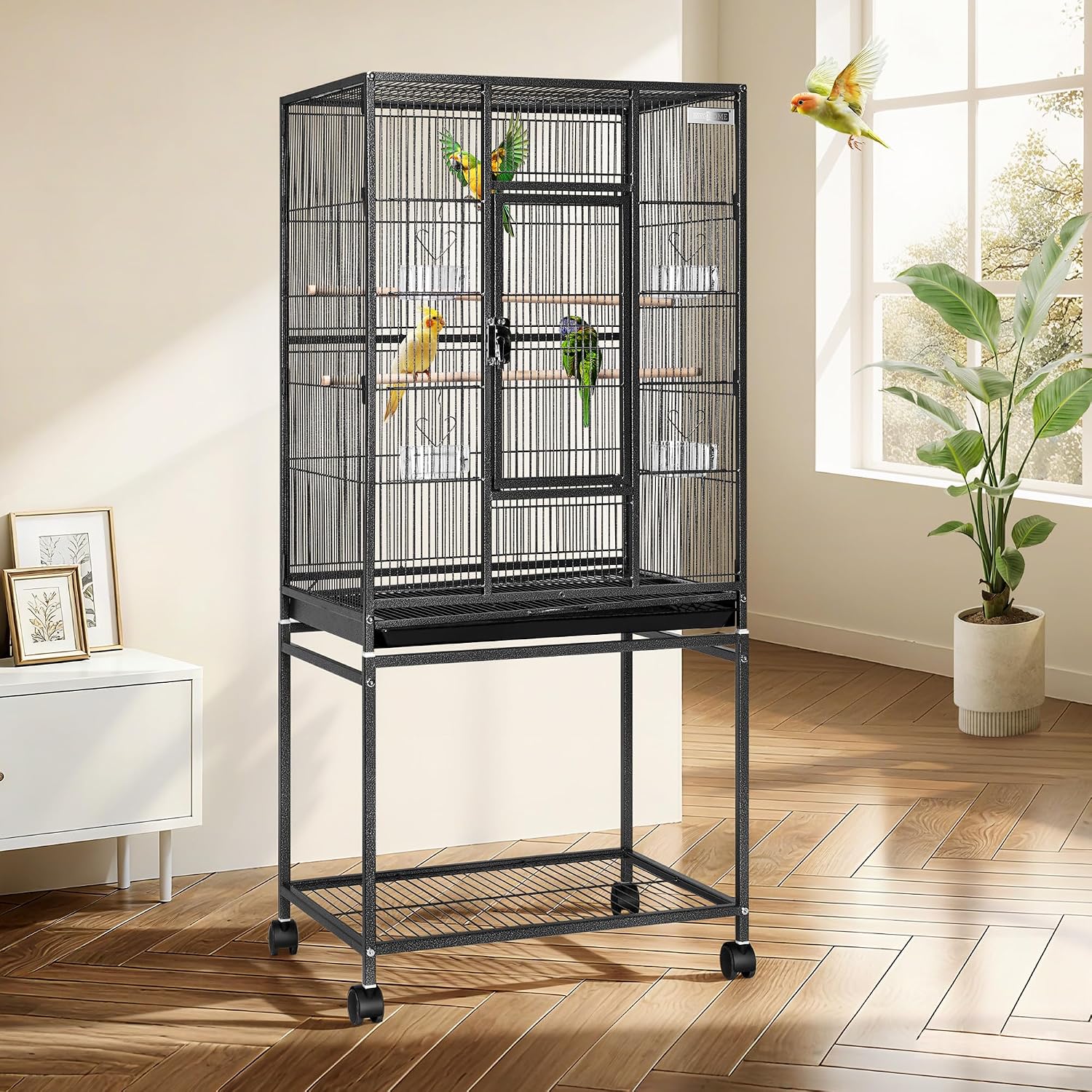
cockatiel cages comfortable spaces for your bird
What a Good Cockatiel Cage Includes
When comparing listings, a well-specified cockatiel cage will generally include horizontal bars for climbing, which cockatiels use far more than vertical bars. It will have multiple perch mounting points at different heights, a locking mechanism that cannot be opened by a bird pushing upward with its beak, and a tray that slides out without tools. Removable grates above the tray keep the bird from walking in droppings, though some owners remove them for easier cleaning and accept the trade-off.
Feeder doors that open independently of the main door are a meaningful convenience, because they allow food and water changes without giving the bird an open exit. A cage that includes a breeder box door is aimed at owners planning to breed, and that feature is unnecessary for a single pet cockatiel. Assembly hardware should be stainless or coated rather than bare zinc-plated steel, for the same toxicity reasons that apply to the cage bars themselves.
Frequently Asked Questions
What is the minimum cage size for a cockatiel?
A commonly cited minimum is 24 inches long by 18 inches wide by 24 inches tall, but this is a floor rather than a target. A cage of at least 30 by 18 by 36 inches gives a single cockatiel room to climb, stretch its wings, and hold perches at multiple heights without crowding.
Can two cockatiels share one cage?
Yes, provided the cage is large enough, generally at least 36 by 24 by 36 inches, and the birds are compatible. Introductions should be supervised, and separate cages should be kept available in case the pair does not bond. Two birds that do not get along in a shared cage will show feather damage, food guarding, and chronic stress.
Are round cages suitable for cockatiels?
Square or rectangular cages are strongly preferred. Round cages offer no corners for a bird to retreat into, which appears to increase stress, and they make perch placement awkward because perches tend to converge toward the center of the cage.
How often should a cockatiel cage be cleaned?
A practical schedule is daily spot cleaning of food and water dishes and visible droppings, weekly thorough cleaning of perches, trays, and cage surfaces, and monthly deep disinfection of the entire cage. The exact interval matters less than consistency, which is why cages with slide-out trays and removable bases tend to stay cleaner in practice.
What materials are safe for a cockatiel cage?
Powder-coated steel and stainless steel are the finishes most often recommended. Zinc-coated or galvanized cages are widely discouraged because a chewing bird can ingest zinc, and heavy-metal toxicosis is a recognized veterinary emergency in pet birds. Wooden cages are unsuitable because they can be chewed through and absorb moisture.
Is a play top worth it?
A play top adds useful out-of-cage activity space and can reduce the amount of time a bird spends confined. The trade-off is height and weight, since a cage with a play top is taller and harder to move. Interior dimensions should be evaluated first, and the play top treated as a bonus rather than a reason to buy a smaller cage.
What Changed in the Cockatiel Cage Market for 2026
Current cockatiel cage listings look similar on the surface to what was available a few years ago, but three shifts are visible across 2026 catalogs. The first is price pressure on larger flight-style cages. Powder-coated wrought iron cages in the 30 to 32 inch range, which sat at premium prices when they first appeared, now compete with mid-range cages in a size class that used to be dominated by 24 inch models. For owners who previously settled for the absolute minimum dimensions, the practical effect is that a genuinely flight-capable cage now costs closer to what a cramped starter cage used to cost.
The second shift is specification transparency. More manufacturers now publish bar spacing, finish type, and tray dimensions directly in their listing specifications rather than burying them in photographs. That makes comparative shopping faster, but it also raises the bar for verification: listing photos compress distance and make spacing look narrower than it is, so a written specification is still the only input worth trusting. Where a listing describes the finish vaguely, as "spray coating" or "metal finish" without naming powder coat or stainless steel, treat the ambiguity the same way you would treat an unstated bar spacing.
The third shift is the steady arrival of stainless steel at lower price points. Stainless remains the premium finish, particularly for birds that chew bars persistently, but the gap between it and powder-coated steel has narrowed enough that it now appears in serious comparisons for medium parrots. The decision rule has not changed: a well-cured powder coat from a manufacturer that answers questions about its coating process is adequate for most cockatiels, and the money saved is often better spent on perches, foraging toys, and an avian wellness exam.
Accessory bundling has also changed. Cages that ship with a seed catcher, a cage cover, or a starter perch set are more common than they were, and bundling can reduce the first-month cost of a setup. The same caution applies as always: bundled accessories are rarely the reason to choose a cage. Interior dimensions, bar spacing, door design, and tray access decide whether a cage works, and everything included in the box is negotiable afterward.
Where to Buy: A Single Reference Option
As an Amazon Associate, PawCritic earns from qualifying purchases. This does not affect our reviews or recommendations.
The flight-cage category includes a wide range of sizes and finishes, and listings change frequently. Rather than working through a numbered list of named products, the more reliable method is to hold one concrete listing as a reference and compare every other candidate against it on dimensions, bar spacing, finish, and door design. You can view this option on Amazon as a starting point, then check the manufacturer's published specifications before committing.
If that reference cage offers more interior space than you need, a smaller cage with the same half-inch bar spacing and a powder-coated finish will serve a single cockatiel adequately. If it is smaller than you expected, look for a longer horizontal run rather than a taller frame, since horizontal space is what allows a cockatiel to attempt short flights between perches. You can also check the current price on Amazon to see how it compares with other cages in the same size class, and view this option on Amazon once you have confirmed the bar spacing matches the safe range for cockatiels.
Final Considerations Before You Buy
The cage you choose will outlast most of the accessories you buy for it, so it is worth spending time on the specifications rather than on the marketing photographs. Confirm the bar spacing in writing, confirm the finish is powder-coated steel or stainless steel rather than galvanized, and confirm the tray slides out without tools. Measure the space where the cage will sit, including the extra depth added by a debris guard and the extra height added by a play top, before ordering.
It is also worth reviewing general pet care guidance before bringing a cockatiel home, since housing is only one part of the picture. The ASPCA pet care library covers basic husbandry topics that apply across species, and avian-specific housing and health questions are best directed to an avian veterinarian. A cage is the foundation, but diet, out-of-cage time, and veterinary care determine how well a cockatiel does in the long run.
Finally, resist the temptation to buy the smallest cage that technically meets a minimum. Cockatiels live for fifteen to twenty years or more, and a cage that feels cramped in year one will feel worse in year five. Buy the largest cage that fits your room and your cleaning routine, verify the safety specifications against published guidance, and treat every accessory purchase as secondary to getting the enclosure itself right.
Related Reading
cages sized for parakeets, cockatiels and small parrots, natural wood perches and swings for healthy bird feet, and parakeet vs cockatiel: which bird fits your life.