Bird Food Buying Guide: Choosing Nutritious Meals for Your Feathered Friend
Author: PawCritic Editorial Team | Category: Bird Care and Nutrition | Updated: 2026
As an Amazon Associate, PawCritic earns from qualifying purchases. This does not affect our reviews or recommendations.
Why Diet Matters More Than Almost Anything Else
Companion birds are small animals with fast metabolisms and long lifespans, and that combination makes nutrition the single most influential factor in their long-term health. A budgie can live over a decade, and larger parrots such as macaws and cockatoos routinely live 40 to 80 years in captivity, which means the food you pour into the dish every morning compounds over decades. Avian veterinarians have repeatedly identified poor diet as one of the leading contributors to illness in pet birds, and the Association of Avian Veterinarians bird owner resources emphasize nutrition as a foundation of preventive care rather than an afterthought.
The core problem is that many birds in homes today still eat a diet built almost entirely around seed. Seed is calorie-dense and fat-heavy while being low in several nutrients birds need, including calcium, vitamin A precursors, and certain amino acids. A seed-only parrot is often described by veterinarians as comparable to a person living on fried food and white bread: the bird may look fine for years while fat deposits quietly accumulate around the liver and organs. Fatty liver disease, obesity, iodine deficiency, and hypovitaminosis A are among the consequences described in clinical literature on companion bird care, and the Merck Veterinary Manual section on exotic and laboratory animals covers these deficiency patterns in detail for anyone who wants the clinical background.
This guide is a reference, not a review roundup. PawCritic does not run feeding trials or laboratory analysis, so every claim here traces back to published veterinary guidance, manufacturer specifications, or documented owner experiences. Rather than ranking products we cannot verify, the goal is to teach you how to read a bird food label, understand the real trade-offs between seed, pellets, and fresh foods, and recognize where a single concrete product example fits into that decision. If you want to look at one widely available option while you read, you can check the current price on Amazon, but the decision framework below matters more than any single bag.
Understand the Three Food Formats
Seed Mixes
Seed mixes are the traditional format and the one most birds instinctively prefer, because shelling seeds is a natural foraging behavior that occupies time and engages the beak. The honest trade-off is palatability versus balance: birds love seed, and seed loves them back with far more fat than they need. Millet, sunflower, safflower, and peanuts are the common calorie-dense culprits, and a bird given free access to a mixed bowl will typically pick out its favorites and ignore the rest, a behavior owners often describe in reviews as the bird 'eating around' the healthy components. If you feed seed at all, published guidance generally treats it as a portion of the diet, often in the range of a quarter to a third for many parrot species, with the balance coming from pellets and fresh vegetables.
Pellets
Pellets are formulated diets in which grains, proteins, vitamins, and minerals are ground, blended, and extruded into uniform pieces. Because each pellet is nutritionally identical, the bird cannot cherry-pick, which makes pellets the most reliable way to deliver a balanced nutrient profile without guessing. Most avian veterinarians now describe a pellet-based diet supplemented with vegetables and limited seed as the gold standard for parrots, and this position appears consistently in professional owner-education material. The trade-off is acceptance: many birds raised on seed initially refuse pellets outright, and converting a stubborn adult bird can take weeks of patient mixing, measurement, and refusal to panic. Owners documenting conversions online frequently report that persistence and weighing the bird regularly during transition are the keys, since a bird can lose dangerous weight quickly if it simply will not recognize pellets as food.
Fresh Foods, Sprouts, and Supplements
Fresh vegetables, leafy greens, cooked legumes, sprouted seeds, and small amounts of fruit add variety, moisture, enzymes, and enrichment that no dry format can match. Dark leafy greens, bell peppers, carrots, squash, and broccoli are commonly recommended because they supply carotenoids the bird converts to vitamin A, one of the most common deficiencies in seed-only diets. The trade-off is spoilage: fresh food left in a cage for hours grows bacteria, especially in warm rooms, so the standard guidance is to remove fresh items after a few hours and wash dishes daily. Supplements such as cuttlebone and mineral blocks address calcium, which is especially critical for laying hens, though a bird on a well-formulated pellet diet typically needs less supplemental calcium than a seed-fed one.
How to Read a Bird Food Label
Start with the ingredient list, not the front of the bag. Marketing language like 'premium blend' or 'gourmet mix' has no regulatory definition in this category, so the actual contents tell you everything. Look for a stated crude protein, crude fat, crude fiber, and moisture analysis on the bag; reputable manufacturers publish this, and comparing fat percentages across products is genuinely useful. Many parrot seed mixes run well above ten percent fat, while formulated pellets for adult maintenance typically sit lower, and some manufacturers offer explicit high-fat or low-fat variants for breeding birds or weight management respectively. If a bag lists no guaranteed analysis at all, treat that absence as a red flag rather than a neutral fact.
Second, check whether the product names a target species or size range. A cockatiel, a conure, and a macaw have different beak geometries and meaningfully different energy needs, and pellet sizes are designed around beak size for a reason: a budgie cannot comfortably crack a pellet sized for an Amazon parrot, and a large parrot may waste small pellets by crumbling them. Manufacturers typically state the intended species or size class on the packaging, and owner reviews will quickly reveal mismatches, such as large birds ignoring pellets they find too small to handle. Third, look for artificial colors and preservatives. These are not automatically dangerous, but many keepers prefer to avoid them, and veterinary guidance on obesity and behavioral issues such as feather picking sometimes discusses diet simplification as part of a broader plan.
Species-Specific Needs You Should Not Ignore
Budgerigars and cockatiels are native grassland seed eaters and among the easier species to transition to pellets, though they are also prone to obesity and thyroid issues on all-seed diets, which is why formulated small-bird pellets supplemented with greens are the commonly recommended structure. Lovebirds, cockatiels, and budgies also have a documented need for a measured amount of seed or millet as part of enrichment, since complete deprivation of foraging opportunities can produce frustration behaviors. Medium parrots such as conures, quakers, and caiques do well on small-to-medium pellets with daily vegetables, and owners frequently report these species are enthusiastic fresh-food eaters once introduced.
Larger parrots including African greys, Amazons, macaws, and cockatoos add another layer: African greys are noted in veterinary literature as prone to calcium issues and benefit from careful attention to mineral content, while Amazons and cockatoos are famously prone to obesity and fatty liver disease, making fat management the central dietary concern for those species. Macaws have higher fat requirements than Amazons in many published feeding guides and often receive nuts as a meaningful calorie source rather than a treat. Softbills, finches, and canaries occupy a different category entirely, with canaries and finches doing well on quality small seed blends, egg food during breeding, and fresh greens, since these species do not typically take to pellets as readily as hookbills. Lories and lorikeets are nectar feeders with specialized brush-tongues and must never be fed a standard parrot pellet diet; they require dedicated nectar and pollen substitutes, and feeding them the wrong format can cause serious health problems.
Safety: Foods to Never Feed and Storage Mistakes
Some foods are outright dangerous for birds, and this list is worth memorizing because exposure often happens by accident at the table. Avocado, chocolate and caffeine, alcohol, and salty or heavily processed human food are all commonly cited as toxic, and fruit seeds and pits, particularly apple seeds and cherry or peach pits, contain compounds that are harmful in quantity. Non-stick cookware fumes from overheated polytetrafluoroethylene pans are lethal to birds in small airspaces, which is adjacent to diet but relevant to kitchen habits. For an authoritative poison reference, the ASPCA Animal Poison Control resource is the standard owner-facing reference, and a call to a poison hotline or avian vet is the right move immediately after suspected exposure.
Storage is the other underappreciated safety issue. Seed and pellets contain oils and dry goods that go rancid or attract pests, and opened bags should be sealed in airtight containers away from heat and humidity. Buy bag sizes your bird will finish within a few weeks to a couple of months rather than the giant economy size, because nutrient degradation in opened food is real and molds that develop in improperly stored grain can be dangerous. Check expiration dates on the bag at purchase, smell the food when you open it, and discard anything with a musty odor, visible clumping, or evidence of moths or larvae, which owners report occasionally even in sealed retail product.
Two Concrete Product Examples Worth a Look
Because this guide covers a category rather than a ranked list, the two examples below are simply widely available products readers can inspect as a baseline for comparison. Neither is presented as a universal best choice, and your species, your bird's current diet, and your veterinarian's advice should drive the final decision.
Example One: A Formulated Everyday Diet
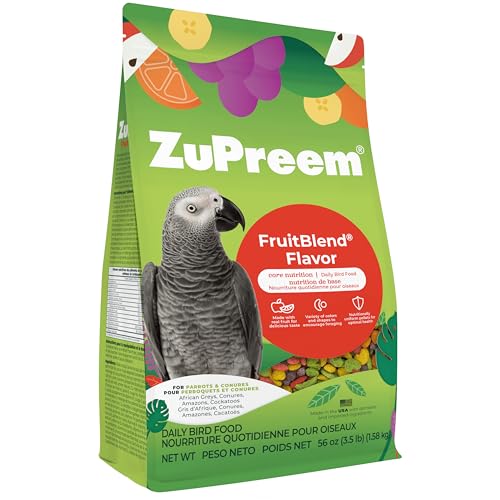
The first example is a formulated diet product in the pellet tradition, the format most avian veterinarians recommend as the base of a companion parrot's daily intake. This type of product suits owners of budgies through mid-sized parrots who want a nutritionally complete staple and are willing to do the transition work if their bird has been seed-fed. The honest trade-off is acceptance and price: formulated diets generally cost more per pound than bulk seed, and a bird accustomed to sunflower seed may ignore pellets initially, so plan a gradual conversion over several weeks while monitoring the bird's weight. You can view this option on Amazon and compare its stated guaranteed analysis against other bags before committing.
Example Two: A Blend for Variety and Enrichment
The second example is a blended food product that combines multiple ingredients in a format suitable for everyday feeding alongside fresh foods. Blends of this kind suit owners who want to keep foraging and variety in their bird's routine, particularly species such as cockatiels and budgies that benefit psychologically from shelling and picking through a mix, or birds still mid-transition from seed to pellets. The trade-off is the classic one for blends: birds may favor certain components over others, so portion control and observation matter, and a blend should not crowd out vegetables or a formulated base if balance is the goal. Owner feedback on products like this one commonly highlights both enthusiasm from picky birds and the need to monitor how much ends up husked and wasted rather than eaten. To inspect the current formulation, packaging, and pricing, check the current price on Amazon.
Portion Sizes, Feeding Routine, and Weight Monitoring
Birds should not have an infinitely full bowl any more than a person should have an infinite buffet. A practical starting point used by many keepers is measured daily portions appropriate to species size, for example roughly one to two tablespoons of pellet per budgie per day, several tablespoons for a cockatiel or conure, and a fraction of a cup for large parrots, adjusted upward or downward based on the bird's weight trend and activity. Fresh vegetables can be offered daily in a separate dish and removed within a few hours. Treats, including millet spray, nuts, and fruit, should stay a small percentage of total intake, with many keepers targeting under ten percent of calories so the base diet does the nutritional work.
A small kitchen scale or gram scale is genuinely one of the most useful bird-keeping purchases, because weighing the bird weekly on the same scale catches both dangerous weight loss during diet transitions and gradual creep toward obesity. Birds hide illness well, and weight is one of the few objective signals available at home. During any food change, weigh every few days, and if a bird loses more than a modest amount of body weight or refuses the new food entirely, slow the transition or consult an avian veterinarian. Documented conversion advice from avian veterinary sources consistently stresses this monitoring step, and experienced owners echo it in reviews and forums.
Common Mistakes and What to Avoid
- Feeding an all-seed diet indefinitely. This remains the single most common dietary mistake reported by avian vets, and it quietly produces obesity and liver problems over years.
- Treating millet spray and sunflower seed as everyday food. These are high-reward training treats, not staples, and free access to them undermines any balanced base diet.
- Assuming a picky bird's preferences equal its needs. Birds choose by taste and texture, not nutrition, so leaving the choice entirely to the bird reliably produces an unbalanced diet.
- Ignoring water. Food discussions often overshadow water, but birds need fresh, clean water changed daily, and many birds will bathe in, or soil, a dish within hours.
- Buying the largest bag available for one small bird. Opened food degrades within weeks and can attract pantry moths, so match bag size to consumption rate rather than to price per pound.
- Skipping the vet. Annual exams with an avian veterinarian are the correct place to validate a diet plan for a specific bird, especially one with existing health issues.
Transitioning a Stubborn Bird Off Seed
Conversion from seed to pellets is where most good intentions stall, so approach it as a project rather than an event. Common methods described in veterinary owner-education material and by experienced keepers include gradual mixing with increasing pellet ratios over two to four weeks, offering pellets first thing in the morning when appetite is highest, crushing pellets over familiar food so the bird tastes them incidentally, and demonstrating interest by eating near the bird, since parrots are social learners. Remove seed for limited daytime windows only once the bird demonstratively eats pellets, and never attempt a cold-turkey switch, because a small bird that refuses food for even a couple of days is in genuine danger. Weigh the bird through the whole process, and expect backsliding, boredom behaviors, and dramatic acting; owners consistently report that persistence over weeks wins.
What Is New in Bird Food for 2026
The bird food shelf has changed in a few practical ways since this guide was first written. Dye-free pellet lines are the most visible shift. Most major formulated-diet brands now offer a natural or dye-free variant, and the price gap between colored and uncolored pellets has narrowed to the point where there is rarely a reason to choose artificial color for aesthetic reasons. Colored pellets still dominate shelf presence, but reading past the front of the bag to the ingredient list remains the reliable method.
Species-specific and life-stage formulations have multiplied as well. Where a brand once offered small, medium, and large pellet diameters, many now publish separate maintenance, breeding, and senior formulations with adjusted fat and mineral levels. This is genuinely useful for the species discussed above, particularly for laying hens that need calcium support and for Amazons and cockatoos where fat content is the central dietary concern. The species or size-class designation on the bag is the first thing to check, before price.
Sprouted seed products have moved from a niche hobby item to a catalog category, which matters because sprouting reduces the fat load of seed while adding moisture and foraging value. The trade-off is hygiene: sprouts spoil quickly, so rinsing on a strict schedule, refrigerating between rinses, and discarding anything with an off smell are non-negotiable. For keepers unwilling to manage that routine, pre-mixed dry sprouting blends with clear instructions are a reasonable middle ground.
Freshness labeling has improved on some brands, with manufacture dates or best-by codes printed further out than the industry previously bothered with. Use it: buy the bag size your bird will finish in weeks rather than months, smell the contents when opening, and store opened food in airtight containers away from heat. A gram-scale habit for weekly bird weights and daily portions completes the routine, and it remains the single most useful purchase in this whole category after the food itself.
Where to Buy and Final Thoughts
Bird food is widely available at pet stores, bird specialty retailers, and online marketplaces, and price per pound often favors larger bags and subscription deliveries if storage is manageable. When comparing listings, check the manufacture or expiration date, confirm the species or size class on the packaging matches your bird, and read recent reviews for freshness complaints, since a common pattern in negative reviews is stale or pest-contaminated product rather than formulation problems. For species-level feeding guidance, the Association of Avian Veterinarians bird owner resources remain the best reference, and the formulated example discussed above can be compared against alternatives by revisiting its listing and reading the guaranteed analysis on each bag before buying.
The most important takeaway is structural rather than brand-specific: a balanced diet built on a formulated base, daily fresh vegetables, measured portions, controlled treats, and weekly weight checks will do more for your bird's long-term health than any single bag ever could. Match the format to your species, transition slowly and with monitoring, and use your avian veterinarian as the final authority for a bird with special needs. General wellness and husbandry references such as the ASPCA pet care library can help you build habits around feeding, hygiene, and daily observation that keep small problems from becoming serious ones.
Related Reading
pellet diets for pet birds, how to convert a seed eater to pellets, and pellets vs seeds: the full comparison.