Best Dog Towels and Drying Gear 2026: Absorbent, Quick-Dry Solutions for Every Coat Type and Size
Published on June 27, 2026 by PawCritic — Dogs Category
Bath time is only half the job. Anyone who has watched a soaked Golden Retriever shake his way down a hallway knows that drying a dog is where the real challenge begins. Beyond the immediate mess of wet floors and damp furniture, improper drying can contribute to genuine health problems. Moisture held against the skin creates favorable conditions for bacteria and yeast, which veterinary references link to hot spots, skin fold dermatitis, and fungal infections. General canine skin and coat guidance from the Merck Veterinary Manual dog owner section describes how prolonged dampness and matting compromise the skin barrier, particularly in dogs with dense or folded coats.
For double-coated breeds such as Huskies, Alaskan Malamutes, and German Shepherds, inadequate drying can allow the undercoat to mat and hold moisture against the skin for many hours, sometimes leading to painful inflammatory skin conditions that need veterinary treatment. That is why drying deserves the same planning you give to shampoo selection, water temperature, and brushing. The right gear shortens the wet period, reduces shaking, protects flooring and furniture, and — most importantly — keeps the coat and skin in a healthy state after every bath, swim, or rainy walk.
The 2026 market for dog drying gear has moved well beyond repurposing a bath towel from your linen closet. Current options include ultra-absorbent microfiber towels designed specifically for canine coats, quick-dry chamois fabrics, grooming towels with silicone nubs that lift and separate the undercoat, and wearable drying coats that wick moisture away while the dog rests. For owners of large breeds, heavy-coated dogs, or multiple pets, high-velocity pet dryers have become considerably more affordable, bringing salon-style drying into home bathrooms and mudrooms.
PawCritic does not perform hands-on product testing. Everything below is compiled from published manufacturer specifications, grooming-industry guidance, veterinary reference material, and verified owner reviews. Where a claim comes from a spec sheet rather than independent verification, we say so. The goal is a reference guide you can check: absorbency ratings, materials, sizing conventions, and safety practices, with three widely used drying products highlighted and links to current Amazon pricing.
Why Drying Matters More Than Most Owners Realize
A wet dog is not merely an inconvenience; sustained dampness changes the skin environment. Veterinary dermatology references note that the canine skin surface has a normal population of yeast and bacteria that stay in balance when the coat is dry. When water sits against the skin — especially under a dense undercoat, inside skin folds, or between the toes — that balance shifts. Owners of Shar-Peis, Bulldogs, and Newfoundlands tend to learn this the hard way, since these dogs combine dense or folded coats with long drying times.
The practical takeaway is that drying gear is health equipment, not just cleanup equipment. A towel or dryer that removes the majority of surface water in the first ten minutes dramatically shrinks the window in which microbes can multiply. The AVMA pet owner resources emphasize post-bath care as part of routine coat maintenance, alongside regular brushing, parasite checks, and grooming. Choosing gear matched to your dog's coat type is the single biggest factor in how quickly and safely that window closes.
How Dog Towels Differ From Human Towels
A cotton bath towel from your closet will dry a dog, but it works against you in several ways. Cotton terry absorbs slowly relative to its weight, becomes heavy and unwieldy when saturated, and sheds lint that clings to a damp coat. Dog-specific microfiber towels are built differently. Split microfiber — typically around 80 percent polyester and 20 percent polyamide — uses fibers fine enough to create capillary action, drawing water off the coat and into the fabric rather than pushing it around.
Manufacturer specifications for the leading microfiber dog towels generally claim absorption of roughly five to ten times the towel's own weight in water, with some dual-layer designs rated higher. Independent laboratory verification of these figures is scarce, so treat the multiplier as a comparative marketing convention rather than a certified measurement. What is well supported by owner reports is the practical difference: microfiber towels wring out easily mid-session, dry fast on a line, and resist the sour mildew smell that cotton towels develop when left damp in a laundry basket or car trunk.
Three Drying Products Worth Comparing
Based on published specifications and consistently positive verified owner feedback, these three options represent the main categories of dog drying gear. PawCritic has not handled these products; the descriptions below reflect manufacturer specs and aggregated owner reviews.
1. Microfiber Drying Towel, Multi-Size
This is a general-purpose microfiber dog towel, the category that suits the widest range of owners. It is typically offered in multiple sizes, is machine washable, and carries manufacturer absorbency claims in the five-to-ten-times-weight range discussed above. Verified owner reviews repeatedly highlight fast wring-out and quick line drying as the stand-out benefits over cotton. The trade-off is familiar to all microfiber: it must be washed without fabric softener, and it is less plush than cotton if your dog expects a cuddly towel experience. It suits most coat types as an everyday drying workhorse.
2. Large Microfiber Grooming Towel
Owners of larger breeds consistently report that standard-size dog towels are too small to wrap around a Lab or Shepherd, which is where a large-format microfiber grooming towel earns its place. The larger surface area covers the whole back and flanks in one pass, and the reinforced edge stitching described in manufacturer materials holds up to frequent hot-water washing. The trade-off is handling: a large towel saturated by a heavy coat gets heavy itself, and some owners of small dogs find the size unwieldy. For multi-dog households, one large towel plus a couple of standard ones is a common and sensible arrangement.
3. Extra-Large Quick-Dry Towel Option
This link represents the extra-large quick-dry microfiber category aimed at giant breeds and heavy coats — Great Danes, Mastiffs, Bernese Mountain Dogs, and Newfoundlands. Manufacturer sizing in this category typically reaches around 60 by 30 inches, large enough to drape the entire body. Owner reviews describe folding it in half for medium dogs and using it full-size after swims, which makes it a flexible choice for active households. The trade-off is storage and laundering: a towel this size can overwhelm a compact washer and takes more shelf space. It is best bought as the dedicated post-swim towel rather than the everyday one.
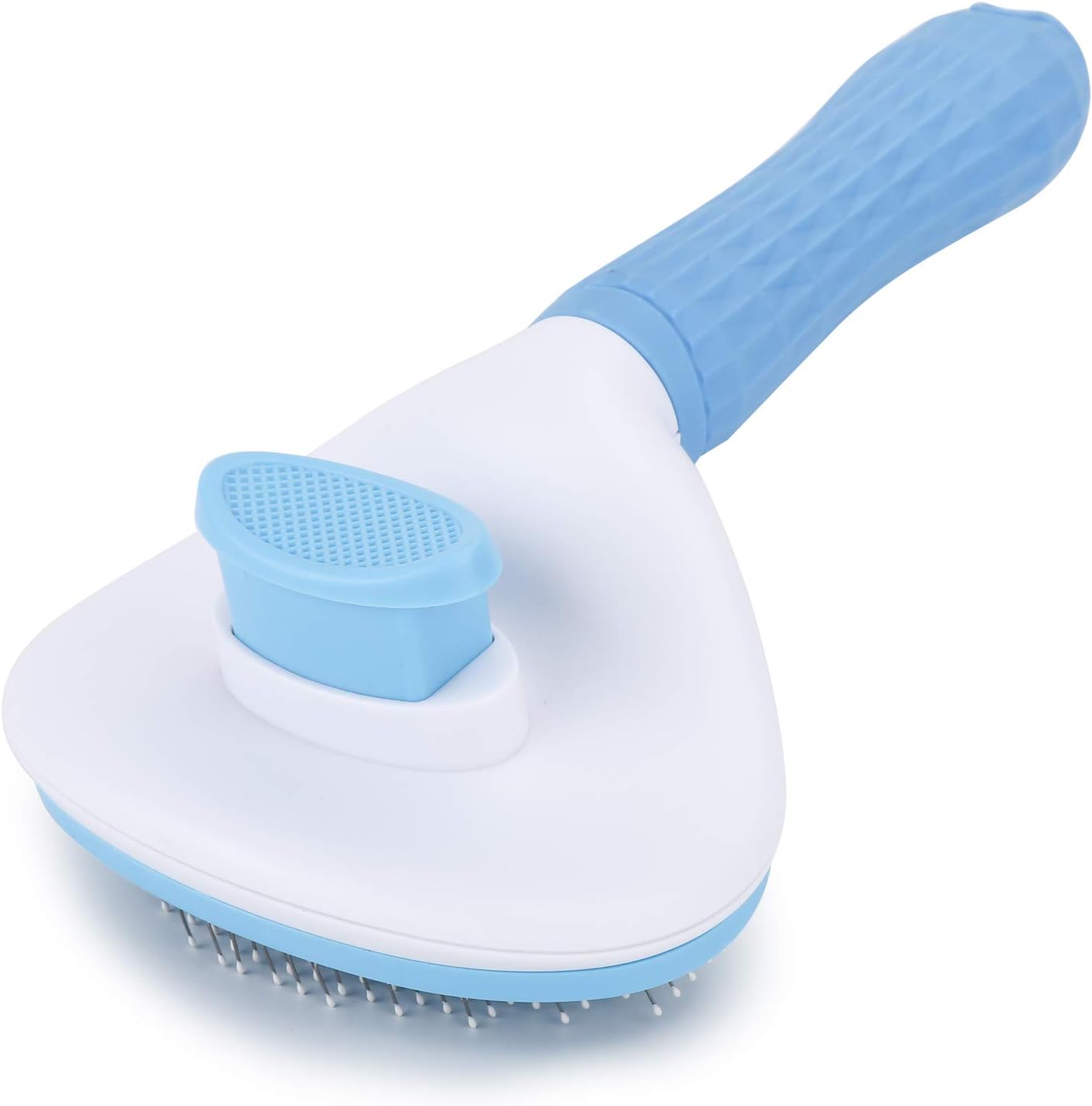
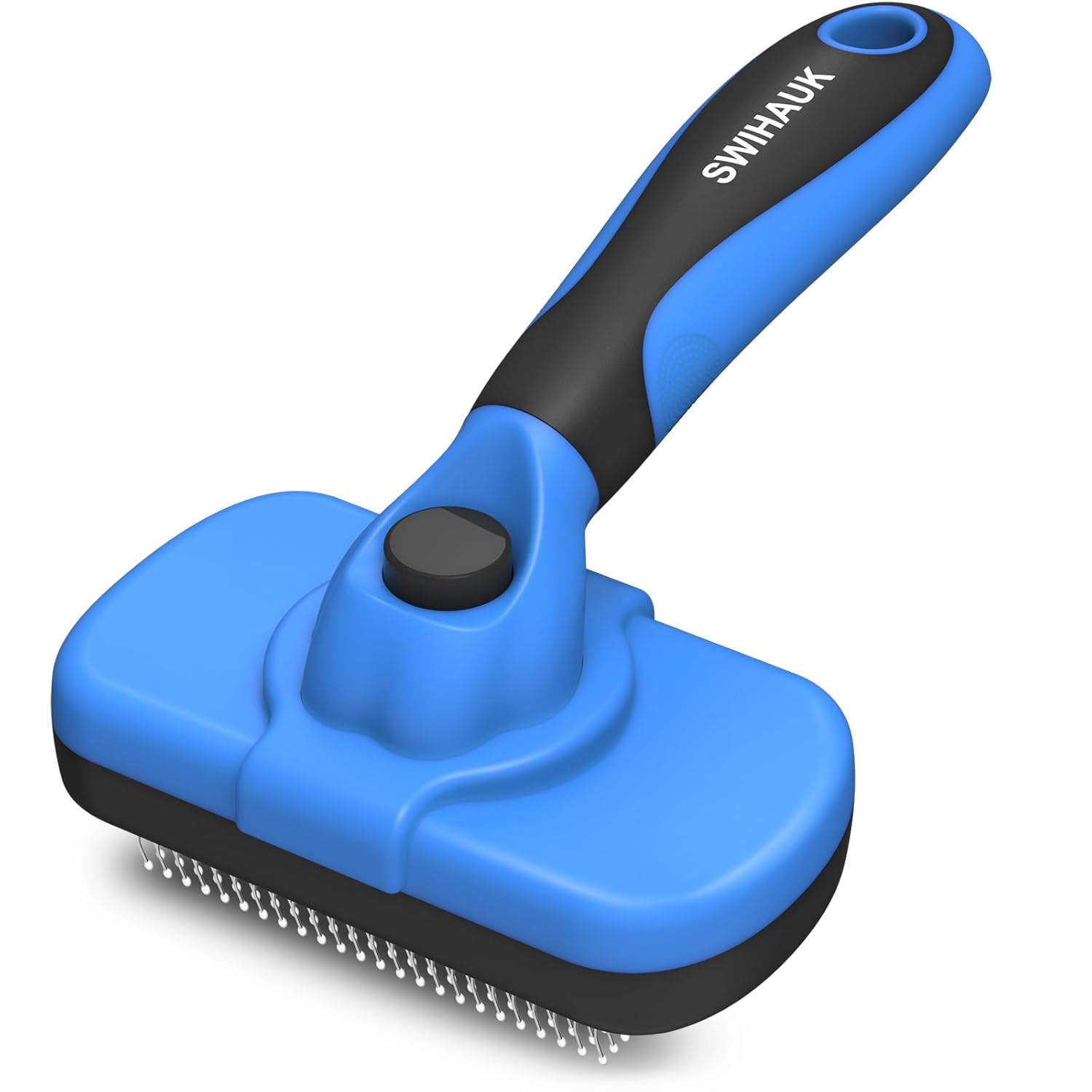
See sizing and pricing on Amazon — and note the same slicker brush above is also available directly here if you want to compare both listings.
Matching Material to Coat Type
Coat type should drive your first decision, because the wrong material either fails to absorb or actively damages the coat. Short-coated breeds — Boxers, Beagles, Pit Bull-type dogs, Pointers — have slick fur that ordinary towels slide across. Towels with textured weaves, terry loops, or rubber grip dots provide the friction needed to actually capture water on these coats. A smooth plush towel on a Boxer mostly smears water around while the dog shakes it back onto you.
Double-coated breeds — Huskies, German Shepherds, Australian Shepherds, Pomeranians — present the opposite problem: the dense undercoat holds water like a sponge, and surface towel drying barely scratches it. Grooming-industry guidance is consistent here: double coats need airflow through the coat, which is why high-velocity dryers and towels with silicone grooming nubs are the standard recommendations. Never brush a soaked double coat aggressively; wet hair breaks far more easily than dry hair, and forced brushing converts a damp coat into a matted one.
Longhaired single-coated breeds — Yorkies, Shih Tzus, Maltese, Afghan Hounds — benefit from soft microfiber and a blotting technique rather than rubbing. Rubbing tangles long hair into knots within seconds, whereas pressing the towel against the coat and lifting absorbs water without rearranging the hair. Puppies and dogs with sensitive or irritated skin do best with the softest available microfiber, used with light pressure only, since friction on inflamed skin worsens irritation regardless of how gentle the towel feels to your hand.
Sizing: Getting the Dimensions Right
Size is where most first purchases go wrong. A towel needs to be large enough to wrap around your dog's body or drape fully across the back; anything smaller turns drying into a many-pass chore that tests your dog's patience. A workable set of conventions based on manufacturer size charts: for dogs under 20 pounds, something in the neighborhood of 24 by 16 inches is adequate. For dogs from 20 to 50 pounds, look for roughly 30 by 20 inches. For large dogs from 50 to 90 pounds, 36 by 24 inches is the practical minimum. Giant breeds over 90 pounds justify the 60 by 30 inch class.
A simple rule of thumb that owner forums repeat often: the towel should be about one and a half times the length of your dog's back. If in doubt between two sizes, buy the larger one — an oversized towel simply gets folded, while an undersized one is useless for its intended job. Also consider buying multiples rather than one premium towel; a single saturated towel stops absorbing, and a second dry towel finishes the job faster than wringing out the first in the bathtub.
High-Velocity Dryers: What the Specs Mean
High-velocity dryers, the type used in grooming salons, force room-temperature or slightly warmed air through the coat at high speed, pushing water off the skin and out through the guard hairs. Manufacturer specifications typically list motor output in the 2 to 5 horsepower range, hose lengths around 8 to 10 feet, and noise output between roughly 65 and 80 decibels — comparable to a loud vacuum cleaner. Groomers report drying times for large double-coated dogs in the 15-to-30-minute range, versus an hour or more of towel work plus shaking.
The safety rules are consistent across published grooming guidance. Use cool or warm air only; these dryers are not meant to deliver hot air, and concentrated hot airflow can injure skin. Never direct the stream into ears, eyes, or genital areas. Introduce noise-sensitive dogs gradually, starting at low speed from several feet away with treats, over multiple short sessions before you ever attempt a full dry. Some dogs never accept the noise, and that is a normal limitation of the category, not a training failure. Budget realistically: reputable units generally run from the low hundreds upward, plus you need space to store a canister-sized machine.
Wearable Drying Coats and Hands-Free Options
Wearable drying coats — essentially absorbent microfiber robes with adjustable closures — occupy a useful niche. After an initial towel pass removes the bulk of the water, the coat wicks remaining moisture while the dog relaxes in his crate or on a mat, protecting furniture in the process. Owner reviews from cold-climate households emphasize the warmth benefit for dogs that shiver after winter baths. Reviews from anxious-dog households emphasize the calm: some dogs who hate vigorous rubbing settle happily into a wearable coat.
The honest limitations are equally clear. A saturated drying coat stops working and must be removed and rinsed; it is not a fire-and-forget solution for a soaked dog. Sizing is by back length and requires measuring your dog properly, since an ill-fitting coat shifts and rubs. And some dogs simply will not tolerate wearing clothing, so the category is worth trying only if you already know your dog accepts apparel. It is a supplement to towel drying, never a replacement for the first absorbent pass.
Maintenance: How to Keep Drying Gear Working
Microfiber care has a few non-negotiable rules, all traceable to manufacturer care labels and cleaning-industry guidance. Wash microfiber separately from cotton items, because cotton lint embeds in microfiber fibers and permanently reduces absorbency. Never use fabric softener, in either the washer or the dryer — softener coats the fibers and can cut absorbency dramatically; multiple cleaning-science sources estimate the loss at half or more. Use warm water and a modest amount of detergent, skip bleach, and either air dry or tumble on low heat, since high heat can melt the fine fibers.
Wash towels after every use. A towel left damp in a hamper or car develops microbial growth within a day, and the next bath transfers it straight onto freshly washed skin — defeating the entire purpose. High-velocity dryers need their intake filters cleaned after each session per manufacturer instructions; a clogged filter reduces airflow and strains the motor. Silicone-nubbed grooming towels need hair picked or combed out before washing so the machine does not pack debris into the nubs. None of this is burdensome; it is five minutes of routine that doubles gear lifespan.
Common Drying Mistakes to Avoid
Some errors recur constantly in owner discussions and grooming forums. Rubbing longhaired coats in circles, which mats damp hair almost instantly — blot and stroke with the grain instead. Letting double-coated dogs air dry unattended, which can leave the undercoat damp against the skin for a full day or more. Crating a wet dog, which traps moisture in an enclosed space and is repeatedly flagged in grooming and veterinary-adjacent guidance as a skin-infection risk. Skipping the paws: moisture between the toes is a leading contributor to interdigital irritation and yeast overgrowth, so dry each paw and between each toe individually, even if the rest of the dog is done.
Other frequent missteps include using hot air from a human hairdryer, which delivers concentrated heat well above what a dog's skin tolerates and is a documented burn risk; blow-drying matted fur, which tightens mats; and washing microfiber with fabric softener out of habit. If your dog is a serial shake-trigger, one practical trick from groomers is to hold a towel loosely over the head for the few seconds immediately after the bath ends — most shaking happens then, and a shield saves your walls the worst of it.
A Quick Note on Bath Products and Safety
Drying gear sits alongside shampoo and coat products in the bathroom, and it is worth a brief safety reminder. Keep grooming products, including any products containing essential oils, out of reach during the chaos of bath time, and use only products labeled for dogs. If your dog ingests a grooming product or you are unsure about an ingredient exposure, the ASPCA Animal Poison Control center maintains owner guidance and a hotline for exactly these situations. Quick reference access is far better than improvised guesswork when a dog licks something he should not have.
Frequently Asked Questions
How often should I wash my dog's drying towels?
After every use. Wet towels left unwashed can develop mildew and bacterial growth within about 24 hours, which then transfers to your dog's skin at the next bath. Wash on warm with mild detergent and air dry or tumble on low. Skip bleach and fabric softener entirely, since both degrade microfiber performance.
Can I just use my own bath towels?
You can, but they underperform. Cotton bath towels absorb less water per pass relative to their weight, become heavy and clumsy when soaked, and deposit lint on the coat. Microfiber dog towels also dry much faster between uses, which matters for smell and hygiene in multi-dog homes.
Are high-velocity dryers safe for all dogs?
They are safe when used correctly, with cool or warm air only, never aimed at ears, eyes, or genitals, and introduced gradually to noise-sensitive dogs. Grooming guidance recommends starting at low speed from a distance with treats across several sessions. Some dogs never acclimate, in which case towels and drying coats are the fallback.
How should I dry a double-coated dog?
Remove bulk water with towels first, then drive air through the coat — either a high-velocity dryer or a silicone-nub grooming towel worked with the grain. Do not let a double-coated dog air dry unattended; the undercoat can hold moisture against the skin for more than 24 hours, raising the risk of matting and skin infection.
What is the best way to dry paws?
Use a small dedicated paw towel or a grooming mitt and dry between each toe individually. Trapped interdigital moisture is a leading contributor to yeast infections and interdigital cysts, so the paws deserve the same attention as the back even though the dog finds them fussier to handle.
Final Verdict
For most owners, a quality microfiber dog towel in the right size is the single highest-value purchase — it covers everyday baths, rainy walks, and post-swim shake-offs, and the category is inexpensive enough to buy in multiples. Owners of large and giant breeds should size up into the large-format and extra-large microfiber options, where coverage per pass matters more than any spec-sheet multiplier. Households with double-coated breeds or several dogs should seriously evaluate a high-velocity dryer, because airflow through a dense undercoat is the one job towels fundamentally cannot do. Whatever you choose, follow the care instructions and the drying order — bulk removal first, detail work second, paws always — and the gear will last for years of baths.
Affiliate Disclosure: PawCritic is a participant in the Amazon Services LLC Associates Program, an affiliate advertising program designed to provide a means for us to earn advertising fees by linking to Amazon.com and affiliated sites. Purchases made through our links help support our research at no extra cost to you. Thank you for your support.
Last updated: June 27, 2026. Prices and availability are subject to change. Always verify current pricing and specifications on Amazon before purchasing.