Best Dog Training Treats 2026: High-Value Treats for Effective Training
Training a dog is one of the most rewarding experiences of ownership, and the reward you carry in your pocket shapes how quickly behaviors stick. Published guidance from veterinary behavior sources is consistent on one point: reinforcement must be immediate, frequent, and genuinely valuable to the dog. A treat the dog shrugs at is not a reward, it is a pause. This buying guide covers what makes a training treat effective, how to read a label, how to size rewards, and how to match treat value to the difficulty of the behavior you are teaching. It is written as a reference guide for 2026, drawing on manufacturer specifications, published veterinary and nutrition guidance, and verified owner reports rather than hands-on testing.
Source: American Veterinary Medical Association (AVMA): The AVMA recommends that puppies attend veterinary wellness exams every 3 to 4 weeks from 8 to 16 weeks of age to ensure proper growth, vaccination timing, and early detection of congenital issues.
Update for fall 2026: single-ingredient freeze-dried treats keep getting more affordable, and they remain the most reliable high-value option for difficult sessions, whether the base is liver or salmon. A single piece often runs about one calorie, which matters when a session involves thirty rewards. The trend worth skipping is the training biscuit pack marketed as high-value; many are essentially kibble with a flavored coating, and many dogs treat them accordingly. If a dog checks out halfway through a session, treat value is usually the first thing to change, not the dog.
Whatever you pick, cut pieces pea-sized or smaller. Sessions stall when the dog spends more time chewing than working. Pair the right rewards with the right mechanics: a structured pet owner resource on positive reinforcement explains why marking and paying must happen within a second or two of the behavior. Once training is consistent, gear matters less than people think, but a well-fitted harness still helps on walks.
Why Quality Training Treats Matter
Not all treats pull the same weight in a session. The difference between a low-value and high-value reward is measurable in repetitions: a dog working for a treat it loves will repeat a behavior more times per session and with more enthusiasm than a dog working for something it merely tolerates. That difference compounds over a week of short sessions.
- Faster learning: Dogs respond more reliably to treats they find genuinely enticing. Low-value treats produce half-hearted responses and slower acquisition of new behaviors.
- Motivation: A high-value reward keeps a dog engaged through the middle of a session, which is usually where attention drops.
- Precision: Small, soft treats can be delivered in under a second, which is the window that matters for marking a behavior.
- Digestibility: Treats made with simple, recognizable ingredients are less likely to cause stomach upset during intensive training weeks.
- Calorie control: Small pieces let you reward often without blowing a dog's daily calorie budget.
The calorie math is the part most owners underestimate. A training session with thirty rewards at 15 calories each is 450 calories, which is a full meal for a small dog. At 1.5 calories per piece, the same session costs 45 calories and can be absorbed by trimming a few kibbles from dinner. This is why treat size and calorie density matter as much as flavor.
What to Look For in a Training Treat
The most useful specification on a training treat package is not the flavor, it is the calorie count per piece and the piece size. A treat that is soft enough to break in half, small enough to swallow without chewing, and low enough in calories to use thirty times a session is doing its job. A treat that is large, hard, or crumbly interrupts the flow of training and adds up in calories.
Ingredient lists are worth reading, especially for dogs with sensitivities. The WSAVA Global Nutrition Guidelines recommend looking for a named protein source, a named fat source, and a complete nutrient profile rather than marketing claims on the front of the bag. For treats, which are not required to be complete and balanced, the practical rule is simpler: a short ingredient list with recognizable items is easier to troubleshoot if a dog reacts badly.
Texture matters more than most owners expect. Soft treats can be torn into smaller pieces on the spot and swallowed quickly. Freeze-dried treats are light, low in moisture, and highly aromatic, which makes them useful in distracting environments. Hard biscuits are the least useful for training because they take time to eat and crumble in pockets.
Odor is the third variable. Dogs rely heavily on smell, and a treat that smells strongly to a human often reads as high-value to a dog. This is why freeze-dried liver and salmon are common recommendations for difficult sessions. The trade-off is that strong-smelling treats can leave residue on fingers and in pockets, so a dedicated training pouch is a practical accessory.
Finally, consider how the treat is packaged. Resealable bags or small tubs keep freeze-dried treats from absorbing moisture and losing their crunch. Soft treats that dry out become hard and less appealing, so a bag that seals well extends usable life.
How to Choose the Right Training Treat
Selection comes down to four variables: the dog's preference, the training environment, the calorie budget, and any dietary restrictions. A treat that works for a puppy in a quiet living room may not work for an adolescent dog in a park with squirrels. Matching value to difficulty is the core skill.
- Your dog's preferences: Observe which treats produce an immediate, eager response and which are accepted politely. The difference is the value hierarchy.
- Training environment: High-distraction areas usually require a higher-value treat than a quiet room. Many owners keep two tiers of treats on hand.
- Size and calorie content: Choose treats small enough to reward frequently without contributing to weight gain. Pea-sized pieces are the common benchmark.
- Dietary restrictions: Consider allergies or sensitivities your dog has, and check with a veterinarian before introducing a new protein.
- Shelf life and storage: Freeze-dried and soft treats behave differently over time. Buy sizes you will finish.
A practical approach is to keep a daily-use treat for easy repetitions and a high-value treat reserved for new behaviors, distractions, or recalls. Reserving the best reward for the hardest task is a standard principle in positive reinforcement training, and it prevents the dog from becoming bored with the top-tier treat.
A Concrete Example: Single-Ingredient Freeze-Dried Treats
dog training treats high value treats for effective training
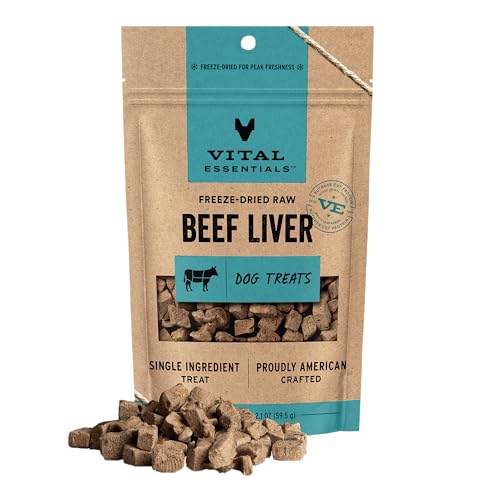
For readers who want one concrete option to look at, single-ingredient freeze-dried treats are the category most often recommended for high-value work. They are typically made from one protein, such as beef liver or salmon, with no added grains, preservatives, or flavorings. Because the moisture has been removed, the flavor is concentrated and the piece is light. Manufacturer specifications for this category commonly list roughly one calorie per piece, which makes them practical for sessions with many repetitions.
The trade-off is cost and smell. Freeze-dried single-ingredient treats usually cost more per ounce than soft training treats, and the aroma is stronger than most owners expect. They are best reserved for new behaviors, recalls, and distracting environments rather than used as the everyday reward for a dog that already knows sit. For a dog that is new to training, a soft chicken-based treat at around 1.5 calories per piece is often a better daily driver.
If you want to see current pricing and packaging for a single-ingredient freeze-dried option, check the current price on Amazon. Treat it as one example of the category rather than a universal recommendation, because the best treat is the one your dog will work for.
Treat Value Tiers: Matching Reward to Difficulty
Experienced trainers often sort treats into three tiers. The everyday tier is a small, soft, low-calorie treat used for repetitions of known behaviors and for rewarding attention. The mid tier is a slightly more aromatic soft treat used when the dog is learning something new or working in a mildly distracting setting. The top tier is a high-value, strongly scented treat reserved for recalls, counter-conditioning, and environments where the dog is competing with squirrels, other dogs, or traffic.
The mistake many owners make is using the top tier for everything. A dog that gets liver for every sit will often lose interest in liver by the time a recall is needed. Rotating tiers keeps the highest-value reward meaningful. It also stretches the budget, because the expensive treats last longer when they are reserved.
Value is not fixed, either. A treat that is high-value for one dog may be mid-tier for another. Some dogs are more motivated by salmon than liver, and some prefer poultry. The only reliable way to build a hierarchy is to offer a few options in a low-distraction setting and watch which one produces the fastest, most eager response.
How to Use Treats Effectively in Training
Treat delivery is a mechanical skill. The reward should arrive within one to two seconds of the behavior you want to reinforce, and it should be easy to deliver without fumbling. A training pouch or a pocket with a wide opening makes a measurable difference in how many repetitions a session contains.
- Use small treats: A pea-sized piece is usually enough. Larger pieces slow the session and add calories.
- Keep treats handy: A training pouch or treat bag keeps rewards accessible without breaking eye contact.
- Time the reward: Mark the behavior with a word or clicker, then deliver the treat within one to two seconds.
- Reduce treats gradually: Transition to intermittent reinforcement once a behavior is reliable, but keep rewarding occasionally to maintain it.
- Store treats properly: Keep freeze-dried treats sealed and soft treats from drying out so they stay appealing.
- Track calories: Subtract treat calories from the daily food ration, especially for small dogs.
One more mechanical point: reward position matters. Delivering a treat at your knee encourages a dog to stay close, while tossing a treat away encourages movement. For stationary behaviors, reward close. For recalls, reward at your body. These small choices shape the behavior as much as the treat itself.
Sizing, Calories, and Weight Management
The most common training-related health problem is not behavioral, it is weight gain. Treats should generally make up no more than about ten percent of a dog's daily calorie intake, a figure that appears consistently in veterinary nutrition guidance. For a 20-pound dog eating 400 calories a day, that is 40 calories of treats, which is roughly 25 pieces of a 1.5-calorie training treat.
Owners of small dogs and puppies need to be especially careful. A puppy's daily calorie needs are lower than an adult's, and a session with large treats can easily exceed the ten percent guideline. Cutting treats into quarters and using a portion of the daily kibble as rewards are two practical ways to stay inside the budget.
Body condition scoring is the check that matters more than the scale. A dog at a healthy weight has a visible waist from above and ribs that are easy to feel under a thin layer of fat. If ribs become hard to find, treat calories are a reasonable first place to look. The Merck Veterinary Manual dog owner reference covers body condition scoring in detail and is a useful starting point for owners who want to check at home.
Safety and Ingredient Considerations
Treat safety is mostly about ingredients and moderation, but there are a few specific hazards worth knowing. Some dogs have allergies to common proteins such as chicken or beef, and a new treat is a common trigger for itching, ear infections, or digestive upset. Introducing one new treat at a time makes it easier to identify the cause if a reaction occurs.
Certain ingredients are toxic to dogs and should never appear in a treat. The ASPCA Animal Poison Control maintains a list that includes chocolate, xylitol, grapes, raisins, onions, and garlic. Treats marketed for dogs should not contain these, but homemade treats and human foods used as rewards are a common source of accidental exposure.
Choking and blockage are the other category of risk. Hard treats that splinter, or treats small enough to swallow whole, can be hazardous for some dogs. Soft treats that can be torn into pieces are generally safer for training because the owner controls the size. For dogs that gulp food, a treat that requires a little chewing is safer than one that can be inhaled.
Finally, check with a veterinarian before changing a dog's diet significantly or introducing a new protein, especially for dogs with a history of pancreatitis, kidney disease, or food allergies. Treats are part of the diet even when they are not part of the bowl.
Common Mistakes Owners Make with Training Treats
The most frequent mistake is using treats that are too large. A treat the size of a thumb is a meal for a small dog and a long pause for a large one. Cutting treats into pea-sized pieces solves both problems and stretches the bag.
The second mistake is using the same treat for everything. A dog that gets the best reward for a known behavior has no reason to work harder for a new one. Tiering treats by difficulty keeps the top reward meaningful.
The third mistake is rewarding late. Treats delivered after the dog has moved on reinforce the wrong behavior. Marking the moment with a word or clicker and then delivering the treat closes that gap.
The fourth mistake is ignoring calories. Treats are food, and a training-heavy week can add up quickly. Trimming the daily kibble ration by the treat calories is the simplest fix.
The fifth mistake is giving up on a treat too quickly. Some dogs need to be offered a new treat two or three times before deciding whether they like it. A single refusal is not a verdict.
FAQ
How many training treats can I give my dog per day?
It depends on the calorie content of the treats and your dog's overall caloric needs. As a general rule, treats should make up no more than about ten percent of a dog's daily calorie intake. For training treats, aim for small, low-calorie options and reduce the main meal accordingly. A 1.5-calorie treat used thirty times in a session adds up to about 45 calories, which is manageable for most adult dogs but significant for a puppy or a small breed.
Are freeze-dried treats better for training?
Freeze-dried treats, especially single-ingredient liver or salmon, are often considered higher value because they have a stronger smell and concentrated flavor. Manufacturer specifications for this category commonly list roughly one calorie per piece, which makes them efficient for high-repetition sessions. They are also more expensive per ounce than soft training treats, so many owners reserve them for difficult behaviors and distracting environments rather than everyday use.
Can I use regular dog treats for training?
Yes, but smaller and softer is generally better. Hard, large treats take too long to eat and interrupt the flow of a session. If the only treats you have are large, break them into pea-sized pieces. The goal is a reward that can be delivered in under a second and swallowed without a long chew.
What if my dog does not like a particular treat?
Every dog has individual preferences. Try different flavors such as chicken, beef, turkey, or salmon, and different textures such as soft, freeze-dried, or crunchy. Offer the new treat two or three times before deciding, and watch for the fastest, most eager response. A treat that produces an immediate reaction is the one to keep in the training pouch.
Should I worry about treat ingredients?
It is always wise to check ingredients, especially if your dog has allergies or sensitivities. Look for treats with recognizable, whole-food ingredients and avoid artificial colors, flavors, and preservatives where possible. Named protein and fat sources are easier to evaluate than generic terms, and a short ingredient list is easier to troubleshoot if a reaction occurs.
How do I keep treats fresh between sessions?
Freeze-dried treats should be kept in a sealed container so they do not absorb moisture and lose their crunch. Soft treats should be kept from drying out, which makes them hard and less appealing. Buy sizes you will finish within a few weeks, and keep a small amount in the training pouch while the rest stays sealed.
When should I switch from treats to praise?
Treats do not have to disappear entirely. Once a behavior is reliable, most trainers move to intermittent reinforcement, where the dog is rewarded occasionally rather than every time. Praise and play can be added as secondary rewards. Keeping a high-value treat available for recalls and difficult environments is standard practice even with well-trained dogs.
Where to Buy
As an Amazon Associate, PawCritic earns from qualifying purchases. This does not affect our reviews or recommendations.
If you want to look at a single-ingredient freeze-dried option as a starting point for high-value training, you can view this option on Amazon. Compare the calorie count per piece and the piece size against your dog's daily calorie budget before buying, and remember that the best treat is the one your dog will work for.
For readers who want to compare a soft, everyday training treat against a freeze-dried high-value option, check the current price on Amazon. Many owners keep both tiers on hand: a soft treat for repetitions and a freeze-dried treat for new behaviors and recalls.
dog training treats high value treats for effective training
Affiliate Disclosure
This article contains affiliate links, meaning a commission may be earned when a purchase is made through links on this site. This comes at no additional cost to the reader. Recommendations are based on published guidance, manufacturer specifications, and verified owner reports. As an Amazon Associate, PawCritic earns from qualifying purchases.
For a final check on any treat you are considering, the current listing on Amazon is a reasonable place to confirm ingredient and calorie information before buying. Cross-check the label against your dog's calorie budget and any known sensitivities, and consult a veterinarian if you are unsure.