Best Ferret Cages 2026: Spacious, Secure Homes for Playful Ferrets
2026 update: A quick reality check before you buy — ferrets need at least three to four hours of supervised out-of-cage time every day, no matter how large the cage is. Owners also keep underestimating ferret escape artistry: doors that close with a simple friction fit or a single magnet latch will not hold a determined animal for long. Published husbandry guidance recommends full-height doors with dual latches, wire spacing of one inch or less, and solid or covered floors, because prolonged standing on bare wire contributes to foot injuries in mustelids. General husbandry references such as the Merck Veterinary Manual's exotic and laboratory animals section cover the housing principles that apply here. Once the cage is sorted, stock it with enrichment so the space stays interesting between play sessions.
Affiliate Disclosure: As an Amazon Associate, PawCritic earns commissions from qualifying purchases.
Introduction
Ferrets are endlessly curious, intensely playful, and unusually determined when they want something — including getting out of a cage that was never designed to hold them. Choosing housing for a ferret is not primarily an aesthetic or price decision. It is a safety and welfare decision, because the wrong enclosure — too small, too flimsy, with bar spacing wider than an inch — invites stress, injury, and a ferret that spends its waking hours working the door latch.
Ferrets descend from burrowing predators, and their instincts reflect it. They seek tight tunnels, dark sleeping corners, elevated perches, and multiple levels connected by ramps. A good cage reproduces that vertical, compartmentalized world inside a secure wire frame, while keeping the animal away from household hazards like cords, appliances, and gaps behind furniture. A good cage is also practical for the human: removable trays, wide doors, and washable surfaces matter enormously when you are spot-cleaning every day and deep-cleaning weekly.
This article is a research-based reference, not a hands-on product test. PawCritic does not operate labs or test enclosures. Everything below draws on manufacturer specifications, published husbandry guidance from veterinary sources such as the Association of Exotic Mammal Veterinarians, and aggregated owner reports from people who live with these cages daily.
Buying Guide: What to Look for in a Ferret Cage
Size and Space Requirements
Ferrets sleep as much as 18 hours a day, but their awake hours are athletic. Husbandry guidance generally points to enclosures at least three levels tall with generous floor area — many keepers use a working minimum in the range of 10 to 12 square feet of combined floor space for one or two ferrets, and more is always better. Cramped cages are associated with boredom-driven behaviors: bar chewing, digging at corners, over-grooming, and weight gain from inactivity. A useful sanity check is to imagine spending a full workday inside the footprint yourself; if that seems grim, it is too small for an animal that will spend substantial time there between play sessions.
Bar Spacing
This is the single non-negotiable specification. Ferrets have flexible skeletons and can compress through surprisingly narrow gaps — a healthy adult can squeeze through an opening close to one inch wide. Bars spaced at one inch or less are considered acceptable for full-grown adults; half-inch to five-eighths-inch spacing is the safer choice for kits or small females. Wider spacing is not a risk you manage — it is an escape hatch, and ferrets will find it, usually at night. Check spacing at the seams and door edges too, where panels meet and gaps can run wider than the rated figure.
Material and Durability
A ferret cage takes constant abuse: climbing, digging, gnawing, and the occasional enthusiastic shake of a hanging toy. Powder-coated steel is the standard recommendation because the coating resists rust and stands up to chewing better than painted or plastic-coated wire. The base tray should be solid plastic or metal — wooden bases fail quickly with ferrets, both because they chew them and because porous wood absorbs urine odor permanently. Latches deserve special attention: spring-loaded or double-locking systems are repeatedly cited in owner reports as the difference between a cage that contains a ferret and one that does not. Simple slide bolts and magnetic catches are the latch types most often defeated.
Multi-Level Design
Vertical territory is what makes a ferret cage usable rather than merely adequate. Multiple levels, ramps, and platforms give the animal more square footage without a bigger footprint, and they satisfy climbing instincts that a single-level floor cannot. Ramps should be solid or covered — bare wire ramps are hard on ferret feet, and mesh surfaces are implicated in toe and foot injuries. Many owners add fleece ramp covers or replace wire ramps with wooden or plastic solid ones as an aftermarket fix. Platforms with a slight lip help keep stray toys and food bowls from being nudged off the edge.
Ease of Cleaning
Ferrets are clean relative to their reputation, but their cages still need daily litter scooping, frequent bedding changes, and a weekly deep clean. Design features that make this tolerable include a slide-out bottom tray, full-width doors that open across multiple levels, and shelves that unclip without tools. Cages with small access doors force you to reach through wire at awkward angles, which is exactly how weekly cleaning turns into monthly cleaning. Deep base trays also matter — ferrets dig, back up into corners, and fling litter, and a shallow pan scatters debris across your floor.
Litter Box Compatibility
Most ferrets can be trained to a corner litter pan, and their strong corner preference makes placement predictable. The cage needs enough flat floor space on at least one level to hold a high-backed corner pan without crowding sleeping and eating areas. Check that the pan you plan to use fits between the shelves — some multi-level cages leave only a few inches of clearance above the bottom tray, which rules out taller pans.
Portability and Assembly
Large ferret cages are heavy and awkward. If you expect to move yours for cleaning behind it or repositioning between rooms, look for locking casters, which several popular models include. Assembly difficulty varies widely: some cages snap together without tools in under an hour, while others need a screwdriver, a second person, and patience with vague instructions. Manufacturer assembly videos are worth checking before purchase for the more complex multi-level models.
Top Picks: Best Ferret Cages of 2026
The four enclosures below are the models most consistently recommended across owner communities and retail listings for 2026, spanning a range of budgets and footprints. Each description reflects manufacturer specifications and aggregated owner feedback rather than hands-on evaluation.
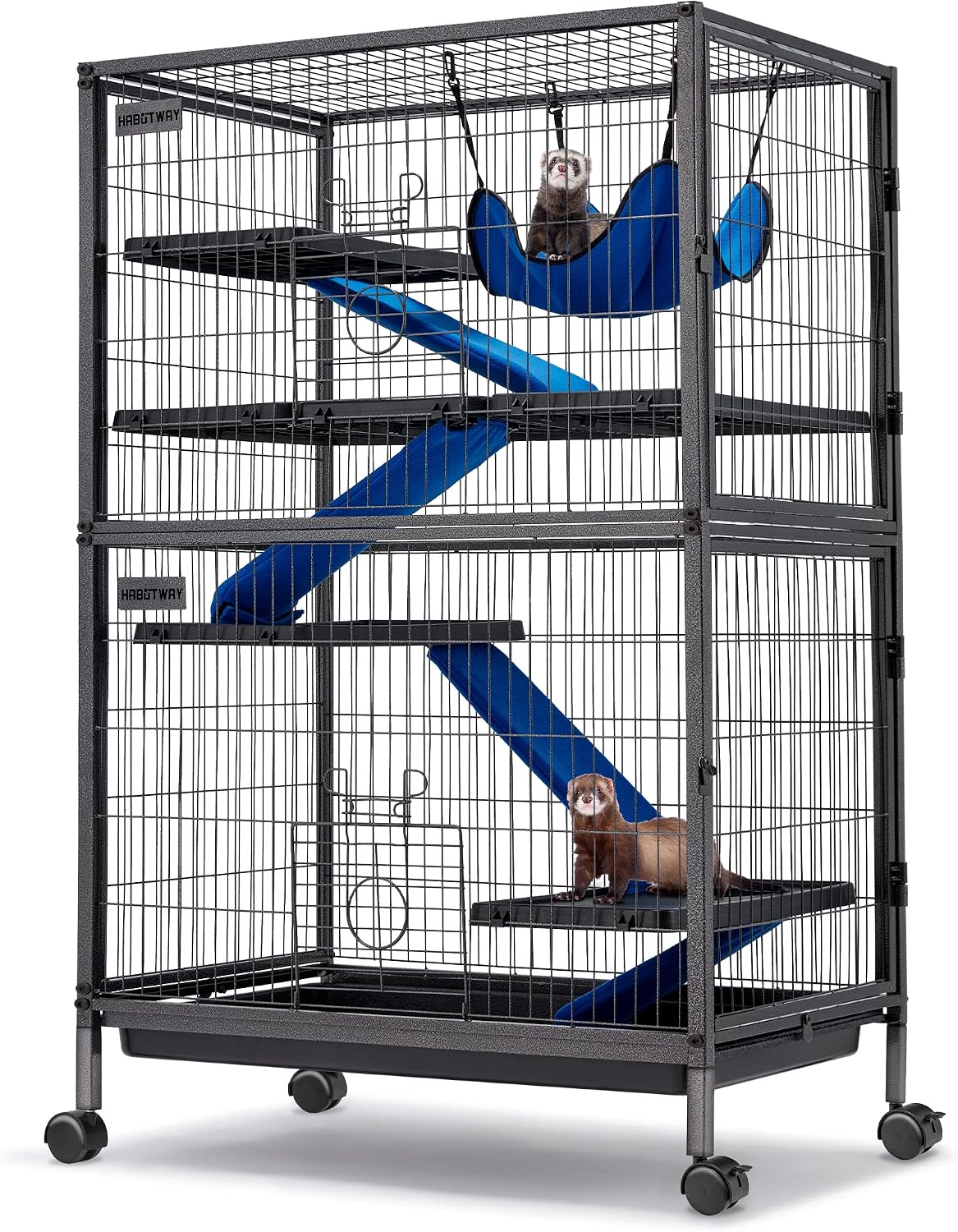
1. MidWest Multi-Level Ferret Cage — Best Overall
This is the category benchmark for a reason: a tall multi-level wire enclosure with full-height double doors, a secure dual-latch system, adjustable shelves, and a removable base tray, at a mid-range price that undercuts most competing cages of similar height. Owner reviews repeatedly highlight the door design as the standout feature — the wide front access makes daily spot-cleaning and weekly deep-cleaning genuinely quick, and the latches hold against ferrets that defeat lesser cages. It suits most adult ferrets and multi-ferret households that want maximum usable space per dollar.
The trade-off is weight and footprint: like any tall multi-level cage, it dominates a room and is easiest to set up once and leave in place, though casters help with repositioning. Verify bar spacing against the specific model listing before ordering if you house kits, since spacing varies by configuration.
2. Ferplast Multi-Level Ferret Cage — Best Premium Tower
Ferplast's tall ferret enclosures are the premium option in this category, built around a deep base tray, multiple platforms with connecting ramps, and a reputation across European and American owner communities for solid, wobble-free construction. The deep base is the most-cited practical advantage: it contains bedding, litter scatter, and the digging debris that shallow-tray cages spread across the floor. Double-locking doors address the escape-artist problem directly, and owner reports describe the latches as holding up against persistent ferrets over years of use.
The honest trade-offs are price and assembly. These cages sit at the top of the budget range, and assembly is more involved than snap-together competitors — expect tools, an hour of work, and ideally a second pair of hands. For owners with one or more ferrets and a dedicated corner of a room, the long-term durability justifies the premium; for a first-time owner unsure of commitment, it may be more cage than needed.
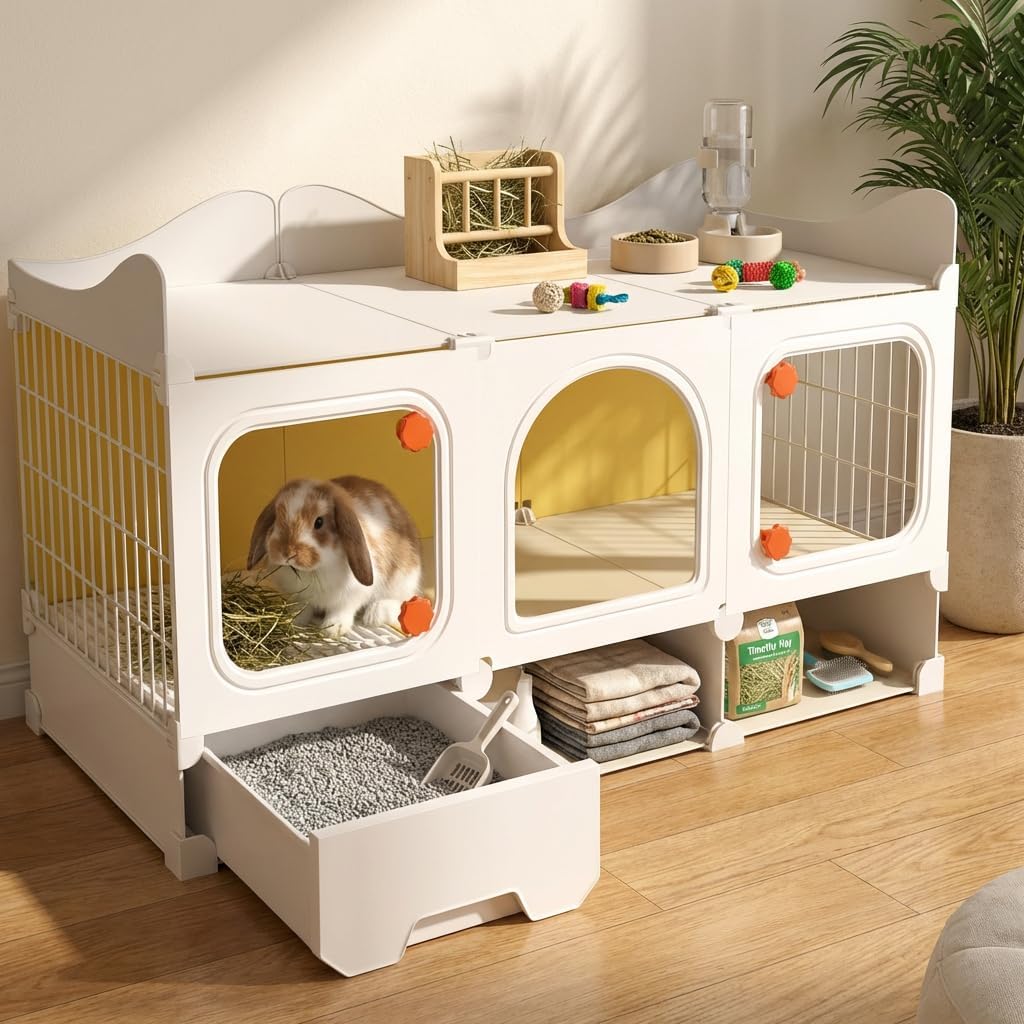
3. Amazon Basics Multi-Level Small Animal Cage — Best Budget Entry
For under a hundred dollars, this cage delivers three levels, connecting ramps, and removable trays in a package light enough to move without help. It is a reasonable entry point for a first-time ferret owner, a secondary or travel cage, or a temporary setup while a larger enclosure is on order. Owner feedback is consistent about what it is: a functional multi-level cage that does the basics for adult ferrets without the structural heft of mid-range and premium models.
The trade-offs are durability and long-term rigidity. Verified owner reviews describe the ramps and platforms as feeling less solid over months of use, and the lighter gauge construction means the cage is best paired with plenty of daily out-of-cage time so the ferrets are not living full-time in it. Bar spacing on this style of cage is typically around one inch, which suits adults but not kits. For a tight budget it is a legitimate choice; just treat it as a starting point rather than a decade-long enclosure.
4. Prevue Multi-Level Small Animal Home — Best Value for a Four-Level Cage
Prevue's small animal enclosures have a long-standing reputation for sturdy construction, and this multi-level model follows the pattern: powder-coated steel wire that resists rust and chewing, four levels with ramps, and bar spacing in the safer sub-inch range that many competitors do not offer. Reports from owners of determined chewers frequently single out the finish as holding up better than expected. The sub-inch spacing also makes it one of the more appropriate options among this group for smaller ferrets.
The trade-offs are the wire ramps, which most owners cover with fleece liners for foot comfort, and smaller access doors relative to the full-width openings on the premium picks, which makes deep cleaning more of a reach-in job. For owners who want a durable, safe-barred multi-level cage at a mid-range price, it is arguably the strongest value in the lineup.
Comparison Table: Best Ferret Cages 2026
| Product | Approx. Price | Levels | Standout Strength | Best For |
|---|---|---|---|---|
| MidWest Multi-Level Ferret Cage | Mid-range | Multi | Full-height double doors, easy cleaning | Best Overall |
| Ferplast Multi-Level Ferret Cage | Premium | Multi | Deep base tray, double-lock doors | Best Premium |
| Amazon Basics Multi-Level Cage | Budget | 3 | Lowest cost, lightweight | First-time owners, backup cage |
| Prevue Multi-Level Home | Value | 4 | Sub-inch bar spacing, tough finish | Best Value |
Setting Up the Cage Properly
The cage is the frame; the setup determines whether it works. Start with flooring: if the levels are wire, cover them with washable fleece liners, carpet remnants designed for cages, or solid shelf inserts. Bare wire is implicated in foot injuries with prolonged exposure, and several veterinary resources — including the ASPCA pet care library — emphasize appropriate substrate as a baseline husbandry requirement for small companion animals. Provide at least one enclosed sleeping spot per ferret: a hammock, a sleep sack, or a hideaway cube. Ferrets sleep hard and deep, and they want darkness and softness, not open platforms.
Place food and water away from the litter corner — ferrets have fast metabolisms and eat frequently, and keeping food near toileting areas invites contamination. Attach a heavy ceramic bowl or a lock-on crock, since ferrets tip light bowls for sport. A water bottle with a guard is more spill-proof, but check the ball valve daily, as ferrets sometimes push bedding against the spout and drain it. Add a high-backed corner litter pan on the lowest level, where most ferrets prefer to toilet, and keep one or two digging-safe toys rotated through the week.
Maintenance and Cleaning Schedule
Daily: scoop the litter pan, spot-clean soiled bedding, refresh water, and wipe the food area. Every few days: wash fleece liners and swap sleeping hammocks, which accumulate oils and odor faster than they look. Weekly: remove all fixtures, wash trays and shelves with ferret-safe cleaner or diluted vinegar, rinse thoroughly, and dry before restocking. Monthly: inspect the wire frame for rust spots, check every latch and hinge for looseness, and examine ramp attachments, which loosen over time from climbing vibration.
Ferret musk odor is manageable but not eliminable — intact ferrets smell strongly, and neutering dramatically reduces it, as husbandry guidance from veterinary sources on ferret care makes clear. Cage location matters too: keep the enclosure out of direct sunlight and away from drafts, and never house ferrets in aquariums or plastic tubs, which provide no ventilation and trap ammonia.
Common Mistakes to Avoid
- Trusting a single latch. Ferrets learn latches. Dual-lock and spring-loaded door systems exist because single slide bolts fail; owner forums are full of stories of ferrets opening them within weeks.
- Ignoring bar spacing at the seams. The rated spacing may be one inch, but gaps at door edges and panel joints can run wider. Measure before you trust it.
- Bare wire everywhere. Wire floors and ramps cause foot problems over time. Cover them — this is a cheap fix for an expensive veterinary problem.
- Skimping on out-of-cage time. No cage, however large, substitutes for three to four hours of supervised daily play. A ferret confined full-time in any enclosure will develop behavioral problems.
- Wooden cage components. Wood absorbs urine, holds odor, and gets chewed. Stick to powder-coated metal and washable plastics.
- Buying for the ferret you imagine. Kits and small females need tighter bar spacing than large males. Check the animal, not just the average spec.
Safety Notes Beyond the Cage
Ferret-proofing the room matters as much as the enclosure itself. Ferrets can slip behind appliances, into recliners, and through gaps a few centimeters wide, and they chew — rubber, foam, and soft plastics are frequent foreign-body hazards. If you suspect your ferret has swallowed something toxic or harmful, the ASPCA Animal Poison Control resource is the standard reference for guidance on toxic exposures in companion animals. Locate an exotic-mammal veterinarian before you need one; ferrets are prone to specific conditions, including adrenal disease and insulinoma, that general small-animal practices may not manage routinely.
Conclusion
Choosing the right ferret cage is one of the most consequential decisions you will make as a ferret keeper. The enclosure needs to be tall, multi-level, built from powder-coated steel with sub-inch or one-inch bar spacing, secured with dual latches, and designed so daily and weekly cleaning are genuinely easy. Among the 2026 field: the MidWest multi-level cage is the strongest all-around pick for space and door access; the Ferplast tower is the premium choice for deep bases and escape-resistant locks; the Amazon Basics multi-level cage is the honest budget entry point; and the Prevue four-level home offers the best value with its safer bar spacing and tough finish.
Whichever you choose, remember that the cage is the beginning, not the end. Ferrets need supervised out-of-cage playtime every day, rotated enrichment, a knowledgeable exotic veterinarian, and consistent handling to stay healthy and social. A good cage gives your ferret a safe place to sleep and a fun place to climb while you are away — the rest of a good ferret life happens outside the bars.
Affiliate Disclosure: As an Amazon Associate, PawCritic earns commissions from qualifying purchases. This does not affect our research or recommendations.
Where to Buy: Our Top Picks
As an Amazon Associate, PawCritic earns from qualifying purchases.