Disclosure: PawCritic is reader-supported. A few links below are Amazon affiliate links, and we may earn a small commission if you purchase through them at no extra cost to you.
Guinea pigs are among the most vocal, social small pets you can keep, and almost everything about their daily comfort comes down to one decision that new owners underestimate: the bedding. Cavies spend up to 18 hours a day in contact with the floor of their enclosure. They walk on it, dig in it, nap in it, and eat hay that falls onto it. The wrong bedding can quietly cause respiratory infections, sore hocks, and urinary problems, while the right bedding keeps a cage dry, odor stays manageable, and your guinea pigs pop and wheek like they own the place.
Bedding is also the expense that never stops. Unlike a cage or a water bottle, it is bought every week or washed every few days, so the math of comfort versus cost matters more here than with almost any other supply. This reference covers what actually matters when choosing bedding in 2026, seven options that have held up under long-term owner use, and the answers to the questions guinea pig owners ask most often.
Why Bedding Matters More Than You Think
Guinea pigs are prey animals with sensitive respiratory systems and delicate foot pads. Their environment has to do several jobs at once, and no single bedding does all of them perfectly, which is why seven different options are ranked here rather than one winner declared for everyone.
Good bedding must:
- Absorb urine quickly and keep the surface dry, because wet flooring is a leading contributor to bumblefoot (ulcerative pododermatitis)
- Control ammonia odor between cleanings, since ammonia from urine damages small lungs fast
- Provide cushioning for resting and enough structure for burrowing and nesting
- Stay low-dust, because high-dust products are strongly associated with wheezing and upper respiratory infections in cavies
- Be safe if nibbled, since guinea pigs chew and ingest small amounts of whatever is under their feet
If a guinea pig has ever had a bout of sniffing, sneezing, or limping, the bedding is the first place to look. Published guidance from the Merck Veterinary Manual on exotic and laboratory animals notes that respiratory disease is among the most common problems in pet cavies, and that environmental irritants such as dusty bedding are frequent contributors. Bumblefoot prevention starts with dry, forgiving flooring, because ulcerative pododermatitis develops when bacteria enter abrasions on the foot pads of animals standing on urine-soaked or rough surfaces.
What to Look for in Guinea Pig Bedding
Dust Level
Dust is the single most important spec. Guinea pig airways are small and easily inflamed, and a high-dust wood shaving product can trigger chronic sneezing within days. Paper-based bedding and fleece are the lowest-dust choices. Aspen sits in the middle. Anything visibly dusty when poured goes back on the shelf. One practical check: dump a scoop from chest height in a well-lit room. If a visible cloud appears, a cavy will be breathing that cloud all week.
Absorbency and Odor Control
Guinea pigs produce a remarkable amount of urine relative to their size, and ammonia builds up quickly in a cage that stays damp. The best absorbent beddings wick moisture downward so the top layer stays dry underfoot. Hemp currently leads on raw absorbency, paper bedding is close behind, and fleece systems depend entirely on a good wicking middle layer and a strict wash schedule. Ammonia is not just unpleasant; it chemically irritates the same airways that low-dust bedding is meant to protect, so odor control and respiratory health are the same conversation.
Material Safety
Not all bedding materials are equal. Here is the honest rundown:
- Paper-based bedding: The safest default. Soft, absorbent, low dust, digestible in small amounts.
- Aspen shavings: The safe wood option. Hardwood, no aromatic oils, compostable.
- Kiln-dried pine: Acceptable for most owners. The kiln process removes most of the phenols that make raw pine questionable, though many cavy keepers still prefer to skip it.
- Cedar: Never. The aromatic phenols are genuinely harmful to small animals.
- Fleece liners: Reusable and dust-free, but they demand real laundry discipline.
- Hemp: Absorbent, low dust, compostable, and increasingly easy to find.
- Hay as primary flooring: Natural and edible, but it holds moisture and molds fast over wet patches. Use it as a top layer, not the whole system.
Any bedding material that a guinea pig might ingest should also be checked against the ASPCA Animal Poison Control guidance, particularly for scented or treated products, since small mammals are more vulnerable to aromatic additives than cats and dogs.
Comfort and Texture
Cavies love to burrow and tunnel, and they need depth to do it. Plan on at least 2 to 3 inches of loose bedding, more if the cage design allows it. Soft fluffed paper and fleece both score well here; coarse, heavy shavings score worse and can abrade the heels of the back feet over months. The foot pads of guinea pigs are covered in thin skin with little fat padding, which is why texture matters more for them than for many other small pets.
Cost Over Time
Price per bag is the wrong number. What matters is cost per week of clean flooring. Fleece costs the most upfront and the least over a year. Hemp and paper sit in the middle. Budget paper blends are cheapest per bag but often need two full changes a week for two pigs, which quietly erases the savings. A useful way to compare is to estimate the number of full changes a product delivers per bag, then multiply by the number of changes a week the cage actually requires.
Cleaning and Maintenance
Match the bedding to the actual routine, not an aspirational one. Disposable bedding needs daily spot cleaning and a full change weekly for a pair of pigs. Fleece needs daily debris removal and a full machine wash at least twice a week, plus a spare liner in rotation. Owners who travel often usually do better with disposables. The bedding system that can be sustained beats the one that wins on paper.
The Top 7 Guinea Pig Bedding Options in 2026
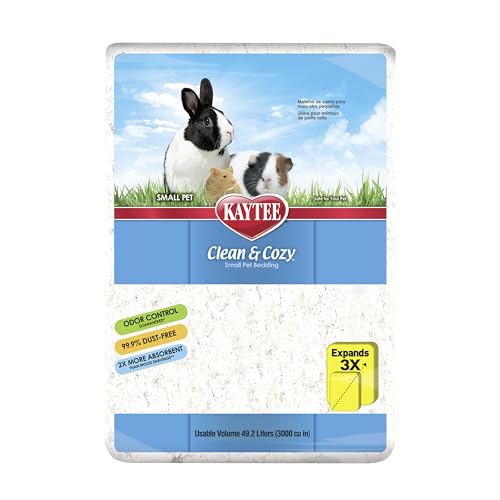
1. Kaytee Clean and Cozy White Paper Bedding - Best Overall
Price: around $25 for 60L | Rating: 4.7/5
Pros:
- 99% dust-free, one of the lowest dust ratings in the category
- Absorbs roughly 8 times its weight in liquid
- Soft, expandable texture cavies burrow into immediately
- Easy to find in every pet store and online
Cons:
- Single-use, so the weekly cost never ends
- Unscented version controls odor slightly less well than the lavender variant
Kaytee Clean and Cozy has been the default answer to guinea pig bedding for years, and it stays at the top because nothing else combines this dust level, absorbency, and availability. Expand it by hand before it goes in the cage; compressed straight from the bag, it looks like half the volume paid for. For a pair of guinea pigs in a 10-square-foot cage, one 60-liter bag covers a weekly full change with a little left over for spot fills. Owners with respiratory-prone cavies consistently report that switching to this product ended the sneezing. It is not the greenest option on the list, but it is the one to hand to new owners who need a safe, forgiving default.
2. Small Pet Select Natural Aspen Bedding - Best Wood Option
Price: around $33 for 14 lbs | Rating: 4.6/5
Pros:
- Pure aspen hardwood, no dyes or fragrances
- Natural odor control without chemical additives
- Compostable after use
- Consistent, clean flake quality from batch to batch
Cons:
- More dust than the best paper beddings
- Flakes scatter beyond cage edges easily
- Costs more per volume than generic shavings
Aspen is the wood bedding recommended without hesitation, and Small Pet Select's version is among the cleanest on the market. Shavings owners like the rustic look and the fact that used bedding composts well in a garden pile. The tradeoff is dust: it is acceptable but clearly visible next to Clean and Cozy. If a cavy has already shown respiratory sensitivity, start with paper instead. If a natural, biodegradable floor is the goal and the pigs breathe easy, aspen is a solid long-term choice. Watch the edges of the cage, because these flakes travel farther than paper strips when a pig popcorns at 2 a.m.
3. Carefresh Colors Custom Bedding - Best for Visible Spot Cleaning
Price: around $30 for 60L | Rating: 4.5/5
Pros:
- Confetti texture holds tunnels and nests well
- Wet patches clump, which makes spot cleaning fast
- Made from 70% recycled paper
- Fun colors let kids see and enjoy spot-cleaning targets
Cons:
- More dust than Kaytee's white formula
- Colored fibers cling to light-furred pigs
- Not quite as absorbent as the leading paper beddings
Carefresh has been a small-pet staple for decades, and the Colors line adds one practical advantage that owners rarely mention: droppings and wet spots stand out against the colored fibers, so daily spot checks take seconds. The clumping behavior under wet patches is genuinely useful, letting a soiled section be lifted out whole instead of sifted. Absorbency is good rather than excellent, so a pair of pigs generally needs a full change every 5 to 6 days instead of a full 7. For families with kids who help with cage care, the visibility alone justifies the pick.
4. Guinea Dad Fleece Liner - Best Reusable System
Price: around $35 per liner | Rating: 4.8/5
Pros:
- Zero dust, the best possible choice for sensitive airways
- Three-layer construction wicks urine away from the surface
- Washable hundreds of times, which makes the yearly cost tiny
- Available in sizes cut for common cage brands
Cons:
- Requires washing at least twice a week, plus a spare liner
- Needs its own laundry routine, separate from household clothes
- Odor builds fast if washing slips
Fleece is where guinea pig housing has clearly headed, and Guinea Dad's engineered liners are the version that works. The wicking layer is the difference between this and a folded blanket: urine passes through the fleece top into an absorbent core, so pigs stay dry on the surface. Over a year, a two-liner rotation costs less than two months of disposable bedding. The commitment is real, though. Miss a wash cycle and ammonia climbs quickly, which is worse for the pigs than any disposable bedding ever was. Households with a reliable laundry rhythm swear they will never go back. Households without one should stay with paper.
5. Oxbow Pure Comfort Bedding - Best for Nesting
Price: around $23 for 42L | Rating: 4.4/5
Pros:
- Reclaimed cotton fiber, soft enough for newborn litters
- Low dust and fragrance-free
- Compresses small, expands to a generous volume
- Backed by a veterinary-trusted brand
Cons:
- Flattens faster than paper under heavy traffic
- Absorbency trails the leading paper options
- Harder to find in local stores
Oxbow built its reputation on small-animal nutrition, and Pure Comfort extends the same care to flooring. The reclaimed cotton texture is the softest on this list, and pregnant sows and young litters do especially well on it because nothing abrades delicate skin. It compresses under a week of traffic more noticeably than paper, so fluff it midweek. For owners already buying Oxbow pellets and hay, adding the bedding keeps the whole habitat consistent with one brand's standards.
6. Hemp Beddzzz Natural Hemp Bedding - Best Absorbency
Price: around $28 for a compressed 50L bale | Rating: 4.5/5
Pros:
- Absorbs around four times its weight, the best raw performance here
- Naturally resists bacterial growth, so odor stays low longer
- Compostable and biodegradable
- Low dust with no added scent
Cons:
- Needs hand-fluffing from its compressed state
- Mostly sold online, rarely on pet store shelves
- Texture feels coarser than paper on first opening
Hemp is the material that has quietly improved most in recent years, and Hemp Beddzzz is the version worth buying. Its absorbency means the wet zone stays localized and the dry zones actually stay dry, which matters for foot health. Many owners report stretching a full change to 8 or 9 days for a pair of pigs without odor problems, which offsets the higher bag price. The coarse first impression fades once fluffed. For eco-conscious owners who want disposable bedding with the smallest footprint, hemp is now the clear pick, and its market availability keeps improving every year.
7. Vitakraft Fresh World Paper Bedding - Best Budget Pick
Price: around $19 for 45L | Rating: 4.3/5
Pros:
- Lowest cost per liter among the quality options
- Baking soda additive helps with ammonia between changes
- Pours and spreads quickly
Cons:
- More dust than premium paper bedding
- Needs more frequent full changes than the top picks
- Batch consistency varies
Vitakraft Fresh World is the honest budget answer. It performs adequately on absorbency and noticeably less well on dust, but at roughly three-quarters the price of the premium options it fills a real need for owners running multiple cages or rescues. The baking soda odor control works, though a faint mineral smell is noticeable for the first day after a fresh change. If budget forces the choice between a cheaper bedding and a smaller cage, take the bigger cage with this bedding. Floor space matters more than the last 20% of dust performance.
Quick Comparison
| Product | Type | Dust | Best For |
|---|---|---|---|
| Kaytee Clean and Cozy | Paper | Ultra-low | Best overall default |
| Small Pet Select Aspen | Hardwood | Low-medium | Natural, compostable flooring |
| Carefresh Colors | Recycled paper | Medium | Fast visual spot checks |
| Guinea Dad Liner | Fleece system | Zero | Lowest long-term cost |
| Oxbow Pure Comfort | Cotton fiber | Low | Nesting and litters |
| Hemp Beddzzz | Hemp | Low | Maximum absorbency |
| Vitakraft Fresh World | Paper blend | Medium | Tight budgets |
How Often Should You Change the Bedding?
For disposable bedding, the working rhythm is simple: remove wet patches and droppings daily, refresh the corner the pigs use most every 2 to 3 days, and do a full change weekly for a pair. If ammonia is noticeable before the week ends, the schedule is wrong for the bedding choice, not for the nose. Ammonia is not just unpleasant; it chemically irritates the same airways that low-dust bedding is meant to protect.
For fleece, wash at least twice weekly with a fragrance-free detergent, skip fabric softener because it destroys wicking, and keep a spare liner so a wash day never becomes an excuse. Owners who stretch fleece to weekly washes almost always end up back on disposables within a season, usually after a first encounter with flystrike risk in summer. The bedding system that can be sustained beats the one that wins on paper.
Sizing and Cage Setup Considerations
Bedding depth and cage size interact more than most owners expect. A cage that is too small for the number of pigs will saturate faster no matter which bedding is used, because the same square footage absorbs more urine per hour. The widely cited minimum for a pair of guinea pigs is around 10 square feet, with more space for boars, who tend to mark more heavily. In a cage at that size, two to three inches of loose bedding gives enough depth for burrowing without spilling over low cage walls.
Corner litter areas are worth setting up even for pigs that are not fully litter trained. Most cavies choose one or two corners for urination, and placing a shallow tray with a little bedding there concentrates the wettest waste in a small, easily changed zone. This can extend the interval between full cage changes by a day or more, which matters most for owners using premium paper or hemp. The tray should have low sides so that pigs can step in and out without scraping their foot pads.
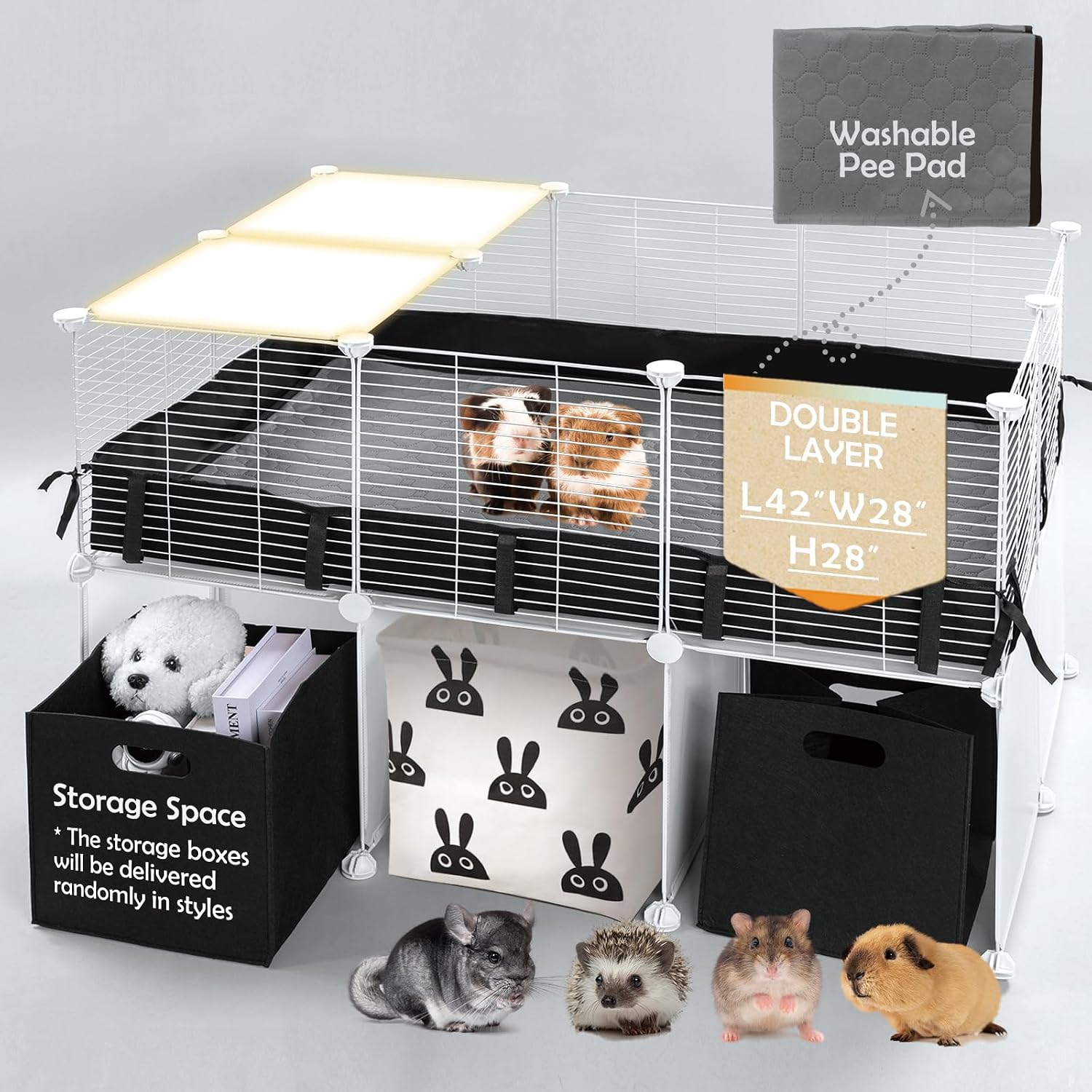
For fleece systems, sizing is about the liner matching the cage footprint plus a margin for tucking under edges. A liner that is too small shifts during popcorning and exposes the cage floor, which defeats the purpose. A liner that is too large bunches up and creates folds where urine can pool. Most manufacturers publish dimensions for common cage brands, and measuring the interior floor before ordering avoids returns.
What Has Changed in the Bedding Aisle for 2026
Paper bedding has seen the least change in formulation and the most change in price. The standard 60-liter bag that anchored this category for years now competes with larger compressed bales and subscription pricing, and the spread between budget and premium paper products has widened enough that cost-per-change math deserves a fresh run before you restock. The formulation itself remains the safe default: low dust, high absorbency, forgiving underfoot. What has shifted is packaging. Compressed bales that expand to roughly three times their shipped volume are now common even from mid-tier brands, and per-liter pricing on those bales often undercuts the familiar bag despite a higher shelf price.
Hemp bedding has moved from a niche import to a mainstream option. Several new brands entered the market, retail availability improved beyond the handful of online specialists, and absorbency claims have settled around three to four times the product's weight in liquid, which matches what long-term owners report. Hemp still rewards buyers who fluff it thoroughly before it goes into the cage, and its coarse first texture still surprises people expecting paper softness. For owners prioritizing compostability and long intervals between full changes, the 2026 market gives hemp its strongest case yet.
Fleece liners have split into quality tiers that were not obvious a few years ago. A wave of cheap liners hit the market with a fleece top and little or no absorbent core, which puts urine right back on the surface and defeats the entire purpose. A working test before committing: pour a small amount of water on the liner's surface and watch. A properly engineered liner should pull the liquid through within seconds and leave the top dry to the touch. The established three-layer liners still pass that test after a year of washing, and the price gap between them and the flimsy versions is small enough that the test is worth running on any new brand.
Two guidance points have also drifted. Recommended loose-bedding depth now trends toward 3 inches rather than 2, reflecting how much burrowing and tunneling contributes to daily enrichment, and the advice around kiln-dried pine has sharpened rather than softened: kiln processing remains the line between acceptable and questionable, and any listing that does not state the kiln process plainly is best treated as raw. Scented variants continue to sell, but unscented remains the sensible default for a species with airways this reactive. Owners evaluating newer materials such as bamboo-blend bedding should ask the same two questions as always: what is the dust rating, and is the processing method disclosed.
Heading Into Winter: Bedding Notes for Late 2026
Colder months change the bedding equation in ways that catch new owners off guard. Windows stay closed, so the ammonia that used to escape through daily ventilation now stays in the room, and a cage that smelled fine in October can smell sharp by December on the exact same schedule. If your winter routine matches your summer one and the odor has shifted, shorten the interval between full changes before you reach for a stronger-smelling bedding. Scented products cover the signal; they do not change the air the pigs breathe.
Indoor heating also dries the air, and dry air changes how bedding behaves. Paper products hold their structure longer in low humidity, which is a small win, but fleece liners static-cling to hay and hair more than they do in summer, so shake liners out over the trash before they go in the wash. Humidifier placement matters too: a humidifier aimed at the cage pushes damp air into the bedding and speeds up surface saturation, so aim it away and let the cage air stay dry.
This is also the season when compressed bales earn their shelf space. Larger compressed packages expand to several times their shipped volume, which means fewer restock trips through winter weather and usually a lower cost per change. The trade-off is preparation: fluff each portion thoroughly by hand before it goes in the cage, because a compressed slab poured in as-is leaves dense pockets that hold moisture against the floor.
Two small routines carry extra value from November through March. First, check the wet zone daily; pigs drink more from water bottles in heated rooms, and urine output rises with it. Second, keep a spare liner or a spare bag of bedding on hand before the first cold snap, not after it, because restock delays and slow delivery windows are exactly when a cage gets stretched past its schedule. Winter bedding care is not a different system, just the same system with less slack in it.
Common Mistakes Owners Make
- Using too little bedding. Under two inches of loose bedding saturates quickly and stops buffering ammonia, which is the most common reason a cage smells bad within two days.
- Choosing cedar or raw pine. Aromatic oils in softwoods are a known respiratory irritant for small mammals, and cedar in particular is not a safe choice for guinea pigs.
- Washing fleece with fabric softener. Softener coats the fibers and destroys the wicking action, so urine stays on the surface and the pigs sit in it.
- Only changing bedding when it looks dirty. Ammonia is invisible, and by the time a cage looks or smells soiled, the air quality has already been poor for a day or more.
- Mixing scented bedding with a respiratory-prone pig. Fragrance is an added irritant with no functional benefit, and unscented versions are almost always the better default.
- Skipping daily spot checks. Removing droppings and wet patches daily is what makes a weekly full change realistic, and skipping it shortens the useful life of any bedding.
Frequently Asked Questions
Is pine bedding safe for guinea pigs?
Kiln-dried pine is generally accepted as safe because the drying process drives off most of the aromatic phenols, but raw or unlabeled pine is not worth the risk, and cedar is never safe. Aspen removes the debate entirely for a small price difference.
Can newspaper be used at the bottom of the cage?
Newspaper under a thick absorbent layer works fine as a liner. As the top layer it is a poor choice: ink transfers onto light fur, the flat sheets hold moisture against the floor, and it offers no cushioning. Use it as the cheap base layer under paper, aspen, or hemp.
Why does a guinea pig cage smell after two days?
Three usual causes: not enough bedding depth (under 2 inches saturates fast), a diet heavy in watery vegetables, or a cage that is too small for the number of pigs. A 10-square-foot cage for two males with proper bedding depth should not smell strongly between weekly changes.
Do guinea pigs need bedding if fleece is used?
The fleece liner replaces loose bedding as the floor covering, but most owners still add a pile of hay at one end, which doubles as food and a soft nesting spot. Pigs dig and rearrange hay constantly, and it keeps the resting area dry.
What bedding is safest for baby guinea pigs?
Soft paper bedding or a fleece liner. Avoid wood shavings for newborns, since pups are born with open eyes and immediately walk, nibble, and nap on whatever is underfoot. Fine paper fibers are the gentlest option on their skin.
How long does a bag of bedding last for two guinea pigs?
A 60-liter bag of paper bedding typically covers one full weekly change for a 10-square-foot cage with a little left over for spot fills. Hemp, which is more absorbent, often stretches to 8 or 9 days between full changes, so a compressed 50-liter bale can last a pair of pigs roughly five to six weeks.
Final Thoughts
The bedding decision is really a decision about routine. Choose paper bedding like Kaytee Clean and Cozy for the safest all-around default with minimal thought. Choose a fleece system if laundry twice a week is realistic and the lowest dust and lowest yearly cost are the priorities. Choose hemp for disposable convenience with real absorbency and a small footprint. Whatever the pick, give it depth, keep it dry, and the cavies will do the rest of the work themselves.
Where to Buy: Top Picks
As an Amazon Associate, PawCritic earns from qualifying purchases. This does not affect our reviews or recommendations.
- Kaytee Clean and Cozy Paper Bedding: Check price on Amazon
- MEEXPAWS Small Animal Playpen (waterproof-base pen that pairs well with fleece liners): Check price on Amazon
- Oxbow Small Animal Bedding (white paper, 36 L): Check price on Amazon
- Kaytee Aspen Bedding (hardwood, 52 L): Check price on Amazon
For a broader look at general small-pet care standards, the ASPCA pet care library covers housing, diet, and enrichment guidance across species. Owners who keep both guinea pigs and hamsters should note that the safety rules differ in important ways, particularly around wood shavings and nesting materials.
Related Reading
how to set up a guinea pig cage step by step, the best small-pet beddings and substrates, and what guinea pigs can eat.