Best Ferret Toys and Enrichment Supplies 2026: A Reference Guide to Active, Happy Ferrets
Published on July 10, 2026 by PawCritic — Small Pets Category
Source: American Ferret Association (AFA): The AFA recommends that ferret owners provide a variety of toys including tunnels, balls, and puzzle feeders, while noting that ferrets should always be supervised during play to prevent accidental ingestion of small toy parts.
Source: American Ferret Association (AFA): The AFA notes that ferrets are obligate carnivores requiring high-protein, high-fat diets formulated specifically for ferrets, and that long-term feeding of cat or dog food can lead to nutritional deficiencies and health problems.
Ferrets are not casual pets — they are high-commitment companions whose welfare depends heavily on daily enrichment. Anyone who has shared a home with these mustelids knows the pattern: a bored ferret is a destructive ferret, stashing car keys under the couch, chewing charging cables, and excavating houseplants. A ferret with proper outlets, on the other hand, spends its waking hours dashing through tunnels, wrestling with toys, and performing the sideways, open-mouthed 'weasel war dance' that makes the species so entertaining to watch. Understanding why enrichment matters is the first step; veterinary resources such as the Merck Veterinary Manual's exotic and laboratory animals section describe ferrets as highly active, curious animals with strong burrowing and foraging instincts that persist in domestic settings.
The ferret toy market has matured considerably from the era of repurposed cat toys and do-it-yourself PVC pipe. Specialty manufacturers now build enrichment products around ferret anatomy — long bodies, flexible spines, powerful jaws, and instinctive digging and burrowing behavior — and around the practical realities of ferret ownership, namely that anything left in a ferret's reach will eventually be chewed, hidden, or soaked in a nap. Because PawCritic does not perform hands-on product testing, this guide is built entirely from published manufacturer specifications, veterinary and owner-organization guidance, and verified owner reports, organized so you can verify every claim yourself before buying.
Why Enrichment Matters for Ferrets
Domestic ferrets (Mustela putorius furo) descend from the European polecat, an animal that in the wild occupies multi-entrance burrow systems, hunts small prey several times a day, and spends a large share of its waking hours exploring and foraging. Captive ferrets retain those drives. When a ferret digs at carpet corners or pulls stuffing out of a couch cushion, it is usually expressing a natural behavior that has nowhere better to go. The goal of an enrichment program is not to stop the behavior but to redirect it toward safe, designed outlets: tunnels that simulate burrows, dig boxes that satisfy excavation instincts, puzzle feeders that convert foraging drive into problem-solving, and hammocks and fleece items that support the species' famously heavy sleep schedule of fourteen to eighteen hours a day.
Behavioral impoverishment carries real health consequences. Under-stimulated ferrets are more prone to destructive chewing, which creates genuine ingestion risks — swallowed foam, string, or rubber fragments are among the most common foreign-body emergencies in pet ferrets, and the ASPCA Animal Poison Control resource is a sensible bookmark for any exotic-pet household. General small-pet welfare guidance from the ASPCA pet care library reinforces the same principle across species: enrichment, safe materials, and supervision are the three pillars of keeping companion animals physically and mentally healthy.
Reviewed Products
Three linked products are covered below. PawCritic has not handled or tested these items; descriptions are drawn from manufacturer specifications and aggregated verified owner reports, and each entry notes where information is limited so you can check the listing details before purchasing.
1. Ferret Tunnel System (Main Tube, Extension, and Connectors)
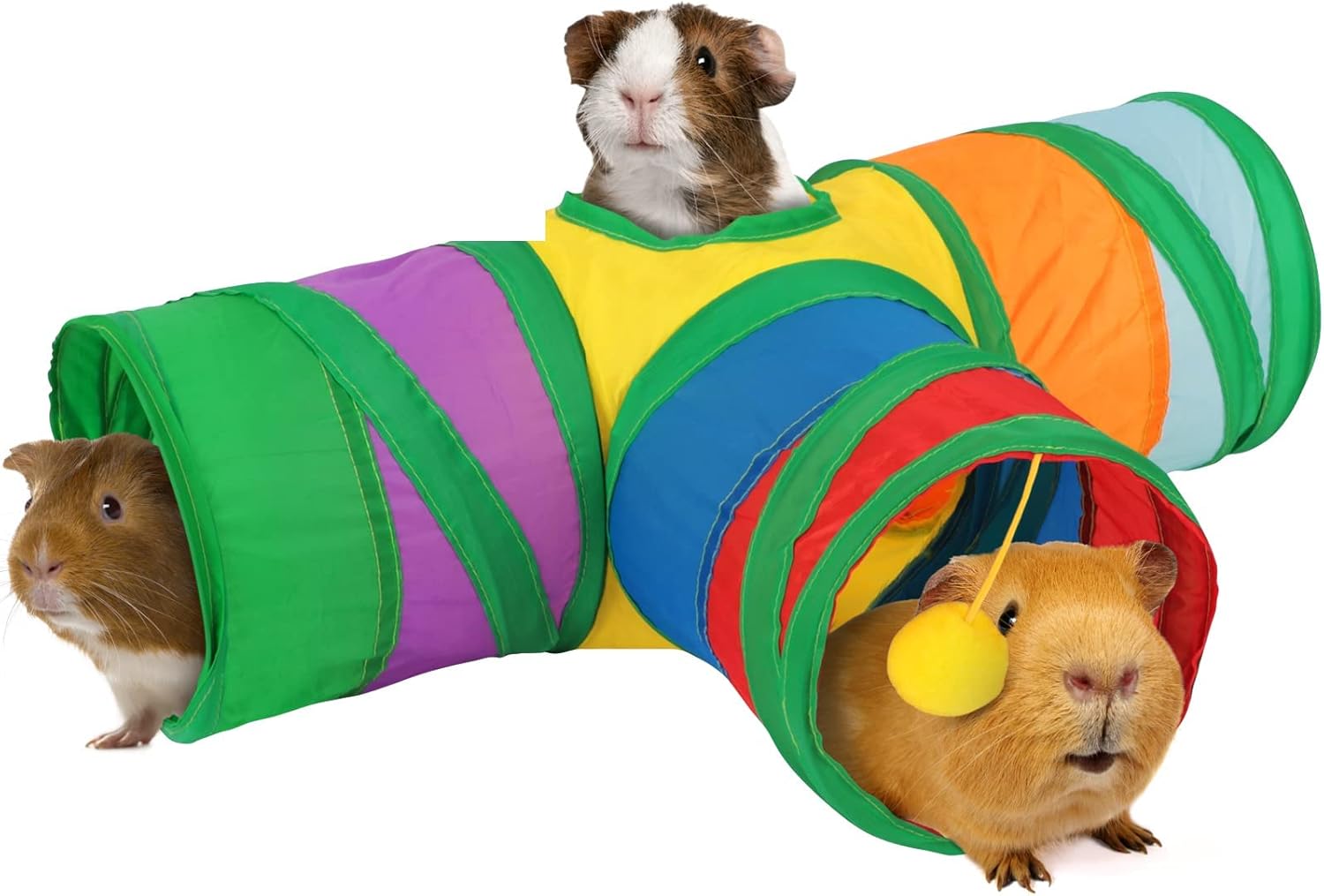
Tunneling sits at the heart of ferret enrichment, and this linked set represents the three components of a modular fabric tunnel setup: a main collapsible fabric tunnel sized for ferret bodies, a five-foot extension section for adding length and bends, and a connector ring set for joining tubes into multi-entrance configurations. Ferret-tunnel products in this category are typically sewn from heavy-duty nylon or polyester with an internal wire coil that holds the tube open while allowing it to collapse flat for storage; per manufacturer listings, the tube diameters run roughly five to six inches, which accommodates most adult ferrets including large males over two and a half pounds. Multiple access points along the length matter more than raw length alone — ferrets instinctively poke out of burrow entrances mid-run, and owners consistently report that a tunnel with side openings sustains play far longer than a simple open-ended tube.
Verified owner feedback on this class of tunnel is consistent: ferrets of nearly every age and temperament engage with it, using the tube for running games, ambush play, wrestling matches, and, inevitably, as a cache for stolen socks and keys. The trade-offs reported are equally consistent. Fabric tunnels with enclosed wire frames should not be left in the enclosure unsupervised, because a determined chewer can eventually work through seams and expose the wire, and a kinked frame is difficult to straighten. Long configurations demand real floor space — a ten-foot layout is not an apartment-friendly toy. On the plus side, the fabric cover on most models of this type unzips for machine washing, which matters because ferrets do occasionally have accidents inside tunnels during excited play. Washing every two to three weeks, with the frame wiped down using a pet-safe disinfectant, is the maintenance cadence most experienced owners report.
The extension and connector components suit multi-ferret households and owners who want configurability without buying an entirely new system. Extensions let you build loops and figure-eight paths that support chase games between cage-mates; connectors keep junctions smooth so claws do not snag at the seams. If you own only one ferret or have limited space, the main tunnel alone is the sensible starting purchase, and the extension becomes worthwhile only when initial engagement stays high — a pattern many owners describe, since novelty is the currency of ferret play and a reconfigured tunnel reads to a ferret as a brand-new environment.
Check the main ferret tunnel on Amazon
View the 5-foot tunnel extension section
See the tunnel connector ring set
2. Dig Box and Foraging Setup
No purchase link from our current set covers a dig box, but any honest ferret enrichment guide has to address digging, because it is the single most frequently misdirected ferret instinct. A dig box is a simple concept: a shallow, sturdy container — commonly a plastic tub around two feet by sixteen inches with high enough walls to contain scatter — filled with a ferret-safe substrate. Widely used fillers include long-grain rice (never instant rice, which swells if eaten), dried pasta shells, untreated cork granules, and clean play sand. Owners bury treats or crinkle toys in the filler so the dig doubles as a foraging exercise, converting a twenty-minute excavation session into a combined physical and mental workout.
Trade-offs are real and should not be minimized. Dig boxes scatter material; placing the box on a vinyl mat or inside a playpen dramatically reduces cleanup. Filler must be replaced every two to three months, both for hygiene and because digging ferrets moisten and soil the substrate over time. Most importantly, supervision is non-negotiable: some ferrets attempt to eat filler material, and while most non-toxic substrates pass in small quantities, habitual ingestion justifies removing the dig box entirely for that animal. Owners of dedicated diggers report the effort is repaid many times over in spared carpet and houseplants, which is exactly the redirection dynamic enrichment is meant to produce.
3. Puzzle Feeders and Treat-Dispensing Toys
Puzzle feeders turn mealtime into problem-solving. Products in this category typically use sliding doors, flip lids, or rotating wheels concealing small food compartments; the ferret must manipulate each mechanism to reach kibble or treats. Ferret-specific designs exist, and quality small-pet puzzle feeders are generally made from BPA-free rigid plastic with rounded edges, a non-slip base, and dishwasher-safe disassembly. Owner reports on puzzle feeders are largely positive, with a recurring caveat: ferrets are fast learners, and many animals master simple mechanisms within a few sessions, after which the toy functions mainly as a slow feeder rather than a genuine challenge. Choosing adjustable-difficulty models, or hiding treats more deeply, extends the useful life of the enrichment.
Two safety points apply. First, puzzle feeders are for dry food and hard treats only — wet food wedged into mechanisms breeds bacteria and is difficult to clean out of crevices. Second, because ferrets have exceptionally strong jaws for their size, inspect plastic mechanisms regularly for chew damage; a cracked slider or a gnawed edge can produce exactly the small sharp fragment that foreign-body emergencies are made of. The payoff, per the American Ferret Association's enrichment guidance, is that foraging-based feeding mirrors how wild mustelids earn multiple small meals across a day, and many owners report calmer, less destructive afternoon behavior on days their ferrets work for breakfast.
Comfort Items: Hammocks, Hideaways, and Sleep Enrichment
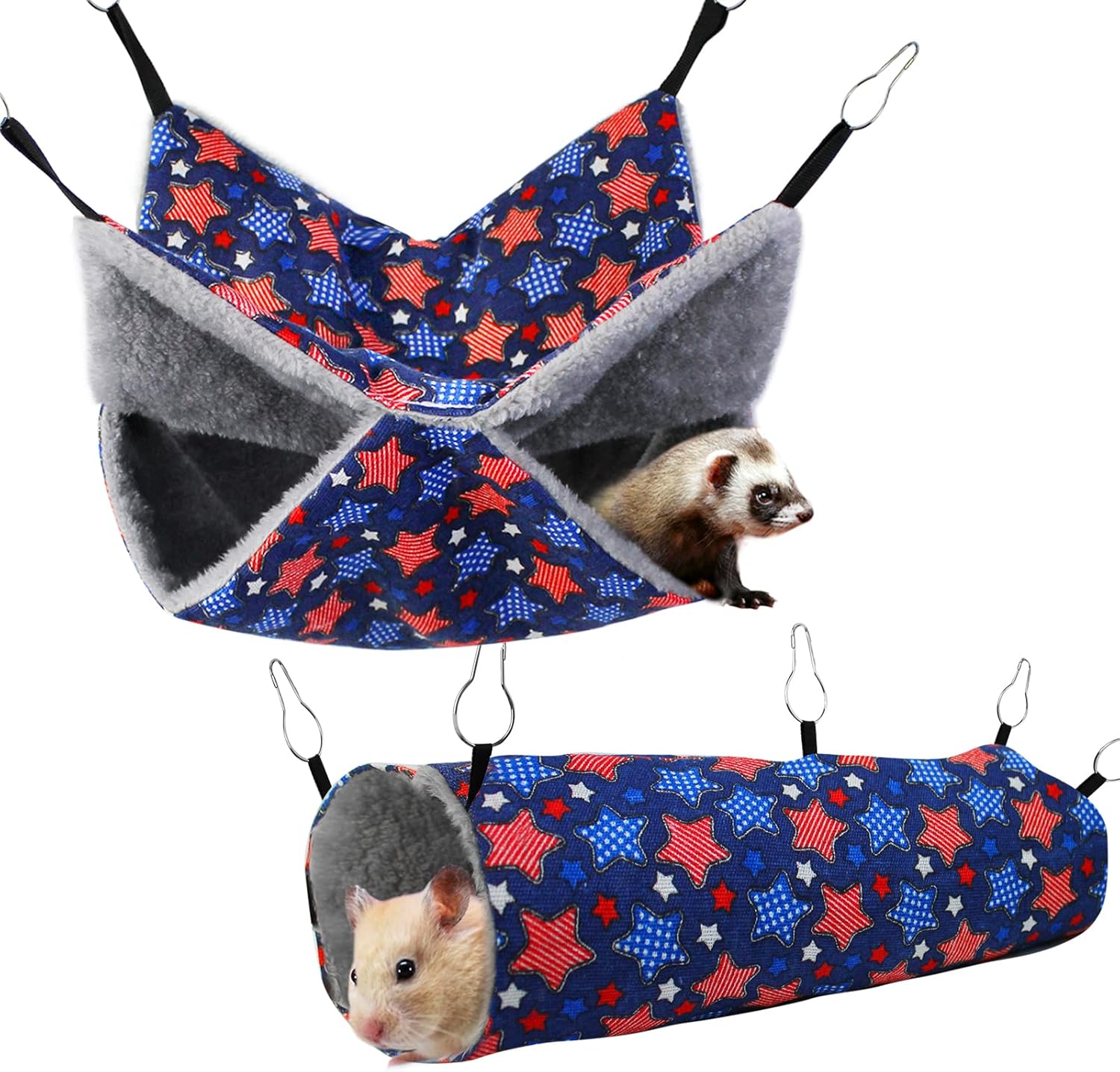
Enrichment for ferrets includes rest, and rest is where hammocks, hanging cubes, cuddle sacks, and fleece burrow logs earn their place. Ferrets sleep deeply and long, and they strongly prefer enclosed, elevated, or swaddling rest positions — a preference that traces directly to the security of a burrow. Published product specifications for mainstream ferret hammocks typically list polyester fleece construction, four metal attachment clips rated to several pounds, and machine washability, which is essential rather than optional: ferret bedding accumulates fur, dander, and the distinctive musky oils of the species, and most care guidance recommends washing fabric items weekly to biweekly.
Fleece deserves special mention because it is the one fabric consistently recommended for ferret soft items. Tight-weave fleece does not fray into ingestible threads the way loosely woven fabrics do, and it lacks the exposed stuffing of cheap plush toys — though any fleece item with batting inside should be inspected for holes, because exposed polyfill is a classic intestinal-blockage hazard. Hanging items should be hung low enough that a failed clip does not drop a sleeping ferret far, and clips should be checked monthly, as budget hardware can rust or fatigue. Owner reports also note a social dimension: ferrets that share hammocks tend to sleep piled together, and multi-ferret households typically install more sleeping spots than animals, since ferrets both pile up and occasionally squabble over prime real estate.
How to Choose Ferret Enrichment: Buying Criteria
Safety screening comes first. Before any toy enters a ferret's space, examine it the way a ferret will: pull at every seam, squeeze every component, and hunt for anything detachable. Reject toys with glued-on plastic eyes, small bells accessible to teeth, foam filling, latex components, or trailing strings and ribbons. Ferrets dismantle things that survive cats and small dogs; durability ratings borrowed from cat-toy marketing are not transferable. The American Ferret Association's supervision guidance exists precisely because the gap between 'sold for ferrets' and 'ferret-proof' is wider than most new owners expect.
Match the item to life stage. Kits and young adults under two years carry the highest energy loads and need physical outlets — long tunnels, dig boxes, and chase toys — preferably rotated to fight habituation. Adults from two to five years do well on a balanced mix of active toys, foraging puzzles, and comfort items. Seniors over five still need mental stimulation but benefit from gentler formats: fleece items with treat pockets, low-difficulty puzzles, and joint-friendly hammocks. Owner reports on senior ferrets repeatedly describe animals who ignore the high-speed play of their youth but will still work ten unhurried minutes to extract a treat from a soft pocket.
Plan for rotation from the start. Ferrets habituate to static environments quickly. A practical approach, widely shared in owner communities, is a library of ten to fifteen items with only four or five in circulation at a time, swapped every three or four days. Stored toys regain near-full novelty value on return, which effectively multiplies the enrichment value of every purchase. Budget accordingly: it is usually better to buy several inexpensive safe items than one expensive item that goes stale in a fortnight.
Cleanability is a specification, not a bonus. Tunnels get soiled, dig boxes get replaced, puzzle feeders get greasy with food oils, and hammocks collect musk. Before buying, check the listing for machine washability on fabric items and dishwasher compatibility on hard items, and weigh how easily a product disassembles. Intricate plush toys with sewn-in crinkle inserts, for example, often cannot be washed without destroying the sound element that makes them interesting.
Materials and Specs That Actually Matter
For tunnels, the numbers that matter are diameter and access points: five to six inches of diameter suits the breed-typical adult, and multiple openings along the run support the pop-in, pop-out behavior ferrets favor. Fabric weight and double-stitched seams distinguish durable models from disposable ones, and an enclosed, fully covered wire frame is a hard requirement — any exposed coil is a chewing and injury risk. For hard toys, look for BPA-free rigid plastic with rounded edges and replaceable or at least cleanable mechanisms. For fabric comfort items, tight-weave fleece with minimal sewn-on decoration is the safe baseline. Avoid natural rubber and latex entirely in ferret households; many ferrets destroy and swallow latex pieces, and latex ingestion incidents are well documented in exotic-pet veterinary literature.
Common Mistakes Owners Make
The most frequent mistake is treating enrichment as a one-time purchase. A pile of toys dumped into a play area all at once loses its effect within days; the same pile, rationed and rotated, lasts months. The second is leaving destructible toys unsupervised in the cage — nearly every published ferret care source, including the AFA guidance cited above, stresses supervised play precisely because ingestion emergencies happen during unsupervised hours. The third is underestimating out-of-cage time: ferrets need roughly four hours of supervised free-roam play daily, typically split across multiple sessions, and no toy substitutes for that interaction. The fourth is misreading destructive behavior as misbehavior; a ferret shredding a hammock is usually an under-exercised ferret that needs a dig box and a longer tunnel run, not fewer possessions. Finally, many owners delay discarding worn items — a toy with a hole, a frayed edge, or a loosened component is no longer a toy but a hazard, and replacement schedules should be treated as a routine cost of ferret ownership.
Daily and Weekly Maintenance Routine
A sustainable enrichment routine looks roughly like this. Daily: supervise out-of-cage sessions with tunnels and dig box available, spot-check toys for new damage, and remove any item that has developed a tear or exposed filler. Weekly: machine-wash fabric items — hammocks, fleece toys, tunnel covers — on a gentle cold cycle and air dry, and hand-wash hard plastic toys with mild soap. Monthly: deep-clean the play area, inspect hanging hardware for rust or fatigue, and rotate the toy library. Every two to three months: replace dig box filler and reassess whether each toy still earns its place in the rotation. This cadence reflects the maintenance intervals published in manufacturer care instructions and echoed across long-term owner reports.
Frequently Asked Questions
How much out-of-cage time do ferrets need daily? Roughly four hours minimum of supervised play, usually split into two or three sessions. Tunnels, dig boxes, and foraging toys should be available during these windows, and ferreting-proofing the room — cable covers, blocked gaps, removed houseplants — matters as much as the toys themselves.
Are cat toys safe for ferrets? Selectively. Crinkle balls, sturdy fabric tunnels, and wand toys used under supervision generally transfer well. Avoid anything with feathers, catnip filling, glued decorations, small bells, or dangling string, since ferrets disassemble toys far more aggressively than cats and the ingestion risk profile is different.
How often should ferret toys be cleaned? Fabric items every one to two weeks, hard plastic items weekly by hand, and dig box filler every two to three months. Cleaning sessions double as inspection sessions — damage found during washing is damage that never becomes an emergency.
Final Verdict
- Best overall enrichment investment: a modular fabric tunnel system — the linked main ferret tunnel is the core purchase, with the extension and connector set added for multi-ferret households.
- Best instinct fulfillment per dollar: a dig box with rice or sand filler and buried treats, addressing the digging drive that causes most household destruction.
- Best daily mental stimulation: a puzzle feeder used for the morning meal, converting foraging instinct into problem-solving work.
Ferrets are demanding, and that is the honest pitch. They need hours of daily interaction, ferret-proofed space, a rotation of safe enrichment, and an owner willing to retire damaged items without sentiment. The reward is one of the most playful and personable small pets available — an animal that will dance, doze, cache, and scheme its way into the center of a household for a six-to-ten-year lifespan. The products and practices described here, verified against manufacturer specifications and the published guidance of organizations like the AFA, are the foundation that keeps those years active and healthy.
Affiliate Disclosure: PawCritic is a participant in the Amazon Services LLC Associates Program, an affiliate advertising program designed to provide a means for us to earn advertising fees by linking to Amazon.com and affiliated sites. Purchases made through our links help support our independent research at no extra cost to you. Thank you for your support.
Last updated: July 10, 2026. Prices and availability are subject to change. Always verify current pricing and specifications on Amazon before purchasing.