Fish Food for Bottom Feeders 2026: Sinking Pellets and Wafers — A Practical Buying Guide
Bottom-dwelling fish occupy a unique niche in the aquarium, and that niche creates a genuine feeding problem. Flakes and floating pellets are designed to stay at the surface, where mid-water and surface feeders get first access. By the time food drifts down, catfish, loaches, and plecos often receive only scraps — or nothing at all. Sinking pellets and wafers solve this by delivering nutrition directly to the substrate level, where bottom feeders naturally forage. This guide explains what matters when choosing a sinking food: ingredient quality, physical format, sink rate, species-specific nutrition, and storage. It draws on published husbandry guidance rather than laboratory evaluation, and it points to verified owner reports and manufacturer specifications where those are the honest source of a claim. For foundational husbandry background, the Merck Veterinary Manual's section on exotic and laboratory animals is a solid reference, and aquatic nutrition and health resources such as UF/IFAS Extension EDIS publications on aquaculture and fish health cover the underlying science of fish diets.
Why Bottom Feeders Need Dedicated Sinking Foods
In a community tank, the fish that eat last are usually the fish that eat least. Corydoras catfish, bristlenose and other plecos, khuli and clown loaches, otocinclus, synodontis catfish, and even bottom-grazing shrimp and snails all feed at or near the substrate. Surface-oriented fish such as guppies, bettas, and hatchetfish will often intercept floating food within seconds of it hitting the water. Even mid-water feeders like tetras and barbs will chase sinking flakes well before they reach the bottom. The practical consequence is that bottom dwellers in a mixed community can be chronically underfed even when the owner is adding what looks like plenty of food. Malnutrition in bottom feeders tends to be slow and easy to miss: a pleco that gradually loses body condition along its flanks, a corydoras that becomes lethargic, or a loach that stops growing. Dedicated sinking foods remove the competition problem because they reach the substrate quickly and stay there, in the form and texture these fish are built to consume.
There is also a behavioral component. Many bottom feeders are nocturnal or crepuscular feeders — khuli loaches and many plecos are most active after lights-out. A feeding routine that includes a small portion of sinking wafers dropped in after the aquarium light turns off matches their natural activity pattern far better than a single daytime flake feeding. Published husbandry guides for aquarium catfish consistently recommend this approach for nocturnal species. If you keep fish that hide during the day, a nighttime sinking feed is one of the simplest husbandry improvements you can make.
Pellets Versus Wafers: Understanding the Two Main Formats
Sinking foods come in two dominant physical formats, and choosing between them is not just cosmetic. Pellets are compact, usually cylindrical or disc-shaped, and typically sink quickly — often within a few seconds of hitting the water. They suit active bottom feeders with decent-sized mouths: corydoras, most synodontis, clown loaches, and larger catfish. Their main advantages are portion control and fast delivery to the substrate. Their main drawback is that very small or slow-feeding species can lose pellets to faster tankmates.
Wafers are larger, flatter, and harder discs designed to sink and remain intact for an extended period — often thirty minutes to several hours depending on formulation. Vegetable-based wafers are the standard offering for plecos and otocinclus, whose wild diets are dominated by aufwuchs: the film of algae, biofilm, and microorganisms that grows on submerged surfaces. A wafer gives these grazers something to rasp at over a long period, mimicking their natural feeding behavior. The trade-off is uneaten portions: if a wafer is not consumed within a few hours, it begins to soften and break down, contributing to ammonia and phosphate spikes. Wafers should be sized to what your fish can finish in a single overnight feeding session, and leftovers should be removed with a net or siphon the next morning.
Reading the Ingredient List Like a Fish Nutritionist
The ingredient panel on a fish food container is ordered by weight before processing, and learning to read it is the single most useful skill for evaluating any brand. For herbivorous and omnivorous bottom feeders such as bristlenose plecos and otocinclus, you want to see plant matter — spirulina, kelp, alfalfa meal, vegetable matter, or algae derivatives — prominent in the list. For carnivorous and omnivorous bottom feeders such as corydoras and loaches, look for aquatic protein sources: fish meal, shrimp meal, krill, or squid. Fish meal listed first is not automatically a red flag; meal is simply a concentrated, dried protein form, and it is a standard ingredient across the aquaculture feed industry, where formulations are validated by decades of production research.
What deserves skepticism is a food whose first several ingredients are fillers — wheat flour, soybean meal, and ground rice — with the protein sources appearing only after the vitamin premix. Fillers are not worthless; they act as binders that hold a pellet together and provide carbohydrates. But a sinking food built primarily from terrestrial grains will deliver less usable protein per pellet, and fish fed on it long-term can show poor growth and dull coloration. Also check the guaranteed analysis panel for crude protein percentage. A reasonable benchmark for community bottom feeders is roughly 30 to 40 percent crude protein; dedicated herbivore wafers may sit lower, closer to 25 to 30 percent, reflecting their plant-based formulation.
Vitamin content matters more than many hobbyists realize, because vitamins degrade in storage. Vitamin C, in particular, is fragile: heat, light, and moisture all break it down, and vitamin C deficiency in fish manifests as spinal deformities, poor wound healing, and reduced disease resistance — effects documented in the aquaculture nutrition literature. Buy container sizes you can use within a few months, and treat the printed vitamin levels as a ceiling rather than a constant.
Sizing: Matching Food to Mouth and Species
Physical size is where many buying mistakes happen. A pellet that is too large simply cannot be eaten by small-mouthed species. Corydoras habrosus or pygmy corydoras, for instance, have tiny downward-facing mouths suited to sifting substrate and picking up small particles; a large catfish pellet may sit untouched while the fish go hungry. Micro pellets or crumbled wafers are the right choice for dwarf species. Conversely, a large pleco or clown loach can handle — and will prefer — substantial pellets and full-sized wafers, and tiny granules will be scavenged by tankmates before the big fish find them. A general rule of thumb from aquarium husbandry practice: the food item should be no wider than the distance between the fish's fully open jaws, and for grazers, wafer diameter should roughly match the fish's head width so it can anchor the wafer against the glass or substrate while rasping.
Think also about how many feeding stations your tank needs. In community aquariums with territorial bottom dwellers — many synodontis and some plecos defend chosen caves — a single feeding point lets the dominant fish monopolize the food. Distributing two or three small portions to different corners of the tank, or one portion at each end plus a wafer near a shy fish's retreat, ensures subordinate animals get a share.
Species-Specific Considerations
Corydoras catfish are omnivores that feed by shoveling substrate through their mouths and filtering out edible particles. They do well on small sinking pellets with a mixed protein-and-plant profile, supplemented with frozen or live foods such as bloodworms and brine shrimp. Owner reports consistently note improved spawning activity in well-conditioned corydoras fed varied, protein-rich sinking diets.
Plecostomus and other Loricariids range from largely herbivorous (bristlenose, otocinclus) to more omnivorous (some Panaque species actually specialize on wood, deriving nutrition from the cellulose and the biofilm on it). Vegetable wafers with spirulina and wood fiber content suit most common species. Driftwood in the tank is not just decoration for these fish — it is a dietary component and a grazing surface. Otocinclus in particular are delicate feeders that do best in established tanks with natural biofilm, supplemented with thin wafers or blanched vegetables such as zucchini.
Loaches — khulis, clowns, yoyos, and their relatives — are enthusiastic carnivore-leaning omnivores with downward-turned mouths built for snuffling through substrate. Sinking pellets with shrimp or krill content are usually devoured. Many loaches also perform a genuine service by eating nuisance snails, and hobbyists keeping them for snail control should note that pellets remain a dietary staple; snails are a supplement, not a complete diet.
Shrimp and snails benefit from dedicated sinking foods too. Shrimp foods are typically small, slow-sinking pellets or sticks formulated with calcium for molting; snails such as nerites and mystery snails will congregate on vegetable wafers and calcium-rich foods. The ASPCA pet care library is a useful general reference for pet nutrition fundamentals, including guidance on feeding routines and the risks of overfeeding.
A Concrete Example Worth a Look
fish food for bottom feeders sinking pellets and wafers
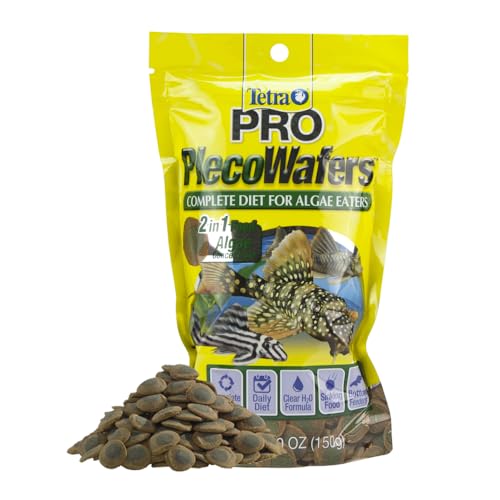
Rather than a ranked list, consider one widely stocked example of the category: check the current price on Amazon. This product is a vegetable-based sinking wafer aimed at algae-eating bottom dwellers such as plecos and otocinclus, and it has a long track record in the hobby — it is the kind of staple many aquarists keep on the shelf alongside a protein pellet. According to the manufacturer's specifications, it is formulated to sink quickly and hold its shape so grazing fish can feed over an extended period, with spirulina and vegetable content forming the nutritional base. Verified owner reviews repeatedly describe fish gathering on the wafers within minutes and consuming them fully overnight, which addresses the two practical concerns that matter most with this format: does it actually sink, and does it hold together.
Who it suits: aquarists keeping bristlenose plecos, otocinclus, and similar grazers, particularly in community tanks where the wafer format protects feeding time from faster surface fish. The trade-off is the same one inherent to all wafers — if your bottom-dweller biomass is small, a full wafer may be more than the tank can consume in one night, so breaking wafers into halves or quarters is a sensible routine. And because it is plant-forward, heavily carnivorous bottom feeders like clown loaches should get a protein pellet as their primary food, with this as variety rather than staple. For current pricing, container size, and the full ingredient panel, view this option on Amazon and compare the listed crude protein and ingredient order against the benchmarks discussed above.
How Much and How Often to Feed
Overfeeding is the most common feeding error in the aquarium hobby, and sinking foods make it easy to commit, because uneaten portions are hidden under decorations rather than visible at the surface. A practical guideline from experienced aquarists and published husbandry advice: feed only what the bottom-dwelling fish can completely consume within about twenty to thirty minutes for pellets, or overnight for wafers dropped after lights-out. For most community tanks this works out to a small pinch of pellets once daily, or one appropriately sized wafer every one to two days depending on the number of grazer mouths. Monitor your nitrate and phosphate trends — uneaten food shows up in water tests, and rising values between water changes are a reliable signal to cut portions. Fish physiology supports restraint as well: aquarium fish are cold-blooded and have low energy requirements compared to mammals, and the aquaculture literature repeatedly documents that growth and water quality are both better under moderate feeding than under ad libitum overfeeding.
Storage and Maintenance of Fish Foods
Fish food is perishable, and treating it as a shelf-stable pantry item is a genuine mistake. Once opened, oxidation begins degrading fats and vitamins; rancid fats are not just unpalatable — oxidized lipids have been associated with health problems in fish. Store containers tightly sealed, in a cool, dry, dark place — not on top of the aquarium hood, where warmth and humidity accelerate degradation, and not in the refrigerator, where condensation on cold containers introduces moisture each time you open the jar. Many manufacturers print a best-by date, and a good personal rule is to finish any opened container within about three to six months. If a food smells sour, paint-like, or sharply fishy when fresh-opened, or if pellets have clumped or discolored, replace it. Never add water to the container to soften food — this contaminates the whole jar with bacteria. If a wafer needs pre-soaking, soak the individual portion in a cup of tank water for a few minutes first.
Common Mistakes to Avoid
- Assuming bottom feeders live on leftovers. The old advice that catfish clean up after other fish is a myth that kills fish slowly. Leftovers are nutritionally unpredictable and often absent entirely. Every bottom feeder needs deliberate, targeted feeding.
- Feeding only one food type. A diet of nothing but one pellet brand, or nothing but wafers, risks both nutritional gaps and boredom-driven refusal. Rotate between a protein pellet, a vegetable wafer, and periodic frozen or blanched-fresh foods.
- Ignoring nocturnal schedules. Adding sinking food only in the morning means nocturnal species compete against the whole tank. Feed them after lights-out.
- Leaving uneaten wafers to dissolve. A forgotten wafer decaying behind driftwood can trigger an ammonia or planaria problem. Remove what is left after a few hours.
- Buying oversized containers. The bulk price per ounce looks better, but a container that sits half-full for a year delivers degraded nutrition. Buy sizes matched to your fish count.
What to Avoid When Shopping
Beyond ingredient quality, watch for a few red flags. Avoid foods with no guaranteed analysis printed on the packaging — reputable manufacturers provide protein, fat, fiber, and moisture figures as a matter of course. Be cautious with heavily dyed pellets; colorants do nothing for the fish and sometimes mask low-grade ingredients. Avoid opaque packaging that exposes contents to light on store shelves, and check dates where printed. Finally, be wary of marketing claims that a single food is complete for every fish in a mixed community containing both herbivorous and carnivorous bottom dwellers — the nutritional spread between a bristlenose and a clown loach is wide enough that two foods genuinely serve them better than one.
fish food for bottom feeders sinking pellets and wafers
Frequently Asked Questions
How do I know if my bottom feeders are actually eating?
Watch for the fish to find the food within a few minutes of it dropping, and check whether portions are gone by the end of the feeding window. Body condition is the long-term indicator: a healthy corydoras or pleco viewed from above has a rounded, filled-out profile behind the head; a concave or knife-edged flanks appearance signals underfeeding.
Can I feed vegetables instead of commercial wafers?
Blanched zucchini, cucumber, spinach, and repashy-style gel foods are popular supplements and many grazers love them. They work best as variety alongside a formulated staple, because whole vegetables alone do not provide complete vitamin and mineral profiles. Remove fresh vegetables within a day.
How much should I expect to spend?
Sinking pellets and wafers are inexpensive relative to most aquarium costs. Quality containers typically run in the five-to-fifteen-dollar range and last months for an average community tank, so the deciding factor should be formulation and freshness, not small price differences.
My fish refuse the new sinking food — what now?
Transition gradually by mixing new and old foods, and try feeding after lights-out for shy species. Fish that have eaten one food for years can take a week or more to accept a change. Persistent refusal with weight loss warrants a look at food size — pellets too large are a frequent cause.
Do bottom feeders need food every day?
Most adult community bottom feeders do well with daily feeding in appropriate portions; some aquarists keep grazers like bristlenose on an every-other-day wafer schedule with natural biofilm in between. Consistency and water-quality monitoring matter more than the exact cadence.
Wrapping Up
Choosing a sinking food comes down to a short checklist: match the format to the species (pellets for hunters, wafers for grazers), match the size to the mouth, read the ingredient list for aquatic protein or plant content appropriate to your fish, buy container sizes you will finish while fresh, and feed amounts the tank can fully consume. A single well-chosen staple, rotated with one or two complementary foods and fresh supplements, covers nearly every community bottom feeder. If the example above fits your grazer-heavy tank, you can check the current price on Amazon — or use the same evaluation criteria on any comparable option. Either way, your catfish, loaches, and plecos will finally get their fair share at dinner.
Disclosure: This article contains affiliate links. If you make a purchase through these links, we may earn a commission at no extra cost to you. Thank you for supporting PawCritic!