Guinea Pig Vitamin C Supplements 2026: A Practical Buying Guide
Published on July 4, 2026 by PawCritic — Small Pets Category
Guinea pigs occupy an unusual position among small pets: like humans and a handful of other species, they cannot synthesize their own vitamin C. This is caused by a mutation in the L-gulonolactone oxidase gene, the same gene that is non-functional in humans and primates. Without the ability to produce ascorbic acid internally, a guinea pig depends entirely on what it eats each day to meet its requirement, and there is no internal reserve to fall back on.
The consequence of a shortfall is scurvy, and the clinical picture is well documented in veterinary references such as the Merck Veterinary Manual's exotic and laboratory animals section. Symptoms progress through lethargy, a rough or staring coat, poor appetite, weight loss, swollen and painful joints, reluctance to move, bleeding gums, delayed wound healing, and weakened immune function. In severe or prolonged cases scurvy is fatal. Because the body stores almost none of it, a gap of even a week or two in intake can begin to produce visible signs, which is why daily consistency matters more than occasional large doses.
One point that surprises many new owners is that pelleted food is not a dependable sole source. Vitamin C in pellets degrades over time, and degradation accelerates once the bag is opened and exposed to air, heat, and humidity. Published stability data suggest potency losses of roughly half within about ninety days of manufacture, and faster after opening. This means a fortified pellet is a useful foundation but not a guarantee, and a dedicated supplement or a strong fresh-vegetable routine fills the gap.
This guide explains how vitamin C supplementation works for cavies, what formats exist, how to dose them, and what to check before buying. Rather than a numbered ranking, it treats the category as a whole and uses one widely available tablet product as a concrete example you can look at alongside the general buying criteria.
Why Guinea Pigs Cannot Go Without Vitamin C
The daily requirement for an adult guinea pig is generally cited as roughly 10 to 30 mg per kilogram of body weight, which works out to about 30 to 50 mg per day for a typical 1 kg (2.2 lb) adult. Pregnant, nursing, young, or ill animals may need more, in the range of 50 to 100 mg daily, because growth and immune demand raise consumption. These figures come from published husbandry and veterinary guidance rather than any single product's marketing, and your exotic-animal veterinarian can help you fine-tune them for your animal's age and condition. Resources like the Association of Exotic Mammal Veterinarians can help you locate a vet who works with cavies regularly.
Because vitamin C is water-soluble, excess amounts are excreted in urine rather than stored, so intake has to be renewed every day. That water solubility is also why toxicity is rare: mild over-supplementation usually causes no harm. However, very high daily doses, in the range of 200 mg or more, have been associated with digestive upset in some animals, so more is not better. Aiming for the recommended range and being consistent is safer than swinging between deficit and overload.
The Four Supplement Formats and Their Trade-offs
Chewable Tablets
Tablets are the format most often recommended in husbandry literature because each tablet carries a fixed, printed dose, usually 50 mg, which removes the guesswork. A stabilized ascorbic acid formulation in a hay-based carrier also tends to hold potency longer than liquid products. The trade-off is palatability: not every guinea pig accepts a tablet on the first offer, and some individuals ignore them indefinitely. Tablets also tend to cost more per dose than bulk human-grade options. For most healthy adults, though, a tablet given as a small daily treat is the most reliable routine.
Liquid Drops
Liquid supplements shine when precise, adjustable dosing matters: smaller animals, growing pups, or sick and post-surgery cavies that need syringe feeding. Drops can be applied directly to a favored vegetable slice, mixed into critical-care formula, or given by mouth. The trade-offs are shelf life and handling: many liquid vitamin C products need refrigeration after opening and lose potency faster than tablets. Ascorbic acid also degrades quickly in solution, so a liquid must be fresh to deliver its labeled dose.
Fortified Hay Treats
Compressed hay wafers with added vitamin C, typically around 25 mg per wafer, pair supplementation with the fiber and dental wear that chewing hay provides. They suit guinea pigs that love to chew and multi-pig households where a shared wafer becomes a routine. The trade-off is that two wafers are needed to reach a full 50 mg, the vitamin C in a hay matrix is somewhat less stable than in a coated tablet, and treat-fed animals may fill up and eat less plain hay, which is the backbone of the diet. Treats should supplement, never replace, unlimited loose hay.
Water Additives
Water additives are the most passive format: add drops to the bottle and walk away. Unfortunately, they are also the least reliable, and most husbandry guidance discourages them as a primary method. Ascorbic acid degrades rapidly in water, with potency losses that can reach half within a day, and some guinea pigs drink less when the taste changes, which creates a double problem of unknown dose and reduced hydration. If you use a water additive at all, treat it as a backup, change the water daily, and watch that bottle levels do not drop.
Fresh Vegetables: The Foundation Before Any Bottle
No supplement beats a strong daily vegetable routine. Red bell pepper is the standout source at roughly 95 mg per 100 g serving, with yellow bell pepper around 80 mg, kale near 50 mg, broccoli about 45 mg, parsley around 40 mg, and Brussels sprouts near 35 mg. A sensible daily cup of mixed, pepper-heavy vegetables can supply 20 to 40 mg of vitamin C on its own, meaning a supplement only needs to top up the remainder. Rotate greens rather than relying on one item, both for nutritional breadth and because guinea pigs can become bored or, with calcium-dense greens like parsley, take in more calcium than is ideal. Introduce new vegetables gradually to avoid digestive upset.
Buying Criteria: What to Check Before You Pay
- Printed dose per unit. Look for a stated mg figure per tablet, drop, or wafer so you can calculate how many units equal the daily target. Vague 'rich in vitamin C' claims are not dosable.
- Stabilized ascorbic acid. Coated or stabilized formulations hold potency over months; plain ascorbic acid in loose powder or liquid degrades faster.
- Hay-based carrier. Timothy-hay bases suit adult guinea pigs; alfalfa bases add calcium, which is fine for pups and pregnant sows but questionable for adults prone to bladder stones.
- No dangerous additives. Check the ingredient list against a toxic-ingredient reference such as the ASPCA Animal Poison Control database. Human products in particular may contain xylitol or artificial sweeteners.
- Package size versus shelf life. Vitamin C products lose potency after opening, so for a single guinea pig, a smaller container used within a couple of months beats a large bottle that goes stale.
- Species labeling. Products made for guinea pigs or rabbits usually have appropriate flavoring and base ingredients; products made for humans need careful vetting and ideally veterinary approval.
A Concrete Example: A Veterinary-Familiar Tablet Supplement
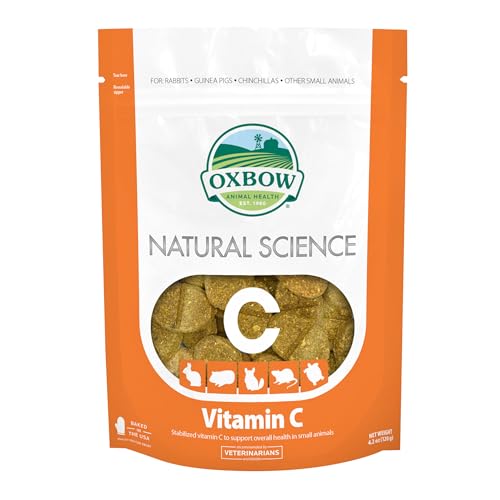
As one concrete example of the tablet format done well, look at Oxbow's Natural Science Vitamin C, a product from a brand that exotic veterinarians and long-time cavy owners frequently mention. Each tablet carries 50 mg of stabilized vitamin C in a timothy-hay-based carrier, which lines up neatly with the daily adult requirement: one tablet, one dose, no arithmetic. The hay meal base is species-appropriate for adults, and the manufacturer's labeling specifies suitability for animals six months and older, with package sizes ranging from 50 to 150 counts and a stated shelf life of around 18 months unopened.
Verified owner reports consistently describe the tablets as well accepted, with most guinea pigs taking them as a treat rather than needing them hidden in food. The trade-offs reported are the ones you would expect from the format: a higher per-dose cost than splitting human tablets, some crumbling when tablets are handled roughly, and occasional individuals who ignore tablets entirely. The brand also makes a companion multivitamin in the same line for owners who want broader coverage; a multivitamin is generally unnecessary if the base diet is good, but it exists as an option. If you want to see the exact product, current pricing, and label details, you can check the current price on Amazon. The same listing family covers the larger count sizes, so if the smaller package suits a single pig, you can also view this option on Amazon in the larger format for multi-pig households. Owners curious about the broader supplement line rather than vitamin C alone can view this option on Amazon as well; as always, read the guaranteed analysis on the label before adding anything to the routine.
Who This Example Suits
A fixed-dose hay-based tablet suits healthy adult guinea pigs, first-time owners who want to remove dosing guesswork, and households where the animal already accepts hand-fed treats. It suits multi-pig homes less well if the pigs have very different needs, such as a pup alongside a senior, since one tablet size does not fit all life stages. In that case, a liquid with adjustable drops, applied to each pig's vegetable portion, gives finer control.
How to Choose Between Formats in Practice
Start with the diet and work backward. If your guinea pig eats a pepper-heavy daily vegetable serving, a single 50 mg tablet or an equivalent wafer pair covers the gap comfortably. If you have a picky pig that refuses tablets, owner-tested workarounds include crumbling the tablet over damp greens so the powder adheres, or switching to liquid drops placed on a favored slice. For ill or recovering animals that eat poorly, a liquid is the practical choice because it can be syringe-fed alongside recovery formula under veterinary direction. For breeders or growing pups, work with your vet, since requirements rise and calcium considerations change. The best supplement is, bluntly, the one your individual guinea pig will actually consume every single day.
Dosing Reference by Life Stage
| Life Stage | Approximate Daily Target | Suggested Format |
|---|---|---|
| Adult, healthy, good vegetable intake | 30–50 mg total from all sources | One 50 mg tablet or equivalent |
| Adult, poor vegetable intake | 50 mg, consistently | Tablet or fortified hay wafer |
| Pup under 6 months | Toward the upper range | Liquid drops, adjustable |
| Pregnant or nursing sow | 50–100 mg | Tablet plus diet review with a vet |
| Ill or recovering animal | As directed by a veterinarian | Liquid, syringe-feedable |
Storage and Potency
Vitamin C is sensitive to heat, light, and moisture, and every format degrades once opened. Store supplements in a cool, dry cupboard away from sunlight, keep containers sealed between uses, and note the opening date on the package with a marker so you can judge freshness later. Buy pellet bags in sizes your household finishes within roughly four to six weeks, transfer opened pellets to an airtight container, and do the same for opened supplement containers. Discard liquids past their refrigerated-use window even if they look and smell normal, because an oxidized vitamin C product can taste wrong, prompt refusals, and deliver less than the label promises. Check expiry dates at purchase time; a heavily discounted large bottle close to expiry is often a poor value.
Common Mistakes to Avoid
- Relying on pellets alone. Fortified pellets are a foundation, not a guarantee, because the vitamin degrades after the bag is opened.
- Relying on water additives as the primary method. Degradation in water and reduced drinking make the delivered dose unpredictable.
- Using human products without checking ingredients. Xylitol and some artificial sweeteners are dangerous; verify every ingredient before offering anything made for people.
- Giving huge doses to 'make up' for missed days. The body excretes the excess; consistency beats bulk.
- Ignoring vegetables. Supplements top up a diet; they do not replace fresh, high-vitamin-C produce.
- Skipping weighing. Weekly weight checks catch appetite loss early, which is often the first visible sign of deficiency or illness.
Recognizing Deficiency Early
Learn the early signs of scurvy so you can act before the condition advances: a rough or puffed coat, reduced activity, eating more slowly or dropping food, weight loss on the weekly scale, swelling or favoring of joints, and gums that look inflamed or bleed. Any of these warrants a veterinary visit promptly, because advanced scurvy is painful and can be fatal, while early cases usually respond well to restored intake. Deficiency signs can overlap with dental disease and other conditions, so let a professional confirm the cause rather than assuming vitamin C alone.
Frequently Asked Questions
Can a guinea pig get too much vitamin C?
Toxicity is rare because excess water-soluble vitamin C passes out in urine, but very high daily doses, around 200 mg or more, have been linked to digestive upset. Staying in the 30 to 50 mg range is the sensible course.
Do guinea pigs need vitamin C every single day?
Yes. There is no meaningful storage capacity, so intake must be renewed daily. A consistent routine matters far more than occasional large doses.
How long does vitamin C last in pellets after opening?
Potency declines significantly within about ninety days of manufacture and faster once opened. Buy bag sizes you finish within four to six weeks and store them airtight, cool, and dark.
Can I use human vitamin C for my guinea pig?
Sometimes, with veterinary approval and a careful ingredient check. Products containing xylitol or artificial sweeteners must be avoided, and accurate splitting of high-dose human tablets is harder than it sounds, which is why pet-formulated fixed-dose products are usually recommended.
What if my guinea pig refuses tablets?
Try crumbling the tablet over damp greens so powder sticks, or switch to liquid drops on a favorite vegetable. Fortified hay wafers are another accepted route for many stubborn individuals.
Are water additives ever acceptable?
As a backup only. If used, change the water daily, dose conservatively, and monitor that bottle levels show normal drinking.
Wrapping Up: Build a Routine, Not a Stockpile
Vitamin C supplementation is a non-negotiable part of guinea pig care, but it does not need to be complicated. Build the foundation with daily red bell pepper and rotated greens, add one reliable fixed-dose supplement in whatever format your animal actually accepts, store it properly, and use it before it expires. Weigh your pig weekly, watch the coat and appetite, and involve an exotic-savvy veterinarian at the first sign of trouble. If you want to compare the example tablet discussed above against what is available locally, you can check the current price on Amazon and read the full label before deciding. Whatever you choose, the product that gets eaten happily every day is the right one for your cavy.
Affiliate Disclosure: PawCritic is a participant in the Amazon Services LLC Associates Program, an affiliate advertising program designed to provide a means for us to earn advertising fees by linking to Amazon.com and affiliated sites. Purchases made through our links help support our research-based guides at no extra cost to you. Thank you for your support.
Last updated: July 4, 2026. Prices and availability are subject to change. Always verify current pricing and label details on Amazon before purchasing.