Why Hamster Bedding Deserves More Attention Than Any Other Cage Purchase
Bedding is not an accessory in a hamster habitat — it is the habitat. A hamster spends nearly its entire life in contact with the substrate: walking on it, digging through it, nesting in it, and in some cases moving it around by the cheek-pouchful for hours each night. Because hamsters live with their noses an inch or less from the cage floor for their whole lives, the dust level, chemical content, and absorbency of that substrate affect their respiratory health more than almost any other husbandry decision an owner makes. Veterinary guidance for small rodents, including material published by the Merck Veterinary Manual's exotic and laboratory animals section, consistently identifies bedding choice as a primary environmental factor in rodent husbandry, linking dusty or aromatic substrates to respiratory irritation and linking improper nesting material to injury.
The stakes run in both directions. The wrong bedding can contribute to chronic sneezing, wheezing, eye discharge, skin irritation, fur loss, impacted cheek pouches, and ammonia buildup from urine. The right bedding does the opposite: it supports burrowing, insulates the nest, wicks moisture away from the hamster's body, controls odor without synthetic fragrance, and gives the animal a surface it can reshape to its own design every night. An owner who gets bedding right has solved roughly half of the environmental side of hamster welfare before the wheel, hides, or toys even enter the picture.
Modern welfare standards have also shifted expectations upward. Where a thin scattering of shavings was once considered normal, current guidance from organizations such as the RSPCA and PDSA calls for deep, dust-free, absorbent, non-toxic substrate — with many keepers now aiming for eight to ten inches or more so the hamster can construct genuine tunnel systems. Paper-based bedding has become the default recommendation for meeting that standard, and larger value packs have made deep bedding affordable for most households. Shallow bedding may look tidy in photographs, but a hamster that cannot burrow tends to show more stress behaviors: bar-biting, pacing, and repetitive corner digging.
What Safe Hamster Bedding Actually Looks Like
Before considering any specific product, it helps to understand the properties that separate a good substrate from a mediocre one. These criteria come from published welfare guidance and from patterns that recur across large numbers of verified owner reviews, and they apply to any bedding you encounter regardless of brand.
- Dust level: Dust is the single most cited respiratory hazard in hamster bedding. Look for products explicitly described by the manufacturer as dust-free or dust-extracted, and be aware that even within one brand, batches can vary — owner reviews frequently mention this.
- Absorbency: Bedding must pull urine away from the surface and lock it into the lower layers. A substrate that stays damp breeds bacteria and accelerates ammonia release, which irritates the respiratory tract.
- Ingredient transparency: Plain, unprinted, undyed, unscented material is the safest baseline. Added fragrances and dyes offer no benefit to the animal and introduce avoidable chemical exposure.
- Texture and structure: Soft, fine, slightly springy fibers hold tunnels open and cushion feet. Large, stiff, or splintery pieces can injure paws and discourage burrowing.
- Shredability: Hamsters carry bedding to a nest site and rearrange it. A good substrate can be shredded and packed by the hamster itself without falling apart into dust.
- Odor control without perfume: Natural absorption, or activated carbon in some formulations, neutralizes ammonia smell. Anything listing fragrance or parfum should be avoided.
hamster bedding safe and comfortable litter options
One additional consideration is packaging volume versus cage size. Deep bedding consumes substrate quickly: filling a large enclosure to ten inches can take a substantial fraction of an expanded 60-liter pack, so buying in larger compressed packs usually lowers the per-fill cost considerably. Compressed paper bedding also fluffs to several times its packed volume, which is why a modest-looking bag can cover a large cage more than once.
Materials to Avoid Completely
Some substrates remain on pet-store shelves despite being well documented as harmful to small rodents. None of the following should be used as hamster bedding under any circumstances, including versions marketed specifically for small animals.
- Cedar and untreated pine shavings: These woods release aromatic phenols that damage the respiratory tract and liver over time. Kiln-drying reduces but does not eliminate the concern, and veterinary references advise against softwood shavings for rodents. Aspen, a hardwood free of aromatic phenols, is the safe wood option if shavings are desired.
- Corn cob bedding: It molds readily when wet, swells and can impact cheek pouches or the gut if eaten, and absorbs poorly.
- Clumping cat litter: Contact with moisture causes clumping; ingestion can produce fatal intestinal blockages.
- Scented bedding: Synthetic fragrance masks odor chemically without addressing it and is a recognized respiratory irritant for small mammals.
- Glossy printed paper and newspaper: Inks and coatings introduce unnecessary chemicals, and the flat sheets hold moisture rather than absorbing it.
- Cotton fluff and fabric nesting wool: Long synthetic or cotton fibers wrap around limbs and digits, cutting off circulation, and can cause fatal impaction if swallowed. Shredded plain toilet paper is the safe nesting alternative.
If you suspect a bedding reaction — sneezing, squinting, wet eyes, raspy breathing, or increased scratching after a substrate change — remove the new bedding, return to a known-safe paper product, and contact an exotics veterinarian promptly. Respiratory infections in hamsters progress quickly, and the Association of Exotic Mammal Veterinarians maintains a directory for finding a vet experienced with small mammals. The general care guidance in the ASPCA pet care library is also a useful starting point for household hazards.
How Much Bedding to Use, and Why Depth Matters
Depth is the most commonly under-provided element of hamster husbandry. Wild hamsters dig multi-chambered tunnel systems that shelter them from predators and temperature swings, and the drive to burrow does not disappear in captivity. Published welfare guidance sets six inches as a workable minimum, with ten inches or more described as preferable, particularly for Syrian hamsters — the larger species with the strongest digging instinct. Dwarf species can manage with slightly less, but deeper is nearly always better, and hamsters with ample substrate typically spend noticeably more time engaged in natural digging and nesting behavior.
Translating depth into shopping quantities takes a little arithmetic. A cage with a 100 by 50 centimeter floor filled to six inches across most of the floor generally consumes on the order of 10 to 15 liters of expanded bedding per fill, more if you mound extra depth in a corner or nesting zone. A 60-liter compressed pack therefore covers multiple fills even for a large enclosure, which is why buying in larger packs usually wins on cost. Many keepers slope the bedding — deep at one end, shallower near the food and wheel — to give the hamster both a digging wall and easier surface access.
Deep bedding also changes the cleaning rhythm. Because urine tends to concentrate in a few chosen toilet spots, the bulk of a deep substrate stays clean for weeks. Daily or every-other-day spot cleaning of soiled areas, combined with occasional fluffing to redistribute moisture, means a full substrate change is typically needed only every three to four weeks with a quality paper bedding. If you smell ammonia before then, change the bedding regardless of the calendar.
Two Concrete Bedding Examples Worth a Close Look
Rather than a long ranked list, this guide highlights two widely available paper beddings that illustrate the category well. Both are long-established products with large bodies of owner feedback, and each represents a slightly different priority: one a general-purpose white paper bedding, the other an odor-focused natural paper formula. Neither is the only acceptable choice — they simply give you a concrete reference point when comparing specifications and prices.
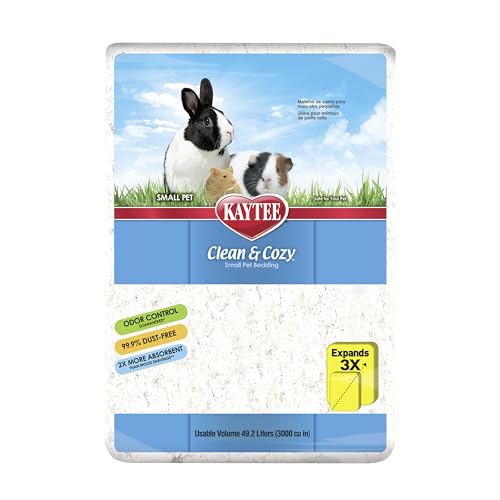
A general-purpose white paper bedding (Kaytee Clean and Cozy)
This is one of the most widely used paper beddings in the hamster community, and it suits the largest number of situations: first-time owners, deep-bedding setups, cages with mixed substrate, and households that want one product for multiple small pets. The manufacturer formulates it from reclaimed paper fibers and describes it as 99.9 percent dust-free, which addresses the single most important safety criterion. The white color makes spot cleaning straightforward, since soiled areas are visible at a glance against the pale substrate.
Owner feedback across many years consistently describes it as soft, absorbent relative to wood shavings, and free of added fragrance, with the main recurring complaints being mild batch-to-batch variation and hamsters that shred or hoard it enthusiastically — wasteful for the owner, harmless to the pet. The trade-off versus some competitors is that its odor control relies on absorption alone, without carbon additives, so in very odor-sensitive homes it may need slightly more frequent spot cleaning. As an example of the category done well, you can check the current price on Amazon to compare pack sizes and per-liter cost against local options.
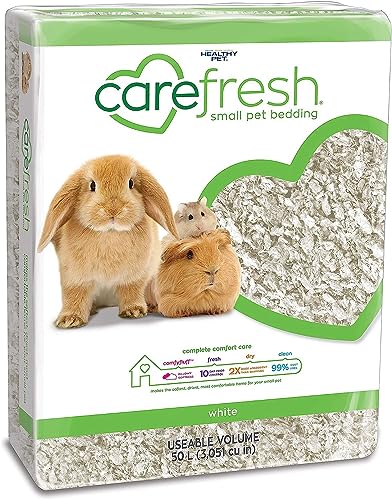
An odor-focused natural paper bedding (Carefresh Complete Pet Bed)
The second example prioritizes smell control. Carefresh's Complete Pet Bed is made from natural paper fibers with a formulation the manufacturer states inhibits odor-causing bacteria for up to ten days, using absorption and natural odor suppression rather than added fragrance. It suits multi-pet households, smaller rooms where cage odor is more noticeable, and owners who prefer to stretch the interval between partial cleanings. The texture is described in owner reviews as fluffy and cushioning, comfortable on paws and easy for hamsters to rearrange into nests.
The honest trade-offs: it typically costs somewhat more per liter than general-purpose paper bedding, the colored versions contain food-grade dyes that are generally considered safe but are unnecessary, and some owner reviews note occasional batches with more dust than expected. It is available in natural and colored varieties; the natural version is the cleaner choice for hamster lungs. If odor is your primary concern, this formulation is the reference point to compare others against — you can view this option on Amazon alongside the white bedding above.
Between these two archetypes — maximum-absorbency white paper and carbon-assisted odor control — most other reputable paper beddings on the market fall somewhere in the middle, and choosing among them comes down to price per liter, local availability, and how your particular hamster responds to the texture. Whatever you select, apply the criteria from earlier sections rather than the marketing on the front of the bag.
Comparison at a Glance
hamster bedding safe and comfortable litter options
| Bedding type | Dust level | Odor control | Absorbency | Best suited to |
|---|---|---|---|---|
| White paper bedding (e.g. Kaytee Clean and Cozy) | Manufacturer-rated 99.9% dust-free | Good, absorption-based | High — rated well above wood shavings | Most owners, deep bedding, first cages |
| Natural paper with odor formula (e.g. Carefresh Complete) | Manufacturer dust-minimized | Excellent — rated up to 10 days | High | Odor-sensitive homes, multi-pet households |
| Aspen shavings | Varies; choose dust-extracted | Moderate | Lower than paper | Mixing substrate, texture variety |
| Hemp or coco fiber | Generally low | Moderate | Moderate | Experienced keepers, dig-box areas |
Bedding for Different Species and Setups
Syrian hamsters are powerful diggers and benefit most from very deep bedding — ten inches or more where the cage allows — with firm paper or a paper-aspen mix that holds tunnels open. Dwarf species (Roborovski, Campbell's, winter white, and Chinese hamsters) are smaller and can use slightly shallower substrate, though they too burrow readily and appreciate depth. Because dwarf species are more agile climbers and shyer foragers, a mixed substrate with a dig box of coco fiber or sand gives them additional enrichment. In every case the non-negotiables stay the same: dust-free, unscented, non-toxic, and deep enough to tunnel.
Tank-style enclosures and cages with deep bases handle loose substrate best. For cages with shallow trays, owners commonly build up the base with a cardboard or acrylic extension — a well-documented community workaround — rather than settling for two inches of bedding forever. Fleece liners, popular for some small pets, should never be the sole substrate for hamsters: burrowing is too central to their behavior, and fleece does nothing for ammonia absorption. If used at all, fleece belongs in specific zones such as under a water bottle, with loose bedding covering the majority of the floor.
Maintenance and Common Mistakes
A sensible maintenance rhythm with quality paper bedding looks like this: spot-clean the toilet area and any visibly damp spots daily or every other day, fluff and redistribute the remaining substrate roughly weekly, and do a full change every three to four weeks or when ammonia becomes noticeable. Over-cleaning is its own mistake — stripping the whole cage too often removes the hamster's scent marks and nest, which is stressful, so reserve full changes for genuine need and always return a small handful of the old nesting material to soften the transition.
Other common errors worth avoiding: buying shavings because they are cheaper without checking the wood species; using scented bedding to mask poor cleaning habits rather than fixing them; providing cotton fluff as nesting material instead of plain toilet paper; filling the cage with bedding but forgetting that depth under the wheel matters too, since a wheel buried in substrate stops turning; and ignoring a new bag that smells musty or dusty straight out of the packaging, which owner reviews suggest happens occasionally with paper products stored poorly. Trust your nose and your hamster's behavior over the label.
Eating small amounts of paper bedding is generally not dangerous — it is non-toxic and usually passes through — but persistent bedding eating can signal boredom, an undersized cage, or a deficient diet, and is worth addressing at the cause rather than the symptom.
Frequently Asked Questions
How often should bedding be fully changed?
With an absorbent paper bedding and consistent spot cleaning, most keepers report a full change every three to four weeks works well. Remove soiled bedding daily or every other day, and fluff the rest to redistribute moisture. If you smell ammonia earlier, change everything immediately.
Can different beddings be mixed?
Yes. Mixing paper bedding with safe substrates such as aspen, hemp, or coco fiber is a common way to improve texture and lower cost, provided the majority of the mix remains dust-free paper and nothing unsafe joins it.
Is white or colored bedding better?
White or natural bedding contains no dyes and makes soiled areas easier to see, which is why it is usually recommended. Colored bedding from reputable brands uses food-grade dyes considered safe, but avoid brightly colored products from unknown manufacturers.
Is aspen safe?
Yes — aspen is a hardwood without the aromatic phenols that make pine and cedar dangerous. It is less absorbent and rougher than paper, so it works best as a mixing substrate rather than the sole bedding, and it should be dust-extracted and from a reputable source.
Are odor-control additives safe?
Activated carbon and natural plant extracts, as used in some paper beddings, are generally considered safe and effective. Anything listing fragrance or parfum should be avoided entirely.
Where to Buy
Both example products discussed above are widely available online and in pet stores. For the general-purpose white paper bedding, you can check the current price on Amazon, and larger multi-pack listings there often bring the per-liter cost down meaningfully. Compare the expanded volume listed on the packaging against your cage dimensions before buying, since a pack that looks small may fluff out to cover more floor than expected. For the odor-focused natural paper option, you can likewise view this option on Amazon — whichever direction you go, prioritize the dust-free, unscented, paper-based fundamentals over any single brand claim, and let your hamster's breathing, coat condition, and burrowing enthusiasm tell you whether the choice was right.
Affiliate Disclosure
PawCritic is a participant in the Amazon Services LLC Associates Program and other affiliate advertising programs designed to provide a means for sites to earn advertising fees by advertising and linking to retailers. We may earn a commission from qualifying purchases made through links on this page at no additional cost to you. Our editorial content is not influenced by advertisers or affiliate partnerships. PawCritic does not perform hands-on product testing; recommendations are based on published guidance, manufacturer specifications, and verified owner reports.