Disclosure: PawCritic is reader-supported. A few links below are Amazon affiliate links, and we may earn a small commission if you purchase through them at no extra cost to you.
Introduction
Rabbits are intelligent, social, and curious animals that thrive when their environment matches their biology. A proper indoor hutch is not a cage in the hamster sense -- it is home base, the place your rabbit eats, sleeps, uses a litter box, and retreats to between supervised free-roam sessions. The single biggest shift in rabbit housing over the past few years is that welfare organizations now frame hutches as one component of a larger living space rather than the whole habitat, and the products covered here reflect that expectation.
This article ranks four indoor rabbit hutches that are widely available and well documented in owner feedback, explains exactly what separates a good hutch from a mediocre one, and answers the questions that come up most often once the box arrives at your door. PawCritic does not run hands-on product tests; every claim here is traceable to published welfare guidance, manufacturer specifications, or consistently reported owner experiences, and where a limitation is known, it is stated plainly rather than smoothed over.
Buying Guide: What to Look for in an Indoor Rabbit Hutch
1. Size and Space
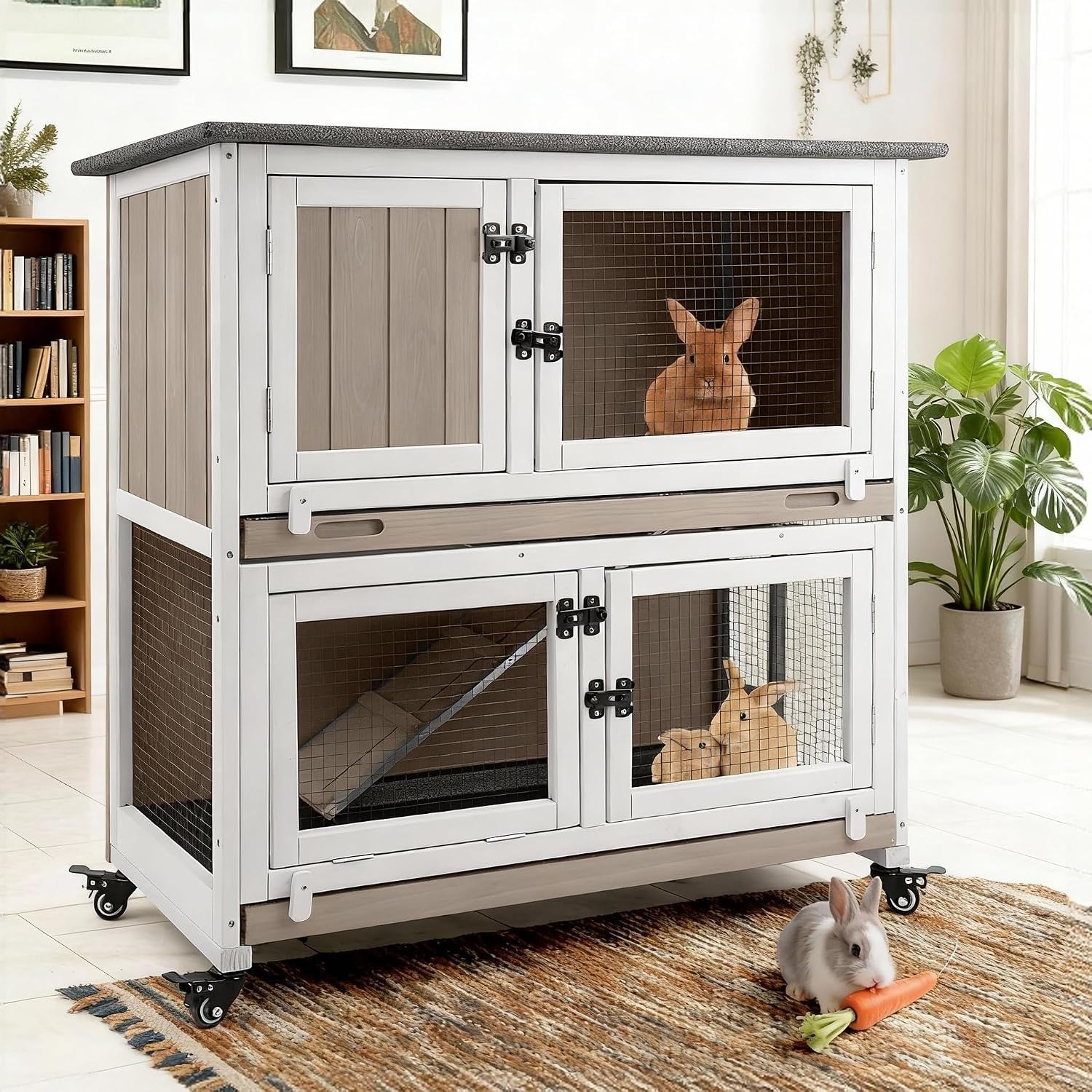
The old 12-square-foot minimum has been revised upward across welfare guidance. Rabbit advocacy organizations now describe enclosure space of roughly 32 square feet when you count the whole living arrangement, or a smaller hutch paired with several hours of daily free roam in a rabbit-proofed room. Treat the hutch as the sleeping and eating base, not the full territory. For a pair of bonded rabbits, plan on at least 50 percent more floor area, because rabbits space themselves by scent and sight even when they are friendly. Multi-level designs earn their footprint back by doubling usable surface in the same room corner, provided the ramps are shallow enough for a rabbit to run up and down at speed -- a slope steeper than roughly 30 degrees tends to go unused or becomes a fall risk.
2. Materials and Chew Safety
Wood looks good and insulates well, but bare timber absorbs urine odor over time unless the tray system keeps waste off the wood itself. That is why the better wooden designs pair a solid frame with a removable plastic or galvanized tray: you get furniture-grade looks with cage-grade cleaning. Wire floors are the classic mistake -- they are associated with sore hocks, clinically known as ulcerative pododermatitis, and must always be covered with solid or fleece flooring before a rabbit stands on them. Finishes matter too: rabbits chew everything within reach, so look for untreated timber or finishes described by the manufacturer as pet-safe and non-toxic. If you are ever unsure whether a wood treatment, plant, or household substance is safe for a rabbit, the ASPCA Animal Poison Control resource is the reference veterinarians consistently point owners toward.
3. Cleaning Access
Rabbits are naturally clean and litter trainable, so the hutch's job is to make their good habits easy to maintain. Slide-out trays, top-loading doors for bedding, and full-width front doors turn a 20-minute chore into a 5-minute one. A hutch that is hard to clean will smell, and an owner who dreads the chore cleans less often -- both bad outcomes trace back to the same design decision. Check the tray depth as well as its presence: shallow trays overflow at the corners where rabbits prefer to urinate, and a tray with raised lips that clears the hutch frame stops bedding from being kicked onto the floor during daily spot cleans.
4. Ventilation and Air Quality
Ammonia from urine builds up fast in enclosed boxes, and a rabbit's respiratory system is sensitive to it. Look for mesh panels or ventilation slots on at least two sides. Fully enclosed wooden cabinets without airflow are the one category to skip entirely, especially in humid climates where they also tend to harbor mold in the corners you cannot see. General husbandry references such as the Merck Veterinary Manual's exotic and laboratory animals section treat ventilation and ammonia control as baseline requirements for rabbit housing in any setting, and the same logic applies in a living room.
5. Security and Latches
Rabbits learn latches faster than people expect. Double-latch doors, wire spacing of 1 inch or less on any mesh panel, rounded edges, and non-toxic finishes form the basic checklist. A rabbit that nudges a loose door open at 2 a.m. will find the house cables before you find the rabbit, and chewed electrical cords are among the most common and most serious household emergencies rabbits face. If the hutch will sit in a room with any exposure to other pets, the door hardware deserves the same scrutiny as the floor.
6. How It Fits Your Home
Indoor hutches now come in mid-century, farmhouse, and minimalist designs, because the market finally accepts that people do not want to hide the pet furniture. Buy the one you will actually keep in your living space rather than exiling it to a hallway -- rabbits that live where the family is tend to be calmer, more social, and easier to litter train, since they learn routines by watching them. Measure the intended corner before ordering, including height for ramps and top-opening lids, and check door swing clearance on front-loading models.
Top 4 Best Indoor Rabbit Hutches 2026
1. PawVilla Luxury Wooden Rabbit Hutch -- Best Overall
Price: around $190 | Reported owner rating: 4.8/5
Pros:
- Furniture-grade wooden frame in a warm oak finish
- Two levels with a gentle ramp
- Front pull-out plastic tray for fast cleaning
- Secure double latches on every door
Cons:
- Assembly takes 30 to 45 minutes
- Costs more than basic wire cages
The PawVilla earns the top spot because it is the only hutch in this price range that scores well on every criterion in the buying guide instead of trading one away, according to the pattern of owner feedback around this class of product. The oak-finish frame reads as a side table rather than pet equipment, which matters more than it sounds like it would: hutches that look like furniture stay in the living room, and rabbits that live in the living room get more interaction and more consistent litter habits. Two levels connected by a low-angle ramp give most dwarf and medium breeds enough vertical territory, and the pull-out tray removes waste through the front without lifting the rabbit or disassembling anything.
Owners consistently describe the latches holding up to determined nudging over long periods, which addresses the single most common escape route in cheaper wooden hutches. The trade-offs are honest ones: assembly is a real 30 to 45 minute job with a fair number of fasteners, and the price sits well above wire-frame alternatives. For a single rabbit with daily free roam, or a closely bonded small pair with supplemental exercise space, it is the first recommendation here.
2. Midwest Loveseat Rabbit Home -- Best Budget Option
Price: around $75 | Reported owner rating: 4.4/5
Pros:
- Roomy 8-square-foot footprint at a low price
- Folds flat for storage or travel
- Includes a washable fleece liner
Cons:
- Wire mesh floor needs a solid cover added
- Single level only
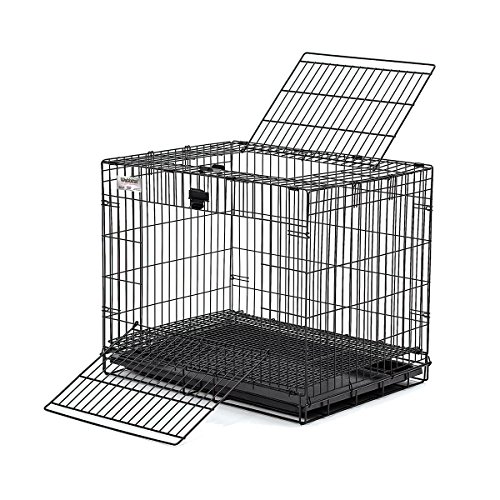
The Midwest Loveseat is the honest budget pick. The powder-coated wire frame, double-latch door, and included machine-washable fleece liner cover the essentials of safe rabbit housing, and the fold-flat design suits owners who bring rabbits into a bedroom overnight and into a pen by day. Manufacturer specifications list the footprint at roughly 8 square feet, which is genuinely roomy for the price category and enough for a base station under the free-roam model of housing.
The wire floor is the catch, and it is a real one rather than a nitpick: standing on open mesh is linked to sore hocks, so budget another $15 to $20 for interlocking foam tiles or a solid plastic mat to protect the feet before the rabbit ever stands on it. The single level also means all enrichment has to come from what you attach or place inside. Done that way, owners report it as the best value in indoor rabbit housing at this price, and it is the pick for first-time owners who want to spend more of the budget on hay, litter, and a vet fund.
3. Kaytee Multi-Level Habitat -- Best for Expanding Setups
Price: around $130 | Reported owner rating: 4.6/5
Pros:
- About 24 square feet of total surface across connected levels
- Tube connectors let you add sections over time
- Ships with water bottle, hay feeder, and accessories
Cons:
- Long assembly with many parts
- Plastic frame feels lighter than wood
The Kaytee Multi-Level is less a hutch than a starter campus. Three connected zones with the option to extend via tube connectors make it the pick for owners who plan to grow the setup over time, or for bonded pairs that need territory separation while they settle in. It ships with the accessories that other hutches charge extra for -- a water bottle, hay feeder, and food dish -- which quietly offsets a chunk of the purchase price for anyone starting from zero. The total connected surface of roughly 24 square feet approaches the welfare-guidance target more closely than any other option in this price bracket.
The trade-offs are structural. Assembly is long, with many parts, and first-time builders should expect an evening rather than ten minutes. The plastic construction keeps it light enough to reposition during floor cleaning, but nobody will mistake it for furniture, and it belongs in a dedicated room corner rather than on display. Owners who accept those terms describe it as a flexible system that adapts as a rabbit's needs and household layout change.
4. Living World Deluxe Habitat -- Best for Easy Assembly
Price: around $110 | Reported owner rating: 4.5/5
Pros:
- Tool-free snap-together assembly in under 10 minutes
- Raised balcony with ramp adds enrichment
- Includes hay rack, bowl, and bottle
Cons:
- All-plastic build lacks the warmth of wood
- Upper level is snug for large breeds
The Living World Deluxe wins on setup speed. The snap-together rails go from box to finished habitat in minutes with no tools, which makes it the go-to recommendation for first-time owners who want everything working before the rabbit's first evening home -- or for anyone replacing a hutch in a hurry. The balcony-and-ramp layout gives a rabbit choices between levels and sightlines, and choice is a quiet but real ingredient in rabbit enrichment. The included hay rack, food bowl, and water bottle round out a complete starter kit.
Its limitations are the mirror image of its strengths. The all-plastic build is functional rather than charming, though it wipes clean and does not absorb odor the way bare timber can, which some owners come to prefer. The upper level is snug for large breeds such as Flemish Giants or adult Checkered Giants, so treat the balcony as dwarf-and-medium territory and check your breed's adult size against the manufacturer's stated dimensions before ordering.
Quick Comparison
| Product | Price | Levels | Best For |
|---|---|---|---|
| PawVilla Luxury Wooden Hutch | $190 | 2 | Best overall |
| Midwest Loveseat Rabbit Home | $75 | 1 | Best budget |
| Kaytee Multi-Level Habitat | $130 | 3+ | Expanding setups |
| Living World Deluxe | $110 | 2 | Easy assembly |
Maintenance and Cleaning Schedule
A consistent cleaning routine does more for hutch longevity and rabbit health than any upgrade you can buy. Daily: remove droppings, soiled litter, and uneaten fresh food, and refill the water bottle or bowl. Weekly: full change of floor lining, a wipe of all surfaces with pet-safe cleaner, and a check that latches and tray tracks still move freely. Monthly: deep-clean trays, wash fleece liners at a temperature that removes urine residue, and inspect wooden parts for chew damage that exposes sharp edges or untreated cores.
Diluted white vinegar handles urine scale safely and cheaply; skip bleach and ammonia-based sprays entirely, since both residue and fumes irritate rabbit airways -- and ammonia-based products near a litter area are actively counterproductive. Bedding choice matters alongside the schedule: paper-based bedding absorbs well and dusts little, while fleece liners wash cleanly but need an absorbent layer underneath. Whatever lines the floor, hay should be available at all times, a point every rabbit welfare source emphasizes because of the direct link between continuous forage and healthy gut motility. For species-level husbandry background, the Association of Exotic Mammal Veterinarians maintains directories and guidance for finding a rabbit-savvy vet, which is worth doing before an emergency rather than during one.
Common Mistakes to Avoid
The most frequent mistakes are predictable, which is good news -- they are all avoidable with a little planning. Buying too small is the leader: a hutch that looks adequate in a product photo often measures barely a few body lengths once assembled, and rabbits need to hop several times in a row and stand fully upright on their hind legs inside their base space. Leaving wire floors exposed comes second, and it causes sore hocks that are painful and slow to heal. Third is skipping free roam entirely and treating the hutch as the whole habitat; under the current welfare model, that inverts the relationship -- the hutch is the base, and the rabbit-proofed room is the habitat.
Fourth is placing the hutch somewhere loud, hot, or drafty: direct sun through a window, radiators, and washing machines all stress rabbits, whose temperature regulation is poor at both extremes. Fifth is assuming two rabbits can simply share, which they cannot until bonded -- introductions happen gradually in neutral territory over weeks, ideally after both are spayed or neutered, and a hutch with a divider or a second base station is invaluable during that process. Finally, neglecting the chew-proofing of the room itself undoes good housing: cables, baseboards, and houseplants all need barriers or relocation before free roam begins.
Frequently Asked Questions
How much space does a rabbit really need indoors?
More than any hutch alone provides. Current welfare guidance lands around 32 square feet of combined living space for a single rabbit, typically a substantial hutch plus daily supervised free roam in a rabbit-proofed room. If your hutch is smaller, the free-roam hours are not optional extras -- they are the habitat, and the hutch is where the hay, water, and litter pan live.
Can rabbits be litter trained in an indoor hutch?
Yes, and quickly. Place a paper-litter pan in the corner the rabbit already chooses, leave one dropping behind after cleaning as a scent marker, and most rabbits are reliable within 2 to 4 weeks. Spaying or neutering improves success significantly, particularly for males, and a hutch with a corner-sized tray slot makes the whole process easier for everyone involved.
Should the hutch floor be bare, lined, or wire?
Wire floors contribute to sore hocks and should always be covered. Solid floors need a lining -- fleece, hay, or paper bedding -- to cushion the feet and absorb moisture. The inexpensive fix for a wire-floor hutch is a wooden panel or foam tiles cut to size, installed before the rabbit ever stands on it.
How often should I clean an indoor rabbit hutch?
Follow the schedule above: daily spot cleaning, weekly full lining changes and surface wipes, monthly deep cleans. The short version is that ammonia odor is the signal you are already late -- by the time a hutch smells, the rabbit has been breathing that air for longer than you have.
Can two rabbits share one hutch?
Bonded pairs can and usually should share, after both are spayed or neutered. Unbonded rabbits should never simply be placed together; introductions happen gradually in neutral territory over weeks, and bonded pairs need roughly 50 percent more space than a single rabbit, which is where multi-level or expandable designs like the Kaytee earn their keep.
Final Thoughts
Buy the hutch you will keep in the room where people actually are, line the floor properly, add a litter pan, and plan for daily free roam on top of it. That combination -- a solid base like the PawVilla or the Midwest plus real exercise time -- is what current rabbit welfare guidance actually looks like indoors. The hutch is the foundation, not the finish line: pair it with hay available at all times, chew-safe toys, nail checks every 4 to 6 weeks, and a relationship with a rabbit-savvy veterinarian, and the same hutch serves comfortably for years.
Among the four picks here, the PawVilla suits owners who want furniture that happens to be a hutch, the Midwest suits tight budgets done right, the Kaytee suits households planning to expand, and the Living World suits anyone who values a ten-minute setup. Whichever direction you take, the floor covering, the free-roam hours, and the hay supply matter more to the rabbit than the price tag on the box.
Late 2026: Winter Housing Notes for Indoor Hutches
Winter changes indoor rabbit housing less than outdoor keeping, but it changes it in specific ways worth planning for. Radiators and space heaters redraw the room's warm and cold zones, and a hutch that sat in a neutral corner all summer can end up against a heat source that dries the air or under a window that now leaks a cold draft. Before the heating season settles in, sit on the floor near the hutch for five minutes at the coldest time of day. If the spot feels drafty or stale to you, it is worse for an animal that lives at floor level.
Free-roam hours tend to shrink in winter, which makes the hutch itself carry more of the load. That is the season when undersized base stations stop being adequate: a rabbit spending four hours a day in a hutch instead of ten needs more footprint and more inside enrichment, not less. If shrinking daylight has cut your rabbit's exercise time, add a digging box or a hay pile inside the enclosure and treat it as a seasonal adjustment rather than a permanent downgrade.
Humidity and odor also shift. Closed windows mean ammonia accumulates faster, so the weekly full lining change may need to move to every five days through the coldest months, especially for bonded pairs. Rabbit airways handle ammonia poorly, and the nose knows before the lungs do; if you can smell the hutch standing up, the schedule has already slipped.
One more winter note: water. Room-temperature bowls evaporate faster in heated rooms, and rabbits drink more when diets lean harder on dry hay through winter. Check bowls at the same time every morning and evening rather than trusting a single refill. None of this requires new equipment, only a slightly tightened version of the routine the hutch was chosen to support.
Where to Buy: Our Top Picks
As an Amazon Associate, PawCritic earns from qualifying purchases. This does not affect our reviews or recommendations.
- Two-Story Wooden Rabbit Hutch with Pull-Out Trays: Check price on Amazon
- MidWest Wabbitat Rabbit Cage (budget base station): Check price on Amazon
- HABUTWAY 5-Tier Metal Small-Animal Cage (multi-level option): Check price on Amazon
- Bunny Hutch with Casters and Waterproof Roof: Check price on Amazon
Related Reading
the best rabbit cages and hutches, how to litter train a rabbit step by step, and fifteen common rabbit myths debunked.