Why a Pet Water Fountain Matters
Hydration is one of the most fundamental and frequently overlooked parts of routine pet care. Many pets, cats in particular, have a naturally low thirst drive and will not drink enough from a static bowl. A pet water fountain addresses this by circulating water continuously through a filter, keeping it fresh, oxygenated, and moving. The motion and sound of flowing water are known to attract pets to drink more often, which supports kidney function, urinary tract health, and general wellbeing.
It is worth understanding why this matters medically rather than cosmetically. Cats evolved as desert animals with a weak thirst response, and chronic under-drinking is a recognized contributor to kidney disease and urinary crystals, two of the most common feline conditions seen in veterinary practice. The Merck Veterinary Manual section on exotic and laboratory animals documents how water intake and urine concentration are closely tied to urinary and renal health in small mammals and cats. Pets fed wet food take in much of their moisture from meals, but for animals on dry kibble, a fountain is one of the simplest upgrades an owner can make.
Fountain design has shifted in recent years toward quieter pumps and, in some models, app-connected water tracking. Many current units are rated at or below 25 dB, while earlier versions hummed loudly enough that some cats avoided them entirely, which defeats the purpose. Placement matters too. Cats instinctively distrust water placed near where they eat, a leftover behavior from avoiding contaminated prey near water sources. If your pet is skittish around new objects, set the fountain across the room from the food bowl for the first week and let curiosity do the work.
This guide covers what genuinely matters when choosing a fountain: filtration, material, capacity, noise, cleaning routine, and safety. It is written as a reference, drawing on published veterinary guidance, manufacturer specifications, and verified owner reports rather than hands-on lab work. One concrete example of a widely available model appears below so you can see how the specifications translate into a real product.
pet water fountains keep your pets hydrated with fresh water
A Single Concrete Example: The Catit Flower Fountain
The Catit Flower Fountain is a 3-liter (100 oz) plastic fountain with a flower-shaped top that disperses water into a gentle flow. Manufacturer specifications list three adjustable flow settings: a quiet bubbler, the flower setting, and an open top stream. Filtration is three-stage, combining a foam pad, activated carbon, and mineral stones. The unit is BPA-free, uses a low-voltage 5V USB adapter, and the top-rack dishwasher-safe components make weekly cleaning straightforward. It is available in blue, pink, and white.
For a single cat or a pair of cats, the capacity is generally rated to last two to three days between refills, depending on how much the animal drinks and how warm the room is. The adjustable flow is the feature that matters most for hesitant drinkers, because a cat that avoids a loud stream may accept the gentle bubbler setting. The trade-off is that the plastic body will eventually show scratches and needs more frequent scrubbing than stainless steel or ceramic to stay hygienic. Replacement filters are inexpensive and widely available, but they must be changed on schedule or the fountain becomes a bacteria reservoir rather than a clean water source.
If this specification set matches what you need, you can check the current price on Amazon. It is offered here as one representative option, not as a ranked winner over other models.
What to Look For in a Pet Water Fountain
Filtration System
Filters are not interchangeable in quality. The useful ones combine mechanical filtration to trap hair and debris, activated carbon to reduce odors and some chemicals, and in better designs an ion exchange resin to soften hard water. A fountain with only a foam pad and carbon layer will still collect fur, but it will not address mineral buildup that can affect taste. Replacement filters typically run from a few dollars each up to around fifteen dollars depending on brand and type, and most fountains accept standard-sized filters that third-party sellers also produce. Budget roughly forty to sixty dollars a year for replacements if you change them every two to four weeks as most manufacturers recommend.
Material
Stainless steel and ceramic are generally the more hygienic choices. They do not absorb odors, resist scratching better than plastic, and are easier to sanitize. Ceramic is heavy, which reduces tipping risk with large dogs, but it can chip if dropped. Stainless steel is durable and dishwasher-friendly. BPA-free plastic is acceptable and usually the least expensive option, but it requires more diligent cleaning because scratches can harbor residue and biofilm. Whichever material you choose, check that every part that touches water is listed as BPA-free.
Capacity
As a general rule, dogs need roughly one ounce of water per pound of body weight per day. A 30-pound dog therefore needs about 30 ounces daily, so a 2.5-liter (84 oz) fountain covers two to three days for that dog alone. Cats typically drink less, but multiple cats or a fountain shared with a dog will drain a small reservoir quickly. Choose a capacity that holds at least two to three days of water for the household, and remember that fountains lose volume to evaporation as well as drinking.
Noise Level
For a noise-averse cat, pump quietness can determine whether the fountain is used at all. Submersible pumps are generally quieter than external ones. Look for ratings below 40 dB, and note that the sound of falling water itself contributes to the total noise, so a fountain with a long free-falling stream may be louder than its pump rating suggests. If your pet is sensitive, a design with a low bubbler or gentle ramp is usually the safer starting point.
Ease of Cleaning and Assembly
Fewer parts means faster cleaning and less chance of mold developing in hidden crevices. Top-rack dishwasher-safe components save meaningful time, but the pump itself almost always needs hand scrubbing with a small brush. Check how the filter is accessed; a design that requires disassembling the entire unit to swap a filter will get neglected. Simple filter replacement is a genuine long-term advantage.
Power Source
Most fountains use a low-voltage adapter, either 5V or 12V. USB-powered models can run from a power bank during travel or a power outage, which is convenient. Confirm that the adapter is included in the box, because some listings sell it separately. Cord length also matters for placement flexibility, especially in larger rooms.
Species-Specific Considerations
Cats are the classic fountain users because of their low thirst drive and preference for moving water, but the same logic applies to many small mammals. Rabbits, guinea pigs, and ferrets all benefit from fresh, moving water, though they are often housed with bottles rather than bowls. If you keep a rabbit, note that the RSPCA has documented pododermatitis, commonly called bumblefoot, as a painful condition caused by prolonged contact with hard or wet surfaces, which makes appropriate flooring and bedding essential preventive measures. A fountain that splashes and soaks bedding can work against that goal, so placement and a drip tray matter.
For dogs, the main variables are size and drinking style. Large breeds and multi-dog households need higher capacity and often a wider bowl. Some dogs splash enthusiastically, which can leave a puddle around the base; a fountain with a raised lip or a mat underneath helps. Puppies and kittens can generally use fountains once they are eating solid food, but very young animals should be introduced gradually and monitored, and any change in drinking behavior in a young or unwell pet warrants a call to your veterinarian rather than a product change.
Maintenance and Cleaning Routine
A fountain only improves hydration if it is clean. A full cleaning every one to two weeks is the standard recommendation, and more often in hot climates or multi-pet homes. That means disassembling the unit, washing all parts in warm soapy water or running dishwasher-safe components on the top rack, scrubbing the pump impeller with a small brush, and replacing the filter. Algae and biofilm develop fastest in warm, still water, so a fountain left uncleaned for a month can be worse than a bowl rinsed daily.
Pump maintenance is the step owners most often skip. Hair and mineral deposits wrap around the impeller and cause the pump to slow or stop, which then lets water sit stagnant. Most manufacturers publish a cleaning interval for the pump specifically, often every two to four weeks. Keeping spare filters on hand removes the excuse to delay a change. If the water level drops below the pump intake, many units will run dry; some have automatic shut-off, but not all, so check the level every day or two.
Common Mistakes and What to Avoid
- Placing the fountain next to the food bowl. Cats in particular often avoid drinking near food, so separation improves acceptance.
- Buying a fountain that is too small for the household. A single-cat 2-liter unit will not keep up with two dogs.
- Ignoring the filter schedule. A clogged filter reduces flow and can harbor bacteria.
- Choosing a loud model for a nervous pet. If the pump hums, the pet may never use it.
- Skipping pump cleaning. The impeller is the part most likely to fail from neglect.
- Using additives or flavorings without checking safety. Some additives are not intended for pets, and the ASPCA Animal Poison Control maintains guidance on substances that are toxic to animals at ASPCA Animal Poison Control.
- Assuming a fountain replaces veterinary care. Increased drinking or changes in urination are medical signs, not product problems.
Frequently Asked Questions
How often should a pet water fountain be cleaned?
A full cleaning every one to two weeks is the common manufacturer recommendation. This includes washing all parts, scrubbing the pump, and replacing the filter. In hot weather or with multiple pets, clean more frequently to prevent algae and bacteria buildup.
Can puppies and kittens use water fountains?
Yes, but with care. Very young animals under eight weeks should be discussed with a veterinarian first. Older kittens and puppies can use fountains with gentle flow settings. The Association of Exotic Mammal Veterinarians at AEMV is a useful resource for species-specific guidance on small mammals.
Are pet fountains safe to leave on all day?
They are designed for continuous operation. Low-voltage pumps generate minimal heat, and many units have automatic shut-off if the water level drops too low. Running continuously is generally recommended to keep water fresh and oxygenated. If the power goes out, the fountain simply functions as a still bowl until power returns.
How much do replacement filters cost?
Replacement filters typically range from a few dollars to around fifteen dollars each depending on brand and type. Most fountains accept standard-sized filters, and third-party options can reduce the cost per filter. Budget roughly forty to sixty dollars per year for replacements.
My cat will not use the fountain. What can I try?
Start with the gentlest flow setting, since cats often prefer slow-moving water. Place the fountain away from the food bowl and in a low-traffic spot. Give the pet time to adjust, and avoid forcing interaction. Some cats accept a fountain only after several days of ignoring it.
Can I use tap water in my pet fountain?
For most pets in most areas, tap water is fine. If your tap water has a strong chlorine smell or high mineral content, filtered or distilled water can improve taste and reduce filter strain. The ASPCA pet care library at ASPCA pet care covers general hydration and care topics for a range of species.
Summary: Matching the Fountain to the Pet
The right fountain is the one your pet will actually drink from. That usually means a quiet pump, a flow setting the animal accepts, a material that is easy to keep clean, and enough capacity that the water does not run low between refills. Filtration quality matters, but it only helps if the filter is changed on schedule. Material matters, but only if the unit is cleaned regularly. Capacity matters, but only if the fountain is placed where the pet is willing to use it.
For a single cat or a small pair, a 2.5- to 3-liter fountain with adjustable flow and multi-stage filtration covers the essentials. For large dogs or multi-pet homes, look at 5-liter units with wider bowls and higher flow. For households with rabbits or other small mammals, place the fountain to avoid soaking bedding and check that all parts are safe for the species. In every case, treat the fountain as a maintenance commitment rather than a one-time purchase.
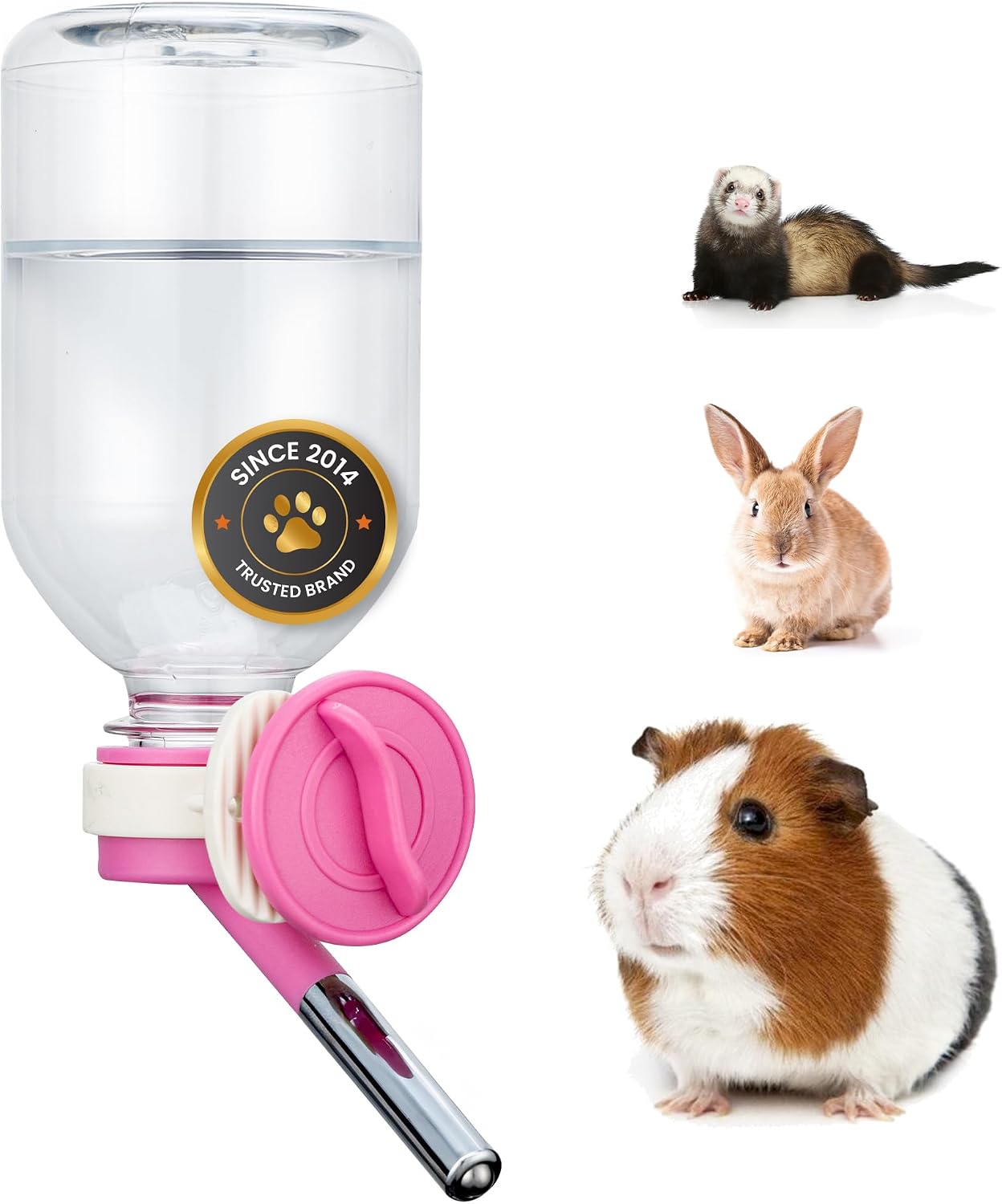
If the Choco Nose No-Drip Water Bottle specification set fits your household, you can view this option on Amazon. It is a representative example of a small-animal water bottle with a leak-proof nozzle, not a claim that it outperforms every alternative.
This article was last updated in 2026. Prices and availability may vary. Specifications are drawn from manufacturer listings and published veterinary guidance.
Affiliate Disclosure: PawCritic is a participant in the Amazon Services LLC Associates Program, an affiliate advertising program designed to provide a means for sites to earn advertising fees by advertising and linking to Amazon.com and affiliated sites. We may earn a commission from qualifying purchases made through links below at no additional cost to you. Our editorial content is independent and based on published guidance, manufacturer specifications, and verified owner reports.