Parrot Food: A Research-Based Buying and Feeding Guide
Parrots are long-lived, highly intelligent birds whose dietary needs differ sharply from those of cats and dogs. In the wild they sample an enormous range of foods, from seeds and nuts to leaves, flowers, fruit, and even mineral-rich clay. In captivity they depend entirely on what a keeper puts in the bowl, which is why diet is one of the most consequential decisions in parrot care. Published guidance from avian veterinarians consistently links seed-only feeding to obesity, fatty liver disease, and vitamin A deficiency, while balanced diets support feather quality, immune function, and normal lifespan.
This guide explains what belongs in a parrot's bowl, how much to offer, how to read a pellet label, how to transition a stubborn bird off an all-seed mix, and which foods are genuinely dangerous. It is written for keepers of budgies, cockatiels, conures, African greys, Amazons, and macaws, with notes where species differ. A single example product is linked where relevant so readers can see what a formulated pellet looks like on a retail listing; it is not a ranked pick and no product is presented as a universal best choice.
Quick 2026 context: cold-pressed and baked pellet manufacturing has become more common alongside traditional extrusion. The practical difference is that heat-sensitive vitamins, particularly A and some B vitamins, survive processing differently depending on method, so a pellet that lists its vitamin levels and a manufacture date is easier to evaluate than one that lists neither. The Association of Avian Veterinarians owner resources remain the standard starting point for diet proportions, and they continue to describe formulated pellets as the base of a captive parrot diet with vegetables and limited seeds filling out the rest.
One point that is easy to overlook: parrots are neophobic, meaning they distrust unfamiliar food shapes and colors. Any diet change should be gradual, spread over weeks, with the bird's weight tracked so a refusal to eat is caught early. A gram scale and a weekly weigh-in are the two most useful tools a keeper can own during a transition.
parrot food complete guide to pellets seeds fresh foods nutrition
What a Parrot Actually Needs
Parrot nutrition is usually described in terms of macronutrients and micronutrients, and the numbers matter less than the balance across a full week of feeding. Protein supports feather growth, muscle maintenance, and immune response; most maintenance diets land in the range of roughly 10 to 15 percent protein, with higher needs during molt, growth, and breeding. Fat is the most common problem area in captivity, because seed mixes are fat-dense and parrots are sedentary compared with wild birds. A total diet in the range of about 5 to 10 percent fat suits most non-breeding companion parrots, with macaws tolerating somewhat more and cockatoos and Amazon parrots doing better at the lower end.
Carbohydrates supply ready energy and are best delivered through whole grains, legumes, and vegetables rather than sugary fruit or human snack food. Vitamin A is the nutrient most often deficient in seed-fed birds, and it is supplied either as preformed vitamin A in fortified pellets or as beta-carotene from dark leafy greens, carrots, sweet potato, and bell pepper. Vitamin D3 is required for calcium absorption, and birds kept indoors without unfiltered sunlight depend on dietary D3 or a properly dosed full-spectrum lamp. Calcium matters most for laying hens, growing chicks, and African greys, which have a well-documented tendency toward low blood calcium even on apparently adequate diets.
Water is the nutrient keepers forget. A parrot can decline quickly without fresh water, and bowls contaminated with food, droppings, or feather dust discourage drinking. Two water stations, refreshed at least twice daily, are a reasonable practice in households with multiple birds or messy eaters. The Merck Veterinary Manual section on exotic and laboratory animals covers nutritional disorders in caged birds in more clinical detail for readers who want the veterinary framing.
The Four Parts of a Parrot Diet
Formulated Pellets
Pellets were developed to solve a specific problem: when birds are offered a mix, they eat what they like and leave what they need. A formulated pellet compresses grains, plant proteins, vitamins, and minerals into a uniform piece, so every bite carries roughly the same nutrition. For most companion parrots, published guidance places pellets at roughly half to three-quarters of the total diet by volume. The trade-off is that pellets remove choice, which is good for nutrition and dull for a bird, so foraging enrichment has to come from somewhere else in the routine.
When comparing pellets, the useful things to check are the guaranteed analysis, the first several ingredients, whether the formula is colored artificially, whether it is certified organic, the pellet size relative to the bird's beak, and the best-by date. Naturally colored pellets are not automatically better nutritionally, but they make it easier to spot a bird that is eating only the red ones. Organic certification raises cost and does not change the nutrient profile much, though some keepers prefer it for concerns about pesticide residue in grain. Pellet size matters more than most buyers expect: a budgie cannot easily eat a macaw-sized pellet, and a macaw offered crumbles will scatter most of them.
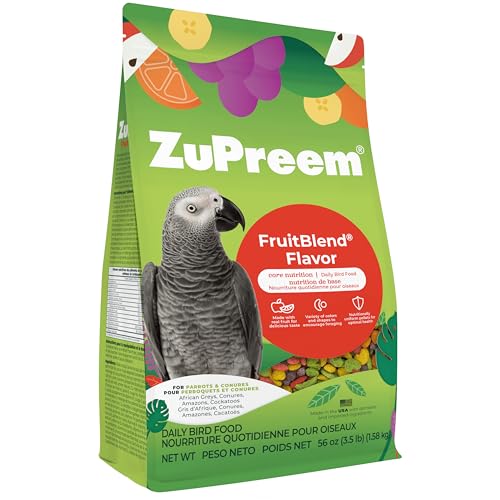
One concrete example of a formulated pellet that appears on retail listings is linked below. It is offered as a reference point for what to look for on a label, not as a universal recommendation.
check the current price on Amazon
Fresh Vegetables
Vegetables are the part of the diet that supplies natural beta-carotene, fiber, and texture, and they double as enrichment because a parrot has to work at a chunk of squash or a pepper half. Dark leafy greens such as kale, collard, and dandelion greens are the standard recommendation, along with orange and red vegetables like carrot, sweet potato, and bell pepper. Broccoli, cauliflower, squash, zucchini, green beans, peas, and cooked pumpkin all work well. Raw is fine for most vegetables; sweet potato and squash are usually offered cooked because raw versions are hard to chew and poorly digested.
Presentation affects acceptance more than most keepers expect. A bird that ignores chopped greens on a flat dish may attack the same greens clipped to the cage bars, woven through a foraging toy, or threaded onto a skewer. Serving vegetables in the morning, when appetite is highest, improves intake. Anything left uneaten should be removed within a few hours, because warm, moist vegetable matter grows bacteria quickly.
Fruit and Legumes
Fruit is best treated as a small flavoring rather than a staple, because most fruits are high in sugar and low in the nutrients parrots actually need in volume. Apple without seeds, berries, melon, papaya, mango, and small amounts of banana and grape are all reasonable. Dried fruit is more concentrated in sugar and sticks to the beak, so it belongs in the treat category. Cooked or sprouted legumes such as lentils, chickpeas, and mung beans add plant protein and are especially useful for Eclectus parrots, which appear to do better on higher-fiber, lower-fortification diets than many other species.
Seeds and Nuts
Seeds are not poison, but they are the wrong foundation. Sunflower and safflower dominate most commercial mixes, and both are high in fat and low in vitamin A precursors. Used as training rewards, foraging fill, or a small fraction of the daily diet, seeds are useful. Used as the whole diet, they reliably produce the fatty liver and vitamin A problems veterinarians have documented for decades. Nuts follow the same logic: macaws can handle more than cockatoos, but a handful per day is a treat, not a meal.
Species Notes That Change the Plan
Small parrots such as budgies, lovebirds, and parrotlets have fast metabolisms and small stomachs, so they need frequent access to food and pellets sized as crumbles or mini. They also become overweight on seed-heavy diets quite easily despite their small size. Medium species including conures, Quakers, and Senegals handle standard pellets well and tend to be adventurous eaters, which makes vegetable introduction easier. Large species such as African greys, Amazons, and Eclectus need larger portions and more attention to calcium and vitamin A respectively, with greys warranting periodic veterinary monitoring of calcium status.
Macaws and cockatoos sit at opposite ends of the fat question. Macaws are large enough to use a somewhat higher fat intake without gaining weight rapidly, while cockatoos gain weight easily and are prone to obesity-related problems, so portion control and exercise matter more. Eclectus parrots have a longer digestive tract than many relatives and are often reported to do better on diets that emphasize fresh produce and lower supplementation, though any change should be discussed with an avian veterinarian.
How Much to Feed
Portion guidance is a starting point, not a prescription, because activity level, ambient temperature, molt, and reproductive state all shift energy needs. A practical framework is to establish pellets as the free-fed base, offer a measured portion of vegetables once or twice daily, and cap treats and seeds at a small fraction of total intake. Body condition is the real feedback signal: a healthy parrot has a keel bone that can be felt but not seen sharply, and a breast that feels rounded rather than bony or padded.
| Size class | Typical weight | Starting portion guidance |
|---|---|---|
| Small (budgie, lovebird, parrotlet) | 30 to 100 g | 1 to 2 teaspoons pellets daily, plus a small serving of chopped vegetables |
| Medium (conure, Quaker, Senegal) | 100 to 400 g | 1 to 2 tablespoons pellets daily, plus vegetables |
| Large (African grey, Amazon, Eclectus) | 400 to 800 g | 2 to 4 tablespoons pellets daily, plus a generous vegetable serving |
| Extra large (macaw, cockatoo) | 800 g and up | About 1/4 to 1/2 cup pellets daily, plus large vegetable portions |
Weekly weighing is the simplest way to know whether the plan is working. A bird that is steadily gaining should have pellets reduced slightly or the seed ration cut; a bird that is losing should be checked by a veterinarian before any further diet change.
Converting a Seed-Eating Parrot
Conversion is the step where most keepers make their one serious mistake: removing all seed at once and waiting for hunger to do the work. Parrots can and do starve themselves rather than eat an unfamiliar food, and a bird that has not eaten for a day is a veterinary emergency. The reliable approach is gradual, measured, and monitored with a scale.
A workable schedule runs over roughly six to ten weeks. In the first two weeks, place a small dish of pellets near the usual food so the bird can investigate without pressure. Over the next two weeks, mix pellets into the seed at about one part pellet to three parts seed. Then shift to roughly half and half, watching weight and droppings. Then move to about three parts pellet to one part seed. By the final stage, pellets are the free-fed base and seed is rationed as a treat or scattered into foraging toys.
Several practical tricks improve acceptance. Offering pellets in more than one location, including on the cage floor, suits birds that prefer to forage low. Lightly misting pellets with water releases aroma and softens texture. Eating from the same bowl in front of the bird exploits their social feeding instinct. Mixing pellets with a favorite vegetable or a small amount of unsweetened fruit juice can bridge the flavor gap for a few days, but juice should not become a permanent addition. Throughout the process, weigh the bird weekly; a loss of more than about ten percent of body weight means slowing down and consulting a veterinarian.
Foods to Avoid Entirely
Some foods are unambiguously dangerous. Avocado can cause acute cardiac failure in birds. Chocolate and caffeine are toxic. Alcohol is toxic. Onion and garlic in any meaningful quantity can damage red blood cells. Apple seeds, cherry pits, peach pits, and apricot kernels contain cyanogenic compounds and should never be offered. Xylitol, a common sugar substitute, is dangerous to birds as it is to dogs. Salty snack food, fried food, and anything containing added sugar belong off the menu.
Beyond the well-known toxins, the less obvious risks are household items: nonstick cookware fumes, scented candles and aerosols, and lead or zinc in old cage hardware, curtain weights, and some imported toys. The ASPCA Animal Poison Control maintains current guidance on toxic substances and is a reasonable first call in a suspected exposure, followed immediately by an avian veterinarian. General species care material in the ASPCA pet care library is useful for keepers new to birds.
Storage, Hygiene, and Freshness
Pellet and seed quality declines with heat, light, and air. Airtight containers kept in a cool, dark cupboard preserve vitamin content far better than an open bag beside a sunny window. Organic pellets in particular tend to have shorter shelf life, and refrigeration after opening slows rancidity in the oils they contain. Any food that smells musty, looks clumped, or shows discoloration should be discarded rather than picked through, because mold can produce toxins that are not visible.
Fresh food has a shorter clock. Vegetables and fruit should be removed within a few hours, sooner in warm weather. Bowls and water dishes need daily washing with hot water and dish soap, and water should be refreshed at least twice a day. Produce should be rinsed thoroughly, and anything that has touched a human mouth should never go into a bird's dish, because human oral bacteria can cause serious infection in birds. Sprouted seeds and legumes, which are excellent nutrition, are also a high-risk food if not rinsed carefully during sprouting and refrigerated afterward.
Reading a Pellet Label
A pellet bag carries three pieces of information worth reading before purchase. The guaranteed analysis gives minimum protein and fat and maximum fiber, which is the quickest way to compare formulas across brands. The ingredient list, ordered by weight, shows whether the base is whole grain or a byproduct and whether the formula relies on added colors. The best-by date tells the buyer how much vitamin potency is likely left, since vitamins degrade over time even in a sealed bag. A pellet with a clear manufacture or best-by date and a short, legible ingredient list is easier to evaluate than one sold in bulk bins with no date at all.
Buyers should also consider pellet size and shape. Extruded pellets tend to be harder and more uniform; baked and cold-pressed pellets are often softer and more crumbly, which some birds prefer and others reject. None of these formats is inherently superior, but a bird that will not eat a given pellet gets no nutrition from it, so acceptance is a legitimate part of the evaluation.
Common Mistakes and How to Avoid Them
The single most common mistake is treating a seed mix as a complete diet. It is not, and the resulting deficiencies develop slowly enough that owners often miss them until a bird is visibly ill. The second most common mistake is offering a pelleted diet but topping it up with so much table food, bread, and fruit that the bird fills up on low-nutrient items. The third is failing to monitor weight during any diet change, which turns a manageable transition into a medical event.
Other frequent errors include feeding only one vegetable because it is the only one accepted, leaving fresh food in the cage all day, using treats as a substitute for handling and enrichment, and assuming that a bird which looks plump is healthy. Parrots hide illness well, and body condition is a better guide than appetite. Finally, keepers sometimes add vitamin supplements on top of an already fortified pellet, which can produce hypervitaminosis, particularly with vitamin A and D3. Supplements should be used only under veterinary direction.
Signs the Diet Is Working
A well-fed parrot shows it in ways that are checkable at home. Eyes are bright and clear without discharge. Feathers lie smooth and glossy, with strong color and few stress bars or frayed tips. Droppings are well formed, with a visible white urate portion and a consistent color. The bird maintains a stable weight on a weekly scale, has good appetite, and shows normal energy and curiosity. The beak wears evenly and the feet have intact skin without sores.
Warning signs that warrant a veterinary visit include weight loss, fluffed posture, tail bobbing or open-mouth breathing, changes in dropping color or consistency, sneezing with nasal discharge, white plaques in the mouth, and sudden refusal of food. Several of these are consistent with the vitamin A deficiency and liver disease that seed-heavy diets produce, and they are far easier to treat early.
Frequently Asked Questions
Can a parrot live on pellets alone?
Pellets are formulated to be nutritionally complete, but a diet of pellets alone removes the enrichment and variety that support behavioral health. Published guidance generally describes pellets as the base of the diet with vegetables and small amounts of other foods alongside. A bird on pellets only will not starve, but it will have a duller daily routine and may develop stereotyped behaviors.
How long do pellets stay fresh after opening?
Most pellets hold quality for roughly two to three months after opening when stored airtight in a cool, dark place, and organic formulas may be shorter. Refrigeration extends freshness for some brands. Any change in smell, texture, or color is a reason to replace the bag rather than feed through it.
Do parrots need vitamin supplements?
If a bird eats a quality pellet with fresh vegetables, additional vitamins are usually unnecessary and can be harmful. Vitamin A and D3 in particular accumulate in the body, and oversupplementation causes its own set of problems. Supplement decisions belong with an avian veterinarian who knows the bird's history.
Is fruit a good everyday food?
Fruit is best treated as a small daily or several-times-weekly addition rather than a staple. It supplies sugar more than it supplies the nutrients parrots most often lack, and birds that fill up on fruit eat less of the vegetables and pellets they need.
Why does my parrot throw food out of the bowl?
Food tossing usually reflects normal foraging behavior, boredom, or dislike of a specific item. It is not a sign of illness by itself. Offering food in foraging toys, rotating vegetables, and reducing portion sizes so less is wasted can reduce the behavior without removing the enrichment value.
Where to Look at a Formulated Pellet
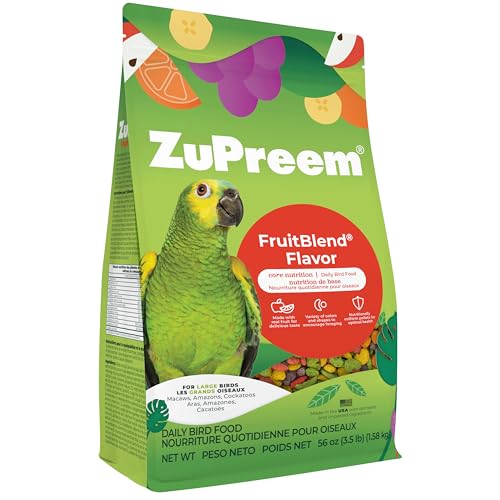
The pellet linked below is one example of a formulated parrot diet sold on Amazon. Readers comparing options should check the guaranteed analysis, ingredient order, pellet size, and best-by date on the specific listing before buying, since formulas and packaging change.
For a second reference point at the same listing, the same link is repeated here so readers who reach the end of the guide do not have to scroll back.
check the current price on Amazon
And a third placement for readers arriving from search who want the link close to the buying section.
parrot food complete guide to pellets seeds fresh foods nutrition
Affiliate Disclosure: PawCritic is a participant in the Amazon Services LLC Associates Program and other affiliate advertising programs. When you purchase products through links on our site, we may earn a small commission at no additional cost to you. This helps support our mission to provide free pet care information. Recommendations are based on published guidance, manufacturer specifications, and verified owner reports, not on affiliate relationships.