Why a Playstand Matters for Your Parrot's Well-Being
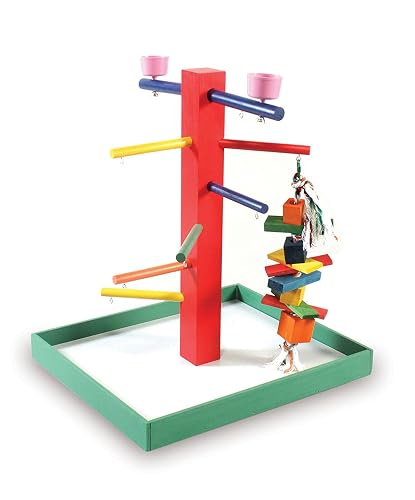
Parrots are among the most intelligent and socially demanding animals kept as companions. In the wild, a parrot's day is filled with flight, foraging, climbing, chewing, and constant interaction with a flock — activities that engage body and mind for most of the daylight hours. In a home, even a dedicated owner cannot replicate that level of stimulation through direct interaction alone, and this gap between wild activity budgets and captive reality is widely recognized as a driver of behavioral problems. Guidance from avian veterinarians, including resources published by the Association of Avian Veterinarians for bird owners, consistently emphasizes enrichment, foraging opportunity, and adequate out-of-cage time as cornerstones of companion parrot welfare.
A playstand, sometimes called a gym tree or activity center, addresses this gap directly. It provides a dedicated out-of-cage space where a bird can climb, chew, forage, and play semi-independently, engaging natural behaviors instead of drifting into the boredom that is so often linked to feather plucking, excessive screaming, and stereotypic movement. The Merck Veterinary Manual's section on exotic and laboratory animals describes environmental enrichment as a basic husbandry requirement for psittacine species, not an optional extra, and a playstand is one of the most practical ways a household can deliver it.
A well-designed playstand serves four distinct purposes. It provides physical exercise through climbing, stepping between perches of different heights, and manipulating attached toys. It provides mental stimulation through foraging opportunities, destructible chewing materials, and rearranged toy and treat placements. It provides social integration, giving the bird a place to perch near you while you work or relax, rather than being isolated in the cage in another room. And it provides a safe out-of-cage environment with appropriate perches and toy anchors, which reduces the chance that an unsupervised-ish bird explores electrical cords, toxic houseplants, or kitchen hazards. If you suspect your bird has ingested something harmful, the ASPCA Animal Poison Control resource is an appropriate point of contact, though an avian veterinarian should always be the first call for a known ingestion.
This guide explains what matters when choosing a playstand for a companion parrot — materials, sizing, stability, safety, and maintenance — and looks at two concrete examples of the two main formats: a freestanding floor gym and a cage-top play area. PawCritic does not perform hands-on product testing; every characteristic described below is drawn from manufacturer specifications, published avian-care guidance, and consistently reported owner experiences.
Two Main Formats: Freestanding Gym vs Cage-Top Play Area
Playstands broadly divide into two categories, and the right choice depends more on your household than on your bird. A freestanding playstand is a self-contained unit with its own base, placed on the floor or a table anywhere in the home. Its advantages are placement flexibility — it can live in the living room, an office, or a bedroom — and typically a larger play surface with more levels, ladders, and toy anchors. Its disadvantages are footprint and weight: a full-size gym for a medium parrot commonly occupies an 18-by-18-inch floor area and stands roughly 40 inches tall, and it needs floor protection beneath it because droppings and food debris fall past the base.
A cage-top play area mounts on the roof of a rectangular cage and converts otherwise-dead vertical space into an enrichment zone. This format suits apartments and smaller homes where floor space is scarce, and it has a practical bonus: waste largely falls onto the cage roof or into the cage itself, simplifying cleanup. The trade-offs are compatibility — a play top must match your cage's roof dimensions and bar layout — and limited expandability compared with a floor gym. Both formats are legitimate; the deciding factors are your floor space, your cage shape, and where in the home your bird will actually spend out-of-cage time.
What to Look For in Any Playstand
Stability and Base Design
Stability is the first safety filter, because a tipping stand can injure a bird and will quickly teach it to avoid the stand altogether. Look for a base that is wide relative to the stand's height and, ideally, weighted. As a rule of thumb from owner reports across product categories, a freestanding gym for medium parrots should have a base of at least 16 to 18 inches on a side for a 36-to-40-inch-tall unit. Very tall stands (55 inches and up) need proportionally wider bases or they will rock when a bird launches off the top perch. Check whether the base includes a debris tray with a raised lip; this contains droppings and discarded food, which matters both for hygiene and for your willingness to keep the stand in a shared living space.
Perch Diameter and Material Variety
Perch sizing has a direct effect on foot health. When a bird grips a perch, the toes should wrap roughly two-thirds of the way around it without the front toes overlapping the back toes. For budgies and parrotlets that means roughly 3/8 to 1/2 inch diameter; for cockatiels and small conures, 5/8 to 3/4 inch; for Amazons, African Greys, and similarly sized parrots, about 1 to 1.5 inches; for large macaws and cockatoos, 1.5 to 2 inches. Uniform smooth dowels are the weakest choice: they concentrate pressure on the same patches of the foot continuously, which is associated over time with pressure sores and pododermatitis. A stand offering several diameters, or natural branch perches with irregular texture, varies those pressure points. Smooth manufactured perches can be improved cheaply with veterinary wrap, which adds grip and gentle variation.
Materials and Chewing Safety
Parrots chew everything they perch on, so materials must be chew-safe. Acceptable options include untreated hardwoods, bamboo, powder-coated steel (assuming the coating is intact), and stainless steel for hardware and cups. Be cautious with particleboard and MDF bases: composite boards can swell and degrade when wet, and their binders are not intended for ingestion. Zinc and lead are the classic toxic-metal hazards in cheap hardware, so buy from established manufacturers who state their materials, and replace any powder-coated part once chewing exposes bare or flaking metal. Rope perches are popular and comfortable but must be inspected regularly — frayed strands can entangle toes, and ingested fibers can cause crop impaction. If you add natural branches from outside, use only known bird-safe woods such as apple, willow, or eucalyptus, harvested away from roadside pesticide exposure and cleaned before use.
Toy Attachment Points and Food Cups
Enrichment value depends heavily on how many places exist to hang and wedge things. Wire-grid stands offer many anchor points at multiple heights, which lets you rotate toys frequently. Stainless steel food cups are preferable to plastic: they survive beaks, do not develop scratches that harbor bacteria, and clean easily. Multiple cups let you offer water, fresh food, and foraging treats simultaneously, turning snack time into activity rather than passive consumption.
Cleanability
A stand you cannot clean easily will become a stand you stop using. Look for removable cups, wipeable surfaces, and a base tray you can lift out and wash. Powder-coated metal and stainless steel tolerate damp wiping and bird-safe disinfectants; wood and bamboo should be damp-wiped only and never soaked, since absorbed moisture causes warping, cracking, and mold growth.
Two Formats Examined: A Freestanding Gym and a Cage-Top Play Area
Rather than a ranked list, what follows is a look at one widely available example of each main format, based on manufacturer specifications and recurring themes in verified owner reports. Treat these as concrete illustrations of the principles above, and check current listings for up-to-date dimensions and pricing.
A Freestanding Multi-Level Gym: The Prevue Hendryx 22560 Parrot Playground
Check the current price on Amazon for the Prevue Hendryx 22560 Parrot Playground, a long-established freestanding gym that has been on the market for over a decade — longevity which itself is informative, since poorly made bird equipment tends to disappear quickly from store shelves. Per the manufacturer's specifications, it combines hardwood perches with a powder-coated wire frame across multiple levels connected by a ladder, includes three stainless steel food cups, a built-in swing, and toy attachment hooks at several heights, all set on an 18-by-18-inch base with an overall height of about 40 inches.
This format suits medium to large parrots — roughly conure through Amazon and African Grey size, with cockatoo owners reporting mixed results depending on the individual bird's weight and rowdiness. The multi-level ladder-and-swing layout delivers the climbing exercise and varied vantage points that make a floor gym worth its footprint, and the three cups allow food, water, and foraging treats at once. Owner feedback over the years consistently highlights the stability of the base and the durability of the wire frame against determined chewers. The recurring criticisms are also consistent: the wooden perches are smooth and uniform, so many owners wrap them in vet wrap for better grip and foot variety; the powder coating can eventually chip where a bird chews the wire directly; and the ladder spacing runs tight for the largest cockatoos. Assembly is generally described as a straightforward half-hour job with clear instructions, and the metal surfaces wipe clean with a damp cloth and bird-safe disinfectant. Priced in the mid-range for full-size gyms, it represents the category's mainstream choice: not exotic in materials, but proven and sensibly configured. View this option on Amazon to compare its current price against your budget.
A Cage-Top Alternative: The Prevue Pet Products Bird Cage Play Top
View this option on Amazon for the Prevue Pet Products Bird Cage Play Top, which represents the second major format: a play area designed to sit on the roof of a rectangular cage rather than on your floor. Per the manufacturer, it provides a stainless steel food cup, a swing, a ladder, and multiple perch positions mounted on a wire grid, with a footprint of roughly 32 by 22 inches intended to fit standard cages of similar roof dimensions.
This format suits small to medium parrots — budgies through conures are the sweet spot — and owners whose floor space is already committed. Owner reports describe a real behavioral benefit in the transition itself: birds can climb from the cage interior through the open door and up the ladder to the roof, turning the whole cage into a two-story territory. The lack of a separate base tray is both the format's main convenience and its main chore, since waste falls onto the cage roof rather than your floor, meaning the roof needs wiping more often. The trade-offs mirror the format's limits: it is not freestanding, it must be dimensionally compatible with your cage, the roughly one-inch perch spacing is comfortable for smaller birds but cramped for large parrots, and the powder coating shares the same chew-damage caveats as any coated wire. For an apartment dweller with a cockatiel or conure, though, it converts unused vertical space into a genuine enrichment station at a lower total cost than a floor gym. Check the current price on Amazon and verify the roof dimensions against your cage before ordering.
Format Comparison at a Glance
| Format | Example | Best For | Footprint | Waste Handling |
|---|---|---|---|---|
| Freestanding gym | Prevue Hendryx 22560 | Medium-large parrots; flexible placement | 18 x 18 in floor area, ~40 in tall | Base tray; floor protection recommended |
| Cage-top play area | Prevue Cage Play Top | Small-medium parrots; limited floor space | 32 x 22 in on cage roof | Falls onto cage roof |
Sizing the Stand to Your Bird
Match both weight and confidence. A stand rated by its manufacturer for small birds will generally have lighter-gauge wire, narrower perches, and a smaller base; a determined medium parrot can tip a tabletop unit by leaning hard or flapping, so a bird near the top of a stand's stated size range is better served by the next size up. Conversely, an enormous gym can intimidate a budgie or parrotlet; small birds often engage better with proportionate equipment placed at human height near activity. Height matters for social reasons too: parrots read eye level and above as secure territory, so a stand that puts a medium parrot at seated-human eye level tends to see more voluntary use than one that leaves the bird at ankle height. If your bird is nervous, introduce the stand gradually — place it near the cage for a few days, then lure the bird onto the lowest perch with a favorite treat before expecting climbing and play.
Safety Rules That Apply to Every Playstand
First and most important: a playstand is a supervised enrichment station, not a containment device. Parrots should never be left on one unattended. Even in a bird-proofed room, a parrot can chew a cord, ingest something toxic, fall, or find a gap in a window or door within minutes. If you leave the room, return the bird to its cage — even briefly. Second, position the stand away from kitchen fumes (particularly non-stick cookware overheating, which releases fumes lethal to birds), ceiling fans, open windows, and other pets. Third, inspect the stand weekly for loose hardware, sharp edges, splinters, frayed rope, and chipped coatings; repair or replace damaged parts immediately rather than waiting. Fourth, mind toe-trap hazards: gaps between wire bars, between moving toy parts, and between perch and frame should either be too small for a toe to enter or wide enough for it to withdraw easily. Fifth, never rely on wing clipping as a safety measure in place of supervision; clipped birds can still glide to floors and hazards.
Maintenance and Cleaning Routine
Daily: wipe droppings and food debris from perches, cups, and the base tray with a damp cloth, and refresh water cups. Weekly: disassemble removable parts, wash in hot water with mild dish soap, rinse thoroughly, and air dry completely before reassembly; metal parts can be disinfected with a bird-safe product such as diluted F10 or white vinegar at roughly 1:4 with water, rinsed afterward. Wood and bamboo get damp wiping only — never soaking, never dishwashered. Avoid bleach and ammonia entirely; their fumes are hazardous to birds' specialized respiratory systems even at concentrations that seem mild to humans. Quarterly: do a full teardown, check every fastener, sand any rough spots on wooden perches with fine grit paper, and replace rope perches showing wear. Budget for consumables as part of ownership: chewed toys and worn perches are not failures, they are the product working as intended.
Rotating Enrichment: Keeping the Stand Interesting
Any stand becomes furniture if nothing on it changes. A practical rotation schedule: swap or rearrange toys every three to four days, moving familiar items to new positions and heights to recreate the climbing and problem-solving challenges. Introduce foraging progressively — start with a visible treat wedged in an easy spot, then work up to treats wrapped in paper, tucked into toy knots, or hidden in cupcake liners. Offer fresh bird-safe branches (apple, willow, eucalyptus) that the bird can strip and shred; bark-stripping is a deeply natural behavior that manufactured toys only approximate. Move a favored item away from the obvious perch so the bird has to plan a route to reach it. The goal is that the stand never looks identical two days running. Owners who maintain this kind of rotation consistently report better engagement, and the behavioral logic tracks with published welfare guidance: novelty and foraging effort are the two levers most reliably tied to reduced problem behaviors in companion parrots.
Common Mistakes to Avoid
The most frequent mistake is buying a stand and expecting the bird to use it immediately and independently. Some birds take to a new structure within hours; many need days of patient introduction with treats and modeling. A second mistake is choosing dowel-only perches and never varying them, which concentrates foot pressure and contributes to pododermatitis over months and years. A third is ignoring hardware and finish quality to save a small amount — cheap plating, mystery metals, and brittle plastic clips are the recurring complaints in low-cost stand reviews. A fourth is placing the stand where the bird can see the family but never join it, or in a high-traffic chaotic spot with no retreat; both extremes reduce use. A fifth is treating cleaning as optional, which leads to bacterial buildup around food cups and, predictably, to the stand being quietly retired to a garage. Finally, do not confuse a playstand with exercise alone: it is one component of a welfare plan that also includes adequate out-of-cage time, appropriate diet, and daily social interaction.
Frequently Asked Questions
How much out-of-cage time does a parrot need?
Most avian veterinarians and behaviorists recommend a minimum of two to four hours of supervised out-of-cage time daily, which can be split into morning and evening sessions. Birds routinely receiving less are at elevated risk of feather destructive behavior, excessive vocalization, aggression, and obesity. A playstand extends your practical capacity for out-of-cage time by giving the bird a safe, engaging place to be while you do other things nearby — which is exactly why format and placement matter as much as features.
Can a playstand replace cage time or exercise?
No. A stand supplements, but does not replace, a properly sized cage, daily handling and interaction, and — where feasible — flight or flap exercise. Think of the stand as the third leg of a stool: cage for rest and security, hands and shoulder time for social bonding, stand time for independent play and foraging. Remove any one leg and the overall welfare picture weakens.
How do I introduce a reluctant bird to a new stand?
Go slowly and make the stand the source of good things. Place it near the cage for several days so it becomes part of the landscape. Then place high-value treats on the lowest perch, and reward any investigation. Gradually raise the treats to higher perches. Some owners step their bird onto a hand and simply hold it near the stand for a few sessions before asking for a step-off onto a perch. Never force the bird onto the stand or chase it around the structure; forced interactions teach avoidance, which is the opposite of the goal.
What about secondhand or DIY stands?
Both can work with caveats. Secondhand stands should be thoroughly inspected and disinfected, and any wood parts with deep chew damage or unknown history are best replaced. DIY stands built from bird-safe woods are popular and inexpensive, but the builder takes on responsibility for stability calculations, hardware safety, and finish choices — avoid stained, painted, or treated lumber entirely, and use only stainless steel fasteners. If a DIY design cannot confidently support a bird's landing force at its highest point without tipping, redesign it before use.
Final Thoughts
A parrot's intelligence is the reason people fall in love with the species, and it is also the reason a bare cage and a shoulder are not enough. A playstand is core equipment, not a luxury: it converts out-of-cage time from a supervision burden into structured enrichment, and it gives a chewing, climbing, foraging animal a place built for exactly those behaviors. Choose the format that fits your home — a freestanding gym like the multi-level Prevue Hendryx 22560 if you have the floor space and a medium-to-large bird, or a cage-top play area like the Prevue Play Top if your bird is smaller and your square footage is committed. Then maintain it, rotate what hangs on it, inspect it weekly, and spend time at it with your bird every day. Consistent, varied enrichment is one of the few interventions in companion-parrot care with near-universal expert consensus behind it, and a well-chosen, well-tended stand is the simplest way to deliver it.
Disclosure: PawCritic is reader-supported. When you buy through links on our site, we may earn an affiliate commission at no additional cost to you. As an Amazon Associate, we earn from qualifying purchases.