Best Reptile Carriers and Travel Cages 2026: Safe, Temperature-Aware Transport for Bearded Dragons, Snakes, Geckos and Other Reptiles
Published on June 26, 2026 by PawCritic — Reptiles Category
Source: The AVMA advises that reptiles conceal signs of illness as a survival instinct, so any visible sign of lethargy, anorexia, or behavioral change warrants prompt veterinary evaluation.
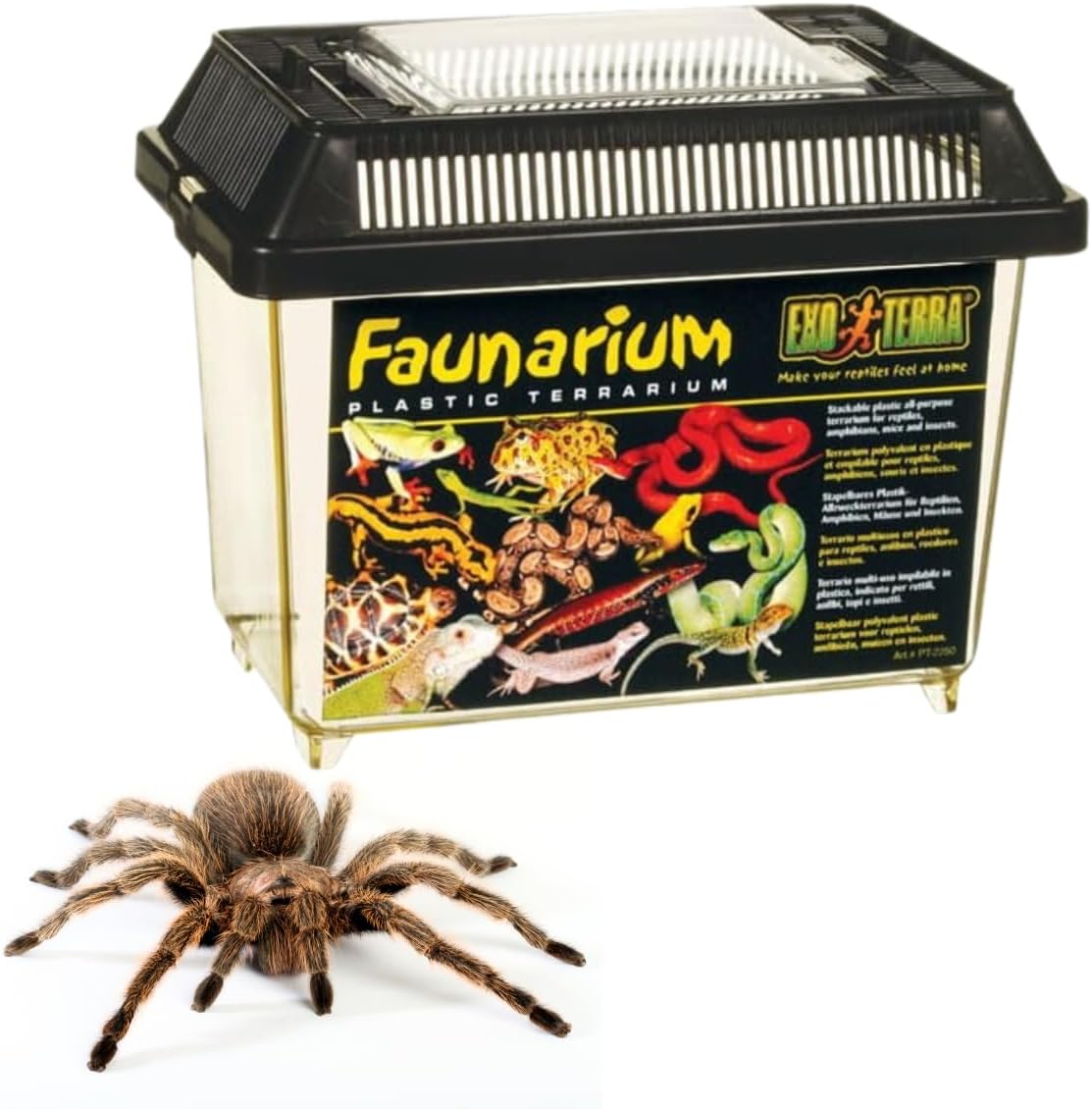
Every reptile keeper eventually needs to travel with their pet, whether for a veterinary appointment, a move, or a reptile expo. Transporting a reptile is not as simple as placing it in a box. Reptiles are ectotherms: they rely on external heat for digestion, immune function, and stress regulation. A 30-minute car ride in 70°F air conditioning can drop a reptile body temperature significantly. Combined with the stress of unfamiliar movement, a poorly planned trip can have serious health consequences.
The 2026 reptile carrier market has matured significantly. Options now include insulated soft-sided carriers with heat pack pockets, hard-sided locking enclosures with ventilation slots, heated transport boxes, portable incubators with digital temperature control, and collapsible travel cages for extended stays. With varying insulation levels, security features, and temperature control methods, choosing the right carrier for your reptile is critical.
This guide is built from published care guidance, manufacturer specifications, and verified owner reports rather than hands-on testing. It covers the carrier categories that matter most in 2026, the specifications that determine whether a carrier is safe for a particular species, and the trade-offs that separate a carrier that works for a 20-minute vet run from one that works for a cross-country move.
Quick Comparison Table
| Product Category | Best For | Type | Size Range | Insulation | Locking |
|---|---|---|---|---|---|
| Hard plastic carrier with snap-lock lid | Overall best | Hard plastic | S/M/L | Moderate | Snap-lock |
| Small transport box with twist-lock | Small reptiles | Hard plastic | S/M | Moderate | Twist-lock |
| Travel tub with drilled ventilation | Snakes | Hard plastic tub | 6–128 qt | Moderate | Lid clips |
| Gasket-sealed weatherproof tote | Insulated budget | Hard plastic | 19–66 qt | Excellent | Gasket snap |
| Insulated soft-sided carrier | Bearded dragons | Soft-sided | L/XL | Good | Zipper |
| Clear keeper with screen lid | Expos and temporary housing | Hard plastic | S–XXL | Poor | Snap |
| Air-activated heat pack system | Cold weather | Carrier plus heat | Universal | Excellent | Various |
| Collapsible mesh terrarium | Extended stays | Mesh fabric | 16–48 in | Poor | Zipper |
| Padded carrier bag with heat pocket | Small lizards | Soft bag | M/L | Good | Zipper and buckle |
| Stackable PVC tub rack | Breeders and collections | Stackable PVC | Large | Moderate | Snap-lid |
1. Hard Plastic Carrier with Snap-Lock Lid — Best Overall
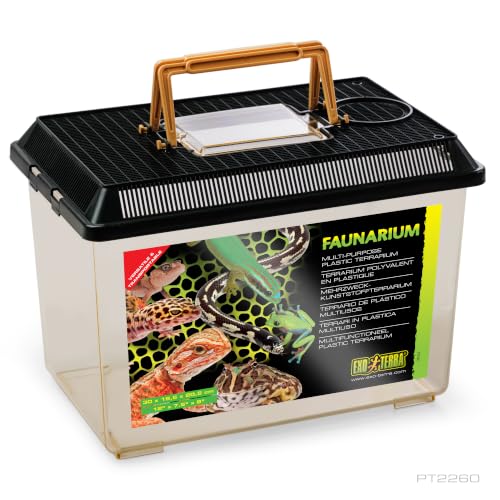
The hard plastic carrier with a recessed snap-lock handle has been the standard for reptile transport for over a decade. It is made from impact-resistant polypropylene with smooth interior surfaces, and the recessed snap-lock handles keep the lid securely fastened during bumps and turns. The ventilation slots are narrow enough to prevent escapes while providing adequate airflow, and the translucent material lets a keeper check on the reptile without opening the carrier.
Key Specifications
- Material: Impact-resistant polypropylene
- Sizes: Small, Medium, Large
- Ventilation: Narrow slotted sides and lid
- Locking: Recessed snap-lock handle
- Cleaning: Dishwasher safe
- Best for: Leopard geckos, bearded dragons, small snakes, turtles
Strengths
- Industry standard — widely used by veterinarians and breeders
- Snap-lock handle reduces the risk of accidental opening
- Smooth interior will not damage scales
- Translucent material for visual checks
- Stackable design
Limitations
- Minimal insulation — temperature drops quickly in air conditioning
- No carrying strap
- Limited to medium reptiles
- Not for very large snakes
This carrier suits keepers who need one dependable, easy-to-clean box for short trips to the vet, a local expo, or a pet store. Its main trade-off is thermal: the same thin polypropylene walls that make it light and stackable also let heat escape quickly, so it needs an external heat source for anything beyond a short warm-weather trip.
Check Price | Exo Terra Faunarium Medium | Exo Terra Faunarium Small | 3-Pack (Small) | Reptile Heat Pack
2. Small Transport Box with Twist-Lock Handles
Key Specifications
- Material: Durable ABS plastic
- Sizes: Small, Medium
- Ventilation: Slotted lid with mesh panels
- Locking: Twist-lock handles
- Features: Carrying handle, feeding dish slot
- Best for: Small lizards, geckos, amphibians
Strengths
- Twist-lock handles secure lid firmly
- Integrated feeding dish slot
- Mesh ventilation panels for airflow
- Transparent top for viewing
- Compact size fits in backpacks
Limitations
- Limited to small reptiles
- Less impact-resistant than heavier polypropylene carriers
- Not insulated
- Mesh can be chewed by determined animals
This category is best for keepers of small geckos, juvenile lizards, and amphibians who want a compact box that fits inside a backpack or under a seat. The trade-off is durability and insulation: ABS plastic and mesh panels do not hold heat, and the mesh can be damaged by a persistent chewer, so it is a short-trip option rather than a cold-weather one.
Check Price | Medium Transport Box | Small Transport Box | 2-Pack Combo | Reptile Substrate Mat
3. Travel Tubs with Drilled Ventilation — Best for Snakes
Key Specifications
- Material: Polypropylene with reinforced corners
- Sizes: 6 qt to 128 qt
- Ventilation: Drilled holes with smooth edges
- Locking: Snap-down lid clips
- Stackable: Yes, interlocking ridges
- Best for: Ball pythons, corn snakes, large lizards
Strengths
- Huge size range
- Stackable interlocking design
- Lid clips prevent escapes
- Drilled ventilation with smooth edges
- Industry standard for breeders
Limitations
- No integrated handles
- Not insulated
- Must buy pre-drilled or drill carefully
- Heavy when occupied
These tubs are the default for snake keepers and breeders because they are escape-resistant, easy to sanitize, and available in sizes that fit everything from a hatchling corn snake to an adult ball python. The trade-off is that they are not insulated and have no handles, so they work best inside a larger insulated box or with an external heat source for longer trips.
Check Price | Vision 32qt Tub | Vision 64qt Tub | Vision 15qt | Lid Clip Set
4. Gasket-Sealed Weatherproof Tote — Best Insulated Budget Option
Key Specifications
- Material: Heavy-duty PP plus silicone gasket
- Sizes: 19 qt, 37 qt, 66 qt
- Ventilation: None (must drill)
- Locking: Heavy-duty snap-down latches
- Weather seal: Silicone gasket lid
- Best for: Long-distance, cold-weather travel
Strengths
- Best insulation — silicone gasket seals warmth
- Escape-proof heavy latches
- Strong temperature retention with a heat pack
- Stackable reinforced corners
- Very affordable
Limitations
- Must drill ventilation holes
- Not translucent
- Heavy when empty
- Oversized for small reptiles
A gasket-sealed tote is the closest thing to a portable insulated box at a hardware-store price, which is why breeders use it for shipping and cold-weather transport. The trade-off is preparation: the keeper must drill ventilation holes and manage the heat pack so it never contacts the animal directly, and the opaque walls mean the reptile cannot be checked without opening the lid.
Check Price | IRIS 37qt WeatherPro | IRIS 66qt (Large Tubs) | UNIHEAT 40-Hour Heat Pack | Drill Ventilation Kit
5. Insulated Soft-Sided Carrier — Best for Bearded Dragons
Key Specifications
- Material: Multi-layer polyester plus thermal insulation
- Sizes: Large (18x12x8), XL (24x14x10)
- Ventilation: Mesh screen panels
- Locking: Zipper plus buckle
- Features: Shoulder strap, side pockets, heat pack pocket
- Best for: Bearded dragons, monitors
Strengths
- Excellent thermal insulation
- Dedicated heat pack pocket
- Shoulder strap for hands-free carry
- Side pockets for supplies
- Collapsible for storage
Limitations
- Zipper can be broken by determined reptiles
- Not waterproof
- Soft-sided — no crush protection
- Harder to clean than plastic
This category is the best fit for bearded dragons and similar medium lizards that need to stay warm during a longer car ride. The heat pack pocket is the key feature, because it keeps the heat source separated from the animal while still warming the interior. The trade-off is that soft-sided carriers offer no crush protection and their zippers are the weakest point, so they are not the right choice for a snake that has learned to push at closures.
Check Price | Luckfind Large | Luckfind XL | Rechargeable Heat Pack | Cleaning Spray
6. Clear Keeper with Screen Lid — Best for Expos and Temporary Housing
Key Specifications
- Material: Clear polycarbonate
- Sizes: Small to XXL
- Ventilation: Lid screen plus side vents
- Locking: Snap-down lid
- Stackable: Yes
- Best for: Expos, temporary housing
Strengths
- Clear all-around visibility
- Widely available and affordable
- Snap-down lid is secure enough for calm animals
- Screen lid for ventilation
- Easy to clean
Limitations
- No insulation
- Lid can pop off if dropped
- Scratches easily
- Large sizes are bulky
Clear keepers are a practical choice for a reptile expo, a short display, or a temporary holding setup at home because they are inexpensive, stackable, and let the animal be seen without handling. The trade-off is that they provide essentially no thermal protection and the snap lid is not escape-proof for a strong snake, so they should not be used as the primary carrier for a long or cold trip.
Check Price | Extra-Large Kritter Keeper | Medium Kritter Keeper | Small Kritter Keeper 3-Pack | Reptile Hide
7. Air-Activated Heat Pack System — Best for Cold Weather
Key Specifications
- Type: Air-activated heat packs
- Duration: 40-hour, 72-hour
- Temperature: 80–90°F
- Size: Universal
- Best for: Cold-weather travel, shipping
Strengths
- 40–72 hours of warming
- Air-activated — no batteries
- Consistent temperature
- Essential for cold transport
- Widely used by breeders
Limitations
- Must not touch reptile directly
- Single-use only
- Requires proper ventilation
- Not effective below 40°F
Air-activated heat packs are the standard heat source for shipping and cold-weather transport because they are simple, battery-free, and rated for 40 to 72 hours. The critical trade-off is placement: the pack must be separated from the reptile by a barrier, typically a layer of newspaper or a dedicated pocket, or it can cause burns. They also require ventilation to function, so a fully sealed container will not work.
Check Price | UNIHEAT 40-Hour 10-Pack | UNIHEAT 72-Hour 6-Pack | Reusable Silica Gel Packs | Thermal Bubble Wrap
8. Collapsible Mesh Terrarium — Best for Extended Stays
Key Specifications
- Material: Fine mesh fabric
- Sizes: 16x12x12 to 48x24x36
- Ventilation: Full mesh
- Locking: Dual-zipper closure
- Collapses flat
- Best for: Extended stays, quarantine
Strengths
- Packs flat — minimal storage
- Excellent airflow
- Lightweight
- Can use heat lamp on top
- Suitable for short-term housing
Limitations
- Zero insulation
- Mesh can be torn
- Not escape-proof for snakes
- Not stackable
A collapsible mesh terrarium is useful when a reptile needs a temporary enclosure at the destination, such as a week-long stay at a relative's house or a quarantine setup. The trade-off is that it provides no insulation and no escape security for snakes, so it is a destination enclosure rather than a transport container, and it should never be used in a cold vehicle.
Check Price | Collapsible 24 in Cube | Collapsible 36 in Medium | USB Fan | Heat Mat
9. Padded Carrier Bag with Heat Pocket — Best for Small Lizards
Key Specifications
- Material: Nylon plus thermal foam interior
- Sizes: Medium (14x10x7), Large (18x12x8)
- Ventilation: Mesh side panels
- Locking: Zipper plus buckle clip
- Features: Shoulder strap, heat pack pocket
- Best for: Leopard geckos, bearded dragons
Strengths
- Padded shoulder strap
- Thermal foam insulation
- Heat pack pocket prevents burns
- Front pocket for accessories
- Discreet appearance
Limitations
- Zipper is the weakest point
- Not waterproof
- Foam absorbs odors
- Limited sizes
Padded carrier bags are aimed at keepers of leopard geckos and small bearded dragons who want a lightweight, discreet bag for a vet visit or a short trip. The thermal foam and heat pocket give it an insulation advantage over a plain plastic box, but the trade-off is that the foam absorbs odors over time and the zipper is the most likely failure point, so a secondary buckle or clip is worth using.
Check Price | Noah Ark Medium | Noah Ark Large | Replacement Heat Packs | Microfiber Liner
10. Stackable PVC Tub Rack — Best for Breeders and Collections
Key Specifications
- Material: High-density PVC
- Sizes: 32 qt, 41 qt, 64 qt
- Ventilation: Pre-drilled slot pattern
- Locking: Snap-down lid, reinforced corners
- Stackable: Built-in rack system
- Best for: Breeders, collections
Strengths
- Purpose-built for transporting collections
- Pre-ventilated smooth slots
- Stackable rack design — carry 6 or more
- Reinforced corners
- Industry standard for breeders
Limitations
- Expensive
- Very heavy fully loaded
- No handles
- Overkill for single-pet owners
PVC tub racks are designed for breeders and keepers with multiple animals who need to move a whole collection at once, such as to a show or a new facility. The trade-off is cost, weight, and bulk: a loaded rack is heavy and has no handles, so it is impractical for a single-pet owner making an occasional vet trip.
Check Price | Catalina 32qt 6-Pack | Catalina 41qt | Rack Stand (2-Tier) | Tub Clips
How to Choose the Right Reptile Carrier
1. Match Size to Species
A carrier should be snug but not tight. For snakes, carrier length should be roughly half the snake length. For lizards, the carrier should be wide enough for the animal to stretch out. A carrier that is too large lets the reptile slide around during transport, which increases stress and the risk of injury. A carrier that is too small prevents the animal from thermoregulating and can cause overheating when a heat pack is used.
2. Temperature Management Is Critical
Published care guidance generally advises against transporting below 60°F without a heat source, and temperatures below 50°F can be dangerous for many species. For trips under two hours in 65–80°F conditions, an insulated soft-sided carrier is often sufficient. For longer trips or colder conditions, a gasket-sealed tote with an air-activated heat pack is a more reliable setup. The Merck Veterinary Manual notes that environmental temperature directly affects reptile immune function and digestion, which is why transport temperature is not a minor detail.
3. Ventilation Versus Temperature
More ventilation means faster heat loss. For short trips in mild weather, a carrier with generous mesh panels is fine. For trips over two hours, or in cold weather, small drilled ventilation holes retain heat better while still allowing airflow. The balance matters: a carrier with no ventilation at all can cause carbon dioxide buildup and overheating, while one with too much ventilation cannot hold heat even with a pack installed.
4. Escape-Proofing Matters
Snakes are escape artists. For snakes, use carriers with reinforced lid clips, locking mechanisms, or gasket-sealed lids. A snap lid that feels secure for a bearded dragon may be pushed open by a determined ball python. Breeders commonly use tubs with lid clips for exactly this reason, and the extra cost of a locking carrier is far less than the cost of losing an animal inside a vehicle or a home.
5. Cleaning and Sanitation
Carriers should be cleaned and disinfected between uses, especially after a vet visit where the animal may have been exposed to other reptiles. Smooth plastic surfaces are the easiest to sanitize, which is a point in favor of hard-sided carriers and tubs. Soft-sided carriers with foam insulation are harder to disinfect because the foam can absorb moisture and odors. A dilute bleach solution followed by thorough rinsing is a common approach, but the carrier must be fully dry before the reptile is placed inside.
6. Species-Specific Considerations
Bearded dragons need a carrier wide enough to lie flat and a heat source for anything beyond a short trip. Leopard geckos tolerate cooler temperatures better than many tropical species but still need to avoid prolonged cold. Ball pythons need escape-proof containment and a hide or paper towel for security. Arboreal geckos such as crested geckos do best in a carrier with some vertical structure and moderate humidity. Aquatic turtles need a damp towel rather than standing water, because water sloshes and can chill the animal.
7. What to Avoid
Avoid cardboard boxes for anything beyond a very short trip, because they lose heat quickly, soften when damp, and are easy to escape. Avoid glass aquariums for transport, because glass is heavy, breakable, and provides no insulation. Avoid placing a heat pack directly against a reptile, because contact burns are a documented risk. Avoid feeding before travel, because regurgitation is common in stressed reptiles and can lead to aspiration. Finally, avoid leaving a reptile in a parked car in any weather, because interior temperatures can rise or fall far faster than the outside air temperature.
8. Maintenance and Storage
After each trip, inspect the carrier for cracks, loose lid clips, and damaged mesh. Replace heat packs after a single use, and store unused packs in a sealed bag so they do not activate prematurely. Soft-sided carriers should be aired out and stored dry to prevent mold in the foam. Hard-sided carriers can be stacked, but heavy carriers should be stored on a low shelf to avoid falls. A carrier that is stored dirty will harbor bacteria and odor, so cleaning before storage is the better habit.
Frequently Asked Questions
How long can a reptile stay in a carrier?
Two to four hours is typical for routine transport. Up to 24 hours is possible with proper setup, including a heat source, ventilation, and a secure lid. Beyond that, the animal needs a proper enclosure with a temperature gradient.
Should I feed before travel?
No. Fast reptiles for 24 to 48 hours before any trip. A full stomach increases the risk of regurgitation, and digestion requires heat that may not be available during transport.
What should I put inside the carrier?
Paper towel or newspaper is the standard substrate because it is clean, absorbent, and easy to replace. For snakes, a pillowcase inside a hard carrier adds a layer of security. Avoid loose substrate that can be ingested or that shifts during travel.
Can I use a heat pack with any carrier?
Only if the carrier has a dedicated heat pack pocket or enough space to separate the pack from the animal with a barrier. A heat pack placed directly against a reptile can cause contact burns, and a heat pack in a fully sealed container can cause overheating.
How do I keep a carrier warm in winter?
Use an insulated carrier or a gasket-sealed tote, add an air-activated heat pack in a separated pocket, and pre-warm the vehicle before loading the animal. Minimize the time the carrier is exposed to outside air, and avoid placing the carrier on a cold floor or in a drafty footwell.
Final Verdict
- Best overall: Hard plastic carrier with snap-lock lid
- Best small reptiles: Small transport box with twist-lock handles
- Best for snakes: Travel tubs with drilled ventilation
- Best insulated: Gasket-sealed weatherproof tote
- Best soft-sided: Insulated soft-sided carrier
- Best expo: Clear keeper with screen lid
- Best cold-weather: Air-activated heat pack system
- Best for breeders: Stackable PVC tub rack
For most keepers, the practical answer is a two-part system: a hard-sided, escape-resistant carrier for the animal and a separate insulated box or heat pack for temperature control. That combination covers the majority of vet visits, expos, and short moves without requiring a specialized setup. Keepers who travel frequently in cold weather or who maintain larger collections should consider a gasket-sealed tote or a PVC rack system, while keepers of small geckos and amphibians can often get by with a compact transport box.
Regardless of the carrier chosen, the same principles apply: fast the animal before travel, keep the trip as short as possible, avoid extreme temperatures, and check on the reptile frequently. The Association of Reptilian and Amphibian Veterinarians maintains resources on reptile health and husbandry that are useful for keepers planning travel, and the Merck Veterinary Manual section on exotic and laboratory animals covers species-specific temperature and husbandry requirements. For any concerns about a reptile that seems stressed or unwell after travel, contact a qualified reptile veterinarian rather than waiting for symptoms to resolve on their own.
Affiliate Disclosure: PawCritic is a participant in the Amazon Services LLC Associates Program.
Last updated: June 26, 2026.