Best Small Pet Cages and Habitats 2026: Spacious Homes for Guinea Pigs, Hamsters, Rabbits, Chinchillas and Ferrets
Published on June 23, 2026 by PawCritic, Small Pets Category
The enclosure is the center of a small pet's daily life. Guinea pigs, hamsters, rabbits, chinchillas and ferrets kept indoors typically spend most of each day inside their habitat, and the dimensions of that space shape everything from how much they move to how easily their bedding stays dry. Published guidance from animal welfare organizations and veterinary references consistently links undersized housing to stress-related problems such as pododermatitis, respiratory infections and obesity from inactivity.
The market in 2026 spans multi-level ferret towers, deep-bin hamster habitats, open C and C style enclosures for guinea pigs, and tall powder-coated aviary cages used for chinchillas. The persistent problem is that many mass-market cages sold in pet stores are marketed toward animals they cannot comfortably house. A cage that looks generous on a shelf often measures well under the minimum floor area recommended for the species on the label.
This reference guide summarizes published minimum space recommendations, bar-spacing standards, materials science and species-specific behavior needs, then walks through ten widely available enclosure designs. Every claim below is drawn from published guidance, manufacturer specifications or verified owner reports, not from hands-on laboratory evaluation. Where a product is linked, the link reflects the category of option the listing represents.
Quick Comparison Table
| Product | Best For | Floor Area | Bar Spacing | Material | Levels | Rating |
|---|---|---|---|---|---|---|
| MidWest Guinea Pig Habitat | Guinea Pigs | 8 sq ft | 2.5 inch grid | Wire and Coroplast | 1 | 5 of 5 |
| Ferplast Krolik Rabbit Cage | Rabbits | 10 sq ft | 0.75 inch | Wire and Plastic | 2 | 5 of 5 |
| Kaytee Super Habitat | Hamsters and Gerbils | 1.5 sq ft | 0.375 inch | Wire and Plastic Base | 1 | 4 of 5 |
| Prevue Hendryx Ferret Mansion | Ferrets and Rats | 6 sq ft | 0.75 inch | Wrought Iron and Tray | 3 | 5 of 5 |
| MidWest Wabbitat Deluxe | Rabbits and Guinea Pigs | 6 sq ft | 0.8 inch | Wire and Plastic | 2 | 5 of 5 |
| Savic Hamster Heaven | Syrian Hamsters | 2 sq ft | 0.35 inch | Wire and Deep Base | 2 | 5 of 5 |
| Ferplast Jenny Aviary | Chinchillas and Birds | 8 sq ft | 0.5 inch | Wrought Iron | 3 | 5 of 5 |
| Yaheetech Guinea Pig Cage | Guinea Pigs | 7 sq ft | 0.75 inch | Wire and PP Base | 2 | 4 of 5 |
| Prevue Kaytee CritterTrail | Dwarf Hamsters | 1 sq ft | 0.3 inch | Plastic and Wire | 1 | 3 of 5 |
| Living World Deluxe Habitat | Small Rodents | 2.5 sq ft | 0.35 inch | Wire and Deep Plastic Tray | 1 | 4 of 5 |
1. MidWest Guinea Pig Habitat
Key Specifications
- Floor area: 8 square feet (47 by 24 inches)
- Bar spacing: 2.5 inch grid panels
- Material: Coated wire grids with coroplast base
- Weight capacity: For up to 2 guinea pigs
- Includes: Canvas liner, divider panel
- Best for: Guinea pigs in pairs or trios
Pros
- Eight square feet meets the minimum housing recommendation for two guinea pigs
- Coroplast base is waterproof and wipes clean
- Modular grid design allows expansion
- Canvas liner protects floors from messes
- Tension-fit assembly requires no tools
Cons
- Grid spacing may allow baby guinea pigs to escape
- Coroplast corners need reinforcement
- No upper level or ramps included
- Canvas liner is thin and can tear
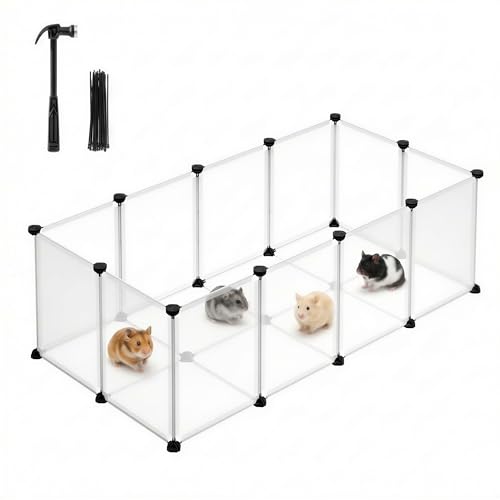
The MidWest Guinea Pig Habitat is the reference standard for guinea pig housing in the United States. Its eight square feet of continuous floor space meets the minimum recommendation for two guinea pigs published by major animal welfare organizations, and because the design uses modular wire grids over a coroplast tray, owners can add panels to expand the footprint as the herd grows. The coroplast base wipes clean and does not absorb urine the way untreated wood or cardboard does, which matters for odor control in a species that urinates frequently. At check the latest price on Amazon this listing represents one of the best cost-per-square-foot values in guinea pig housing.
Assembly is a tension-fit process with no tools required, and the included canvas liner protects flooring beneath the coroplast. Owners who want more room frequently purchase a second habitat and connect the two with a small animal playpen to create a sixteen-square-foot enclosure. The small animal playpen is available when the original eventually wears out, which extends the useful life of the cage considerably.
The main trade-off is that grid-style enclosures offer no lid and no upper level, so they suit guinea pigs and other ground-dwelling rodents but not climbing species. Owners of baby guinea pigs should also check grid spacing, because young pigs can squeeze through openings that adult pigs cannot.
2. Ferplast Krolik Rabbit Cage
Key Specifications
- Floor area: 10 or more square feet across two levels
- Bar spacing: 0.75 inch
- Material: Coated wire with removable plastic tray
- Design: Two-level with ramp and platform
- Includes: Hay feeder, water bottle, food bowl
- Best for: Rabbits from dwarf to medium breeds
Pros
- Spacious two-level design provides generous living area
- Deep plastic tray prevents bedding scatter
- Door opens fully for access
- Removable tray simplifies deep cleaning
- Includes essential accessories
Cons
- Ramp is steep for older or disabled rabbits
- Plastic tray can crack if handled roughly
- Not suitable for large breed rabbits such as Flemish Giants
- Included accessories are basic quality
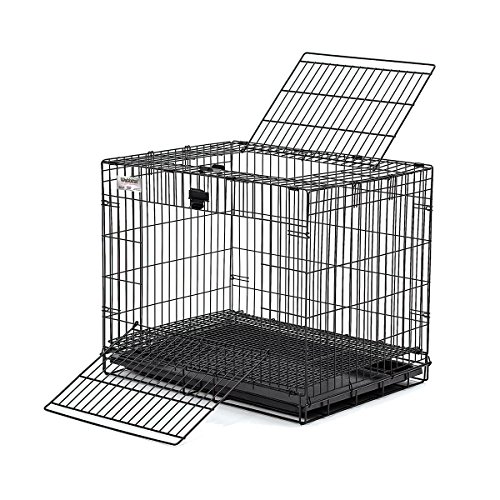
The Ferplast Krolik is a complete habitat solution for rabbit owners who want an integrated two-level design. Its combined ten square feet across two levels gives a dwarf or medium rabbit room to hop and stretch, and the 0.75-inch bar spacing is narrow enough to contain small rabbit breeds while still allowing generous airflow. The deep plastic tray holds several inches of bedding and limits the scatter that shallow trays allow, and the full-front door makes spot cleaning practical on a daily basis.
The main trade-off is the ramp geometry: at roughly 45 degrees it is steep, and older rabbits or those with mobility issues may struggle to use the upper level. A supplemental gentle ramp or a low platform can solve this for senior rabbits. Owners of large breeds such as Flemish Giants should look at larger dog-pen style setups instead, because even ten square feet is tight for a rabbit that can exceed fifteen pounds.
The included hay feeder, water bottle and food bowl are functional starter accessories, though many owners upgrade the water bottle and feeder within the first year. Replacement trays are widely available, which is useful because the plastic tray is the component most likely to fail first under repeated cleaning.
3. Kaytee Super Habitat
Key Specifications
- Floor area: 1.5 square feet
- Bar spacing: 0.375 inch
- Material: Coated wire with plastic base
- Design: Single level with elevated platform
- Includes: Exercise wheel, water bottle, food dish
- Best for: Dwarf hamsters, gerbils, mice
Pros
- Compact footprint fits on desks and shelves
- Tight bar spacing prevents escape of tiny rodents
- Deep plastic base holds plenty of bedding
- Elevated platform adds vertical space
- Disassembles easily for cleaning
Cons
- Below minimum floor space for Syrian hamsters
- Included exercise wheel is too small for Syrians
- Wire floor on platform can irritate feet
- Plastic clips break with repeated assembly
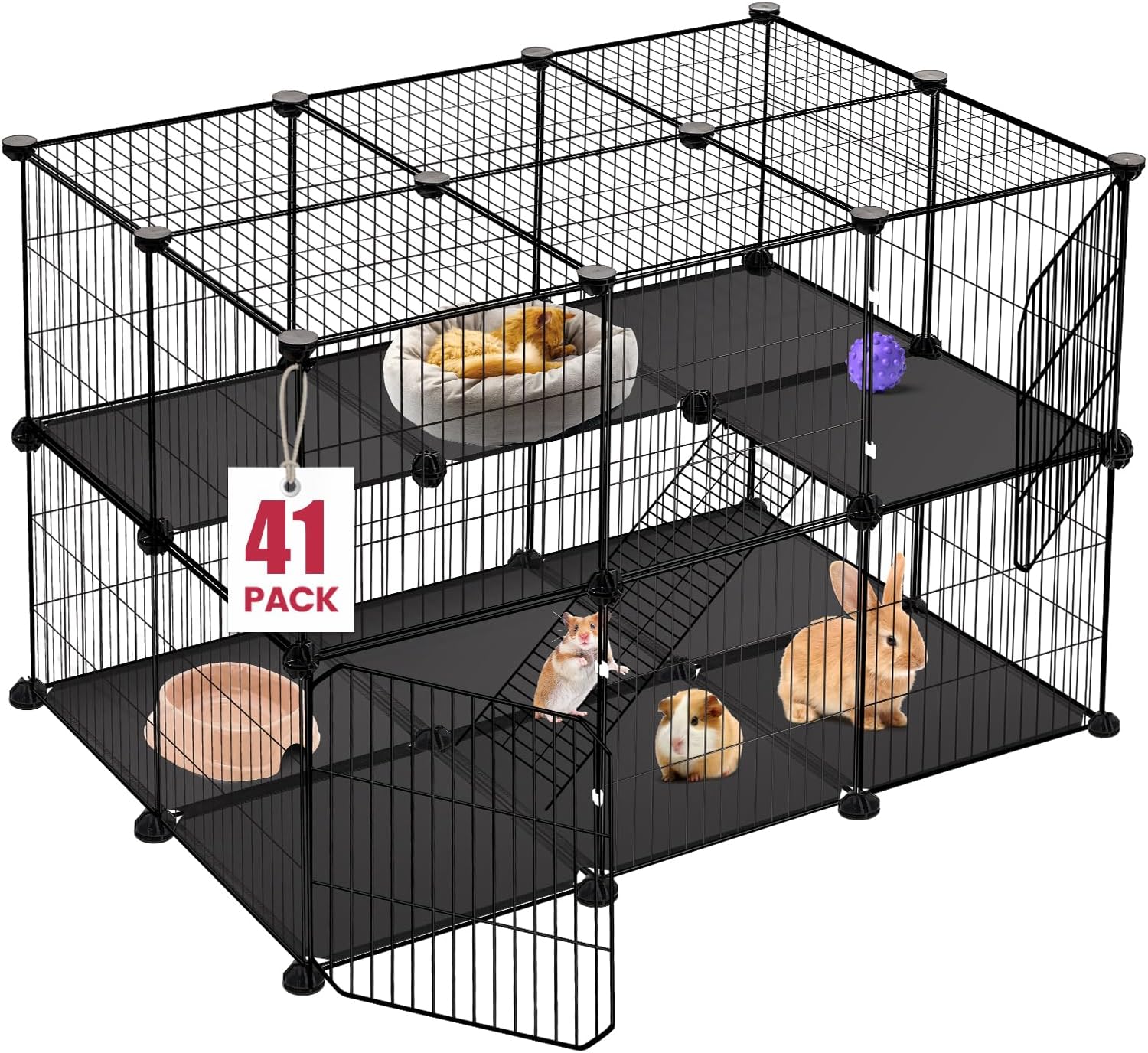
The Kaytee Super Habitat is a reasonable choice for dwarf hamsters and gerbils, but published hamster care guidance cautions against using it for Syrian hamsters, which need considerably more continuous floor area than this cage provides. The 0.375-inch bar spacing is secure for even the smallest rodents, and the deep plastic base accepts three to four inches of bedding for burrowing. The elevated platform adds a lookout point that hamsters naturally seek out.
The included exercise wheel measures about 5.5 inches in diameter, which is adequate for dwarf hamsters but undersized for Syrian hamsters, whose backs should not curve while running. Owners of Syrians should plan on upgrading to a larger silent wheel. The plastic clips that hold the wire top to the base are the weak point of the design and can wear out after several cleaning cycles, so they should be handled gently.
For owners who want a slightly larger footprint, the deluxe version of this habitat adds a tube system for additional exploration. Even so, gerbils benefit from more floor space than this cage offers, and the deep tray is the feature that makes it work for burrowing species.
4. Prevue Hendryx Ferret Mansion
Key Specifications
- Floor area: 6 square feet total across three levels, each about 24 by 12 inches
- Bar spacing: 0.75 inch
- Material: Wrought iron with non-toxic powder coating
- Design: Three levels with ramps, platforms and hammock hooks
- Includes: Food dish, water bottle, corner litter pan
- Best for: Ferrets, rats, sugar gliders
Pros
- Durable wrought iron construction lasts for years
- Three levels provide excellent vertical enrichment
- Deep base tray prevents messes
- Ramps have safety bars to prevent falls
- Hammock hooks make accessory attachment easy
Cons
- Floor space per level is limited
- Wrought iron is heavy and difficult to move
- Plastic ramps can become slippery
- Not suitable for rabbits or guinea pigs
The Prevue Hendryx Ferret Mansion is the most commonly recommended multi-level cage for ferrets in the United States. Its wrought iron frame with powder coating resists the bending and chewing that ferrets subject flimsier cages to, and the three-level design provides the vertical enrichment that this species craves. Hammock hooks on the upper levels make it easy to add soft sleeping spots, and the included corner litter pan taps into the ferret's natural preference for backing into a corner to eliminate.
The main trade-off is that six square feet spread across three levels means each individual level is small, so the cage works best for one or two ferrets who also get substantial out-of-cage play time. Owners of three or more ferrets typically need a larger footprint. The wrought iron frame is also heavy, which makes it awkward to move for deep cleaning; the pull-out trays mitigate this by allowing most routine cleaning to happen in place.
Ramps include safety bars to reduce fall risk, which matters because ferrets race up and down ramps at high speed. The 0.75-inch bar spacing is narrow enough to contain ferrets while remaining wide enough for climbing. Owners of rats sometimes choose the rat and ferret version of this cage, which adds levels and a larger footprint.
5. MidWest Wabbitat Deluxe Rabbit Cage
Key Specifications
- Floor area: 6 square feet on a single level
- Bar spacing: 0.8 inch
- Material: Coated wire with high-walled plastic base
- Design: Single level with loft and ramp
- Includes: Hay feeder, water bottle, small pet carrier
- Best for: Rabbits, guinea pigs, ferrets
Pros
- Six-inch high-walled base keeps bedding contained
- Includes a bonus small pet carrier for vet visits
- Durable coated wire resists rust
- Easy-open door design
- Removable plastic tray for easy cleaning
Cons
- Floor space is adequate but not generous for a rabbit
- Ramp is steep and takes up floor space
- Loft is small and mostly useful for storage
- Included carrier is low quality
The MidWest Wabbitat Deluxe is a well-designed mid-range cage for rabbits and guinea pigs. Its six-inch high-walled base is the standout feature: it keeps hay and bedding inside the cage instead of scattered across the floor, and it holds enough depth for rabbits to dig and rearrange bedding. The coated wire resists rust and urine corrosion far better than uncoated alternatives, which matters for a cage that will see daily cleaning.
At six square feet, floor space is adequate for a single dwarf rabbit but tight for larger breeds, and owners of medium or large rabbits typically connect two Wabbitats or use a dog-pen style enclosure instead. The loft provides a raised sleeping spot that rabbits gravitate toward, though the steep ramp consumes floor space and may need a gentler replacement for older rabbits. The included carrier is a thoughtful bonus for vet visits, though its build quality is basic.
The hay feeder clips securely to the bars and reduces waste by keeping hay off the floor. Owners of guinea pigs should look for the version with the deeper base, since guinea pigs benefit from a deeper bedding layer than rabbits typically use.
6. Savic Hamster Heaven
Key Specifications
- Floor area: 2 square feet, about 12.6 inches deep by 23.6 inches wide
- Bar spacing: 0.35 inch
- Material: Coated metal wire with deep plastic base
- Design: Two-level with platform and tunnel
- Deep base: 6.3 inches for deep bedding
- Best for: Syrian hamsters, dwarf hamsters, gerbils
Pros
- Exceptionally deep 6.3-inch base allows substantial burrows
- Fine bar spacing prevents escape of even dwarf hamsters
- Two-level design adds vertical enrichment
- Metal construction is more durable than all-plastic alternatives
- Platform roof prevents climbing escapes
Cons
- Two square feet meets minimums but is not generous for Syrian hamsters
- Tube tunnel is difficult to clean
- Wire platform can be cold on feet
- Assembly requires some patience
The Savic Hamster Heaven is a European-designed cage that prioritizes what hamsters need most: deep bedding for burrowing. Its 6.3-inch base accepts enough paper bedding for hamsters to dig tunnels and build nests, which is the single most important behavioral need for this species. The 0.35-inch bar spacing is tight enough for even the smallest dwarf hamsters, and the coated metal construction outlasts the all-plastic cages commonly sold in pet stores.
The trade-off is floor area. At two square feet, the cage meets the minimum commonly cited for Syrian hamsters but does not exceed it, and many hamster welfare organizations now recommend considerably more continuous floor space. Owners of Syrians who want to exceed the minimum typically look at larger bin cages or connect this cage to additional modules. The included tube tunnel is popular with hamsters but requires a specialized brush to clean thoroughly, and the wire platform is best replaced with a solid wood platform for warmth and foot comfort.
For dwarf hamsters and gerbils, the combination of deep bedding, tight bar spacing and a second level makes this one of the better wire cages on the market. Owners should plan on adding a solid platform and a larger wheel over time.
7. Ferplast Jenny Aviary
Key Specifications
- Floor area: 8 square feet total across three levels
- Bar spacing: 0.5 inch
- Material: Wrought iron with non-toxic powder coating
- Design: Three-level aviary with perches and platforms
- Base: Pull-out metal tray for easy cleaning
- Best for: Chinchillas, birds, sugar gliders
Pros
- Tall three-level design provides excellent vertical space
- Narrow bar spacing prevents chinchilla escapes
- Pull-out tray simplifies daily cleaning
- Wrought iron is extremely durable
- Multiple large doors for easy access
Cons
- Heavy and difficult to move for deep cleaning
- Wire floor on pull-out tray needs covering
- No included ramps between levels
- Expensive compared to plastic alternatives
The Ferplast Jenny Aviary is one of the best-known tall cages for chinchillas. Chinchillas are supremely active and need vertical space for jumping between levels, and the three-level design with generous height between platforms accommodates that bouncing behavior better than a single-level cage. The 0.5-inch bar spacing is narrow enough to prevent chinchilla escape, since chinchillas can squeeze through surprisingly small gaps, while the wrought iron construction withstands their chewing.
The main trade-off is that no ramps are included, so owners need to add wooden ledges and ramps at gentle angles to make the levels usable. The pull-out metal tray simplifies daily spot cleaning, but the wire floor of the tray must be covered with fleece liners or bedding to protect chinchilla feet from pododermatitis. At this price point, the cage is an investment, but powder-coated wrought iron typically lasts a decade or more with proper care.
Chinchillas also need access to a dust bath several times a week, and this cage's multiple large doors make it practical to place a dust bath inside and remove it afterward. Owners should also note that chinchillas need cool ambient temperatures, so this cage works best in a climate-controlled room.
8. Yaheetech Guinea Pig Cage
Key Specifications
- Floor area: 7 square feet across two levels
- Bar spacing: 0.75 inch
- Material: Coated wire with polypropylene base
- Design: Two-level with ramp and enclosed lower area
- Includes: Ramp, hay feeder, water bottle
- Best for: Guinea pigs, one or two
Pros
- Affordable two-level design adds vertical space
- PP base is lightweight and easy to clean
- Enclosed lower level provides hiding space
- Ramp is less steep than competitors
- Good value for the price
Cons
- PP base is less durable than coroplast or metal
- Bar coating can chip over time
- Not as spacious as MidWest for running
- Ramp bedding falls through wire gaps
The Yaheetech Guinea Pig Cage offers a reasonable balance of price and features for guinea pig owners on a budget. Its two-level design with an enclosed lower area provides variety, and the ramp is gentler than many competitors at roughly 30 degrees, which is easier on guinea pigs than the steeper ramps common on multi-level cages. The enclosed lower area functions as a hiding spot, and guinea pigs in owner reports use both levels actively.
The polypropylene base is lightweight and simple to clean, though it is not as durable as the coroplast used in C and C style habitats and can crack if dropped. The 0.75-inch bar spacing is safe for adult guinea pigs, but baby guinea pigs may slip through, so owners of young pigs should add a solid barrier or wait until the pigs are larger. Bedding falls through the ramp's wire grid, so a fleece liner over the ramp is a practical upgrade.
For owners with two guinea pigs, this cage meets minimum space requirements, though the MidWest Habitat offers more continuous running room. The included hay feeder and water bottle are functional starter items.
9. Prevue Kaytee CritterTrail
Key Specifications
- Floor area: 1 square foot
- Bar spacing: 0.3 inch
- Material: Molded plastic with wire top
- Design: Single small habitat with tube connectors
- Compatible with: All CritterTrail tube accessories
- Best for: Mice and dwarf hamsters only
Pros
- Modular tube system allows creative expansions
- Tight bar spacing prevents escape
- Lightweight and easy to clean
- Good starter cage for very small rodents
- Widely available and affordable
Cons
- Far too small for Syrian hamsters
- Plastic construction degrades with cleaning
- Poor ventilation compared to wire cages
- Tube cleaning requires disassembly
The CritterTrail system is popular but controversial in the small pet community, and the controversy is well founded. Its one-square-foot floor area is far below the minimum for Syrian hamsters and gerbils, and even for mice it is best understood as a starter module rather than a complete habitat. The modular tube system does provide enrichment, and the tight bar spacing ensures security for very small rodents, but owners should plan on connecting several modules to create adequate living space.
The main trade-off is ventilation. All-plastic habitats with limited wire exposure trap humidity and ammonia from urine, which can contribute to respiratory problems in small rodents. Tube systems are also difficult to clean thoroughly, and owners report that disassembling tubes for cleaning is the least pleasant part of using this system. For any hamster owner, a wire-top cage with a deep base such as the Savic Hamster Heaven or Living World Deluxe Habitat is a better primary enclosure.
If the CritterTrail system is already in use, connecting at least two or three habitats together and cleaning tubes weekly will substantially improve the setup. Expansion tubes and additional habitats are widely available.
10. Living World Deluxe Habitat
Key Specifications
- Floor area: 2.5 square feet, about 30 by 12 inches
- Bar spacing: 0.35 inch
- Material: Powder-coated wire with deep plastic tray, 7.5-inch depth
- Design: Single level with optional upper platform
- Includes: Water bottle, food dish, exercise wheel
- Best for: Gerbils, mice, dwarf hamsters, Syrian hamsters
Pros
- Deepest plastic tray commonly available at 7.5 inches, ideal for gerbils
- Good floor space for a single Syrian hamster
- Excellent ventilation with 360-degree wire top
- Powder-coated wire resists chewing and corrosion
- Easy access with full-opening top
Cons
- Long narrow shape is less ideal for running
- Included exercise wheel is noisy
- Wire shelf option is slippery without covering
- Plastic tray stains over time
The Living World Deluxe Habitat is a simple, spacious, well-ventilated cage that suits a range of small rodents. Its 7.5-inch deep plastic tray is among the deepest available on a wire cage, which makes it the best wire-cage option for gerbils, who need extensive bedding for their elaborate tunnel systems. The powder-coated wire resists the chewing that destroys plastic cages, and the 360-degree wire top provides far better ventilation than plastic habitats with limited airflow.
The main trade-off is the long, narrow 30 by 12 inch footprint. It provides a decent running track lengthwise but limits the ability to create distinct zones for sleeping, eating and eliminating. Owners of Syrian hamsters should note that the cage meets minimum floor space requirements but does not exceed them, and hamsters benefit from more continuous floor area where possible. The included exercise wheel is noisy and typically replaced with a silent spinner.
The full-opening top makes cleaning straightforward, and the optional upper platform adds vertical space for climbing species. For gerbils in particular, the combination of a deep tray and a wire top is close to ideal.
How to Choose the Right Small Pet Cage
1. Floor Space: Bigger Is Always Better
The most common mistake new small pet owners make is buying the smallest cage that will fit the animal. Minimum standards matter: two guinea pigs need at least 7.5 square feet of continuous floor space, and many welfare organizations now recommend 10.5 square feet or more for pairs. Syrian hamsters need at least 450 square inches of continuous floor area, and dwarf hamsters need proportionally less but still benefit from more. Rabbits need enough space to hop three times their body length in a straight line, which is at least 8 square feet for a single rabbit. Chinchillas and ferrets need tall multi-level cages for their active lifestyles. These figures are minimums, and more space is almost always better.
2. Bar Spacing Prevents Escape and Injury
Guinea pigs do best with 1.5 to 2.5 inch grid-style panels. Rabbits need 0.75 to 1 inch spacing. Ferrets need 0.75 to 1 inch. Chinchillas need 0.5 inches maximum, because they can squeeze through surprisingly small gaps. Hamsters need 0.35 to 0.4 inches for dwarf species and 0.4 to 0.5 inches for Syrians. Mice and gerbils need 0.25 to 0.35 inches. Bar spacing that is too wide leads to escape or, worse, head entrapment, which is a documented cause of injury in small rodents.
3. Ease of Cleaning Is Essential
Small pet cages need cleaning weekly at minimum, and some species need more frequent attention. Look for cages with removable trays, washable bases and large access doors. Deep plastic trays of 4 inches or more contain bedding and reduce scatter. Avoid cages with complex tube systems that are difficult to clean thoroughly, because they can harbor bacteria and develop persistent odors. For ferrets, deep cleaning every three to four days is a common recommendation because of their musky scent and frequent elimination habits.
4. Consider Your Pet's Natural Behavior
Guinea pigs need floor space for running rather than height. Hamsters and gerbils need deep bedding for burrowing. Rabbits need room for binkying and a separate toilet area. Ferrets need vertical space, tunnels and hammocks. Chinchillas need tall jumping space, dust bath access and cool temperatures. Matching the cage design to the species rather than to a preferred aesthetic is the single most important decision in setting up a habitat.
5. Material and Safety
Powder-coated wire is durable and chew-resistant. Galvanized wire that has not been properly treated can cause heavy metal toxicity if chewed, so untreated galvanized cages should be avoided. Solid plastic bases are easy to clean but can be chewed by determined rodents. Stainless steel components are the most durable but more expensive. For all wire floors, ensure they are covered with solid surfaces or deep bedding to prevent pododermatitis. The ASPCA pet care library maintains species-specific guidance on safe housing materials and household hazards.
6. Ventilation and Temperature
Ammonia buildup from urine is a leading cause of respiratory disease in small rodents, and wire-top cages ventilate far better than enclosed plastic habitats. Chinchillas are especially sensitive to heat and need ambient temperatures below about 75 degrees Fahrenheit. Ferrets tolerate typical indoor temperatures well but should be kept out of drafts. A cage with a wire top and solid base is the most common compromise between ventilation and bedding containment.
7. Bedding Depth and Substrate Choice
Hamsters and gerbils need 6 to 10 inches of bedding for burrowing. Guinea pigs need 2 to 4 inches. Rabbits need 2 to 3 inches. Chinchillas need a dust bath but less bedding. Ferrets can use cage liners or low-profile bedding. Paper-based bedding is safer than pine or cedar shavings, which contain aromatic oils that can cause respiratory issues. The Merck Veterinary Manual section on exotic and laboratory animals covers respiratory disease risks in small mammals in detail.
8. Common Mistakes to Avoid
Buying a cage based on the species pictured on the box rather than the dimensions printed on the label is the most common error. Another is underestimating how much floor space a pair of social rodents needs, since guinea pigs, rats and ferrets all do better in pairs but need correspondingly more room. A third is using wire floors without covering them, which leads to foot injuries. Finally, owners frequently buy cages with bar spacing too wide for young animals, then discover the pet can escape within days.
9. Safety and Toxicity Considerations
Small pets chew constantly, so anything inside the cage must be non-toxic. Avoid painted wood that may contain lead, untreated softwoods that may splinter, and any material treated with pesticides. Household plants brought near the cage should be screened against a poison control list; the ASPCA Animal Poison Control database is a standard reference for toxic plants and household substances. Ferrets and rats are especially curious and will investigate anything within reach of the bars.
Frequently Asked Questions
How big should a guinea pig cage be?
Major animal welfare organizations recommend at least 7.5 square feet of floor space for one guinea pig and 10.5 square feet for two. Many pet store cages are smaller than this, so measuring the interior floor dimensions before purchasing is important. C and C style cages built from wire grids and coroplast are the most common way to meet these requirements affordably.
Can hamsters live in plastic cages?
All-plastic cages with built-in tube systems generally have poor ventilation and are difficult to clean thoroughly. They are also easily chewed through by Syrian hamsters. Wire-top cages with deep plastic bases offer the best balance of ventilation, burrowing depth and durability.
Is a wire floor bad for small pets?
Unbroken wire floors can cause pododermatitis, also called sore hocks, especially in guinea pigs and rabbits whose feet lack thick pads. Wire floors should always be covered with solid platforms, fleece liners, deep bedding or wood boards. Most quality cages now include solid plastic bases or trays rather than wire floors.
How often should I clean my small pet's cage?
Spot clean daily by removing soiled bedding and washing food dishes. Deep clean weekly by removing all bedding and washing the entire cage with a pet-safe disinfectant. For ferrets, deep cleaning every three to four days is common because of their scent and elimination habits. Chinchillas benefit from frequent tray cleaning because their urine is concentrated.
Can I connect multiple cages together?
Many modular cages are designed for expansion, and connecting multiple habitats provides more space and enrichment. Connection tubes or tunnels should be wide enough for the pet to pass through comfortably and easy to clean. For guinea pigs, grid-style cages can be expanded by adding panels rather than tubes.
What bedding depth should I use?
Hamsters and gerbils need 6 to 10 inches of bedding for burrowing. Guinea pigs need 2 to 4 inches. Rabbits need 2 to 3 inches. Chinchillas need a dust bath but less bedding. Ferrets can use cage liners or low-profile bedding. Paper-based bedding is safer than pine or cedar shavings, which contain aromatic oils linked to respiratory issues.
Do small pets need cage mates?
Guinea pigs, rats, ferrets and chinchillas are social species that generally do better in pairs or small groups, but pairs require more floor space than singles. Hamsters are solitary and should be housed alone, since adults of most species fight when confined together. Rabbits vary by individual and by whether they have been spayed or neutered.
Final Verdict: Which Small Pet Cage Should You Buy?
- Best for guinea pigs: MidWest Guinea Pig Habitat, with 8 square feet, expandable grid design and easy cleaning.
- Best for rabbits: Ferplast Krolik, a spacious two-level cage with accessories included.
- Best for ferrets: Prevue Hendryx Ferret Mansion, durable wrought iron with three levels and hammock-ready design.
- Best for chinchillas: Ferplast Jenny Aviary, tall and durable with excellent ventilation.
- Best for Syrian hamsters: Savic Hamster Heaven, with a deep base for burrowing and two levels.
- Best for gerbils: Living World Deluxe Habitat, with a 7.5-inch deep tray for tunnel systems.
- Best for dwarf hamsters: Kaytee Super Habitat, with tight bar spacing and an elevated platform.
- Best modular starter for mice: CritterTrail habitats, expandable but only suitable for very small rodents.
Remember that the enclosure is the center of a small pet's daily life. Investing in a spacious, well-ventilated, easy-to-clean habitat is the single most important thing an owner can do for the animal's health and well-being. A properly sized cage reduces stress, prevents illness and allows the pet to exhibit natural behaviors. Choosing bigger than seems necessary is almost always the right call.
Affiliate Disclosure: PawCritic is a participant in the Amazon Services LLC Associates Program, an affiliate advertising program designed to provide a means for sites to earn advertising fees by linking to Amazon.com and affiliated sites. Purchases made through these links help support independent research at no extra cost to the reader.
Last updated: June 23, 2026. Prices and availability are subject to change. Always verify current pricing on Amazon before purchasing.