Small Pet Treats and Healthy Snacks: A Buying Guide for Rabbits, Guinea Pigs, Hamsters, Gerbils, Chinchillas and More
Published on June 22, 2026 by PawCritic — Small Pets Category
Giving a treat is one of the simple pleasures of keeping small pets. Anyone who has watched a guinea pig popcorn for a slice of bell pepper, a rabbit binky over a sprig of fresh dill, or a hamster cram a flaxseed into its cheek pouches understands why the treat ritual matters for bonding as much as nutrition. The trouble begins at the pet store shelf, where the small pet treat aisle is crowded with sugary yogurt drops, dyed seed sticks, and calorie-dense snacks that veterinary guidance links directly to obesity, dental disease, and selective feeding — the pattern where a pet fills up on treats and leaves the hay and pellets that should form the core of its diet untouched.
Small pets have unusually sensitive digestive systems and narrow dietary tolerances. Rabbits and guinea pigs are fiber-processing herbivores that do best with high-fiber, low-sugar, low-calcium extras. Hamsters and gerbils are omnivorous rodents that can handle a little more fat and protein but still need strict sugar limits. Chinchillas sit at the far end of the sensitivity spectrum: their hindgut fermentation is easily disrupted, and even a single sugary or fatty item has been associated in veterinary case reports with gastrointestinal stasis and bloat. Choosing treats well is therefore not a matter of taste preference but of genuine preventive health care, and the Merck Veterinary Manual's exotic and laboratory animal section is a useful reference for the underlying digestive physiology if you want to understand why.
This guide is a reference resource, not a lab report. PawCritic does not run product testing programs; every observation below is attributed to published veterinary guidance, manufacturer specification sheets, or aggregated owner reports, and the two linked products appear only as concrete examples of the buying principles discussed — not as winners of a competitive evaluation. Where a claim comes from an owner consensus rather than a specification, that is stated plainly.
Why Treat Choice Matters More for Small Pets Than for Dogs or Cats
A treat is a much larger share of a small pet's daily energy budget than most owners realize. A two-ounce Syrian hamster eating three sugary yogurt drops has consumed, proportionally, something like a human eating several candy bars. Because small bodies amplify small errors, the margin between a harmless reward and a health problem is measured in grams per week, not servings per day. Veterinary literature on rabbits identifies obesity, gastrointestinal stasis, dental malocclusion, and urinary sludge among the most common diet-linked conditions seen in practice, and each of these has a treat-related component: sugary snacks disrupt cecal flora, soft baked treats provide insufficient dental wear, and calcium-dense additions contribute to bladder issues in adult rabbits.
The second reason treat selection matters is behavioral. Small pets are prey animals, and hand-feeding is one of the most effective trust-building tools available to an owner. A skittish rabbit or a newly adopted hamster will often accept food from a hand weeks before it tolerates petting. That means the treat you keep in the cupboard shapes your relationship with your animal — which is exactly why it is worth stocking something healthy rather than something merely irresistible. The Association of Exotic Mammal Veterinarians maintains resources on small mammal husbandry and nutrition that reinforce the same principle: the diet framework comes first, and everything else is a garnish.
Species-by-Species Treat Rules
Rabbits
A rabbit's diet should be roughly 80 percent grass hay by volume, with a measured pellet portion and a leafy green allowance, leaving treats as a small fraction of daily intake. The safest commercial rabbit treats are hay-based baked biscuits with zero added sugar and low calcium, or plain dried herb and flower forage mixes. Fresh options that most rabbits accept readily include cilantro, basil, dill, romaine, small carrot pieces, and the occasional berry. Items to avoid or strictly limit include yogurt drops, grain-heavy mixes, molasses-bound seed sticks, and high-calcium greens such as spinach and kale fed daily, since calcium excess in adult rabbits is associated with urinary sludge and bladder stones in clinical reporting.
Guinea Pigs
Guinea pigs share the rabbit's high-fiber herbivore framework with one critical difference: they cannot synthesize vitamin C and must obtain it daily from diet. This makes certain treats genuinely useful rather than merely enjoyable — red bell pepper, parsley, cilantro, and dried rosehips are all concentrated natural vitamin C sources, and rosehips in particular are documented as one of the richest plant sources of the vitamin. Hay-based biscuits formulated for guinea pigs, sometimes with added vitamin C, are a reasonable daily option. The same calcium cautions that apply to rabbits apply here, and sugary drops should be rare-occasion items only.
Hamsters and Gerbils
These omnivorous rodents tolerate more dietary variety than herbivores, including protein-rich seeds such as pumpkin and flaxseed, and small amounts of grain-based biscuit. The dominant risk is sugar: many popular hamster treats are essentially candy, with refined sugar appearing in the first three ingredients. Owner forums and veterinary guidance converge on the same advice — read the ingredient panel, choose whole-seed and whole-grain formats over sticky coated drops, and treat seed mixes as scatter-foraging enrichment rather than bowl filler, because hamsters given free access to mixes reliably select the fattest seeds and leave the rest. Pumpkin seeds are frequently noted as beneficial for urinary tract health in male rodents, while flaxseed supplies omega-3 fatty acids associated with coat condition.
Chinchillas
Chinchillas demand the strictest discipline. Their digestive systems are adapted to a near-desert diet of coarse fibrous material, and veterinary guidance is unambiguous: no fruit, no nuts, no yogurt drops, no corn, soy, or molasses. Safe additions are limited to high-fiber, low-fat, zero-sugar items such as dried rosehips, chamomile blossoms, dandelion leaf, plain hay-based biscuits, and — as an occasional item some veterinarians mention — a single piece of unsweetened shredded wheat. The payoff for this discipline is a chinchilla that maintains stable gut motility across a lifespan that can exceed fifteen years.
What to Look For on a Treat Label
Ingredients are listed by weight before cooking, so the first three entries tell you most of what you need to know. If sugar, molasses, honey, corn syrup, or dried fruit lead the list, the product is a dessert, not a treat, regardless of the cartoon rabbit on the packaging. The healthiest commercial treats list hay, vegetables, herbs, or whole grains first. Beyond the ingredient order, check three specification numbers where the manufacturer publishes them: crude fiber (higher is better for herbivores; hay-based biscuits in the low-to-mid twenty percent range are typical of the better products), sugar (look for zero added sugar), and calcium (adult rabbits and guinea pigs do best with low-calcium formulations, generally under about 0.6 percent for daily use).
Avoid artificial colors entirely — they exist to appeal to the human buyer, and dyed pieces teach nothing to an animal with poor color vision. Avoid 'animal digest' and rendered fat in herbivore products; these ingredients belong in carnivore diets and their presence in a rabbit or guinea pig treat signals a formulation aimed at cost rather than species appropriateness. Finally, be skeptical of marketing terms like 'natural' and 'gourmet,' which carry no regulated meaning in this category. The specification sheet and ingredient list are the only honest parts of the packaging.
Two Concrete Examples Worth Examining
A Hay-Based Biscuit as the Daily-Use Benchmark
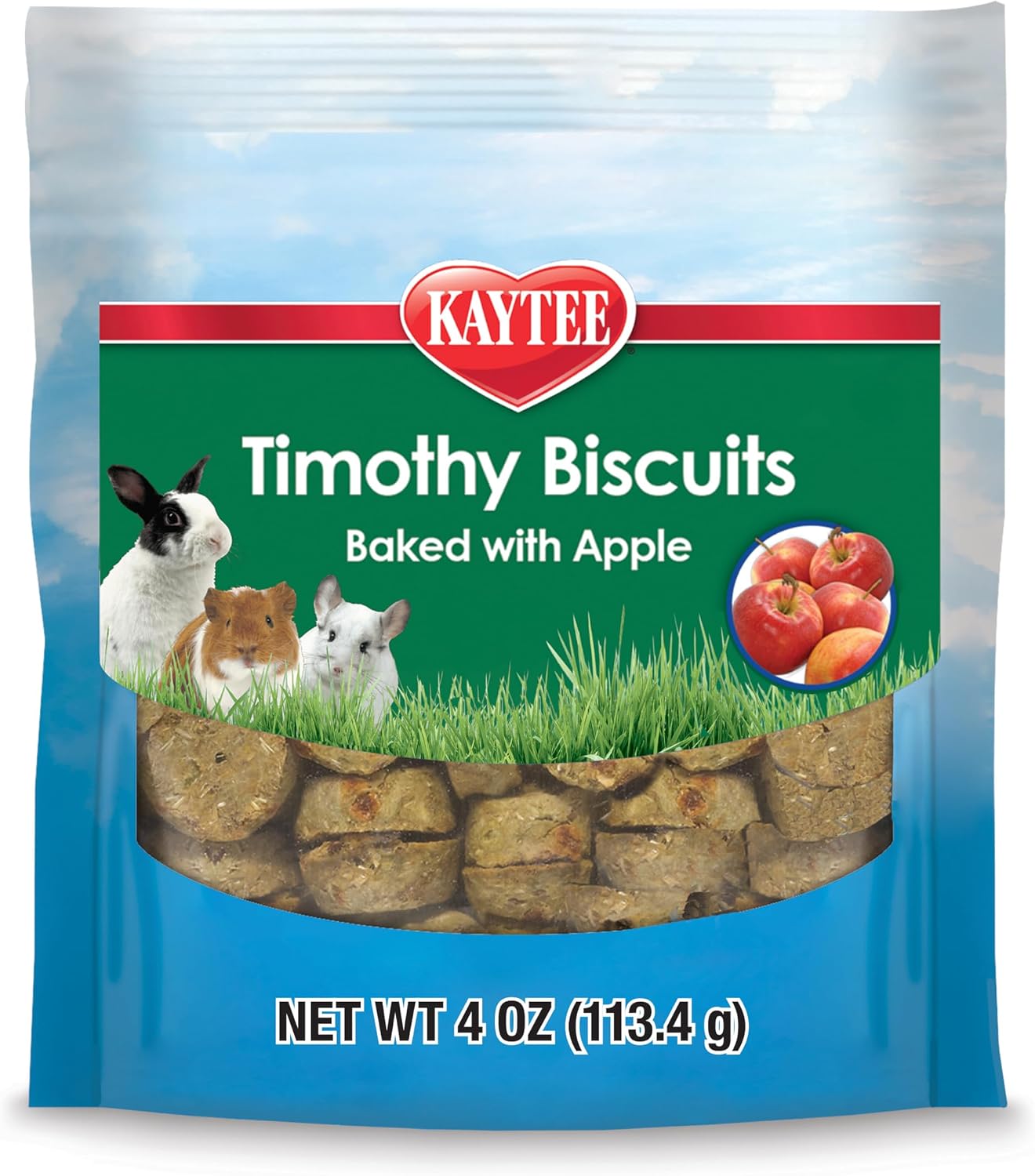
The single most commonly recommended style of treat in veterinary-adjacent guidance for rabbits, guinea pigs, and chinchillas is the high-fiber, hay-based baked biscuit, and one widely available example of the format is Oxbow's Simple Rewards line. According to the manufacturer's published specifications, the Timothy variety is built on high-percentage grass hay, carries fiber in the low twenties as a percentage, contains no added sugar, and keeps calcium low enough for daily use in adult herbivores. Owner reports are largely consistent with the spec sheet: most animals accept the crunchy texture, the hard biscuit contributes to dental wear, and the plain flavor is either a feature (no sugar-driven selective feeding) or a limitation (some pets find them unexciting compared with fruit-flavored alternatives). The honest trade-off is that a plain hay biscuit is a maintenance treat and a training aid, not a high-value reward — for taming a very fearful animal you may need something more aromatic, used sparingly.
This format suits three situations well: daily portioned treating within the 5 percent guideline, clicker or recall training where many small rewards are dispensed, and households with adult rabbits where calcium control matters. Its limitations are real: elderly pets with dental disease may struggle with the hard texture, and the biscuits are plain enough that some individuals ignore them. If that describes your animal, check the current price on Amazon and compare the ingredient panel against any biscuit you are currently using — the comparison itself is educational.
A Forage-Style Herb and Flower Blend
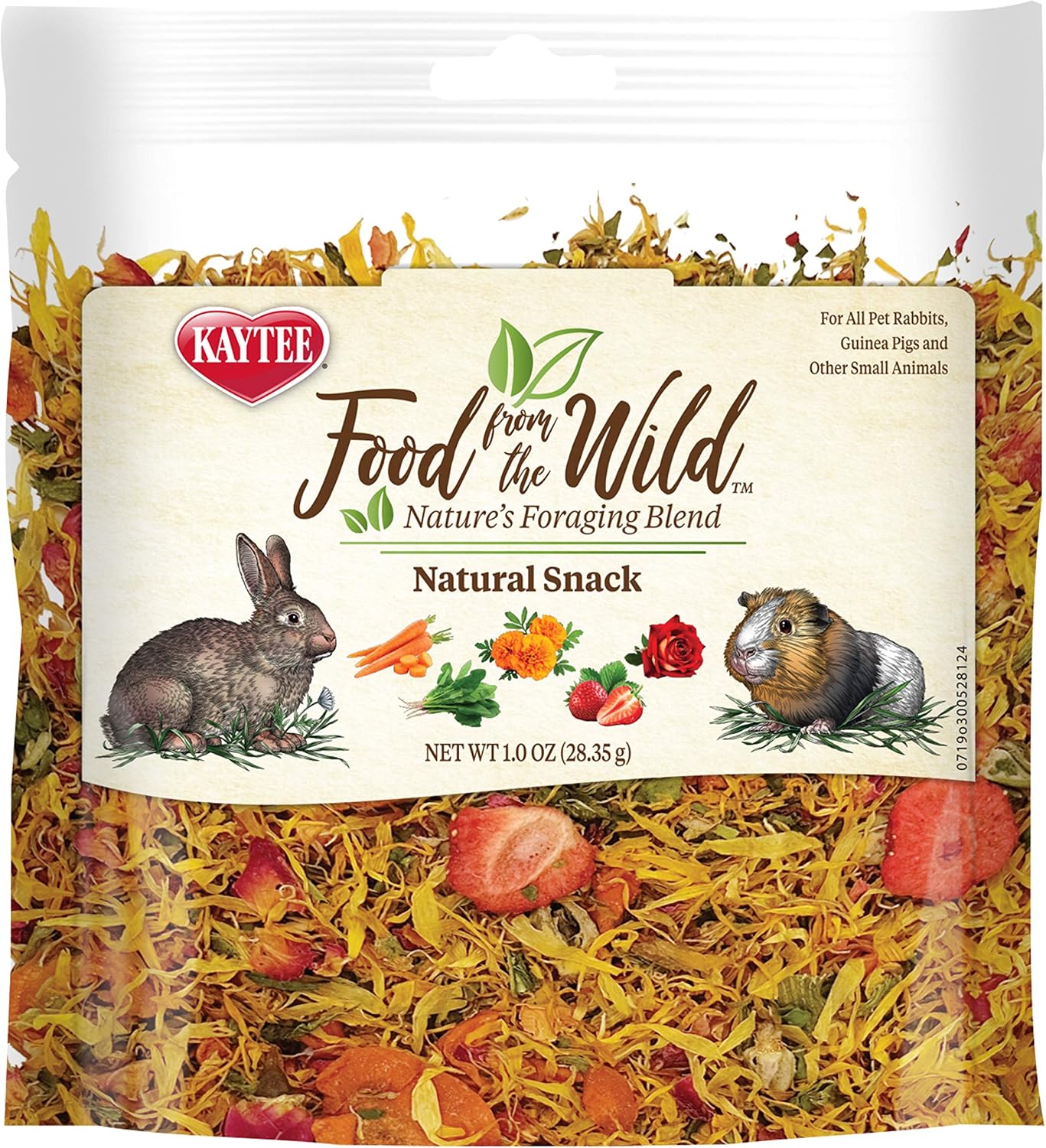
The second example represents a different philosophy of treating: instead of a discrete biscuit, a dried herb and flower blend — the Small Pet Select forage mixes are a frequently cited instance — provides dill, chamomile, rose petals, marigold, and nettle with nothing added. Specification-wise these blends run very high in fiber, contain no sugar, and are low in calcium, which places them among the safest categories for daily offering to rabbits, guinea pigs, and (in smaller portions) chinchillas. The practical advantage reported by owners is behavioral: scattered through the enclosure or hidden in cardboard tubes, a forage mix converts treat time into a foraging session that can occupy a small herbivore for many minutes, which is closer to its wild feeding pattern than any bowl-fed food.
The trade-offs are cost and waste. Ounce for ounce, dried forage blends cost more than fresh herbs from a grocery store, small packages deplete quickly in multi-pet households, and pets routinely ignore one or two components of any blend while demolishing the rest. Airtight storage matters because dried herbs lose aroma and appeal quickly in humid conditions. Chamomile is frequently mentioned by owners for its mild calming effect on nervous animals, though this is anecdotal consensus rather than a clinical claim. If the concept appeals to you, view this option on Amazon and note the ingredient list — any blend matching that profile of plain dried herbs and flowers will serve the same purpose.
What About Yogurt Drops and Seed Sticks?
They are not poison, but they deserve their reputation as the category's problem children. Yogurt-style drops typically contain a whey base with added sugar — commonly around two grams per small serving for rabbit-marketed versions and similar per-drop loads in hamster-sized mini drops — and owner reports of soft stools in sensitive animals after dairy-based treats are common enough to treat as a pattern. Used as a weekly hand-taming reward at one or two drops, the risk is modest and the bonding value is real; used as a daily bowl addition, they are a reliable driver of obesity and selective feeding. Coated seed sticks present a similar picture with molasses as the binding agent. If you keep these on hand, treat them the way you would treat dessert in your own diet: portioned, occasional, and never a substitute for the hay, pellets, and greens that constitute the actual diet.
Portion Guidance: The 5 Percent Rule
The most useful planning heuristic from published feeding guidance is that treats and extras should stay at or below roughly 5 percent of daily food intake by weight. In practical terms this works out small: for a five-pound rabbit, on the order of a single hay biscuit or a small pinch of forage per day; for a one-pound guinea pig, a couple of grams; for a hamster, a teaspoon of scattered seed mix at most, with sugary drops counted against a weekly rather than daily allowance. Weighing your pet monthly on a kitchen scale is the single most effective monitoring habit, because gradual weight creep is nearly invisible by eye on a fluffy animal and is the earliest signal that treat portions have drifted upward. Dental health is monitored alongside weight: hay consumption and hard-textured treats produce the grinding wear that continuously growing rodent and lagomorph teeth require, while a diet of soft treats and pellets alone is a recognized contributor to malocclusion.
Common Mistakes to Avoid
The recurring failure modes reported by exotic veterinarians and echoed across owner communities are consistent enough to list. First, treating as a substitute for interaction — food is the easiest affection currency, and portions inflate accordingly; substitute handling time, floor time, and enrichment where possible. Second, trusting package feeding directions, which are written to sell product; calculate portions from your animal's weight instead. Third, introducing new treats too quickly; hindgut fermenters especially need new items introduced one at a time over a week or more so you can attribute any stool change correctly. Fourth, assuming small animals self-regulate; they do not, and a hamster with a hoard or a rabbit with an open treat bag will overeat. Fifth, ignoring species boundaries by feeding a chinchilla the rabbit's fruity treat or a guinea pig the hamster's seed mix. And sixth — the most preventable — offering toxic human foods. The ASPCA Animal Poison Control resource is the appropriate reference when you are unsure whether a kitchen item is safe; avocado, chocolate, caffeine, onion, and garlic are firmly on the never list for all small pets.
Fresh Alternatives From Your Own Kitchen
It is worth stating plainly that many of the healthiest snacks cost less than commercial treats because they come from the produce drawer. A slice of red bell pepper, a sprig of cilantro or dill, a leaf of romaine, one blueberry, a thin strawberry slice, or a single basil leaf each delivers active vitamins and high water content that no dried or baked product matches. Fresh feeding does require different hygiene: remove uneaten fresh items within a few hours in warm weather, wash everything, and introduce new produce gradually. Dried and fresh formats are complementary rather than competing — fresh for daily nutrition-bearing treats, dried forage and biscuits for scattering, training, and dental work, and the pantry stays stocked for busy days. Freeze-dried vegetable flakes occupy a middle ground and are frequently mentioned by owners of convalescing pets because they rehydrate into a soft mash that sick animals will often accept when they refuse everything else.
Transitioning a Pet Off Sugary Treats
Pets conditioned on sugar-flavored treats can be switched, but it takes patience measured in weeks rather than days. The approach that owner consensus supports is gradual ratio-shifting across seven to fourteen days: mix a small amount of the healthier item with the familiar one, increase the healthy proportion steadily, and offer new items in the morning when appetite is highest. Persistence matters because many animals refuse a new food several times before accepting it, and owners who quit after two refusals conclude their pet 'only likes the sweet ones.' Chinchillas and rabbits can be particularly slow to accept new textures; scent-based acceptance often precedes eating by days, and a herb left in the enclosure overnight is sometimes consumed once the human has stopped watching.
Where This Guide's Advice Ends
Every general rule above has species-specific exceptions and individual-animal variations, and a treat question in the context of a pet with existing dental disease, obesity, digestive illness, or kidney or bladder issues is a veterinary question. Exotic-mammal veterinarians are the right professionals for small pets — the category is specialized enough that a general small-animal practice may not keep current on rabbit cecal dynamics or chinchilla sensitivities. If a treat change coincides with reduced appetite, smaller droppings, or lethargy in a rabbit, guinea pig, or chinchilla, treat it as an urgent matter rather than a wait-and-see matter, because gastrointestinal stasis in these species can progress quickly.
A Practical Starting Point
If you are building a treat cupboard from scratch, the pattern that best matches published guidance is simple: one plain hay-based biscuit with zero added sugar as the everyday item, one dried herb and forage blend for scattering and enrichment, and fresh produce as the nutritional wildcard. When evaluating any product on a shelf, apply the same three checks used above: leading ingredients should be hay, vegetables, herbs, or whole grains; added sugar should be zero; and for adult rabbits and guinea pigs, calcium should be low. To see how a mainstream example stacks up against those checks, check the current price on Amazon and read its full label, or view this option on Amazon to compare a forage-style alternative. Neither link is an endorsement of a winner; both are specimens for practicing label literacy, which is the actual skill this guide exists to teach.
Treats are supplements, not meals. Nothing in a package replaces unlimited grass hay for rabbits and guinea pigs, a balanced pellet for hamsters and chinchillas, or daily fresh greens where the species calls for them. Portion strictly, rotate textures for dental wear, keep sugary items to rare occasions, and let the bulk of your animal's diet be exactly what its digestive system evolved to process. The enthusiasm with which a healthy small pet greets a sprig of dill is all the reward a well-chosen treat needs to deliver.
Affiliate Disclosure: PawCritic is a participant in the Amazon Services LLC Associates Program, an affiliate advertising program designed to provide a means for us to earn advertising fees by linking to Amazon.com and affiliated sites. Purchases made through our links help support our independent research at no extra cost to you. Thank you for your support.
Last updated: June 22, 2026. Prices and availability are subject to change. Always verify current pricing and current ingredient panels on Amazon before purchasing.