Fleece Cage Liners for Small Pets: A Research-Based Buying Guide
Published on June 25, 2026 by the PawCritic Editorial Team — Small Pets
Fleece cage liners have become a standard alternative to loose bedding for guinea pigs, rabbits, rats, chinchillas, and other small companion animals. Instead of replacing disposable shavings or paper pellets every week, owners launder a layered fabric pad and return it to the cage. Published guidance from small-animal veterinarians and manufacturer specifications describe the same core structure: a moisture-wicking fleece top, an absorbent core, and a waterproof backing. This guide explains how those layers work, what specifications matter, how to size a liner correctly, and where the real trade-offs sit.
The appeal is straightforward. Loose substrates generate dust that can irritate sensitive respiratory tracts, and they must be purchased repeatedly. A fleece system produces no bedding dust, is soft underfoot, and can be reused for years if it is washed correctly. The costs shift from a recurring supply expense to an upfront purchase plus laundry labor. According to the ASPCA pet care library, small pets such as guinea pigs and rabbits need clean, dry living areas to prevent urine scald and respiratory problems, which is exactly the problem a well-made liner is designed to solve.
This article is a buying guide, not a ranked list of tested products. PawCritic does not operate a testing laboratory, and nothing here is based on instrument measurements or controlled trials. Every claim below is drawn from published care guidance, manufacturer specifications, or patterns that appear repeatedly in verified owner reviews. Where a specific product is mentioned, it is offered as one concrete example of the category, not as a crowned winner.
How a Fleece Cage Liner Actually Works
A properly constructed liner has three functional layers. The top is a fleece fabric that allows liquid to pass through rather than absorbing it, so the surface stays relatively dry against the animal's feet and belly. The middle is an absorbent core, often a furniture pad, microfiber towel, or proprietary batting, which holds the urine. The bottom is a waterproof laminate, usually PUL (polyurethane laminate) or TPU (thermoplastic polyurethane), which keeps moisture off the cage base. This three-layer design is described consistently in manufacturer specifications and in veterinary-oriented care resources such as the Merck Veterinary Manual section on exotic and laboratory animals, which notes that sanitation and moisture control are central to preventing skin and respiratory disease in small mammals.
The fleece layer must be prepared correctly to wick. New fleece often carries a manufacturing finish that repels water, so many owners wash it several times before first use. Manufacturer instructions for reusable liners typically specify a fragrance-free detergent and no fabric softener, because softener coats the fibers and blocks wicking. This is one of the most common reasons a liner stops working: the fabric is fine, but the surface has been conditioned into a barrier.
Quick Comparison Table
| Consideration | What to Look For | Why It Matters |
|---|---|---|
| Top fabric | Anti-pill or blizzard fleece | Resists pilling and stays smooth through repeated washing |
| Absorbent core | Furniture pad, microfiber, or bamboo batting | Determines how long the surface stays dry between changes |
| Waterproof backing | PUL for heavy use, TPU for light use | Protects the cage base and prevents leakage |
| Edge construction | Bound edges or raised sides | Reduces fraying and chewing, contains hay and droppings |
| Cage fit | Measured interior dimensions | Prevents bunching, gaps, and exposed cage floor |
| Wash tolerance | Gentle cycle, low or no heat | Extends the life of the waterproof laminate |
One Example in This Category
The Paw Inspired Critter Box is a raised-sided fleece liner that illustrates several features worth understanding before any purchase. Manufacturer specifications describe an anti-pill fleece top, an absorbent core, and a PUL waterproof bottom, with roughly three-inch raised sides and edge protection. It is offered in common C and C grid sizes as well as MidWest habitat dimensions. Because the sides stand up, hay and droppings are more likely to stay inside the enclosure rather than spilling onto the floor.
The trade-offs are equally concrete. Raised sides add height that can make it slightly more awkward to sweep out a cage, and the liner is heavy when wet, which matters if the washing machine is far from the cage. The raised-edge design also limits it to cages whose dimensions match the listed sizes. For an owner with a standard C and C or MidWest setup who wants containment, that trade-off is usually acceptable. For someone with a custom-built cage or a very small enclosure, a flat pad may be a better fit.
Check the current price on Amazon
What to Look For Before Buying
Measure the Cage Interior First
The single most common mistake is ordering by cage brand name rather than by measured interior dimensions. C and C cages are built from grids that come in different sizes, commonly described as 12-inch or 14-inch grids, and the same nominal layout can produce different floor areas depending on which grid is used. A MidWest guinea pig habitat has its own fixed footprint. Before ordering, measure the inside floor from wall to wall in both directions, then compare against the manufacturer's listed dimensions. If the liner is slightly small, urine can reach the bare cage base at the edges; if it is too large, it bunches and creates folds where moisture collects.
Understand the Waterproof Layer
PUL is the more established choice for heavy-use cages. It is flexible, bonds well to fabric, and manufacturer care instructions generally rate it for hundreds of wash cycles when heat is avoided. TPU is a newer alternative that some makers market as more environmentally friendly, but owner reports more often describe TPU delaminating after repeated hot washes. For guinea pigs and rabbits, which produce a substantial volume of urine, PUL is the safer specification. For hamsters, gerbils, and small travel carriers, TPU is often adequate because the moisture load is lower.
Anti-Pill Fleece Is a Functional Requirement
Standard craft fleece pills after a few washes, and the resulting fabric balls trap debris and can be chewed loose. Anti-pill fleece, sometimes sold as blizzard fleece, is engineered to keep a smooth surface over many cycles. This is not a cosmetic preference. A pilled surface is harder to spot clean, holds odor, and gives a determined chewer more loose fiber to pull at. If you are sewing your own liners, choose anti-pill fleece and bind the edges so the layers cannot be separated.
Raised Sides Versus Flat Pads
Raised sides contain hay, droppings, and kicked-up bedding, which reduces daily cleanup around the cage. They also discourage some animals from burrowing under the liner to reach the cage base. Flat pads are cheaper, easier to launder, and more versatile across cage shapes, but they require a separate containment strategy such as a cage guard, a corner litter box, or a lip on the cage itself. Neither design is universally better; the right choice depends on how much your animal kicks and whether you are willing to sweep around the cage.
How Many Liners to Own
A practical rotation is three liners per cage for a single animal: one in use, one in the wash, one clean and ready. Multi-pet households often need four or five to maintain a two-to-four-day change schedule without running out. A multipack of smaller pads can serve this rotation role well for small enclosures, while a large cage generally needs full-size liners plus a few small pads for high-traffic corners.
Choosing by Species
Guinea Pigs
Guinea pigs produce a significant volume of urine and drop a lot of hay, so they benefit most from a full three-layer liner with a PUL backing and, ideally, raised sides. A C and C or MidWest-sized liner changed every two to four days is the common schedule reported by owners. Corner pads placed under hideouts and water bottles extend the interval between full changes. Guinea pigs also tend to burrow if the liner edge is loose, which is why edge protection matters for this species more than most.
Rabbits
Rabbits can be litter trained with reasonable consistency, so many owners use a hybrid setup: a fleece liner over the main floor and a litter box filled with paper bedding or wood pellets in a preferred corner. Rabbits are strong chewers, and published guidance from exotic-animal veterinarians, including the Association of Exotic Mammal Veterinarians, emphasizes that ingested fabric can cause gastrointestinal obstruction. A liner with bound edges and no loose threads is therefore a safety consideration for rabbits, not just a durability one.
Rats, Chinchillas, and Ferrets
Rats adapt well to fleece liners and generally do not chew them heavily, though they will nest in loose fabric if given the chance. Chinchillas need a dry surface and are sensitive to damp bedding, so a liner with reliable wicking and frequent changes suits them. Ferrets produce strong odors and a high volume of waste; owners typically report needing more frequent changes and a heavier absorbent core than a guinea pig cage of the same size would require.
Hamsters and Gerbils
These species burrow by instinct, which means they may tunnel under a flat liner rather than stay on top of it. Fleece can still work, especially in a hybrid setup that provides a deep dig box of paper bedding in one area and a fleece-lined surface elsewhere. Small multipack pads are often used in travel carriers and play bins, where a full cage liner would be oversized. Because these animals produce less urine, a four-to-seven-day change interval is often sufficient.
Washing and Maintenance
Shake loose hay and debris into a trash bin outdoors before the liner goes into the machine. Wash on a gentle cycle with cold or warm water and a fragrance-free detergent. Do not use fabric softener, dryer sheets, or chlorine bleach. Softener coats the fleece and blocks wicking; bleach degrades the waterproof laminate over time. Adding about half a cup of white vinegar to the rinse cycle is a common owner practice for neutralizing odor. Tumble dry on low or air dry. High heat is the most frequent cause of PUL and TPU failure reported by owners.
Daily spot cleaning matters as much as the wash schedule. Removing droppings and wet hay each day keeps the surface usable longer and reduces odor between full changes. A spare liner in the rotation means a wet liner never has to go back into the cage because the clean one is still drying. Owners who track their liners generally report that a well-made PUL-backed liner holds up for one to three years, while thinner budget pads may need replacing within six to twelve months.
Safety Considerations
Chewing is the main safety issue with any fabric bedding. Ingested fleece fibers can cause a blockage, and rabbits in particular are prone to gastrointestinal stasis. Inspect liners regularly for loose threads, separated edges, and exposed core material, and remove any liner that is coming apart. If an animal persistently chews the liner, provide more hay and safe chew items to redirect the behavior, and consider whether the cage is too small or too bare.
Household chemicals are another risk. The ASPCA Animal Poison Control notes that small pets are highly sensitive to many common household substances, including some cleaning products and scented laundry additives. Rinse liners thoroughly, avoid scented detergents and softeners, and let the cage air dry before returning animals to it. If a pet shows skin redness, hair loss, or persistent scratching after a bedding change, consult a veterinarian rather than guessing at the cause.
Common Mistakes to Avoid
- Buying by brand name instead of measuring the cage interior, which leads to gaps or bunching.
- Using fabric softener or dryer sheets, which destroys the wicking property of the fleece.
- Washing in hot water or drying on high heat, which delaminates the waterproof backing.
- Owning only one liner, which forces a damp liner back into the cage while the clean one dries.
- Ignoring daily spot cleaning and then wondering why odor appears before the wash interval is up.
- Assuming a flat pad will contain hay and droppings the way a raised-sided liner does.
- Leaving a chewed or frayed liner in the cage, which turns a bedding product into an ingestion risk.
Frequently Asked Questions
How often should fleece liners be washed?
For guinea pigs and rabbits, every two to four days is the commonly reported schedule. For hamsters and gerbils, four to seven days is often sufficient because urine volume is lower. Odor appearing before the scheduled change is a signal to shorten the interval or add corner pads in high-traffic areas.
Are fleece liners cheaper than loose bedding?
Over time, usually yes, but the savings depend on how long the liner lasts. A quality PUL-backed liner that survives one to three years offsets many bags of shavings. A thin budget pad that fails within a year may not save much once replacement cost is counted. The upfront cost is always higher than a single bag of bedding.
Can fleece liners be used with a litter box?
Yes, and this hybrid setup is common for rabbits and guinea pigs. A corner litter box filled with paper bedding or pellets handles the heaviest urine concentration, while the fleece liner covers the rest of the floor. This reduces how often the full liner needs changing.
What happens if the waterproof layer fails?
Urine reaches the cage base, which can damage the pan and leave the animal standing in moisture. Signs include a damp cage floor after a wash, peeling fabric layers, or a visible crackle in the laminate. A liner with a failed backing should be replaced, not patched, because the failure point usually spreads.
Do fleece liners work for all small pets?
They work well for guinea pigs, rabbits, rats, chinchillas, and ferrets with appropriate change schedules. For hamsters and gerbils, a hybrid setup with a digging area of loose bedding is usually more compatible with their burrowing behavior than an all-fleece cage.
Final Verdict
There is no single best fleece cage liner, because the right choice depends on cage dimensions, species, and how much containment you need. The specifications that consistently matter are anti-pill fleece on top, a substantial absorbent core, a PUL waterproof backing for heavy-use cages, and edges that are bound or raised so the layers cannot be pulled apart. Buy at least three liners per cage to maintain a rotation, measure the cage interior before ordering, and treat the washing instructions as part of the product rather than an afterthought.
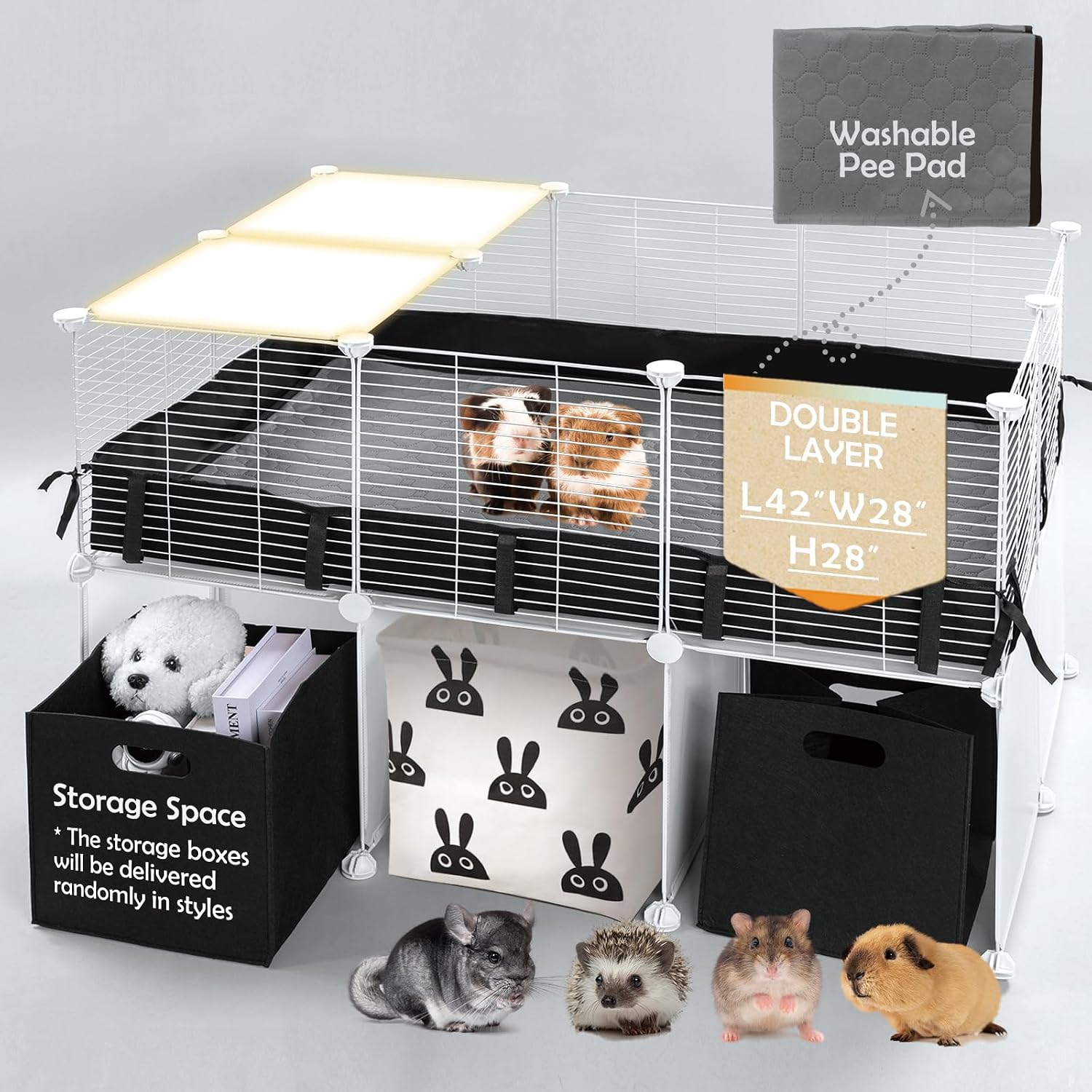
For readers who want a raised-sided example with a PUL backing and edge protection, the Paw Inspired Critter Box is one option to compare against your cage measurements. It is not the only design worth considering, and a flat pad from another maker may suit a custom cage better. The right approach is to match the liner's construction and dimensions to your specific setup rather than to a ranking.
Affiliate Disclosure: PawCritic is a participant in the Amazon Services LLC Associates Program, an affiliate advertising program designed to provide a means for sites to earn advertising fees by linking to Amazon.com and affiliated sites. Recommendations are based on published guidance, manufacturer specifications, and verified owner reports. Purchases made through our links help support our independent research at no extra cost to you. Thank you for your support!
Last updated: June 25, 2026. Prices and availability are subject to change. Always verify current pricing on Amazon before purchasing.