So Your Single Bird Just Laid an Egg
You walked past the cage this morning, glanced in, and saw it: a perfectly formed egg sitting on the cage floor. No male bird in the house. No mating behavior you noticed. Just an egg, appearing out of nowhere like a bad magic trick. If your first reaction was confusion followed by a low-grade panic, you're in good company. I get emails about this constantly, usually with a photo attached and a subject line in all caps.
Here's the short version: a female bird laying eggs without a male is completely normal biology. The eggs are infertile, like chicken eggs from the grocery store. One clutch, once in a while, isn't an emergency. What IS an emergency is when she lays clutch after clutch, month after month, draining her body of calcium and protein until she's a shell of herself. That condition is called chronic egg laying, and it kills more pet hens than almost anything else I see. The good news is that in most cases you can interrupt the cycle at home, and I'll walk you through exactly how.
Why a Bird With No Mate Produces Eggs Anyway
Egg production in birds isn't triggered by mating. It's triggered by environmental cues that scream 'breeding season' to her hindbrain. In the wild, a hen waits for the right combination of long days, abundant food, a secure nesting cavity, and a mate's attention. In your living room, she doesn't need all of those. She just needs enough of them. A budgie or cockatiel can crank out eggs on artificial lighting alone.
The usual suspects, in roughly the order I find them when troubleshooting with owners:
- Too much light. Anything over 10 to 12 hours of daylight-equivalent exposure tells her body that spring has arrived. Full-spectrum lamps on 14 hours a day are a classic accidental trigger.
- A dark, cozy cavity. Happy huts, tent-style sleepers, cardboard boxes, even the space under a piece of newspaper. If it feels like a nest hole, her ovaries treat it like one.
- High-fat, high-calorie food. An all-seed diet is basically a breeding-condition pellet. Sunflower and safflower in heavy rotation simulate a season of plenty.
- Touching her below the neck. Back stroking, tail petting, under-the-wing scratches. To a hen, that's mate behavior, and you've just volunteered for the role.
- Mirror companions, favorite toys she regurgitates on, or shadow reflections she courts.
- Warm ambient temperatures and stable, abundant water, which mimic tropical breeding conditions.
According to the Association of Avian Veterinarians, chronic egg laying is one of the most commonly reported reproductive disorders in companion parrots, with cockatiels, budgies, lovebirds, and canaries leading the pack. Smaller species are the usual patients, but I've seen African greys and macaws do it too, and the bigger the bird, the harder each egg is on her system.
Why This Can Kill Her
Egg production is expensive. Every egg pulls roughly 60 milligrams of calcium from her body in a small species like a budgie, proportionally far more in larger birds, plus significant protein and fat reserves. A single clutch of four to eight eggs is a metabolic withdrawal. Repeat that three, four, six times a year without recovery, and you get a hen with paper-thin bones, depleted muscle, and a hormonal engine that won't shut off.
The catastrophic risks are two. First, calcium deficiency can lead to egg binding, where a soft-shelled or malformed egg gets stuck in the oviduct. An egg-bound hen will sit fluffed on the cage floor, straining, possibly with a swollen vent, and she can die within hours. That's an immediate-aviculture-emergency, get-to-the-vet situation, no waiting until Monday. Second, chronic laying predisposes hens to hypocalcemia, where low blood calcium causes seizures and weakness, and to prolapse of the oviduct or cloaca. According to the ASPCA, any egg-laying bird showing lethargy, loss of appetite, or straining should be seen by a veterinarian promptly, because what looks like 'just sitting there' can progress fast.
Even the less dramatic outcome is ugly: a hen who's laid 30 eggs this year looks rough. Dull feathers, weight loss, irritability, no energy. You don't want to let it get that far.
Step One: Don't Panic, and Don't Pull the Eggs
Here's the mistake half of all owners make the first time. They find an egg, freak out, and immediately remove it. Her body reads the missing eggs as a predator raid, and she replaces them. This is why a cockatiel can end up laying 20 eggs back to back: you keep stealing her clutch, she keeps rebuilding it. Species like cockatiels are determinate layers in some contexts but many pet hens will keep producing to replace removed eggs, so never yank eggs one by one as they appear.
Instead, leave the entire clutch in place until she loses interest, usually two to three weeks after the last egg. Yes, the eggs will rot if she's not sitting on them. That's fine. You can boil or blow them out and return the intact shells so she can't break rotten ones, which is the cleaner move and the one I recommend if she's actively brooding. Let her sit, let her get bored, let her body register that the clutch went nowhere. That hormonal feedback, a failed nest, is nature's off switch, and it works better than anything you can buy.
Step Two: Demolish the Nest, Kill the Vibe
Once she's abandoned the clutch, remove the eggs and go to war on every breeding trigger in her environment. This is where the real fix happens, and it's all free.
First, light. Drop her to 10 hours of light maximum and give her a solid 12 to 14 hours of complete darkness at night. Not dim room light with the TV on, darkness. A blackout cage cover in a quiet room does this. Longer nights mimic winter, and no hen breeds in winter. This single change resolves a surprising number of cases on its own, and it usually takes two to four weeks to register.
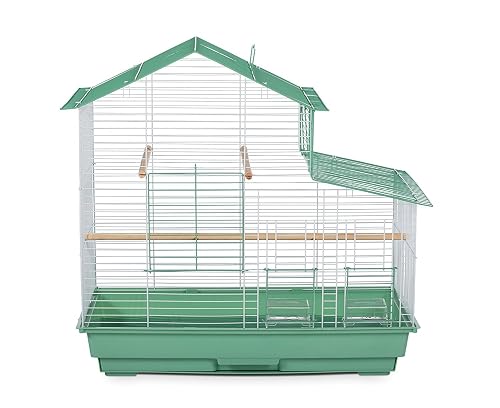
Second, remove every cavity. Happy huts go in the trash. Boxes, tunnels, dark corners behind furniture during out-time, the gap between the cage back and the wall, newspaper she can crawl under. A determined hen will claim territory you'd never suspect, so watch where she hangs out and eliminate it.
Third, change your hands. Pet her head and feet only. Stroke nothing below the neck. If she regurgitates for you, calmly set her down and walk away for a few minutes. It feels mean. It isn't. You are declining a marriage proposal from a bird, and her health depends on the rejection.
Fourth, pull the mirrors and any toy she's courting, and rearrange the cage aggressively. New perches, moved bowls, different layout. Mild environmental instability reads as 'not a safe place to raise chicks,' which is exactly the message we want.
Fifth, cut the fat. Shift her toward a quality pellet base with vegetables, and reduce seeds to training treats. According to the Association of Avian Veterinarians, dietary management, especially reducing high-fat seed content, is a cornerstone of discouraging reproductive activity. There's a food angle to this whole story, and if you want the full breakdown of what a laying hen should actually be eating, this pelleted diet is the kind of formulated base I'd steer a chronic layer toward rather than loose seed mixes.
Step Three: Support Her Body While She Recovers
Even after you've shut down the triggers, she's rebuilding a calcium deficit, and during any active laying she needs mineral support badly. A cuttlebone available at all times is the bare minimum, and mineral blocks work alongside it. My preferred setup for a hen mid-clutch is a cuttlebone she can chew at will plus a well-absorbed calcium supplement, because birds that won't touch a block still need intake. Something like a standard cuttlebone holder mounted low in the cage lets her access it on her own schedule, and hens that are actively forming shells will chew through it noticeably faster than usual, which is your cue that she's depleted.
Watch her weight during this window. A kitchen gram scale and a weekly weigh-in tells you more than any eyeball check. A hen who drops more than 10 percent of her body weight while laying needs a vet, full stop, ideally an avian specialist rather than a general practice. Not every vet is comfortable with birds, and the difference shows up in outcomes.
What If Environment Changes Aren't Enough?
Some hens are hormonal machines, and I've had readers whose cockatiels kept laying even with textbook-perfect husbandry. That's when medical management enters the picture, and it's genuinely effective now. A synthetic GnRH agonist implant, often called a Suprelorin or deslorelin implant, shuts down the reproductive axis for months at a time and has become the go-to intervention for chronic layers. It's a quick procedure at an avian vet and it works in the majority of cases. Hormone injections like leuprolide are an older option with shorter duration. In severe, life-threatening cases, vets can perform a salpingohysterectomy, removing the oviduct and uterus, though it's a riskier surgery in birds than spaying a dog and it's reserved for the worst situations.
What I'd steer you away from is the old folk advice. Fake eggs do have a role, but they're for letting her finish a clutch sanely, not a permanent lifestyle. And never, ever try to interfere with a stuck egg yourself, no oil, no squeezing, no pulling. You'll rupture the oviduct and kill her. Egg binding goes to the vet, warmed carrier, immediately.
The Signs You Should Never Sit On
Because I'd rather you overreact than lose a hen, here's the emergency list. Any of these means an avian vet today, not a forum post:
- Sitting fluffed on the cage floor, straining or pumping her tail for more than an hour without producing an egg.
- A swollen, reddened, or prolapsed vent.
- Leg weakness, tremors, or seizures, which point to hypocalcemia.
- Not eating for a full day, or visible weight loss over a week.
- Eggs laid without shells, or soft, rubbery eggs, which means her calcium is already bottomed out.
Soft-shelled eggs deserve special mention because owners often miss them. A hen can pass a shell-less egg and you might never see it, it looks like a blob that gets eaten or trampled. If you ever find one, her reserves are dangerously low regardless of how normal she acts. Start calcium support that day and get an appointment.
Preventing the Next Cycle
Once you've shut down a chronic layer, you keep her that way with habits, not heroics. The maintenance routine looks like this: 10 hours of light in the darker half of the year and never more than 12 even in summer, strict cavity control forever, head-only petting forever, a pellet-forward diet with seeds as currency rather than dinner, and weekly weigh-ins so you catch the next hormonal ramp-up early. The earliest sign of brewing trouble is usually behavioral: shredding paper at the cage floor, increased territorial aggression around a particular spot, or seeking out dark spaces. Catch that cluster within the first week and two weeks of enforced long nights usually resets her before an egg ever forms.
I'll also say the uncomfortable part out loud. Some owners secretly enjoy having a broody, cuddly hen because hormonal birds are often clingier and sweeter, in the same way they're clingier right before problems start. That affection is the disease talking. The bird who's back to head-bobbing at her toys, chewing wood instead of guarding a corner, and flying to your shoulder for a scratch is the healthy one. Love her like that.
The Takeaway
Chronic egg laying isn't something you wait out, and it isn't cured by removing eggs faster. The fix is letting each clutch fail on her timeline, then dismantling every spring signal in her world: light, cavities, mate-style contact, and rich food. Do that consistently and most hens stop within a month or two. If they don't, a hormone implant from an avian vet will finish the job. And if you're sitting there right now with a straining hen on the cage floor, close this article and call the vet. Everything else can wait; she can't.
Related Reading
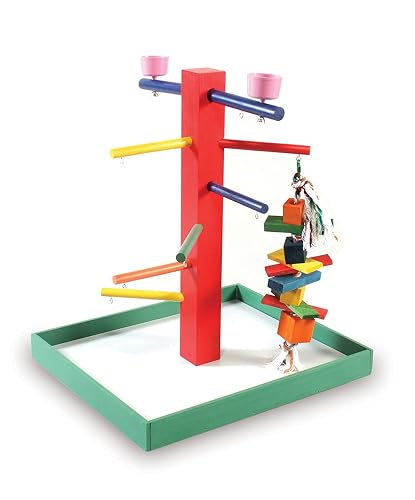
Want more on this topic? Check out our guides on best bird stands play gyms and perch stations, how to read bird body language signals guide, how to stop bird screaming behavior guide.