Two Birds Are Not Always Better Than One
I once watched a client toss a brand-new cockatiel into an existing cockatiel's cage within an hour of getting home from the breeder. The resident bird, a sweet hen named Pumpkin, went from calm to full threat posture in about ninety seconds. Feathers pinned, beak open, lunging at the cage bars. The new bird, terrified and probably already carrying something contagious, had nowhere to hide. That single decision cost my client a $400 vet bill, six weeks of separation, and months of behavioral cleanup.
Introducing a second bird is one of the most rewarding things you can do for a lonely parrot, and simultaneously one of the easiest things to ruin. Birds are territorial, prey animals with long memories and strong opinions about who gets to share their space. Do it right, and you get preening, chatter, and two birds quietly sitting shoulder to shoulder. Do it wrong, and you get blood, screaming, and a permanent enemies list. The good news is that the right process is not complicated. It is just slow, and most people rush it.
This guide walks through the whole thing: quarantine, cage placement, the first visual introductions, supervised out-of-cage time, and the eventual decision about whether your two birds should ever share a cage at all. I will also tell you where I disagree with common internet advice, because there is a lot of bad advice floating around on bird forums.
Step One: Quarantine Is Non-Negotiable
Before your new bird ever sees your resident bird, it needs to spend time in a completely separate room, ideally for 30 to 45 days. This is not optional paranoia. New birds can carry contagious diseases, and some of the worst ones, like psittacosis, can hide for weeks before symptoms show. According to the Association of Avian Veterinarians, quarantining new birds in a separate airspace is one of the most important biosecurity steps any multi-bird household can take, and a wellness exam with an avian vet during the quarantine window catches problems before they spread. Psittacosis is also zoonotic, meaning it can infect humans, so this protects your family too, not just your flock.
Practical rules for quarantine:
- Separate room, not just a separate cage. Airborne pathogens travel, and dust and dander travel even farther.
- Feed and clean the resident bird first, then the new bird, and wash your hands between. Change clothes if you want to be strict about it.
- Do not share food bowls, toys, or perches between the two birds during this period.
- Get a vet check during week one or two, including a fecal gram stain at minimum.
I know quarantine feels cruel when the whole point of getting a second bird was companionship. It is not. It is eight weeks out of a twenty-year relationship. Suck it up.
Step Two: Set Up a Second Cage Before the Bird Arrives
The biggest mistake people make is assuming the new bird will just move in with the old one. Even birds that end up bonded should start with their own territory. You need two fully equipped cages, each with its own perches, food and water stations, and toys.
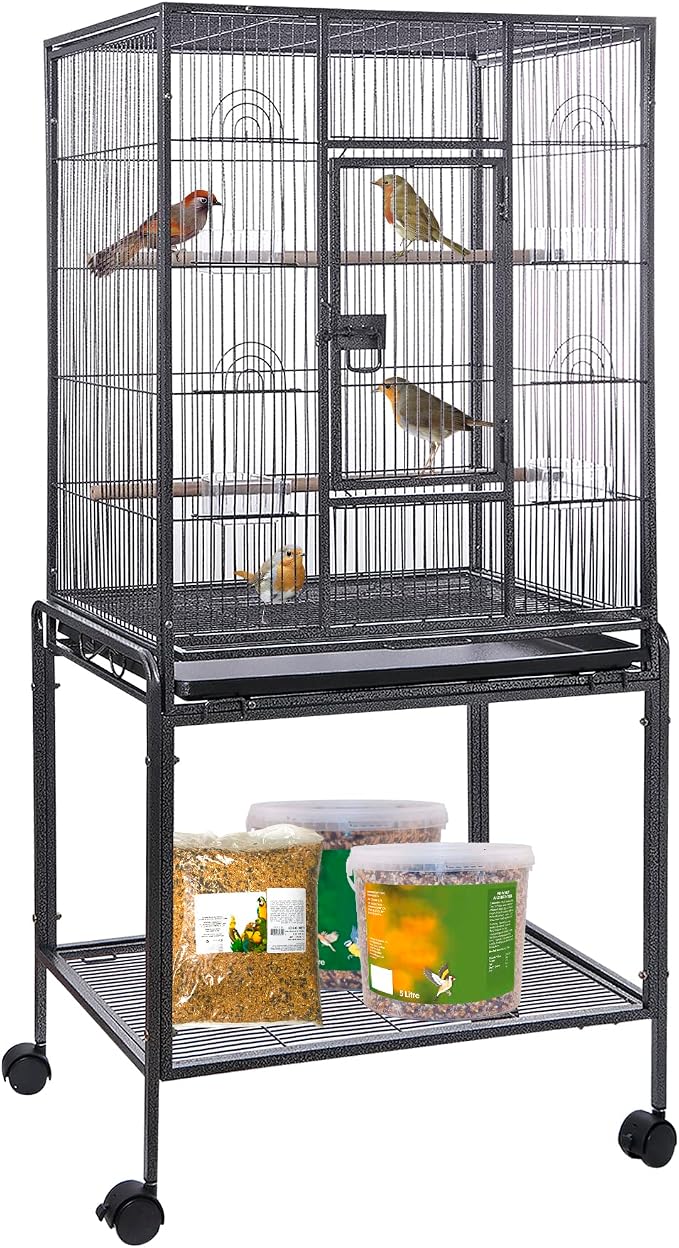
For the quarantine room, a simpler travel-style or small starter setup is fine. Once quarantine ends and the cages move closer together, you want the new bird in a proper home. I like the Prevue Pet Products flight cage for small to medium birds like budgies, cockatiels, and conures, because the extra width lets a nervous bird actually fly away from perceived threats instead of just dropping to the cage floor. For a larger parrot, size up accordingly; a proper cage for an African grey or Amazon should be at least 36 inches wide, and wider is always better than taller.
Stock both cages with varied perch diameters. Sore feet and pressure sores come from uniform dowel rod perches, and a stressed new bird that never moves off one perch is at higher risk. Natural wood, rope, and one grooming perch near the food bowl is a solid mix.
Step Three: The Side-by-Side Phase
After quarantine, put the two cages in the same room, several feet apart. Not touching. Cage-to-cage contact invites toe biting, and a bitten toe through the bars is one of the most common injuries I have seen in multi-bird homes. Start with three to five feet of separation and watch the body language.
What good signs look like:
- Both birds eating normally while the other is visible
- Calm vocalizations, contact calls back and forth, mimicking each other's sounds
- Relaxed posture, one foot tucked up, normal preening
- Gradually choosing to sit on the side of the cage closest to the other bird
What bad signs look like:
- Pinning eyes, fanned tails, and rigid posture whenever the other bird moves
- Constant pacing or climbing the cage walls
- Lunging at the bars, biting at the bars toward the other bird
- A resident bird that stops eating, or a new bird that hides on the cage floor
If you see bad signs, push the cages further apart for a few days and slow down. Distance is your pressure valve. Over two to three weeks, if things look calm, you can gradually slide the cages closer until they are about a foot apart. Never clanging right up against each other, even in the best relationships, because one bad morning and a sleeping bird's toes are exposed.
Step Four: Neutral-Territory Meetings
Here is where I disagree with the dominant forum advice, which says to let birds 'work it out' on top of a cage. Never introduce two birds on or near a cage. Cages are territory, and territory turns minor squabbles into real fights. Instead, pick a neutral space: a bed, a play gym neither bird uses regularly, a tabletop in an unfamiliar room. If you use a shared play stand, make sure it is one neither bird currently claims.
A sturdy neutral ground option is a tabletop play stand with food bowls, placed somewhere new to both birds. Food matters here. Put a shared bowl of something wonderful, millet spray for small birds, a slice of warm sweet potato for bigger parrots, and let them discover it side by side. Food creates positive associations. Two birds eating together is flock behavior, and it rewires how they feel about each other.

Rules for these sessions:
- Keep them short, five to fifteen minutes for the first several sessions
- Always supervise. Always. Not from the next room.
- Have a towel or a piece of cardboard handy to separate birds instantly if a fight breaks out. Never use your hands to break up a parrot fight.
- End sessions on a good note, before either bird gets tired or cranky.
Expect some beaking, some posturing, some gentle 'back off' signals. That is normal flock negotiation. A quick beak-to-beak squabble resolved without contact is fine. Drawing blood is not. A bird chasing another bird relentlessly around a table is not. Learn to read the difference and intervene at the threat stage, not the bite stage.
Step Five: Out-of-Cage Time Together
Once the neutral sessions are going well, move to joint out-of-cage time in your bird room. Open both cages and let them come out on their own schedule. The first few sessions may involve one bird completely ignoring the other, and that is fine. Ignoring is a win. Coexistence precedes friendship in bird relationships, and some pairs never progress past polite coexistence. That is an acceptable outcome.
Keep the same rules: supervision, food, and an escape route for both birds. Watch for resource guarding around the good toys and treats, and provide duplicates of everything. Two birds, two of every item, spaced apart. If one bird hoards three toys while the other cowers, remove the hoarded items and rethink the layout.
This phase is where foraging toys earn their keep, because a busy bird has less bandwidth for picking fights. A wall-mounted or hanging foraging toy stuffed with treats and shredded paper gives both birds a shared project, and working a puzzle within a foot of each other is exactly the kind of low-stress proximity that builds tolerance into companionship.
Step Six: Should They Ever Share a Cage?
My honest answer: probably not, and definitely not soon. Some species pairs, particularly budgies, cockatiels, finches, and lovebirds, often cage together successfully after months of proven harmony. Many parrot pairs never should. An Amazon and a conure in one cage is a recipe for the conure getting mutilated, because size mismatch turns normal squabbles into amputations. Even same-species pairs can turn on each other at sexual maturity, which hits anywhere from six months in budgies to several years in larger parrots.
If you do eventually try cohabitation, do it on a trial basis in a third, neutral cage that neither bird has claimed, larger than either of their current cages, with duplicate everything. Watch them like a hawk for the first full day. Separate at any sign of aggression and do not feel bad about retreating. According to the ASPCA, providing each bird with its own space and resources reduces stress and territorial aggression in multi-bird homes, and permanent separate cages with shared out-of-cage time is a completely legitimate end state. Two cages side by side with two birds that chatter and preen through the bars is a success story, not a failure.
Common Mistakes I See Over and Over
Skipping quarantine. I will keep beating this drum. One skipped quarantine can kill every bird you own.
Introducing on the resident bird's cage. The resident bird has home-field advantage and will use it. Neutral ground only.
Mixing dramatically different sizes. A macaw beak can break a cockatiel's leg in a heartbeat. Free interaction between big size gaps needs constant supervision forever, and some pairings should never mix at all outside of caged, supervised distance.
Expecting instant friendship. Some birds take weeks to tolerate and months to like each other. Some never do. Birds are individuals with preferences, and forcing compatibility creates stress, feather destruction, and injuries.
Neglecting the resident bird's bond. If your current bird is bonded to you, a new rival for your attention can trigger jealousy-based screaming and biting toward the newcomer. Give the resident bird attention first, in sight of the new bird, so it learns that the newcomer does not mean losing you.
What About Mirror Time and Alone Time?
During the early phases, give each bird daily one-on-one time out of sight of the other. The new bird needs to bond with you too, and that is easier without the resident bird performing from across the room. Ten to fifteen minutes of focused attention per bird, separately, does more for household peace than you would expect.
Skip mirrors as a bonding shortcut. A mirror gives a solitary bird a false flock mate and can create territorial obsession, which is the opposite of what you want when you are trying to build a real second relationship. If the new bird needs comfort in its cage, soft toys, radio at low volume, and partially covering one side of the cage work better. A cozy cage-mounted comfort toy or hideaway can also give a nervous newcomer a sense of security during the adjustment weeks.
A Realistic Timeline
Here is roughly how this plays out when you do it right:
- Weeks 1 to 6: Quarantine, vet check, separate rooms, bonding with the new bird one-on-one.
- Weeks 7 to 9: Cages in the same room, several feet apart. Watch body language daily.
- Weeks 10 to 12: Neutral-territory sessions, short and supervised, with shared food.
- Months 4 to 6: Joint out-of-cage time, duplicate resources, gradual closeness.
- Month 6 and beyond: Consider a trial cohabitation only if the species mix makes sense and the relationship is consistently calm.
Faster timelines are possible with easygoing species, but do not build your expectations around the best-case scenario. Build them around the realistic one.
The Takeaway
Slow is fast with bird introductions. Every week you spend on quarantine and side-by-side cages buys down the risk of a fight you cannot undo, because bird injuries from bites are often permanent and sometimes fatal. Get the vet check, buy the second cage, choose neutral ground, use food as diplomacy, and let the relationship develop at the birds' pace, not yours. Some pairs become inseparable. Many settle into comfortable neighbors. Both outcomes are wins if both birds are safe, healthy, and relaxed in your home. Start tonight by picking your quarantine room and booking that new-bird vet appointment, because everything else in this process flows from those two decisions.
Related Reading
Want more on this topic? Check out our guides on best bird cages parakeets cockatiels small parrots, best bird training tools speech aids clickers target sticks, how to tell if your bird is sick warning signs.