That Little Sneeze Might Not Be Cute
I've had more than one panicked phone call that started the same way: 'My guinea pig sneezed twice yesterday and today she's making a clicking sound when she breathes.' Here's the uncomfortable truth most new cavy owners learn too late: guinea pigs are respiratory disaster zones waiting to happen. A sneeze that a dog or cat would shrug off can snowball into pneumonia in a guinea pig within 48 to 72 hours. I've seen this go wrong in my own herd, and I've watched it go right when someone caught the signs on day one instead of day four.
So no, you're not overreacting if a single wet sneeze made your stomach drop. You're paying attention. This guide covers what respiratory infections look like in guinea pigs, why they spiral so fast, what your vet can actually do, and the habitat mistakes that keep triggering them in the first place.
Why Guinea Pig Lungs Are So Fragile
Guinea pigs are rodents, but they don't have a rodent's reputation for hardiness in the respiratory department. Their airways are narrow, their lungs are proportionally small, and they can't breathe through their mouths the way dogs pant. Everything about their design assumes clean, dry, mild air. In the wild, wild cavies live in the grasslands of the Andes, spending most of their lives outdoors in well-ventilated burrows and tunnels, not in dusty bedrooms on pine shavings under a heat vent.
Three bacteria cause the overwhelming majority of guinea pig respiratory disease: Bordetella bronchiseptica, Streptococcus pneumoniae, and Klebsiella pneumoniae. All three can live quietly in a healthy-looking pig's upper airways for months and then flare up the moment stress or poor conditions tip the balance. That's the part that catches people off guard — the infection often isn't 'caught' from anywhere. It was already there, waiting.
Stress is the trigger, and stress in guinea pigs comes from predictable places: a cage that's too small, a bully cagemate, sudden temperature swings, dirty bedding, a new home, pregnancy, or a diet deficient in vitamin C. According to the ASPCA, proper husbandry — including appropriate bedding, stable temperatures, and a balanced diet — is the foundation of preventing respiratory illness in small pets, because nearly all of these infections gain ground when immunity is already compromised.
The Symptom Ladder: What to Watch and When to Panic
Respiratory infections in cavies progress in a rough order. Learn this ladder, because your response time depends on where your pig is standing on it.
Stage 1: The Sneezes
Occasional sneezing — a couple of times a day with no discharge — can be environmental. Dusty hay, aspen shavings ground to powder, or a scented candle three rooms away can all irritate a sensitive nose. Swap the bedding, shake out the hay outside before feeding, and watch closely for 24 hours. If sneezing continues past that, or increases, treat it as infectious until proven otherwise.
Stage 2: The Crusty Nose and Wet Eyes
Once you see discharge — clear at first, then creamy white or yellow-green — the infection has established itself. Look for dried crust around the nostrils, a damp or matted front paw from wiping the face, and weepy eyes. Guinea pigs groom constantly, so a pig that's wiping her nose with her paw is telling you something's wrong inside that nose.
Stage 3: The Sounds
This is the stage where my phone rings. Healthy guinea pigs are essentially silent breathers. Any of the following sounds mean you call the vet today, not tomorrow:
- Clicking or crackling with each breath, like tiny bubble wrap
- Wheezing or a high-pitched squeak on exhale
- A congested, rattling rattle when she's at rest
- Rapid, shallow breathing above roughly 100 breaths per minute at rest
Put your ear near her nose — gently, without stressing her — and just listen. In a quiet room, congestion is unmistakable. I do this weekly with my own pigs the way other people check their tires.
Stage 4: The Crash
Labored breathing where the whole body heaves, a hunched posture, puffed-up fur, refusing favorite foods, weight loss, and lethargy. At this point you have a genuine emergency and you need an exotic vet, not a general practice that sees mostly dogs and cats. Pneumonia in guinea pigs is frequently fatal, but it's also frequently survivable when caught in stage 2 or 3.
Why You Should Never 'Wait and See'
Here's my strongest opinion in this entire article: waiting is the single most common fatal mistake in guinea pig ownership. I recommend a vet visit at the first sign of nasal discharge plus sneezing together, even if your pig is still eating. Here's the reasoning.
First, guinea pigs hide illness. As prey animals, showing weakness gets you eaten, so a pig who looks 'a little off' is often much sicker than she appears. By the time a cavy looks visibly sick, she's been sick for days.
Second, these infections don't resolve on their own. A viral cold in a human runs its course in a week; a bacterial bronchopneumonia in a guinea pig progresses. The bacteria multiply in the lungs, the airways fill with fluid, and the pig essentially drowns slowly over the course of several days.
Third — and this is critical — a pig who stops eating, even for half a day, risks gastrointestinal stasis. Respiratory infection leads to reduced appetite, reduced appetite leads to gut shutdown, and gut shutdown can kill a pig faster than the pneumonia would have. Two life-threatening problems for the price of one.
According to the AVMA, exotic companion mammals like guinea pigs require veterinary care from practitioners experienced with their species, because their physiology and drug tolerances differ significantly from cats and dogs. Several antibiotics that are perfectly routine in dogs — penicillin-based drugs, for example — are lethal to guinea pigs because they destroy the beneficial gut flora. A well-meaning general vet without exotic experience can accidentally make things worse, so find an exotic vet before you need one.
What Treatment Actually Looks Like
Expect your vet to do a physical exam, listen to the lungs, possibly take radiographs, and start a guinea-pig-safe antibiotic — often a sulfa drug or a fluoroquinolone like enrofloxacin, dosed precisely by weight. Treatment usually runs 10 to 21 days, and here's the part people quit too early: your pig will look dramatically better by day 4 and you'll be tempted to stop the meds. Don't. Stopping early is how resistant infections and relapses happen, and relapses are usually worse than the original infection.
Supportive care matters as much as the antibiotics:
- Keep her warm and draft-free, ideally around 65 to 75 degrees Fahrenheit. Not hot — guinea pigs overheat easily above 80.
- Offer favorite foods constantly and hand-feed if needed. Weigh her daily on a kitchen scale; a loss of more than about 50 grams in a day means you call the vet back.
- Run a humidifier near (not pointed at) the cage to loosen congestion, the same logic as a steamy shower for a congested toddler.
- Separate her from cagemates if the vet suspects something contagious like Bordetella — but keep her within sight and smell of her friends, because isolation is its own stressor.
The Habitat Mistakes That Keep Causing Infections
Most of the pigs I've helped treat lived in enclosures that were quietly working against them. Fix these and you cut your risk dramatically.
Bedding
Pine and cedar shavings release aromatic hydrocarbons that irritate small mammal airways — this has been documented in laboratory animal research for decades. If you use wood, use kiln-dried aspen, or better yet, paper-based bedding. A solid option that controls ammonia and dust well is paper small-pet bedding; deep-fill it to at least 2 inches so urine gets absorbed away from the surface. Ammonia from accumulated urine is a direct lung irritant, and pigs living on soggy bedding in a poorly ventilated cage are basically marinating their airways in it.
Ventilation and Placement
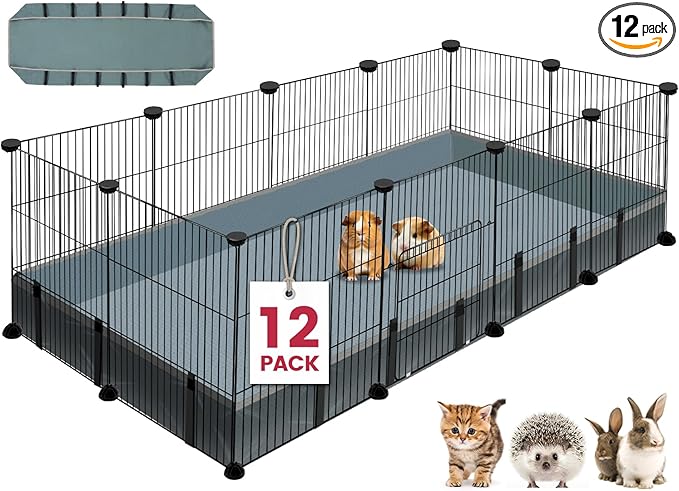
Aquarium-style tanks are terrible for cavies — stagnant, humid air sits at pig level. Use a wire-topped cage or a C&C grid enclosure with open air above. And location matters more than most people think: a cage under a heating or AC vent experiences temperature swings every time the system kicks on. A cage by a sunny window swings from sauna to shade daily. Pick a stable interior wall instead.
Dusty Hay
Hay should be 80 percent of the diet, but cheap, dusty, brown hay delivers a double insult — irritant particles in every breath and lower nutrition. Green, fresh-smelling timothy hay from a reputable supplier makes a real difference. Coarse, first-cut timothy is usually the least dusty. If your hay bag makes you sneeze when you open it, imagine breathing that at nose level 24 hours a day.
Vitamin C
Guinea pigs, like humans, cannot synthesize their own vitamin C. A deficient pig has a compromised immune system, and deficiency and respiratory infection travel together constantly. Feed roughly 10 to 30 mg per day through fresh bell peppers, leafy greens, and a small amount of quality pellets. For pigs under stress or recovering from illness, I keep a liquid vitamin C supplement on hand — never in the water bottle, where it degrades within hours and can discourage drinking, but dosed directly or over food.
New Pigs and the Quarantine Rule Nobody Follows
Bringing home a new guinea pig? Quarantine her away from your existing pigs for a full two to three weeks, in a separate room, with separate bowls and washed hands between handling. Bordetella can incubate silently, and pet store pigs — often weaned early, stressed, and shipped in groups — are the classic carriers. I know quarantine feels mean when your new pig looks lonely. It feels less mean than treating four pigs instead of one.
While we're on equipment: shared items spread more than respiratory bugs. Water bottles with gunk in the sipper tube grow biofilm within days. I scrub bottles with a bottle brush every two to three days and run them through the dishwasher weekly, or use easy-to-disassemble bottles like this glass sipper bottle, whose wide tube comes apart for actual cleaning. And if you use a hay rack, mount it above the bedding — hay dragged through soiled litter becomes both a germ vector and an ammonia trap.
Questions I Get Asked Constantly
Can I catch my guinea pig's respiratory infection? The common guinea pig culprits — Bordetella and Streptococcus pneumoniae — are primarily animal pathogens, but Bordetella bronchiseptica can occasionally infect immunocompromised humans. If someone in your house has a weakened immune system, mention the diagnosis to their doctor. Basic handwashing after handling covers most of the risk.
Do rabbits and guinea pigs share infections? Yes, and this is why I'll never recommend housing them together. Rabbits frequently carry Bordetella asymptomatically and can pass it to guinea pigs, where it turns into genuine disease. They also have different dietary needs and a rabbit's powerful hind legs can seriously injure a cavy. Separate species, separate cages — always.
My pig sneezes only when she burrows in hay. Is that an infection? Probably mechanical irritation from fine particles, especially with dusty hay. But 'probably' is a word I've learned to distrust with cavies. Watch for discharge, monitor for a week, upgrade the hay quality, and if it persists, get it checked. A vet exam costs far less than overnight emergency care.
What about scent diffusers, candles, and cleaning sprays? Get them out of the pig's room entirely. Aerosolized essential oils and fragrance compounds are potent airway irritants for small mammals, and I've talked to owners whose pigs' chronic sneezing vanished within a week of unplugging the diffuser. Clean the cage with plain warm water and dish soap, or a vinegar solution, rinsed well — skip the harsh disinfectant sprays anywhere near the habitat.
Building a Pig-Proof Routine
Prevention is boring, and boring is exactly what you want. Here's the routine I run with my own herd, refined over years of mistakes:
- Daily: spot-clean the toilet corners, refresh hay, check noses and eyes at veggie time, listen for abnormal sounds.
- Every 2 days: full water bottle scrub.
- Weekly: full cage strip and clean, weigh each pig and log it — a steady weight is your best early warning system for almost every guinea pig illness.
- Monthly: check the room for drafts with a incense stick or thermometer at cage level, since floor-level temperature often differs wildly from what your thermostat reads.
Adding enrichment that keeps pigs active also supports immune function — a pig who moves, forages, and popcorns daily is a pig with a stronger baseline. Simple additions like a hideaway with chewable entry points or scattered-forage feeding turn mealtime into exercise.
The Takeaway
If you remember one thing from all this: sneezing plus discharge plus eating less equals a vet visit today. Not a forum post, not a wait-and-see weekend, not advice from the pet store clerk. Respiratory infections in guinea pigs are cheap and very treatable in week one, expensive and coin-flip in week two. Find an exotic vet in your area right now, before you need one, and save the number somewhere you'll actually find it at 9 p.m. on a Sunday. Your pig's lungs are small. Your reaction time shouldn't be.
Related Reading
Want more on this topic? Check out our guides on best guinea pig vitamin c supplements, best hamster tunnel tube systems cage expansions, best small pet fleece cage liners.