Why 58 Degrees Is Not 'Fine'
Disclosure: PawCritic is reader-supported. A few links below are Amazon affiliate links, and we may earn a small commission if you purchase through them at no extra cost to you.
A few winters back, a widely shared owner account described a cockatiel fluffed up like a pom-pom on the bottom of the cage. The heat had gone out overnight and the apartment had dropped into the upper 50s. The owner figured birds live outside in the wild, so how bad could one cold night be? Bad enough that the bird spent three days at the avian vet with a respiratory infection that cost $600. The bird survived. Plenty don't.
Here's the uncomfortable truth most bird owners never hear: almost every parrot species kept as a pet evolved in tropical or subtropical climates where the temperature barely swings 15 degrees all year. Budgerigars come from the Australian interior, cockatiels from arid scrubland, African greys from West African rainforest, macaws from Amazon basin lowlands. Your thermostat set to 64 degrees while you're at work is, from your bird's perspective, a cold snap it never evolved to handle on a sustained basis. Wild birds deal with cold through migration, roosting in groups, and acclimatization over weeks. Your bird sits in the same 30-inch cube regardless.
So let's answer the question properly, because the internet is full of garbage answers on this topic, ranging from 'birds are fine in the cold' to 'never let the temperature change by a single degree.' Both are wrong.
The Actual Numbers That Matter
Published avian husbandry guidance and the framework commonly recommended by avian veterinarians put it this way. Most healthy adult pet parrots are comfortable somewhere between 65 and 80 degrees Fahrenheit. That's the happy zone. They can tolerate brief excursions outside it, but comfort and tolerance are not the same thing.
Below 65, a healthy bird starts spending meaningful energy just staying warm. It will fluff its feathers to trap air against the body, eat more to fuel that metabolic furnace, and may sit still for long stretches to conserve heat. Below about 60 degrees, you're in genuinely risky territory for tropical species that haven't been gradually acclimatized. And below 50? That's an emergency for a bird accustomed to indoor living. Finches and canaries, slightly hardier, still shouldn't be asked to live below the mid-60s indoors.
Now, before the comments fill up with people insisting their grandmother kept budgies on a screened porch in Ohio: yes, outdoor aviary birds acclimatized over months, with wind protection and proper housing, can handle far colder conditions. The keyword is acclimatized. A bird that has lived its whole life at 72 degrees cannot suddenly handle 50. Acclimatization takes weeks of gradual exposure, and it's a process best done under the guidance of someone with outdoor-aviary experience. Do not test this on your pet.
Why Temperature Swings Matter More Than the Number Itself
If one point could be hammered into every new bird owner's head, it would be this: a sudden 20-degree drop is more dangerous than a steady 15-degree-lower-than-ideal temperature. Birds are small animals with fast metabolisms and almost no thermal mass. A 90-gram budgie can't buffer a draft the way a 70-pound dog can. Sudden chills constrict blood vessels, stress the immune system, and open the door to the bacterial and fungal respiratory infections birds are notoriously prone to.
This is why the worst cold-weather scenario isn't a cold house. It's a cold house that also has a draft. A cage sitting next to a leaky window in January, where the bird gets a constant stream of 55-degree air across its back while the room reads 68 on the thermostat, is a bird in trouble. The thermostat tells you almost nothing about conditions at cage level. A twelve-dollar thermometer stuck right next to the cage gives the only reading that matters.
According to the ASPCA pet care library, pet birds should be kept away from drafts, direct airflow from air conditioning and heating vents, and sudden temperature fluctuations, and this guidance shows up repeatedly in their companion-bird care material for good reason. Vets see the consequences every winter.
Reading Your Bird: The Early Warning Signs of Being Too Cold
Birds hide illness. It's a survival instinct, because a visibly sick parrot in the wild is a dead parrot. So by the time your bird looks obviously cold, it has been uncomfortable for a while. Learn the early signals.
Fluffing is the big one. A bird sitting with feathers puffed out for long periods, especially while awake and inactive, is trying to create an insulating layer of air. A healthy bird fluffs briefly while preening, then snaps back to sleek. A cold bird stays puffed. You'll also see the classic 'sick bird posture': fluffed, hunched, both feet down on the perch or the cage floor, sometimes with the head tucked back and eyes partially closed during the daytime. Weight shifting between feet, trembling or shivering while at rest, and eating noticeably more are other clues.
One more subtle sign people miss: a cold bird will often tuck one foot up into its belly feathers and hold it there far longer than usual, alternating feet frequently. That's heat conservation. If you see it alongside fluffing and lethargy, stop guessing and warm the bird up.
If you see tail bobbing, that rhythmic pumping of the tail with each breath, or any open-mouthed breathing, you're no longer looking at a temperature problem. You're looking at respiratory distress, and that's an immediate avian-vet situation. According to the Association of Avian Veterinarians, respiratory signs in birds warrant urgent care because birds decompensate fast, often within 24 to 48 hours of appearing mildly off.
Winter-proofing the Cage Without Cooking Your Bird
Step one: move the cage away from windows and exterior doors. The view doesn't matter. Even a well-sealed window radiates cold and creates convection currents. In winter, cages should stay at least three feet from any exterior glass, and running a hand along the wall on windy days confirms there's no hidden draft. The back of your hand works well, it's more sensitive to temperature than your palm.
Step two: cover three sides of the cage at night. A fitted cage cover traps a pocket of warmer air and blocks drafts while the bird sleeps. If your room dips into the low 60s overnight, this alone makes a real difference. According to most avian vets, birds need 10 to 12 hours of undisturbed dark sleep, so a cover does double duty for temperature and rest. If you want a dedicated one rather than a bedsheet, a well-fitted cover like the one at amazon.com is sized for typical pet cages and blocks both light and chill.
Step three: address the heat source question, because this is where people hurt birds. Never point a space heater directly at a cage, and never use heaters without bird-safe certification. Here's the fact that saves lives: older space heaters, and frankly many cheap modern ones, have PTFE-coated heating elements. Heated PTFE, the same polymer in nonstick cookware, releases fumes that are lethal to birds in minutes. The fumes that cause Teflon toxicity, formally polymer fume fever, can kill an entire flock in a room before you smell anything. If you use a space heater around birds, it must be one with a ceramic or radiant element and no coating, ideally one specifically marketed as bird-safe. Radiant oil heaters are generally a safe choice. And never, ever burn nonstick pans, self-cleaning ovens, or air fryers near your bird, cold weather or not.
A safer and more targeted approach is a heated perch or a thermostatically controlled perch that warms gently to a set temperature. A solid ceramic option like the heated perch available at amazon.com lets the bird choose when to warm up and step away when it's had enough, which is exactly how thermal choice should work. Birds regulate by moving between warm and cool spots; give them options rather than blasting the whole cage.
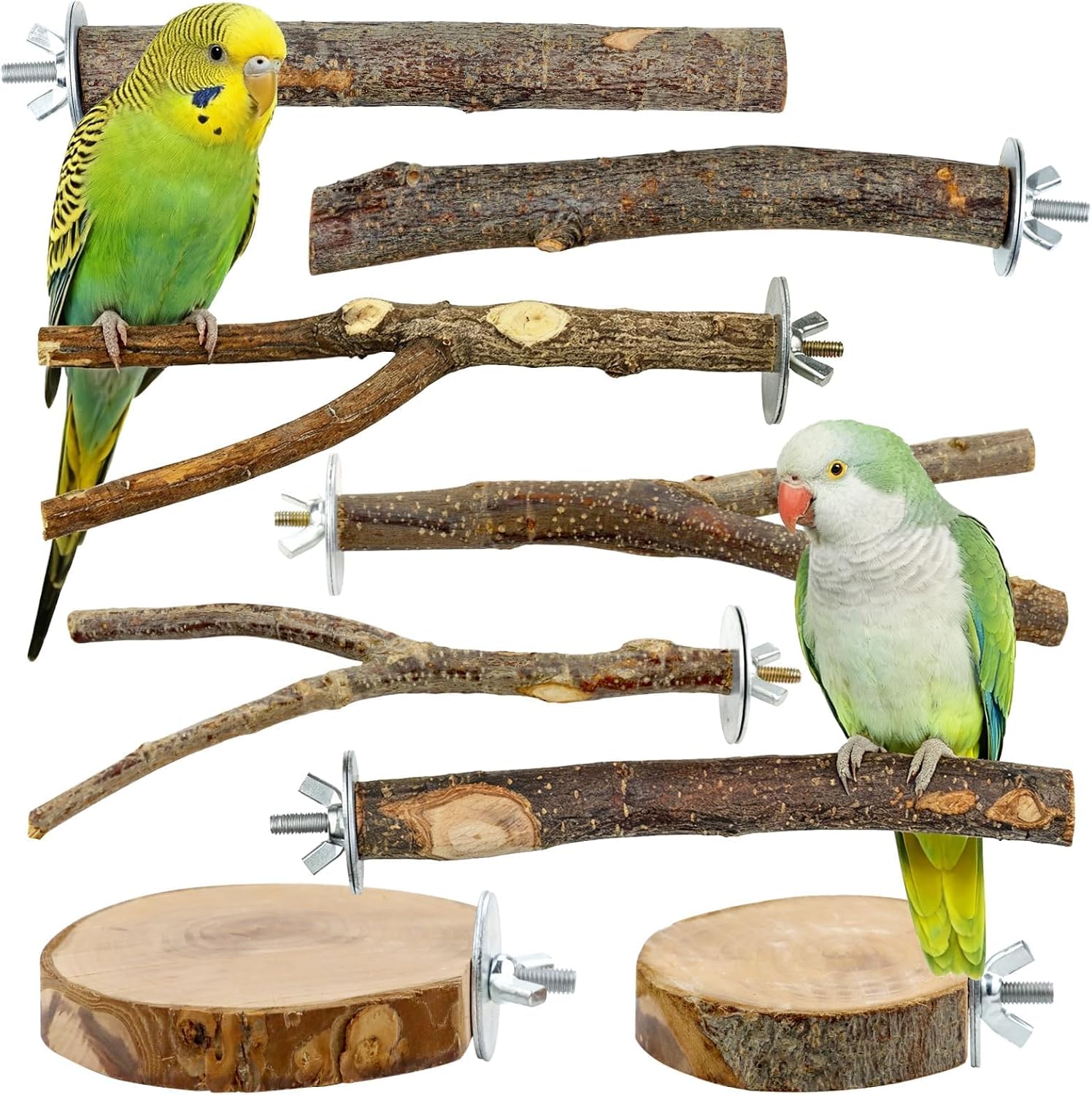
Position any heated perch on the far side of the cage from where the bird sleeps if your bird is a heavy sleeper, or right where it sleeps if the room runs cold. Feel the surface with your own inner wrist before you trust any heat product: warm is right, hot is a burn risk, especially on those scaly feet.
What About Summer Air Conditioning? The Flip Side Nobody Discusses
Here's a mistake seen constantly in July: someone gets a new bird, the house is air-conditioned to a crisp 68, and the cage sits directly in the line of a ceiling vent blowing 60-degree air. The bird fluffs up in the middle of summer and nobody can figure out why it's lethargic. AC is just indoor winter. Same rules apply. Redirect vents, use a deflector, or move the cage out of the airflow entirely.
Overheating is the other side of this coin and it kills faster. Birds have no sweat glands; they cool off by panting and holding wings slightly away from the body. A room above about 85 degrees, especially with high humidity and no air movement, puts a bird at real risk of heat stress. So the target band, roughly 65 to 80, protects against both directions. Don't obsess over hitting a perfect 74. Obsess over stability and no drafts.
Bath Time and Cold: A Combo That Catches People Out
Wet birds lose body heat rapidly. A drenched budgie in a 66-degree room with a fan running can go hypothermic. If your bird bathes, make sure the room is on the warmer side of the comfortable range, ideally 75 or above, and let the bird dry fully in a draft-free spot before evening temperatures settle in. Late morning is the best window for bath days, so the bird has all afternoon to air-dry. And skip baths entirely on days the house runs cold or during a heating outage.
Travel, Power Outages, and Real Emergencies
Car travel in winter deserves a paragraph of its own. Preheat the car before the carrier goes in. Cover the carrier with a warm blanket, leaving a gap for airflow. Never put the carrier on the floor of the car where it's coldest, and keep it away from direct heater output, which swings too hot. A covered carrier traps enough warmth for most trips under an hour.
For power outages, have a plan before you need one. A tent pitched over the cage in a small room, with you and the bird inside, can hold body heat and raise the local temperature ten degrees. Hot water bottles wrapped in towels placed outside the cage cover help too. Insulate the cage's sides with blankets and keep the room closed off. In documented outage accounts, birds have ridden out 18-hour winter storms in a blanket-draped cage in the smallest bedroom with a camping lantern and periodic warm-water bottles, staying sleek and comfortable the whole time because the prep happened in October, not mid-crisis.
A useful piece of year-round insurance is a thermal perch or snuggle-safe style disc that holds warmth without electricity. Options like the cozy thermal perch sold at amazon.com give a bird a warm foothold during outages or in rooms that run cool. Keep one in your emergency kit along with a thermometer, a spare cage cover, and towels.
Special Cases: Chicks, Seniors, and Sick Birds
Everything above applies to healthy adult birds. The margins shrink dramatically for others. Baby birds still feathering out cannot thermoregulate well at all and may need supplemental warmth in the mid-80s, depending on age and development. Sick birds, regardless of the illness, almost always benefit from a warmer environment, typically 80 to 85 degrees, because fever and immune response burn enormous energy; most avian vets will tell you to create a hospital-cage setup with gentle supplemental heat while you get the bird in for an exam. Senior birds, or birds with chronic conditions like fatty liver disease, also tolerate cold poorly and deserve the warmest, draft-free corner of the house.
And a word on newly adopted birds: a bird that just traveled to your home is stressed, and stressed birds are immunocompromised. Keep a new bird's room on the warm and stable side, around 75 degrees, for the first couple of weeks. New imports and store birds commonly crash with respiratory infections within days of arriving in a chilly house, and owners blame the seller when the real culprit was a 63-degree living room.
The Short Version You Can Act On Today
Aim for 65 to 80 degrees, stable, no drafts, measured at the cage with a real thermometer. Cover the cage at night in cold months. Move it away from windows, doors, and vents, summer and winter both. Never use nonstick-coated heat sources or cook with PTFE pans near birds. Watch for the fluffed, hunched, foot-tucking posture that says 'too cold,' and treat tail bobbing or open-mouth breathing as a same-day vet emergency. Warm up a chilled bird gradually, room temperature to slightly warm, never with a blast of direct heat. And prep your outage kit before the first cold snap, because the night your furnace dies is not the night to learn your bird can't handle it.
Your bird can't tell you it's cold. The fluffing tells you. Learn to read it, and winter stops being the season bird owners dread.
Related Reading
Want more on this topic? Check out our guides on how to teach your parrot to step up guide, best bird mirrors toys cage enrichment, best bird bathing accessories misters showers.