Why Macaws Bite
Disclosure: PawCritic is reader-supported. A few links below are Amazon affiliate links, and we may earn a small commission if you purchase through them at no extra cost to you.
Many owners still carry the scar. A green-winged macaw can clamp down on a forearm hard enough to break skin and leave a bruise that lasts two weeks. Here's the part that stings more than the bite did: the bird warned three times. Its pupils pinned, its feathers slicked down tight, it leaned away from the hand, and it let out one low growl. Those signals got ignored because the person was in a hurry. The macaw wasn't being mean. It was being clear, and nobody was listening.
That pattern has shaped how experienced handlers approach every bird since. Parrots almost never bite without warning. What they do is give signals that humans miss, misread, or steamroll right past. If your bird has started biting, the bite itself is the last step in a conversation you've been losing for a while. The good news is that once you learn to read the earlier parts of that conversation, most biting problems resolve without any punishment, dominance nonsense, or damaged trust.
Biting Is Normal Bird Behavior, Not a Personality Flaw
Wild parrots don't bite each other the way they bite us. Within a flock, a bird that gets too pushy gets a beak-point, a raised foot, a hiss, or a quick lunge, and the other bird backs off. Nobody draws blood. Flock-mates speak the same body language fluently. We don't. We reach for birds while looking at our phones, we grab them when we're late for work, we let strangers poke fingers through cage bars. Then, when the bird finally escalates to a bite, we act betrayed.
Here's the working stance: biting is almost always a communication failure, and the human is usually at least half of it. Across hundreds of documented consults, the cases where a bird was truly aggressive by nature are vanishingly rare. The rest were fear, hormones, territorial behavior, overstimulation, or owners who accidentally taught the bird that biting works.
According to the Association of Avian Veterinarians, most behavioral feather issues and aggression cases in companion parrots trace back to environment and handling, not genetics. That's actually great news, because it means the fix is in your hands, literally.
Reason Number One: Fear Biting
This is the big one, especially with rehomed birds, store birds, and any bird under a year in your house. A frightened bird bites because it has run out of options. The cage corner is behind it, your hand is coming, and the beak is the only defense left.
Fear bites are fast and often come from a bird that was fine on the perch a second ago. The tell is the body language right before: leaning back, feathers tight against the body, maybe a quick flee attempt, sometimes raised crest feathers in cockatiels or pinned eyes in Amazons and macaws. If your bird looks small and tense, do not push your hand closer. That's like cornering a scared cat.
The fix for fear biting is distance and patience, not practice. You build trust by being boring and predictable near the cage. Sit across the room, read out loud, drop a treat in the bowl when you walk by without asking for anything. Over days or weeks, the bird learns you're not a predator. Then you work up to treats from the hand, then step-ups on your terms. Never grab a fearful bird out of the cage, even if it's flighted and 'just easier.' Every grab confirms the fear.
Reason Number Two: The Bite That Got Rewarded
This is the one that sneaks up on everybody, and it's the reason a bite problem can get dramatically worse in a single week. Your bird bites, you yell 'ow' or jerk your hand back, and the bird learns something fascinating: biting makes the big human react. For a parrot that spends nine hours a day alone in a cage, a dramatic reaction from you is premium entertainment.
Then it escalates. You learn to flinch, so the bird lunges preemptively and you pull away, and now the bird controls the space around its body with its beak. Cockatoos have been known to empty a whole shoulder with one lunge, purely because every human in the house had been trained to retreat.
The fix is brutally simple and brutally hard: when a bite happens, don't scream, don't shake your hand, don't even glare. Give the bird a brief, calm seconds-long pause of no attention, then set it down somewhere neutral if needed and walk away for a minute. No drama. Meanwhile, flood the bird with attention and treats for the behavior you want instead. Birds repeat what pays. If biting pays in reactions and stepping up pays in almonds, the economics change fast.
Reason Number Three: Hormonal Biting
Springtime biting is real, and if your sweet two-year-old suddenly turned into a landmine at age four or five, hormones are prime suspect. Sexual maturity hits budgies around 6 to 12 months, cockatiels around 9 to 18 months, and larger parrots anywhere from 3 to 7 years. A hormonal bird is moody, territorial, and can flip from cuddly to vicious in a heartbeat.
The classic pattern: the bird loves one person in the house and attacks everyone else. Or the bird was fine being petted everywhere and now bites when you touch anywhere besides the head and neck. That's not ingratitude, that's a bird in breeding condition that views back petting and body contact as courtship. When you withdraw that 'courtship,' some birds respond with aggression.
The hormonal toolkit includes cutting back on high-fat, high-sugar foods like seed-heavy mixes and sunflower seeds, getting a solid 10 to 12 hours of dark, quiet sleep in a covered cage, removing mirrors and shadowy nest spots like boxes and happy huts, and stopping all body petting except head scratches. According to the ASPCA pet care library, reducing perceived nesting opportunities and adjusting light exposure are first-line steps for seasonal aggression in companion parrots. If the behavior is severe, an avian vet visit is warranted, because chronic hormonal states can lead to egg binding and other serious conditions in hens.
Reason Number Four: Territorial Cage Biting
Some birds are angels out of the cage and demons inside it. You put your hand in to change the water and get hammered. That's territoriality, and it's deeply normal. The cage is the bird's territory, and defending it is hardwired.
The trick that works with cage-defensive birds is to never force the issue inside the cage. Open the door and let the bird come out on its own, then do step-ups away from the cage, ideally in a neutral room the bird doesn't consider home turf. Changing cage location, rearranging perches weekly, and feeding treats by hand through the bars (without grabbing) all soften cage aggression over time.
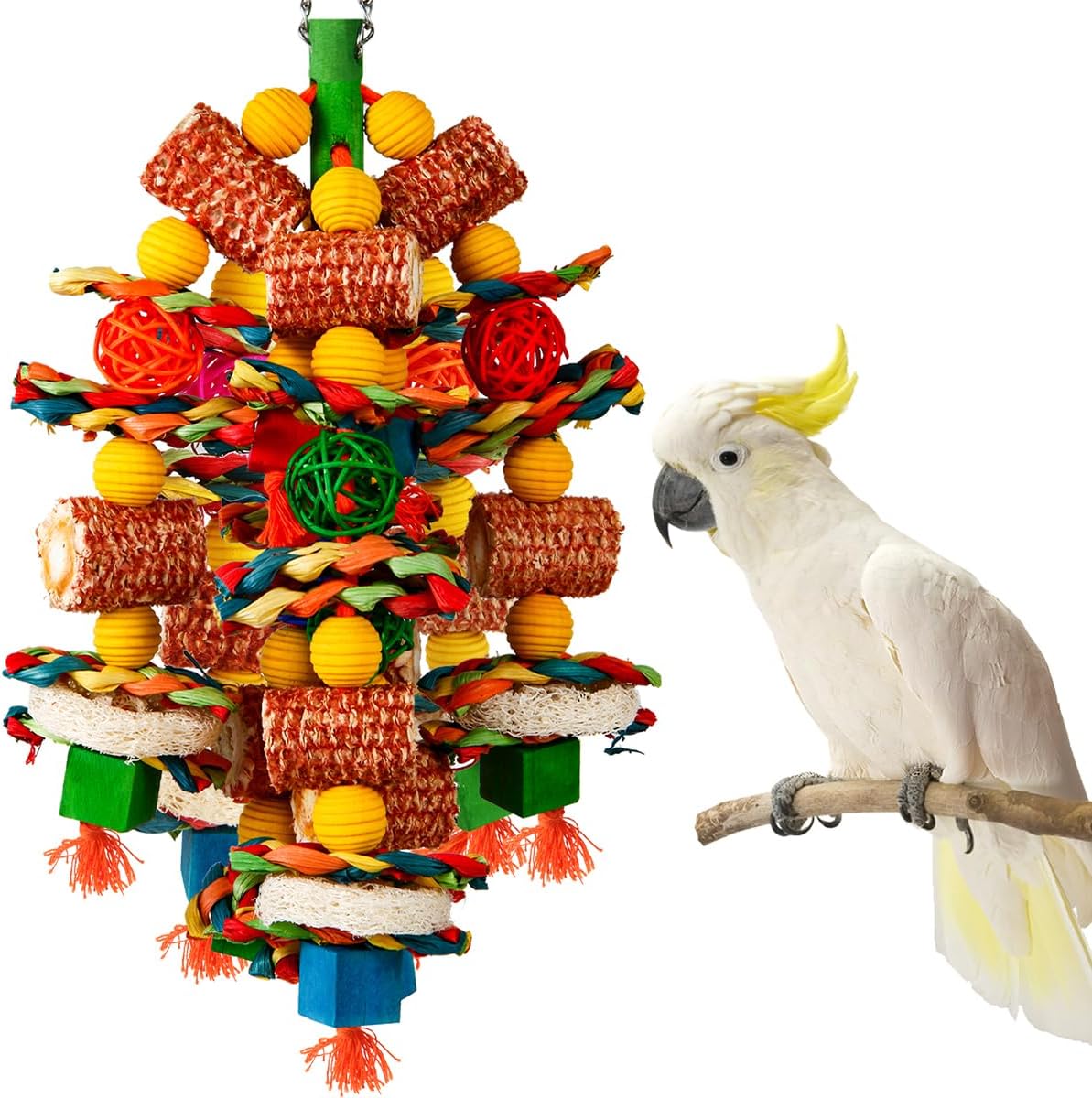
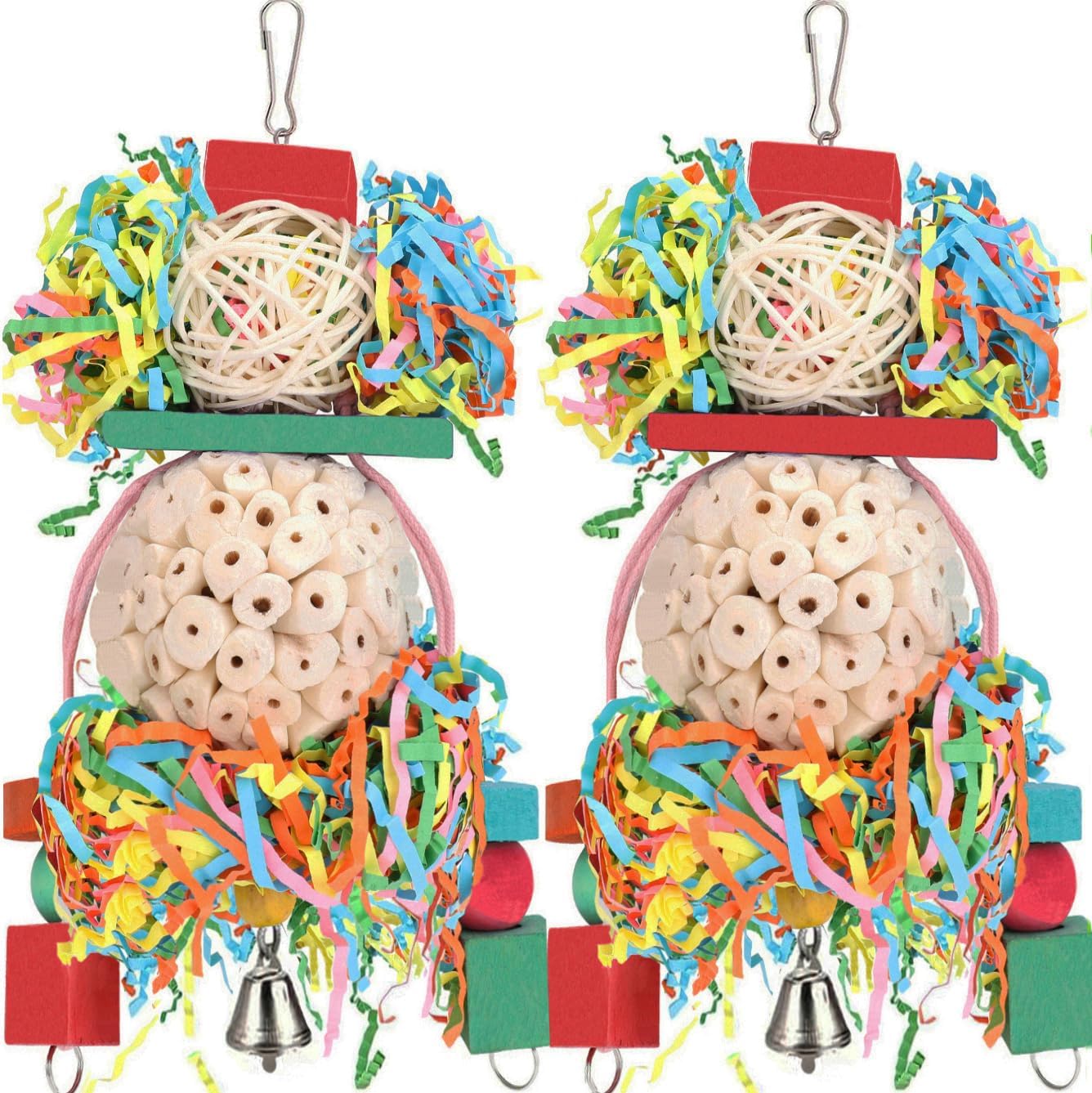
Also look at your cage setup honestly. A cramped cage with nothing to do makes territorial stress worse. Birds in properly sized cages with foraging opportunities and rotating toys show noticeably less defensive behavior. For a persistent cage-aggressive bird, a commonly recommended addition is a tough shredding outlet like a kabob or a natural-wood chew toy so the beak has a legal job. Something like the natural wood and rope shredder toys in this set gives a territorial bird somewhere to direct all that defensive energy instead of your fingers.
Reason Number Five: Overstimulation and the One-Pet-Too-Many Scratch
This bite catches people off guard because everything seemed great. You're scratching your cockatiel's head, she's leaning in, eyes closing, pure bliss, and then chomp. What happened? You overdid it. Birds can get overstimulated, and the beak bite is the off switch.
Watch for the shift: eyes opening, feathers shifting, the bird turning its head toward your fingers, a little beak-grab at your fingernail. That little beak-grab is the warning. It means stop in about ten seconds. Learn your particular bird's threshold and end petting sessions before the bird ends them for you. Short sessions, frequent, always leave them wanting more.
Reason Number Six: Medical Biting
Never skip this one. A bird that has never bitten and suddenly starts deserves a vet check before a behavior plan. Pain is invisible in birds because they hide illness instinctively; a sick bird in the wild gets picked off, so pet birds mask symptoms until they can't. According to the Merck Veterinary Manual, changes in temperament, including new aggression, are one of the few early red flags owners can actually catch in birds. If the biting came with any of these, get to an avian vet now: fluffed feathers, sitting on the cage floor, decreased vocalizing, appetite changes, or favoring a foot. A bird with an injured wing, a sore abdomen, or an aching joint will bite when touched near the problem. Documented 'sudden aggression' cases have turned out to be egg binding, arthritis in a 30-year-old macaw, and one memorable proventricular disease. Rule out the body before you retrain the behavior.
What NOT to Do When Your Bird Bites
Let me kill some persistent myths, because the old-school advice still floating around forums is actively harmful.
Do not flick the beak or hit the bird. Ever. Besides being cruel, it teaches the bird that your hands are dangerous, which feeds fear biting and destroys trust you spent months building. A parrot has the long-term memory of a toddler; they don't forget who hurt them.
Do not do the 'earthquake' wobble every time the bird is on your hand. Shaking your hand to unbalance a biting bird is a commonly repeated tip, and used sparingly it can interrupt a bite in progress, but if you do it constantly you just teach the bird that perching on you is unstable and unpleasant. Use it rarely, or not at all.
Do not yell. I said it before and I mean it, because drama is a reward. And do not put the bird in the cage immediately as punishment every single time, or the bird learns that biting means going home, which some birds actually want. If you must remove the bird after a bite, put it on a neutral perch, not its cage.
And please, do not chase the bird around the cage with your hand insisting on a step-up 'so it knows who's boss.' There's no dominance hierarchy you need to win. Parrots aren't pack predators; they're flock animals that respond to trust, not force. The boss approach creates biters.
Retraining Plan: The Two-Week Reset
Here's a commonly recommended plan. Expect it to take two weeks of consistency minimum, longer for birds with a long history of conflict.
Days 1 through 3: Hands-off completely. No requests, no step-ups, no reaching into the cage. Talk to the bird, sit near the cage, offer a favorite treat through the bars once or twice a day. You're resetting the relationship to zero drama.
Days 4 through 7: Hand-feed treats through the open cage door. Let the bird come to you. If it won't take from the hand, hold the treat and let it grab it off a spoon. Any movement toward your hand gets a treat. Meanwhile, study the bird like a documentary crew: note the warnings, the pinning eyes, the leans. Write them down if it helps.
Days 8 through 14: Ask for a step-up once or twice a day, in a neutral spot, with a high-value treat as payment. If the bird shows warning signals, back off immediately. Backing off when the bird says no builds more trust than any forced success ever will. The bird learns that saying no works, and that it never needs to escalate to a bite.
That last point deserves underlining because it sounds backwards: honoring your bird's 'no' is what eliminates biting. A bird that knows a head-lean-back means the human retreats has no reason to use the beak. The beak is the escalation of last resort when softer signals fail. Don't be the human the signals fail on.
Tools That Actually Help
A few products make the process easier, and none of them involve restraint or punishment.
A target stick with clicker is worth its weight in gold for retraining. Target training gives the bird something to do with its brain and beak that isn't your fingers, and it builds a working communication channel between you two. Ten minutes a day of target work tires out a smart parrot mentally and shifts the relationship from adversary to teammate.
A solid T-stand or tabletop perch gives you that neutral training ground away from cage territory, which matters enormously for territorial biters. Doing step-up practice on a neutral perch removes the whole 'defending my castle' variable.
And for the hormonal cases, swap the high-fat seed mix for a pelleted base diet; a go-to transition trick is mixing ZuPreem pellets in gradually over a few weeks. Lower dietary fat plus longer dark nights plus no dark hidey-huts is the trifecta for cooling down a hormonal biter.
When the Bite Breaks Skin
Quick practical note because it comes up. Wash any bite with soap and warm water right away, and let it bleed a bit, since parrot beaks carry bacteria like everything else. Deep punctures from a big macaw or cockatoo beak warrant a call to your doctor, and watch for infection signs over the next couple of days. On the flip side, your saliva and skin oils aren't great for birds either, so don't let the bird mouth your lips or open wounds. Both of you stay safer with beak-to-hand boundaries.
Special Cases: The One-Person Bird and the Blood-Draw Bites
The bird that loves you and hates your spouse is a classic, and it usually isn't hate. The bird has bonded to you and drives off the rival, which in flock logic is exactly what you do. The fix is for the favored person to become slightly less rewarding, and the 'rival' to become the sole source of the best treats, the best foods, all the walnuts and pasta bits and millet. It takes weeks, and the rival must never force contact. Owner reports frequently describe a 'husband-hating' conure doing a complete turnaround in about six weeks once the husband became the peanut monopoly. It works if you're consistent.
Then there's the bird that bites every time you try to load it into the carrier for vet visits. That one's solved by making the carrier a normal piece of furniture. Leave the travel carrier out year-round with treats inside, door open. A bird that voluntarily walks into its carrier doesn't need to be grabbed, and birds that aren't grabbed don't bite about it.
The Bottom Line
Bites are information. A parrot's beak is its voice, its hands, and its third foot all at once, and a bite usually means every softer signal it sent got ignored. Watch for the lean, the pin, the slicked feathers, the raised foot, the low growl, and respond to those, and most bites simply stop happening because they no longer need to. Add in enough sleep, real foraging work, no nesty corners, and a vet check when the biting is new, and you've addressed the vast majority of cases documented in the literature.
Your bird isn't trying to hurt you. It's trying to be understood by a giant clumsy flock-mate that keeps missing the point. Learn its language before it has to shout, and that beak goes back to being what it should be: the thing that cracks the walnut, not the thing that cracks your knuckle.
Related Reading
Want more on this topic? Check out our guides on best bird cage stands rolling bases heavy duty, how to convert bird seeds to pellets guide, best bird grooming supplies.