First, Some Honesty About Which Birds Actually Talk
African Greys are returned to rescues every year because a bird 'never said a word' after eight months. Yet the same bird can go on to speak fluently in a new home within a year, because the new keeper understands something the first one didn't: talking isn't a switch you flip. It's a skill that emerges from repetition, relationship, and a fair amount of luck.
So before we get to the training plan, let's set expectations, because the internet is full of videos that make this look instant. African Greys are the gold standard, with vocabularies that can exceed a hundred words and, according to research published on the famous Grey named Alex at Brandeis University, genuine contextual understanding. Budgerigars are the underrated champions — a well-socialized male budgie can learn dozens of phrases and holds the record among parrots for sheer word count in some older case studies. Amazon parrots, particularly Yellow Napes and Double Yellow Heads, become chatty adults, though often not until they're several years mature. Quaker parrots, Eclectus, Indian Ringnecks, Cockatiels (males especially), and many Macaws can all learn to mimic speech to varying degrees.
Canaries, finches, and most softbills will never talk. That's not a training failure — it's anatomy and brain wiring. If you have a female budgie or a female Cockatiel, temper your expectations too; hens generally vocalize less and mimic less than males, though there are plenty of exceptions.
And here's the part nobody tells you: some individual birds of the chattiest species simply never talk. You can do everything right and still end up with a silent companion. If talking is the only reason you want a parrot, honestly, don't get a parrot. Get a recording device. But if you want a bird who might learn to say your name back to you, read on.
Why Parrots Talk at All (This Changes How You Train)
Wild parrots contact-call each other constantly. A flock member separated from the group screams, the flock screams back, and the bird knows it's not alone. Your living room is that bird's flock now. When your parrot 'talks' to you, it's essentially performing an advanced version of a contact call — a sound that gets a response from the flock member it loves.
This explains two things every frustrated owner has experienced. First, birds learn the words that get reactions. If you laugh every time your bird says a swear word, congratulations, you've trained a potty-mouthed parrot with an audience incentive. Second, birds learn sounds they hear during high-emotion moments: breakfast preparation, your arrival home, arguments, phone greetings. That's why so many parrots learn to imitate microwaves, kissy noises, and 'hello?' in an annoyed tone — those sounds carry emotional charge in the household.
The practical takeaway: use the words you want learned during exciting, positive moments. Say 'good morning!' with actual enthusiasm when you uncover the cage, not as a bored ritual. Your emotional delivery is the reward amplifier.
When to Start: Age, Season, and Timing
Young birds learn fastest — a hand-fed baby parrot between three months and a year is in prime acquisition mode. But adult birds absolutely can learn; nine-year-old rescue Cockatiels have picked up 'pretty bird' in six weeks after their owners stopped assuming they were too old. The learning window narrows but doesn't close.
Time of day matters more than most guides admit. Early morning and early evening are natural vocalization peaks for parrots — it's when wild flocks do most of their calling. Ten minutes of speech training at 8 a.m. will outperform thirty minutes at 2 p.m. every single time. This pattern is well documented in parrot behavior literature.
Season matters too. Spring, with its longer daylight and hormonal surge, often brings a vocal explosion. Many owners report their bird suddenly 'finding' words in March that they seemed to ignore all winter. Don't panic if progress stalls in the dark months; keep the sessions going and let the daylight do part of the work.
Step 1: Build the Relationship Before You Build the Vocabulary
A frightened bird doesn't learn speech. A bird who has bonded to you learns speech quickly, because your voice is the flock voice it wants to replicate. Before any formal training, spend two weeks just talking to your bird about nothing. Narrate your day. Describe the groceries. Read articles aloud in a warm voice while sitting near the cage.
This sounds ridiculous. Do it anyway. Parrots are auditory sponges, and ambient exposure to a calm human voice does half the teaching for you. Several of the best-talking birds on record were owned by elderly people who lived alone and simply talked to their birds all day. There was no training plan. There was just conversation, and the bird joined in.
Step 2: Pick One Word and Say It Perfectly
The single biggest mistake is owners rotating through a dozen phrases hoping something sticks. Nothing sticks. A parrot's brain needs many hundreds of repetitions of a specific sound before it can reproduce it, and dividing those repetitions across twenty words means each word gets one-twentieth of the exposure.
Choose one short word or phrase. 'Hello' is classic for a reason. The bird's name works. 'Step up' works brilliantly because you pair it with an action the bird performs dozens of times daily — free repetitions. Aim for one or two syllables for beginners, and pick a word with hard consonants like B, D, K, and T, which are easier for a parrot's syrinx to reproduce than soft blends.
Say it the same way every time. Same tone, same pitch, same emphasis. Birds learn sound patterns, not letters, so if you say 'HEL-lo' on Monday and 'hel-LO' on Thursday, you've taught two different sounds. Consistency beats variety in the early phase.
Step 3: Structure Your Training Sessions
Here's the session format recommended in standard parrot-training guidance, and it works across species:
Session length: five to ten minutes, twice daily. Long sessions bore birds, and a bored bird associates your voice with irritation — the opposite of what you want.
Location: a quiet room, away from the TV, radio, and other pets. The bird is trying to isolate one sound from a wall of noise; give it a clean signal.
Distance: start a few feet from the cage, not beak-to-face. Many birds feel pressured by a face looming close and stop vocalizing entirely. Watch your bird's body language — relaxed posture, maybe one foot up, slight tail flare — and that's a bird in learning mode.
Repetition rhythm: say your word, pause two or three seconds, repeat. The pause matters. It gives the bird a slot to fill. Many first attempts happen in that gap — a mumbled, garbled proto-word that owners miss because they never stop talking long enough to hear it.
Reward any vocalization, not just the target word. If the bird makes any sound in the direction of speech, respond with enthusiasm. You're shaping behavior, and the first approximation is usually ugly. Laugh, praise, offer a treat. The clarity comes later.
Step 4: Use the Recording Trick (Sparingly)
A lot of owners leave a speech recording playing for hours while they're at work. Don't. Hours of background loop teaches the bird that the word is cage noise, not flock communication, and birds can learn to tune it out completely. Worse, some birds develop stress behaviors from unrelenting audio.
What does work: a recording of your own voice saying the word, played in short bursts — ten to fifteen minutes, once or twice daily, ideally alongside visual interaction. If you want a simple option for consistent audio during structured sessions, a small repeatable audio device like this one can carry your recording cleanly: reusable audio button on Amazon. Record the word in your voice, not a stranger's. Your bird wants to talk like its flock, and you are the flock.
Step 5: Capture and Reward the First Word
The first word usually arrives when you're not trying. Owners report it constantly: they're in the kitchen and hear a faint 'hello' from the other room. When it happens, do not come sprinting in shrieking with joy — okay, you will, everyone does — but understand that your dramatic reaction just told the bird this sound is extremely valuable. That's actually fine. Big payoff, big motivation.
From that first word onward, switch from scheduled repetition to capturing: reward the word whenever it's offered appropriately. If you walk in the room and the bird says 'hello,' respond warmly, every time. The bird is using the word contextually, which is the real goal. Context is what separates mimicry from communication, and studies of Grey parrots like Alex demonstrated these birds can associate words with objects and concepts rather than just echoing sounds.
After the first word is solid, add a second, then a third. One word per three to four weeks is a realistic pace for most species. Budgies can be faster; Greys are often faster but less predictable.
Step 6: Add Words With Emotional Hooks
Once your bird has the concept of speech, new words come from sounds attached to strong feelings. This is why birds pick up laughing, kissing noises, whistles, and the sound of your alarm. Use it deliberately: if you want your bird to say 'wanna treat?', say it with maximum theatrical enthusiasm every time you actually produce a treat. The word and the reward fuse together. A Quaker can learn a two-word request like 'almond please' in a few weeks when the phrase is paired with genuine, consistent enthusiasm for the actual treat.
A warning in the same spirit: watch your language around the bird, especially in the first two years. Parrots latch onto exactly the words you wish they wouldn't, and they live for decades. A friend's Amazon picked up a curse during a home renovation in 2019 and it remains the bird's favorite word into the 2030s. Forever is a long time to explain that one to guests.
What If Months Pass and Nothing Happens?
Here's my checklist for the silent bird, in the order I'd run it:
First, check the environment. Is the cage in a high-traffic chaotic spot, or in total isolation? Both extremes suppress vocal behavior. Birds in a corner of a busy living room often talk more than birds in a quiet back bedroom, because they hear more human speech and feel part of the action — but a bird stressed by constant chaos goes quiet instead. Aim for present-but-not-overwhelmed.
Second, check health. A bird with a respiratory infection or airway issues won't vocalize energetically. According to the ASPCA, any sudden change in a bird's vocalization — including going unusually quiet — can signal illness, since birds instinctively hide symptoms until they're quite sick. A normally chatty bird who stops making noise needs an avian vet, not a training plan.
Third, check your own energy. Monotone repetition teaching is forgettable. Are you actually fun to listen to? Record one of your sessions. If you sound bored, your bird is bored.
Fourth, consider the individual. Hens, older untamed birds, and certain species just talk less. Your Cockatiel hen might learn one phrase in her lifetime. That's not failure — that's her.
Training Tools That Actually Help
You need almost nothing for speech training. Your voice, your time, and a handful of high-value treats cover ninety percent of it. That said, a couple of low-cost tools make the process smoother, and I'll mention the ones I actually use.
A clicker helps mark the exact moment of a correct sound, the same way it marks a correct trick. If you're already clicker training — and you should be, since short sessions build the focus speech training requires — a slim, quiet clicker like this one works well without startling sound-sensitive birds: training clicker on Amazon.
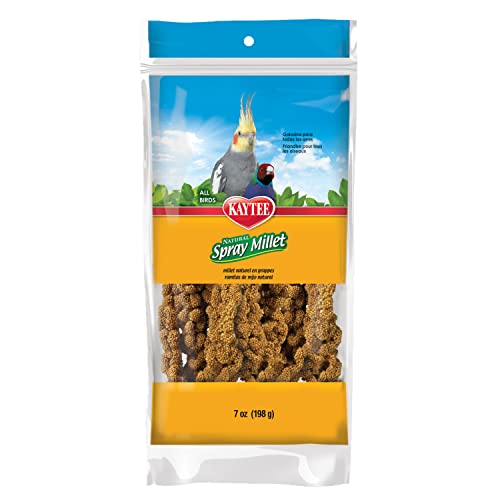
A stash of tiny, irresistible treats is essential for rewarding vocal attempts. Millet sprays are the universal parrot currency; break them into dime-sized pieces so a reward takes two seconds to eat and the session keeps moving. This millet has a long track record with parrot keepers: millet spray on Amazon.
And a notebook. Genuinely. Write down the date you started, the word you chose, and every session where the bird made an attempt. Progress in speech training is so gradual that owners lose heart precisely because they've forgotten how silent the bird was two months ago. The notebook is your evidence that it's working.
Mistakes That Stall Progress
Rotating words too fast. Pick one and commit for a month. This bears repeating because it's the number one failure point.
Training in noise. A TV in the background doesn't just distract — it contaminates the sound you're teaching. Quiet room, clean signal.
Punishing unwanted vocalizations with yelling. If your bird screams and you scream back, the bird learned that screaming summons the flock's loudest response. Ignore unwanted noise completely — leave the room if needed — and respond like a game show host to desired sounds. Birds perform for the audience.
Skipping the relationship. A parrot that steps up reluctantly and tolerates your hand will not rush to imitate your voice. Speech follows bond. Every time.
Quitting at week six. Most birds produce their first word somewhere between one and six months of consistent training, and some take a year. The owners who succeed are rarely the most talented; they're the ones still doing ten quiet minutes at breakfast in month five.
Talking Versus Screaming: Train One, Reduce the Other
Here's a pleasant side effect most owners don't anticipate: speech training reduces screaming. Remember, screaming is a contact call. A bird who can say 'hello' and get a response will often substitute the word for the scream, because the word works better. This plays out with several noisy Conures and one particularly loud Indian Ringneck whose owner was ready to rehome him. Six months of speech work later, the bird greeted her at the door with 'where were you?' instead of an eardrum-splitting call. The screaming dropped by more than half.
The Humane Society of the United States emphasizes responding to birds' appropriate vocalizations and ignoring excessive noise as the foundation of managing parrot screaming — speech training is essentially the constructive arm of that strategy. You're not just teaching words. You're giving your bird a better tool for the job it was already trying to do.
The Realistic Timeline
For a young, bonded budgie or Grey doing two structured sessions daily: first mumbled attempts in three to eight weeks, first clear word in two to four months, a small vocabulary of five to ten words within the first year. For a Cockatiel or Quaker: slower, maybe first word in three to six months. For an adult rescue of unknown history: add months, and accept that the ceiling might be one cherished phrase.
Those are honest numbers, not marketing numbers. Anyone promising a talking parrot in two weeks is selling something.
Where to Go From Here
Start tonight. Not with a formal session — just sit by the cage for five minutes and talk to your bird about your day, in your normal voice, with warmth. That's step one of the entire method, and it costs nothing. Pick your single word before tomorrow morning, say it with feeling when you uncover the cage, and keep a notebook by the cage to log the date. The bird that says your name back to you in six months is built from these unremarkable five-minute sessions, stacked one on top of another, long past the point where it feels like nothing is happening. That's the whole secret. Now go talk to your bird.
Related Reading
Want more on this topic? Check out our guides on best large parrot cages macaws cockatoos african greys, best bird grooming supplies, how to introduce second bird step by step guide.