The Begging Cycle Starts With You, Not the Dog
Disclosure: PawCritic is reader-supported. A few links below are Amazon affiliate links, and we may earn a small commission if you purchase through them at no extra cost to you.
This scene plays out constantly. Family sits down to dinner, dog parks itself three feet from the table, deploys the eyes, and within ninety seconds someone caves and slips a piece of chicken under the table. Everyone laughs, dinner continues, and the dog has just learned something very specific: staring at humans while they eat produces food. Not sometimes. Not randomly. Reliably.
Here's the part most owners don't want to hear. Begging isn't a dog behavior problem. It's a human training problem that the dog solved brilliantly. Dogs are opportunistic scavengers by nature, and according to the American Kennel Club, begging is a learned behavior that persists for one reason: it worked at least once, and probably worked many times. Even a single handout can reinforce the behavior for weeks, because dogs don't think in terms of 'every time' the way we do. They think in terms of 'sometimes,' and 'sometimes' is the most powerful reinforcement schedule there is. It's the same psychology that keeps people pulling slot machine levers.
So if you've been scolding your dog for begging while other family members sneak it fries, you're not training the dog. You're teaching it that begging works from everyone except you, and that the payoff just requires a little more patience. The fix requires total household consistency, a replacement behavior, and about two to three weeks of discipline. That's it. This guide walks you through exactly how to do it.
Why Scolding Makes Begging Worse
Yelling at a begging dog feels productive. It isn't. From the dog's perspective, attention is attention, and negative attention still registers as engagement from you during mealtime, which is exactly what the dog wants. Owner accounts frequently describe dogs that got yelled at every single dinner for years, still planted at the table, still drooling, still trying. The scolding became part of the ritual.
There's also a stress component. If begging gets punished unpredictably, one person feeds, another person yells, the dog lives in a confusing world where the same behavior produces chicken one night and anger the next. That ambiguity creates anxiety, and anxious dogs often whine, pace, or paw at people, which owners then read as the begging 'getting worse.' It did get worse. You made it worse by being inconsistent.
The real solution is extinction: the behavior stops producing any payoff whatsoever, so the brain eventually files it under 'useless' and drops it. But extinction has a nasty catch that trips up almost everyone. During the first few days of ignoring the behavior, it intensifies before it fades. Behavioral scientists call this an extinction burst. The dog that used to sit quietly and stare will escalate to whining, pawing, nudging, maybe even barking, because from its point of view, the strategy that always worked has mysteriously stopped working, so it must not be trying hard enough. If you give in during the extinction burst, and almost everyone does, you've now taught the dog that persistence at a higher intensity is what earns the reward. You've upgraded the begging.
So before you start, commit to this rule: once you begin, there is no going back. A single handout during week two erases everything and makes the next attempt harder.
Step 1: Feed the Dog Before You Eat
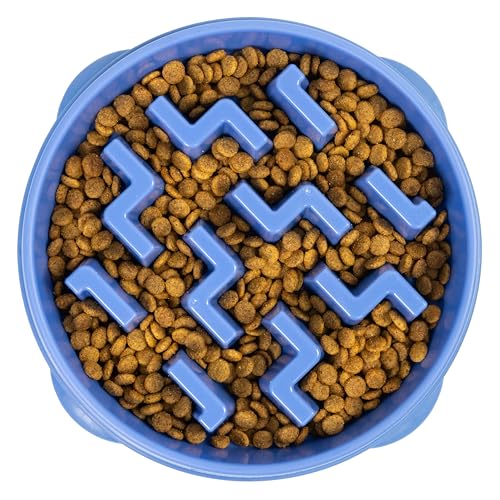
This one sounds too simple to matter, but it changes the physiology of the situation. A dog with a full stomach has less biological drive to fight during your meal. Feed your dog its own meal 20 to 30 minutes before you sit down to eat yours. Use a slow feeder or puzzle bowl if your dog inhales food in 40 seconds flat, because a dog that actually spends 10 minutes working for its dinner walks away more satisfied, both physically and mentally, than one that swallowed a bowl in half a minute.
A puzzle feeder is widely recommended for this. It stretches out mealtime, adds mental exercise that mimics foraging, and leaves the dog genuinely tired rather than merely full. If you're looking for one, this slow feeder bowl is the style most often suggested for beginners, ridged and simple, because the fancy maze designs frustrate some dogs into flipping the whole thing over. Owner reports frequently describe kibble scattered across the kitchen after a frustrated flip.
Step 2: Give the Dog a Job During Mealtimes
You can't just remove a behavior and leave a vacuum. Dogs don't do 'nothing' well. The single most effective replacement behavior for begging is a place command or a designated spot: a mat, bed, or crate across the room where the dog goes and stays until your meal ends. This works because you're not fighting the begging, you're giving the dog a clear, paid alternative.
Here's how to build it. Pick a spot at least eight to ten feet from the table, somewhere the dog can still see you, because banishing a dog out of sight of the family creates its own stress problems. Put a dedicated mat or bed there. Say 'place' or 'go to bed,' whichever word you prefer, lure the dog onto the mat with a treat, reward, release, repeat. Do this in short sessions away from mealtime first, five to ten reps, a couple times a day, until the dog hops onto the mat on the verbal cue alone. Most dogs get the concept in two or three days.
Then add duration and distraction. Ask for the place, wait two seconds, reward. Then five seconds. Then ten. Then step toward the table. Then actually sit at the table for thirty seconds while the dog holds the position. Reward heavily during this phase, and by heavily I mean a steady trickle of small treats delivered to the dog on the mat while you eat. Yes, the dog is getting food while you eat. That's fine. What matters is that the food arrives when the dog is calm and on its mat, never when it's staring at you or hovering at the table. You're shifting the paycheck from begging to settling.
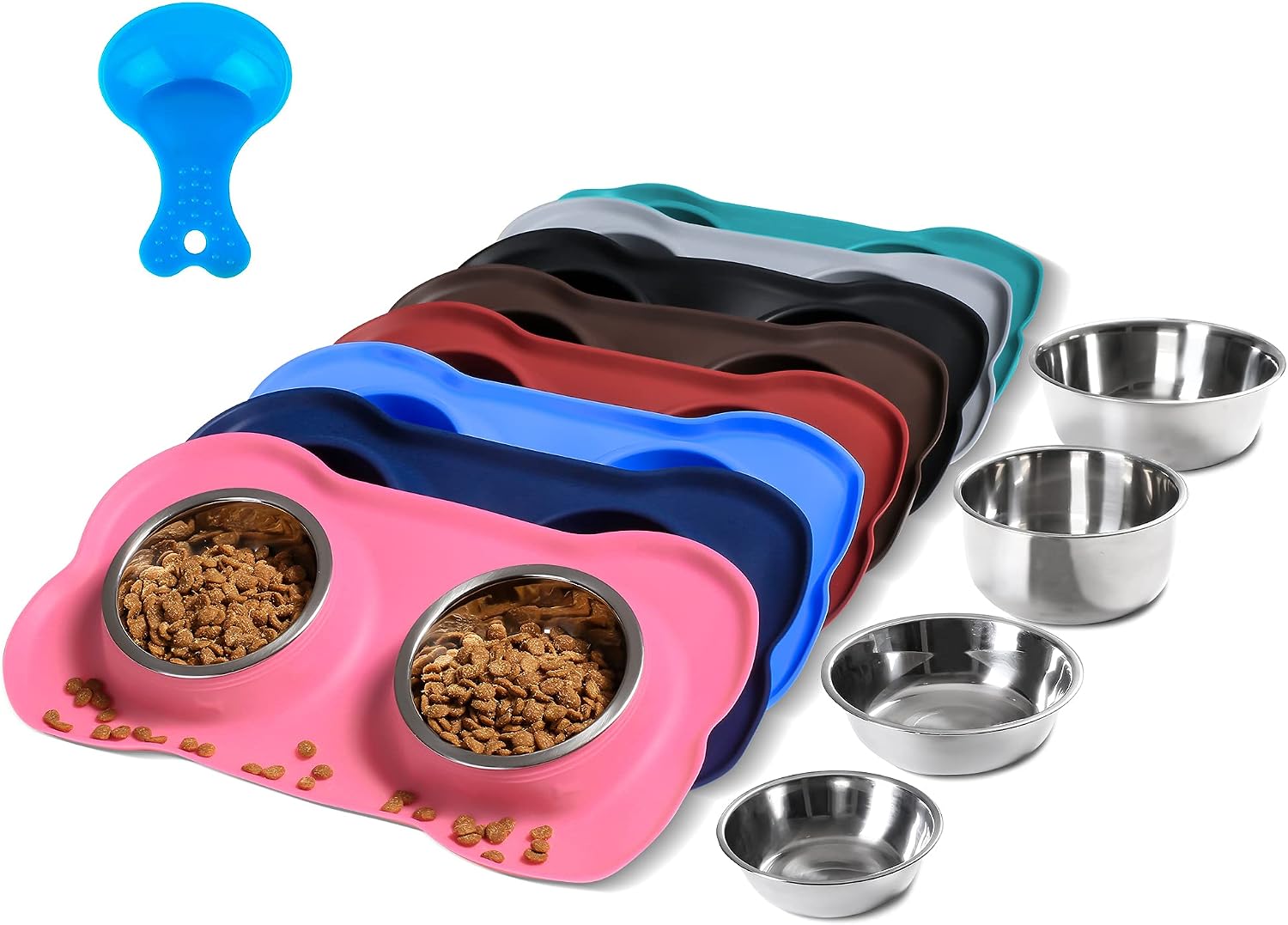
For the mat itself, get something with a definite edge the dog can feel, so the boundary is obvious. A washable one saves you grief. If you need a good option, this durable dog mat style holds up to daily use and machine washing, which matters more than you'd think once peanut butter gets involved.
Step 3: Total Household Compliance, Including Grandmas
This is where most plans collapse. The dog can hold a beautiful place command for two weeks, and then Uncle Rick visits, sits down with a plate of ribs, and feeds the dog from his fork because 'he was looking at me.' One Rick moment can undo a fortnight of work.
Before any meal with guests, state the rule plainly: nobody feeds the dog from the table, ever, and if they want to give the dog something, it goes on the mat, after dinner, from a bowl. Make it non-negotiable. If you have kids who struggle to resist the eyes, and kids always struggle, put them in charge of dropping the mat treats instead. Giving a child the official job of rewarding the dog for staying on its place flips them from accomplice to trainer, and kids take that job very seriously.
Management tools help during the training weeks. If you can't supervise, tether the dog on a leash to a heavy piece of furniture near its mat, or use a baby gate to keep it out of the dining area entirely for high-stakes meals like Thanksgiving. According to the ASPCA, preventing a dog from practicing an unwanted behavior is just as important as teaching the alternative, because every successful rehearsal of begging strengthens it. Management isn't cheating. It's damage control that protects your training investment.
Step 4: Ignore, Don't Correct
When the dog breaks its place and shows up at the table during the extinction period, and it will, your response is nothing. No eye contact, no talking, no 'no,' no pushing away with your foot in a way the dog reads as a game. Fold your arms, look at your plate or your company, and become a statue. Calmly escort the dog back to the mat if needed, with zero drama, then resume eating.
The silence is the message. Every scrap of attention, even irritated attention, is a small payout that keeps the behavior alive. Many owners insist their dog 'only responds to being told off,' but in those cases the telling-off itself is the reward keeping the loop running. Break the loop and it dies, usually within two weeks, though heavy reinforcement history can stretch it to four.
Expect the extinction burst around days two through four. The whining may get dramatic. There may be one memorable evening where the dog throws its entire emotional portfolio at you. Hold the line, and that evening becomes the turning point. Fold once and you're teaching the dog that the Oscar-worthy performance is the new price of admission.
Step 5: Reward the Right Moments, Not Just Meals
Once the begging fades, thin out the treats. Instead of a steady stream during dinner, deliver one reward when you finish eating and release the dog from its place. Then move to every other dinner, then random dinners, then a 'good dog' and a scratch most nights with an occasional jackpot. Variable rewards maintain a behavior long-term with minimal effort, the same mechanism that kept the begging alive, now working for you instead of against you.
Also start capturing calm behavior outside mealtimes. When the dog settles on its mat on its own during the evening, drop a treat between its paws without a word. You're teaching a broader lesson: lying down quietly on the mat generates good things out of nowhere, anytime. Dogs trained this way start choosing the mat on their own, and at that point the begging battle is over, because the dog has a better strategy than staring at your lasagna.
Special Cases Worth Addressing
The counter surfer. Begging at the table and stealing from the counter are cousins but not twins. Counter surfing needs physical management first: nothing edible left within reach, ever, because a turkey sandwich scored off the counter is a jackpot reward that funds months of surfing. Keep counters clear for a month while you train the place command, and the behavior starves out.
The dog that barks through extinction. Some dogs, especially vocal breeds like Beagles and Huskies, escalate to barking fast. Don't shout over it. Walk to the dog, calmly lead it back to the mat, return to your meal. If barking continues past a few minutes, end the session by putting the dog in another room with a stuffed rubber toy, and try again tomorrow with the dog more exercised. Which brings up the next point.
The under-exercised beggar. A dog with 45 minutes of pent-up energy has no chance of holding a settle through an hour-long dinner. Burn some of that off first. A brisk walk, ten minutes of fetch, or five minutes of nose work before your meal drops the dog's arousal level dramatically, and a tired dog chooses the mat because lying down is what a tired dog wants to do anyway. According to the American Veterinary Medical Association, adequate daily exercise is foundational for preventing a whole range of problem behaviors, not just begging, so this pre-dinner burn pays dividends everywhere else too.
The genuinely hungry dog. Rule this out once. If your dog begs frantically at every meal, loses weight, or has recently increased food motivation, check the portion calculator on your food bag against your dog's current weight, and ask your vet at the next visit. Some medical conditions, including diabetes and Cushing's disease, ramp up appetite dramatically, according to the Merck Veterinary Manual dog owner reference. A dog that suddenly can't stop begging deserves a checkup, not just a training plan.
What Never to Do
Never feed from your plate or hand while you're eating, not even once, not even vegetables. Never punish with physical corrections, which damage trust and can create food-related fear aggression, a far worse problem than begging. Never alternate between feeding and refusing based on who's home. And don't bother with gadgets or citronella collars, which suppress symptoms without teaching anything and often just relocate the anxiety.
A Realistic Timeline
Days 1 to 3: the worst stretch. Expect escalation, whining, and a dog testing every old trick. Feed before meals, run the pre-dinner exercise, hold the place command with heavy treats.
Days 4 to 10: the extinction burst breaks. Most dogs dramatically reduce begging somewhere in this window once the behavior has produced nothing across a dozen meals. Keep rewarding mat stays.
Days 10 to 21: proofing. Practice with distractions, guests, tastier-smelling food, longer meals. Randomize the rewards.
Week 4 and beyond: maintenance. The dog goes to its mat when you sit down out of habit, and you occasionally pay it for that good decision.
Start tonight. Feed the dog first, pick the mat spot, and run one five-minute place-training session before dinner. The begging didn't appear in a day and it won't vanish in one, but three weeks of airtight consistency from every human in the house will get you a dog that settles while you eat, and dinners that belong to people again.
Related Reading
Want more on this topic? Check out our guides on best dog harnesses no pull training, best dog toys aggressive chewers, best dog pools water play equipment.