Every Dog Licks Their Paws. Most of the Time, It Means Nothing.
Here's a number that surprises people: dogs spend up to 30% of their waking hours doing some form of self-grooming, and paw licking is the single most common version of it. Cats get all the credit for cleanliness, but your dog is quietly tidying up after every walk, every muddy yard sprint, every romp through the neighbor's flower bed. A few licks here and there after dinner? Completely normal. Boring, even.
The problem is that paw licking exists on a spectrum, and the two ends look almost identical to an untrained eye. On one end: a dog cleaning debris off their feet. On the other: a dog in the early stages of an allergic reaction, an infection, or a compulsive behavior loop that will eventually chew through the fur and the skin underneath. Both presentations show up at the same dog park in the same week, and the owners of both dogs tend to say the exact same thing: he's always done that.
That phrase should set off alarm bells. 'Always' is exactly how chronic problems hide. So let's get specific about what separates a normal lick from a problem lick, what the most common causes actually are, and what a sensible at-home approach looks like before spending money at the clinic.
First, the Quick Test: Normal or Not?
Before you spiral down a Google rabbit hole, run your dog's behavior through these four questions:
1. Is it both front paws or just one? Symmetric licking of both front paws points toward allergies or anxiety. One paw only points toward something local: a cut, a foxtail embedded between the toes, an insect sting, a torn nail. Single-paw licking is honestly the more urgent of the two, because a grass awn buried in a paw pad can abscess within days.
2. How long does a session last? Normal grooming is measured in seconds. A quick lick-and-done after coming inside means nothing. If your dog settles into a licking session that runs five, ten, fifteen minutes, and you have to physically interrupt them, that's not grooming anymore.
3. What do the paws look like? Part the fur and look at the skin between the toes and around the pads. Reddened skin, brownish saliva staining on light fur, damp matted hair between the toes, or a musty smell means the licking has been going on long enough to cause damage. That brown staining is a giveaway, by the way. Saliva contains porphyrins, iron-containing compounds that turn white fur rust-colored. If your dog's white paws are turning copper, they've been licking far more than you've noticed.
4. When does it happen? Licking only at night after everyone's in bed, or only when you leave the room, or only during thunderstorms is a behavioral clue, not a medical one. Usually.
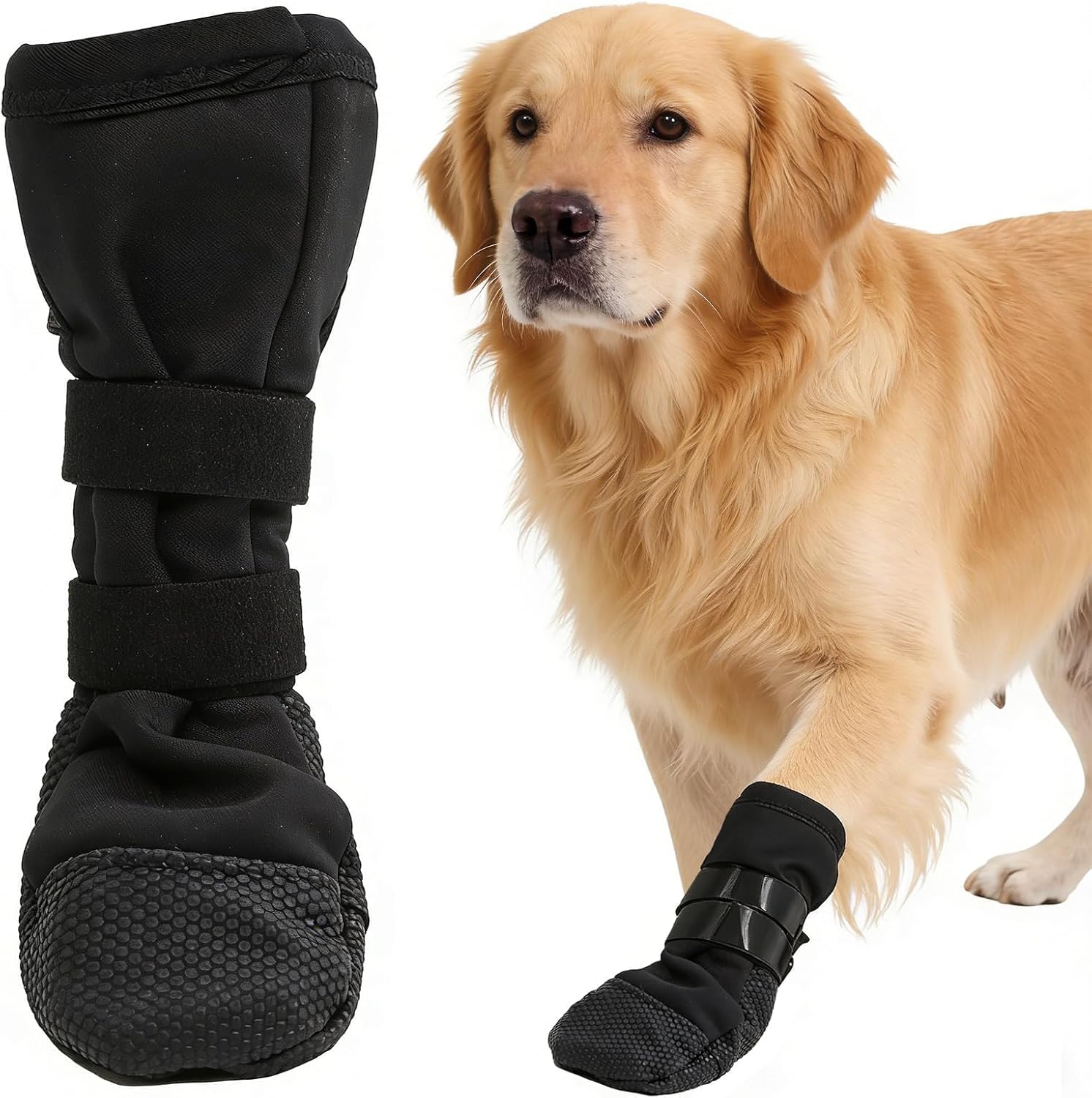
Cause #1: Environmental Allergies (Atopic Dermatitis)
If you had to bet on a single cause for chronic paw licking, atopic dermatitis would be the safest wager every time. Environmental allergies in dogs show up differently than in humans. People get runny noses and itchy eyes. Dogs get itchy skin, and the paws are prime real estate for allergen contact. Every step your dog takes on grass, dirt, and pavement deposits pollen, mold spores, and dust mite debris right on the skin of their feet, and their immune system responds with histamine and inflammation.
The pattern is distinctive once you know to look for it. Dogs with environmental allergies lick their paws seasonally at first, spring and fall when pollen counts spike, then progressively lengthen their itchy seasons until it's year-round by age three to five. Certain breeds are overrepresented: Labrador Retrievers, Golden Retrievers, German Shepherds, French Bulldogs, West Highland White Terriers, and basically any Bulldog variety. If you own one of these breeds and your dog licks their paws from April through October, the allergy conversation with your vet is worth having.
According to the American Kennel Club, atopic dermatitis is one of the most common skin conditions in dogs, affecting roughly 10% of the population, and paw licking is frequently the first and sometimes only visible symptom owners report. It often gets misdiagnosed by owners as a habit rather than a medical condition, which delays treatment by months or years while the skin barrier deteriorates.
What actually helps: wiping your dog's paws with a damp cloth after every outdoor excursion removes allergens before they can drive the histamine response. It sounds too simple to work, but for mild seasonal cases it genuinely reduces licking. For moderate to severe cases, ask your vet about newer options like Apoquel or Cytopoint, which target the itch pathway directly instead of just masking it with antihistamines, which frankly work poorly in dogs compared to humans. The Merck Veterinary Manual dog owner reference covers the underlying allergy mechanisms in more detail.
Cause #2: Food Allergies (Less Common Than You Think)
Here's where it's worth pushing back on popular opinion. Every time a dog starts licking their paws, the internet screams 'food allergy, switch to salmon!' But food allergies account for a much smaller share of canine allergies than environmental ones, on the order of 10-20% of allergic skin disease in dogs. The overwhelming majority of paw-licking dogs are reacting to pollen, not chicken.
That said, food allergies do exist, and their signature is non-seasonal itching. If your dog licks their paws in January with the same intensity as July, food becomes more plausible. The most commonly implicated proteins in dogs are actually beef, dairy, and chicken, which surprises people who've been told grain is the villain. Grain allergies in dogs are genuinely rare.
The only reliable way to diagnose a food allergy is a strict 8-12 week elimination diet with a hydrolyzed or novel protein, prescribed and supervised by your vet. No cheat days, no flavored chews, no dental treats, because a single exposure can restart the whole inflammatory cascade. Owner reports frequently describe six weeks of diligent elimination diet undone by a bacon-flavored heartworm preventative. Read labels on everything. The WSAVA Global Nutrition Guidelines are a useful reference for evaluating diet claims.
Cause #3: Injury or a Foreign Body
This is the sudden-onset category. Your dog was fine yesterday and is now fixated on one paw, licking intensely, maybe holding it up, maybe limping slightly. Get a flashlight and examine that foot properly. Spread the toes and look for:
- Grass awns or foxtails wedged between the toes or embedded in the pad, a genuine summer emergency in the western US because these barbed seeds can migrate into tissue
- Cuts, punctures, or abrasions on the pads themselves
- A cracked or torn nail, especially a dew claw
- Swelling or redness in a single toe, which can signal an interdigital cyst or an abscess
- Bee or wasp stings, common in curious muzzle-first dogs
Small cuts and stings usually resolve on their own in a day or two. Anything embedded needs to come out, and if you can't see or reach it, that's a vet visit, not a tweezers-and-hope situation. A foxtail that migrates deep can end up requiring surgical extraction, so an exam fee of a hundred dollars is cheap insurance.
Cause #4: Boredom, Anxiety, and the Compulsive Loop
Dogs who are understimulated or anxious develop displacement behaviors, and licking is one of the most common because it's self-soothing. Licking releases endorphins, so the behavior rewards itself. This is how a dog bored out of their mind during your ten-hour workday turns into a dog who licks their paws every night, and then into a dog who has licked a bald, raw spot on their wrist by spring.
The behavioral fingerprint is timing. Licking that happens when your dog is alone, when the house is quiet, or right after a stressful event like fireworks or a visitor, and stops the instant you engage them in something interesting, is behavioral. Medical itching doesn't pause because you threw a ball.
The fix here isn't a spray or a cone. It's exercise and enrichment, and real amounts of it. According to the American Society for the Prevention of Cruelty to Animals, adequate daily physical exercise plus mental stimulation is the foundation of preventing problem behaviors in dogs, and many dogs in under-stimulated households develop repetitive behaviors as an outlet. A tired dog with a stuffed Kong and a long morning walk generally has better things to do than lick. A dog staring at the wall for eight hours doesn't. If you need enrichment ideas, snuffle mats and puzzle feeders turn mealtime into twenty minutes of scent work, and there's a solid snuffle mat option linked below because it's the single cheapest behavioral intervention available.
True compulsive disorders, where the licking continues even when interrupted and returns instantly, do exist, particularly in Dobermans, Bull Terriers, and German Shepherds. These dogs sometimes need behavior modification plans and medication, and there's no shame in that. A veterinary behaviorist is the right referral here.
Cause #5: Parasites You Can't Easily See
Fleas remain a top cause of paw and leg licking even in dogs on preventatives, because no product is 100% and a single flea bite can trigger a reaction in an allergic dog. Flea allergy dermatitis classically shows up at the base of the tail and the back legs, but the paws get dragged into it too. Run a flea comb through the fur on the lower back and look for flea dirt, black pepper-like specks that turn reddish on a damp paper towel. That red is digested blood. If you see it, treat the dog and the environment, not just one or the other. The AVMA pet owner resources outline how flea life stages persist indoors.
Mites, especially demodex and sarcoptes, can also drive foot licking, and sarcoptic mange is intensely itchy and contagious to humans. If the itching came on fast and is severe, ask your vet to check for mites before assuming allergies.
Cause #6: Pain
This one gets missed constantly. Dogs lick body parts that hurt. A dog with arthritis in the wrist or a soft tissue injury in the foot will lick the painful area, the same way you'd rub a sore wrist. If your licking dog is also middle-aged or senior, slightly stiff getting up, or reluctant on stairs, ask your vet to evaluate for orthopedic pain before writing the licking off as skin or behavior. More than one 'allergy dog' has turned out to be an arthritis dog, and the licking stopped when the pain was managed.
Secondary Infections: The Complication That Keeps the Cycle Going
Here's the nasty part of chronic paw licking: moisture plus damaged skin equals infection. Constant licking keeps the skin between the toes damp and inflamed, which invites yeast (Malassezia) and bacteria to colonize. The infection itches, the dog licks more, the skin gets worse. It's a self-perpetuating loop that will not resolve without breaking it, usually with topical or oral antimicrobials from your vet plus an e-collar while the medication does its work.
Signs of infection include a musty or corn-chip odor, greasy or damp fur between the toes, red inflamed skin, and sometimes pustules or nodules between the digits. Corn-chip smell is so characteristic of yeast that it's often recognizable across the room. Don't ignore it and don't just keep wiping with baby wipes; infected interdigital skin usually needs real treatment.
What to Do at Home First
If your dog's paws look normal and the licking is mild and intermittent, here's the cheap, sensible first pass:
Rinse the paws after walks. Plain lukewarm water or a dilute wipe-down removes pollen and debris. Avoid human wipes with alcohol, which sting damaged skin and dry out pads.
Look between every toe, every week. Make it part of a routine exam so you catch foreign bodies and early redness before they become infections. Dogs who are handled gently on their feet as routine accept this easily.
Rule out flea exposure honestly. Is your preventative current, given on schedule, at the correct dose for your dog's current weight? Many 'flea treatment failures' are actually dosing gaps.
Add real exercise and enrichment. If the licking correlates with your work schedule, this is your answer, and it costs nothing but effort.
For mild interdigital irritation, a paw balm can protect pads and skin while you monitor, and there are also bitter-taste deterrent sprays that help some dogs break the licking habit while the skin heals. Neither fixes the underlying cause, so use them as a bridge, not a cure.
When to Skip Home Remedies and Call the Vet
Go to the vet, don't wait, if you see any of the following: limping or holding up a paw, visible swelling of a toe or the webbing between toes, bleeding or raw spots, that yeasty odor, hair loss on the feet, nails that look deformed or are growing abnormally, or licking that's severe enough to interrupt sleep, yours or the dog's. Also go if a puppy is licking paws, because young dogs are less likely to have chronic allergies and more likely to have something specific like mange or a foreign body.
And if the licking has been going on for more than a few weeks without an obvious cause, that alone justifies a visit. Chronic paw licking is a symptom, not a diagnosis, and the underlying list includes conditions ranging from trivial to serious, including, rarely, tumors of the toe. That's not meant to scare you, it's meant to stop you from normalizing six months of licking as a quirk.
The Bottom Line
Most paw licking is normal grooming. Some of it is boredom. A meaningful chunk of it is allergies, and a small percentage is injury, parasites, pain, or infection. Your job as the person holding the leash is to notice which category you're in: check the timing, check the symmetry, part the fur and look at the skin, and give an honest accounting of your dog's exercise and enrichment. Catch the pattern early, and you'll usually avoid the infected, stained, bald-pawed stage that takes months and real money to undo. Wait for 'he's always done that' to explain itself, and you'll almost always wish you hadn't.
Related Reading
Want more on this topic? Check out our guides on best dog backpacks hiking day packs, how to clean dog ears step by step guide, best dog beds orthopedic heated luxury beds every breed.